By Ethan Kross
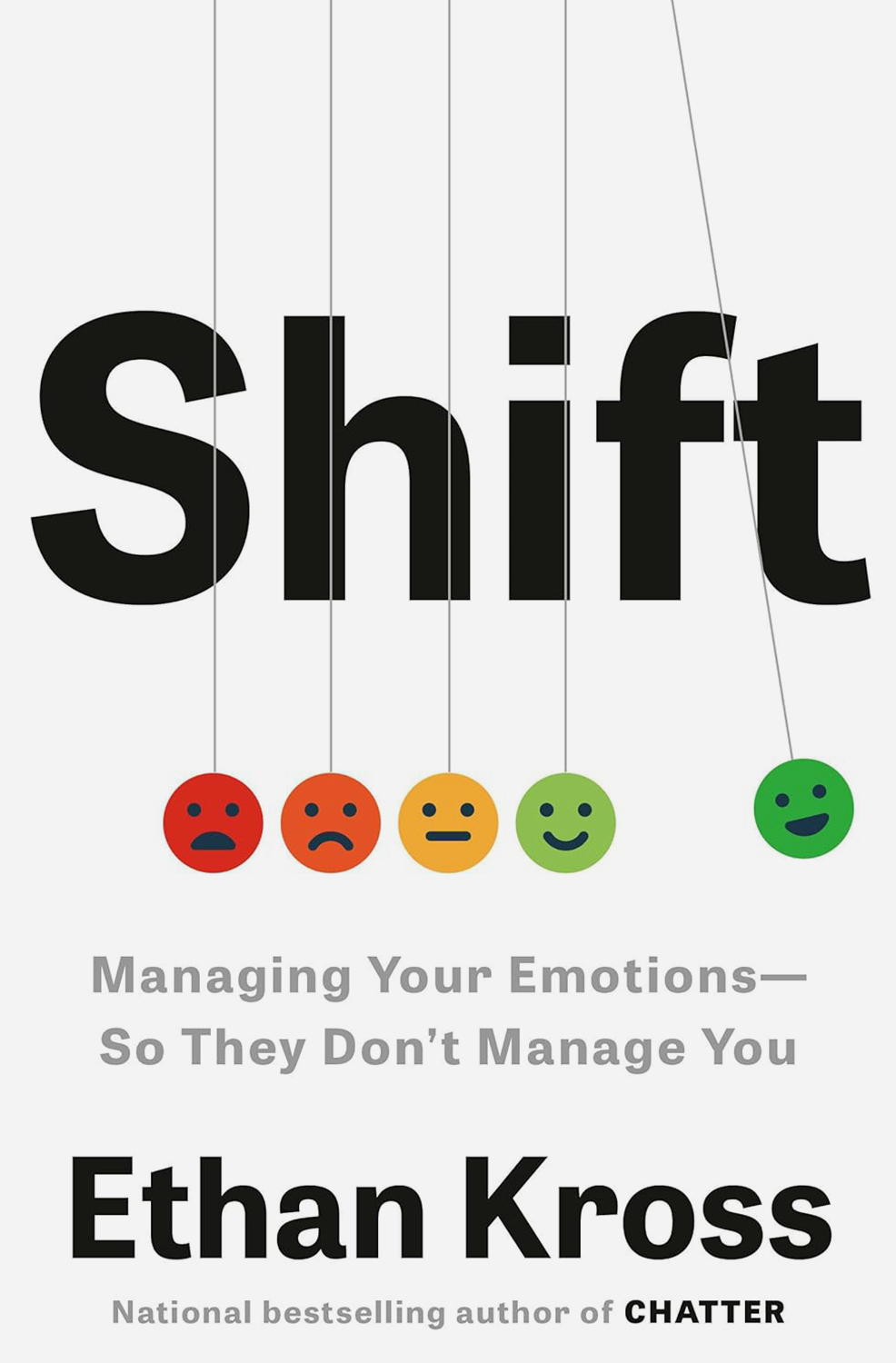
Emotions are a universal human experience, yet most of us feel at their mercy much of the time: anxiety about doctor visits, boiling rage in traffic, sadness after loss—and the sense that we are not in command of how we feel. In Shift: Managing Your Emotions—So They Don’t Manage You, psychologist and neuroscientist Ethan Kross offers a groundbreaking, science-backed framework for understanding emotions not as enemies or obstacles, but as adaptive signals that can guide us toward better decisions, healthier relationships, and more fulfilling lives.
BUY THIS BOOK
Through a mix of cutting-edge research, real-world stories, and practical strategies, Kross explains how emotions operate in the brain, dispels pervasive myths about emotion regulation, and teaches us how to “shift” out of unhelpful emotional patterns and into intentional responses that serve us.
No. 1 — Understanding Emotions: Information, Not Obstacles
A central premise of Shift is that emotions are not inherently good or bad—they are information. They evolved as part of our “emotional immune system,” alerting us to danger, opportunity, or social threat. Emotions prepare us to act appropriately; fear can protect us, anger can signal violation, and sadness can drive connection. Instead of trying to suppress or eliminate emotions, we should seek to understand them and work with them constructively.
Rather than framing emotional regulation as “controlling emotions,” Kross reframes it as shifting emotional experiences so they don’t hijack our lives. He argues that when emotions are activated in the right ways and at the right times, they help us thrive—not just survive.
No. 2 — Myth-Busting Common Beliefs About Emotions
Kross spends considerable time challenging widely held beliefs:
Myth: Avoidance is Always Toxic
Many people assume that confronting every emotion head-on is the healthiest route. In reality, avoidance can be beneficial—if used strategically. Taking a step back from a painful situation before engaging with it can provide clarity and reduce intensity.
Myth: Living in the Moment is Always Best
While mindfulness is valuable, Kross shows that mental time travel—reflecting on the past or projecting into the future—can also be powerful for emotional regulation. Imagining how a tough situation will feel weeks or months later can help us reframe it in the present.
Myth: Venting Emotional Energy is Helpful
Simply releasing emotional energy doesn’t necessarily resolve the emotion. In many cases, venting only provides momentary relief, leaving the underlying issue untouched. Kross suggests coupling emotional expression with perspective-shifting to derive lasting insight.
By debunking these myths, Shift removes emotional “shoulds” that often trap people in unhelpful patterns, and replaces them with flexible, evidence-based strategies.
No. 3 — The Toolkit for Emotional Shifting
Central to Kross’s approach is the idea of emotional shifters: tools and techniques—internal and external—that help redirect emotional responses. These shifters fall into several categories:
Internal Shifters
These involve how you think, focus, and talk to yourself.
- Attention management. Emotions gain traction when attention fixates on them. Redirecting attention purposefully—whether to another task or to broader context—reduces emotional grip.
- Self-talk and distancing. Using psychologically distanced language (e.g., referring to yourself in the third person) helps create mental space and reduce emotional intensity.
- Mental time travel. Shifting perspective to past experiences or future possibilities reduces the urgency of present emotional states.
These strategies help interrupt emotional spirals before they become overwhelming.
External Shifters: Space
Kross explores how physical environments shape emotional states—a concept he calls space shifters. The places we inhabit deeply influence how we feel. Simple changes—getting outdoors, reorganizing a room, or returning to a comforting familiar space—can shift mood and reduce psychological strain.
Our environments cue emotional reactions often without our awareness. By intentionally modifying or selecting environments, we can leverage space as a tool for emotional health.
External Shifters: People
Relationships have enormous impact on emotional regulation. Kross emphasizes the importance of emotional advisors—trusted people who offer perspective, challenge unhelpful interpretations, and help you see your situation more clearly.
But not all emotional support is equally effective. Venting alone can reinforce emotional cycles without leading to insight. Emotional advisors help move beyond expression toward understanding and reframing.
Kross also addresses emotional contagion: emotions spread from person to person. Being mindful of this dynamic helps protect our emotional state and fosters more intentional connection.
External Shifters: Culture
Beyond individual relationships, culture—the shared norms, values, and practices of a group—shapes how emotions are expressed and managed. Kross shows that cultural contexts can either support or hinder emotional well-being.
When culture emphasizes emotional suppression, people may internalize unhealthy patterns. Conversely, cultures that encourage reflection, support, and shared norms of regulation foster resilience. Recognizing culture’s influence allows individuals to work within, modify, or leave cultural environments that impair emotional health.
No. 4 — The Emotional Regulation Framework: Wish, Outcome, Obstacle, Plan
A practical framework that Kross highlights involves four steps:
No. 1 — Wish. Identify what you want emotionally or mentally.
No. 2 — Outcome. Clearly define the desired emotional state.
No. 3 — Obstacle. Recognize what’s standing in the way of that state.
No. 4 — Plan. Craft a strategy —using internal and external shifters — to shift from current emotion to desired state.\
This method encourages intentional engagement with emotions rather than reflexive reaction. It reframes emotional regulation as problem-solving rather than suppression.
No. 5 — Case Studies and Narratives
Kross uses compelling real-world stories to illustrate his tools in action. For example:
- A mother whose fear during a crisis propelled her to take decisive action that ultimately protected her child.
- A nuclear code-carrying Navy SEAL who learned to integrate joy and pain amid grueling training.
These stories demonstrate that emotional mastery is not about eliminating difficult feelings, but about learning how to navigate them and emerge stronger.
No. 6 — Emotion Regulation in Everyday Life
Kross’s approach applies not just to dramatic life events, but to daily emotional challenges:
- Anxiety in anticipation of routine situations.
- Frustration in everyday interactions.
- Sadness in response to interpersonal conflict.
Shift provides tools that can be deployed in moments of high intensity or emotional drift, reminding readers that emotions are malleable—not immutable.
Kross argues that emotional regulation is a skill—not a fixed trait—and like any skill, it can be learned and refined.
No. 7 — Scientific Foundations and Psychological Insight
Throughout the book, Kross draws on decades of psychological research, including studies from his own laboratory at the University of Michigan. He demonstrates how the brain’s emotional networks interact with cognition and how deliberate strategies can reshape these interactions for greater emotional agency.
By grounding emotional regulation in science rather than intuition, Shift gives readers both credibility and practical steps to apply Kross’s methods.
No. 8 — Reframing Emotions: A New Relationship With Feeling
One of the book’s central lessons is that emotions should not be resisted, feared, or dismissed. Instead, they are signals—data points about what matters most. When we treat emotions as information rather than obstacles, we open the door to deeper self-understanding and wiser action.
Kross’s approach reframes emotional hardship as an opportunity for insight and growth, turning emotionally charged moments into opportunities to build resilience and clarity.
No. 9 — Application for Leadership, Relationships, and Daily Life
Emotion regulation is not just a personal benefit—it has implications for leadership, work, and relationships. Leaders who can remain emotionally grounded make better decisions under pressure. People who can shift their emotions effectively are more likely to manage conflict constructively and communicate with clarity. Teams and communities benefit when emotional norms support perspective and regulation rather than reactivity.
No. 10 — Integration and Mastery
Kross ends Shift by emphasizing practice: emotional mastery is not a destination, but an ongoing process. The tools he offers are not one-off fixes but habits of mind, relationships, and space that can be cultivated over time.
The book empowers readers to build a personalized emotional regulation system that draws on internal shifters (like attention and self-talk), external shifters (like relationships and environment), and cultural awareness.
Key Takeaways
- Emotions are information — not enemies.
- Common beliefs about emotions can be misleading; flexibility is key.
- Shifting emotions requires both internal and external tools.
- Environment, relationships, and culture shape emotional experience.
- Emotional regulation is a skill that can be learned and refined.