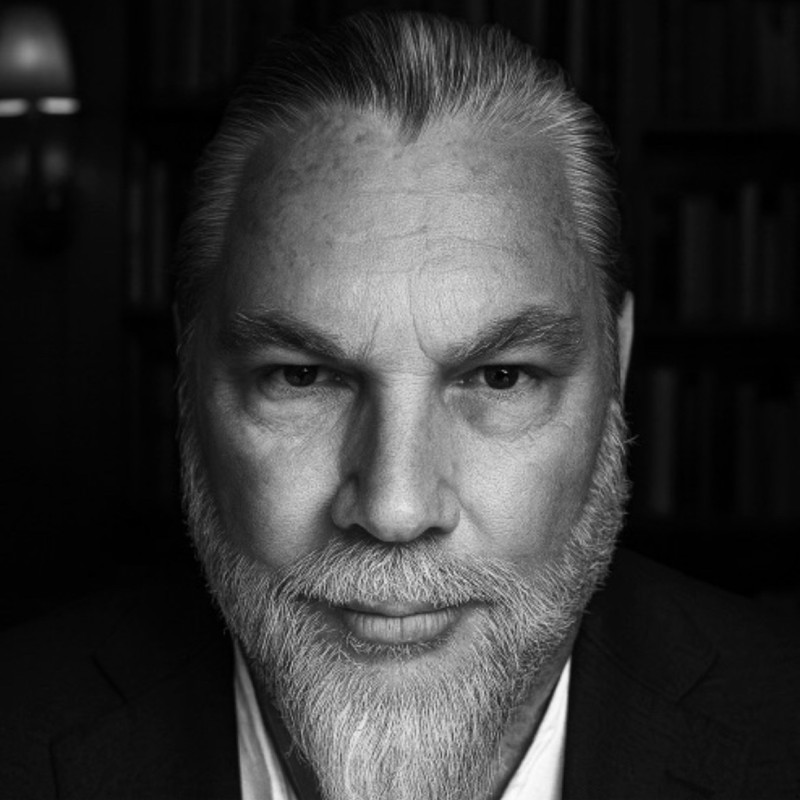
By Mary Beard
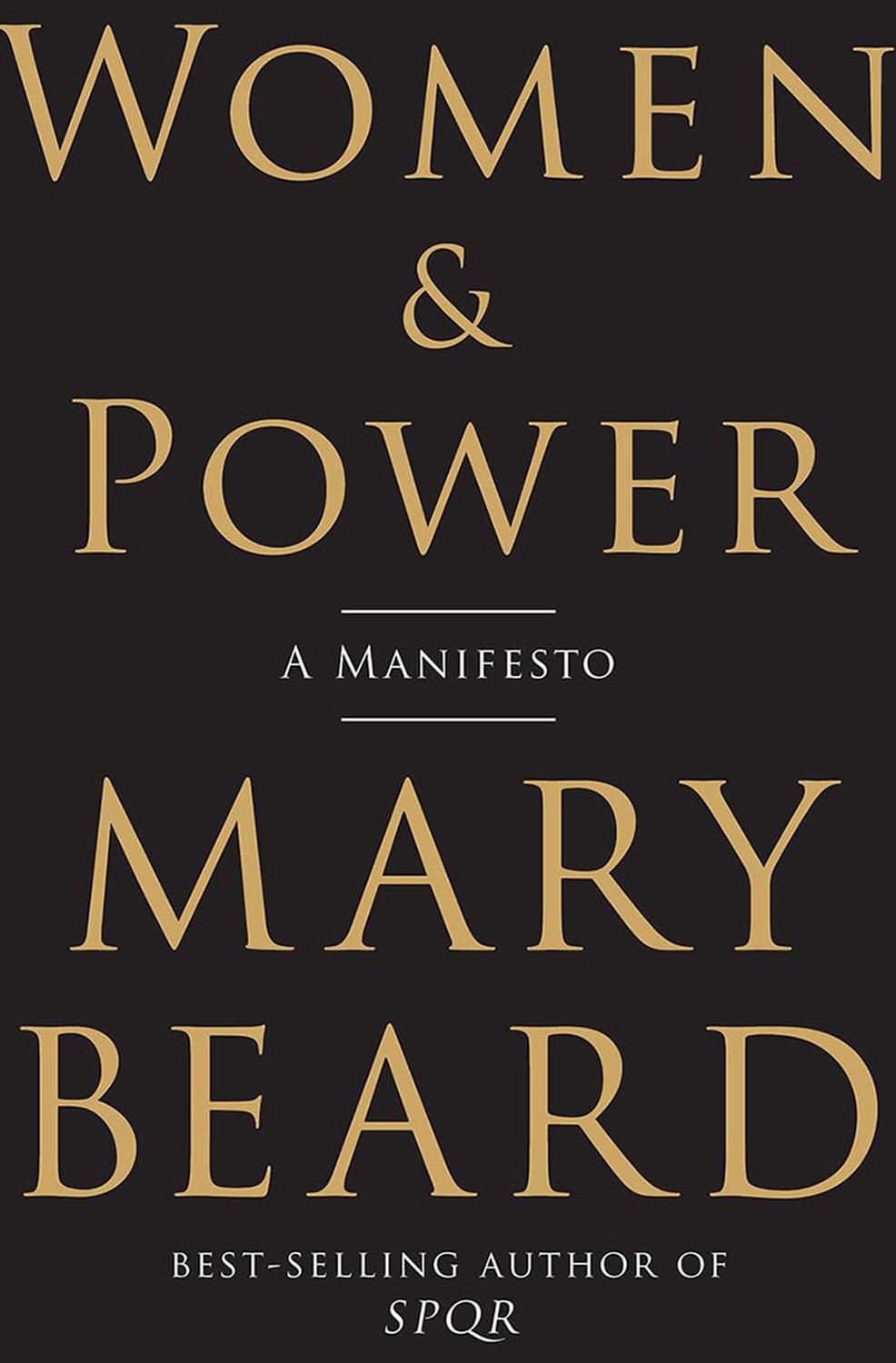
In Women and Power: A Manifesto, classicist Mary Beard explores one of the oldest and most persistent questions in human society: why has power historically been associated with men, and why do women who seek authority continue to encounter resistance, hostility, and exclusion?
Drawing on her expertise in classical history, Beard argues that the marginalization of women from public speech and positions of authority is not a modern phenomenon. Rather, it is deeply embedded in Western cultural traditions that stretch back thousands of years. The roots of contemporary sexism, she suggests, can be found in some of the foundational stories, myths, and political structures of ancient Greece and Rome.
BUY THIS BOOK
The book is based on two lectures Beard delivered on women in power and is relatively brief, but its implications are profound. Beard’s central argument is not simply that women have been excluded from power. Her deeper claim is that Western society has historically defined power itself in masculine terms. As a result, women seeking authority often face a dilemma. They are either criticized for failing to conform to traditional expectations of femininity, or criticized for adopting behaviors associated with leadership and power.
The problem is therefore larger than representation alone. It concerns the very way society imagines authority.
Silencing Women: The Ancient Origins
Beard begins with one of the earliest examples of female silencing in Western literature.
In Homer’s Odyssey, the young Telemachus instructs his mother Penelope to return to her quarters and leave public speech to men. Penelope is not merely interrupted or disagreed with. She is explicitly told that speaking in public is not her role.
For Beard, this moment is significant because it represents more than a family interaction. It symbolizes a broader cultural pattern that has persisted for millennia. Women are excluded not only from political power but also from the public act of speaking itself.
The ability to speak publicly has historically been tied to authority, citizenship, influence, and leadership. To deny women a voice is therefore to deny them participation in power.
Beard argues that many modern experiences echo this ancient tradition. Women continue to report being interrupted more frequently than men in meetings. Female politicians and executives often face criticism regarding their voices, tone, and speaking style in ways that male counterparts do not.
The issue is not simply whether women are allowed to speak.
The issue is whether society recognizes female speech as authoritative.
Throughout history, women have often been expected to remain within the private sphere while public discourse remained overwhelmingly male.
The echoes of this ancient division continue to shape contemporary culture.
The Problem of Voice
One of Beard’s most intriguing observations concerns the relationship between authority and vocal expression.
She notes that many powerful women throughout history have encountered criticism for the way they speak. Female leaders are frequently judged not merely on the content of their message but on the sound of their voice itself.
A deep, authoritative voice has traditionally been associated with masculinity. Consequently, women in positions of authority often face pressure to alter their speech patterns or communication style in order to be taken seriously.
Margaret Thatcher famously underwent voice coaching to lower her vocal pitch before becoming Prime Minister of the United Kingdom. Similar expectations continue to influence female leaders today.
Beard argues that this reflects a deeper cultural problem.
Society has developed unconscious assumptions about what authority sounds like. Since those assumptions were largely shaped in environments dominated by men, women often find themselves judged against standards they did not create.
The challenge is therefore not merely about increasing female participation. It involves questioning the cultural frameworks through which authority is recognized and validated.
Women as Outsiders to Power
A recurring theme throughout the book is that women have historically been positioned as outsiders to power structures rather than participants within them.
Ancient myths frequently portray powerful women as dangerous, disruptive, or unnatural. Figures such as Medusa, Clytemnestra, and various female rulers are often depicted as threats to social order.
These stories matter because myths help shape collective assumptions.
The cultural imagination absorbs narratives long before individuals consciously recognize them. Over generations, these stories establish patterns regarding who appears suited for leadership and who does not.
Beard argues that many contemporary attitudes toward female leaders reflect these ancient archetypes.
Women who seek authority are often subjected to criticism that extends beyond their qualifications or performance. Their appearance, personality, family choices, emotional expression, and even physical characteristics become subjects of scrutiny.
Male leaders certainly face criticism as well. However, women are frequently judged through an additional layer of cultural expectations that have deep historical roots.
As a result, women often occupy a precarious position.
They are expected to lead while simultaneously conforming to social norms that discourage behaviors associated with leadership.
The Double Bind of Leadership
One of the most powerful concepts explored in the book is the double bind experienced by women in positions of authority.
Leadership often requires decisiveness, confidence, assertiveness, and resilience. Historically, these traits have been coded as masculine.
When men display these characteristics, they are frequently viewed as strong leaders.
When women display identical behaviors, they may be described as aggressive, cold, difficult, or unlikeable.
On the other hand, women who conform to traditional expectations of warmth, cooperation, and modesty may be perceived as lacking leadership presence.
This creates an impossible balancing act.
Women are criticized for being too assertive and criticized for not being assertive enough.
The challenge is not individual.
It is structural.
The criteria used to evaluate leadership were developed in environments where leadership was assumed to be male.
Consequently, women often encounter standards that are inherently contradictory.
The Symbolism of Medusa
One of Beard’s most memorable discussions involves the mythological figure Medusa.
Traditionally portrayed as a terrifying female monster whose gaze turns men to stone, Medusa has often been used as a symbol of female danger and disruption.
Beard argues that images of Medusa continue to resonate in contemporary depictions of powerful women.
Female politicians, executives, journalists, and public figures are often subjected to imagery and rhetoric that portrays them as threatening, unnatural, or frightening.
The symbolism is significant because it reveals how cultural narratives shape emotional reactions.
People may believe they are evaluating leaders objectively while unconsciously responding to archetypes that have existed for centuries.
Medusa represents a broader pattern in which female power is portrayed not as legitimate authority but as something unsettling and dangerous.
Understanding these narratives is essential because they continue to influence public perception long after the original myths have faded from conscious awareness.
Rethinking What Power Means
Perhaps the most important argument in the book emerges near its conclusion.
Beard contends that efforts to place more women into existing power structures, while valuable, may not fully address the underlying issue.
The deeper problem lies in how society defines power itself.
Traditionally, power has often been imagined as hierarchical, individualistic, competitive, and command-oriented. These models emerged largely within male-dominated institutions and political systems.
As a result, discussions about gender and leadership frequently focus on helping women fit into existing structures.
Beard challenges readers to consider a different possibility.
Rather than asking how women can adapt to traditional models of power, perhaps society should ask whether those models require rethinking altogether.
Power does not necessarily have to be understood as domination or control.
It might also involve collaboration, influence, collective action, and shared authority.
By broadening our conception of leadership, new possibilities emerge for both women and men.
Beyond Representation
An important contribution of Beard’s work is her insistence that representation alone is insufficient.
Increasing the number of women in leadership positions matters. However, numerical progress does not automatically eliminate cultural assumptions.
Organizations may appoint female executives while continuing to evaluate them according to masculine norms.
Political systems may elect female leaders while subjecting them to unique forms of scrutiny.
Media coverage may celebrate diversity while reinforcing stereotypes.
True progress requires more than changing who occupies positions of authority.
It requires examining how authority itself is understood.
This distinction is crucial because it shifts the conversation from individual adaptation to systemic transformation.
Key Lessons from the Book
Several powerful lessons emerge from Beard’s analysis.
First, the exclusion of women from public speech and leadership is not a recent phenomenon. Its roots extend deep into the foundations of Western culture.
Second, contemporary biases often operate through inherited narratives and assumptions rather than explicit discrimination.
Third, many of the challenges faced by female leaders arise because traditional models of power were constructed within overwhelmingly male environments.
Fourth, achieving genuine equality requires more than representation. It demands a reconsideration of how society defines authority, leadership, and legitimacy.
Finally, Beard encourages readers to recognize that cultural assumptions are neither natural nor inevitable. They are products of history and can therefore be questioned, challenged, and changed.
Conclusion: A Challenge to the Definition of Power
Women and Power is not merely a book about women.
It is a book about power itself.
Beard’s central contribution is her insistence that the struggle for gender equality cannot be reduced to increasing female participation in existing systems. The more profound challenge involves examining the cultural stories, assumptions, and structures that determine who is seen as entitled to authority in the first place.
By tracing these patterns back to ancient Greece and Rome, Beard demonstrates that many contemporary debates have surprisingly deep historical roots. The voices that sought to silence women thousands of years ago may sound different today, but the underlying assumptions often remain remarkably familiar.
The ultimate question posed by the book is therefore not simply how women can gain access to power.
It is whether society is willing to rethink what power means.
That question remains as relevant today as it was in the ancient world, and perhaps even more urgent.