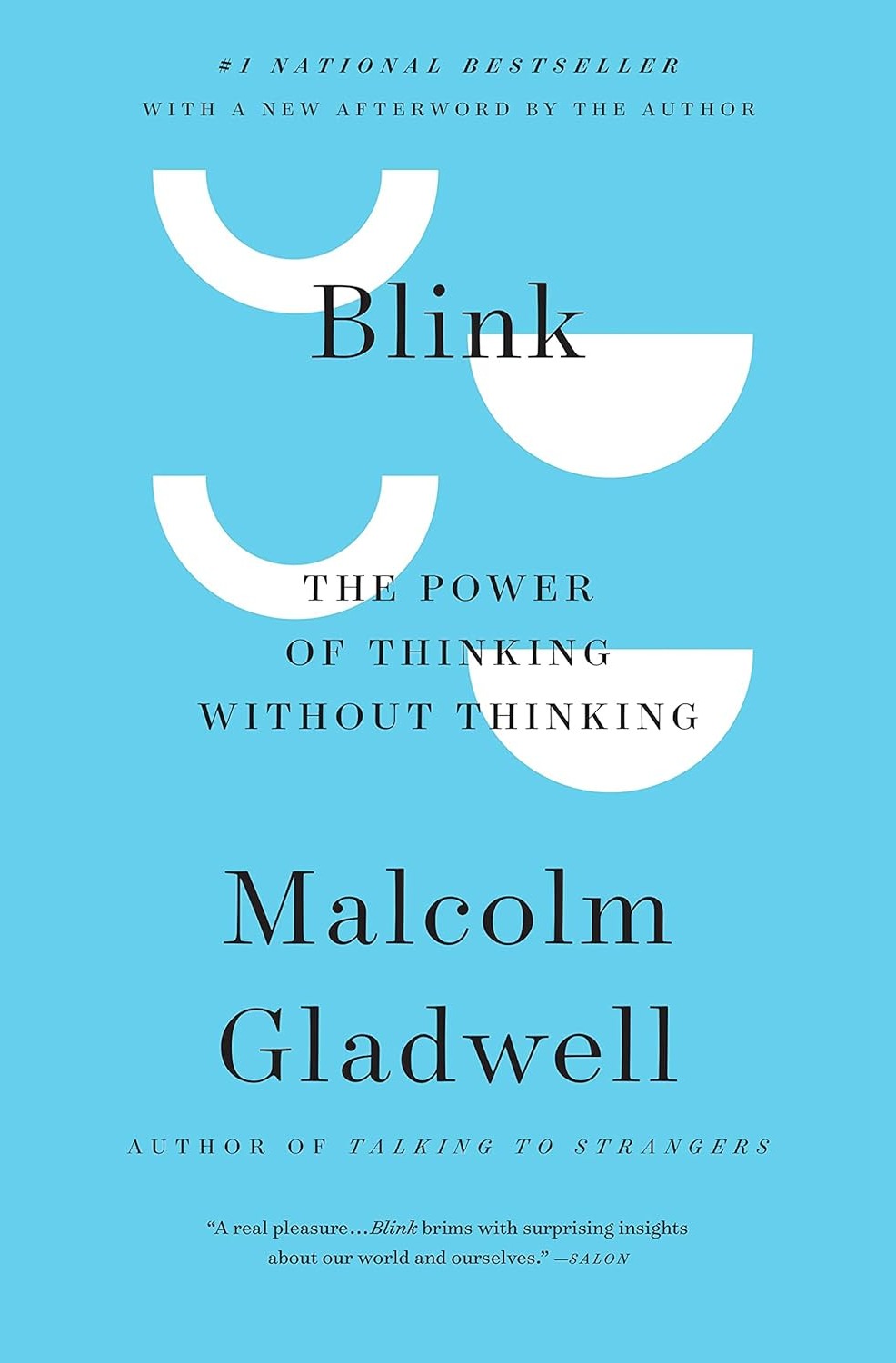
By Malcolm Gladwell
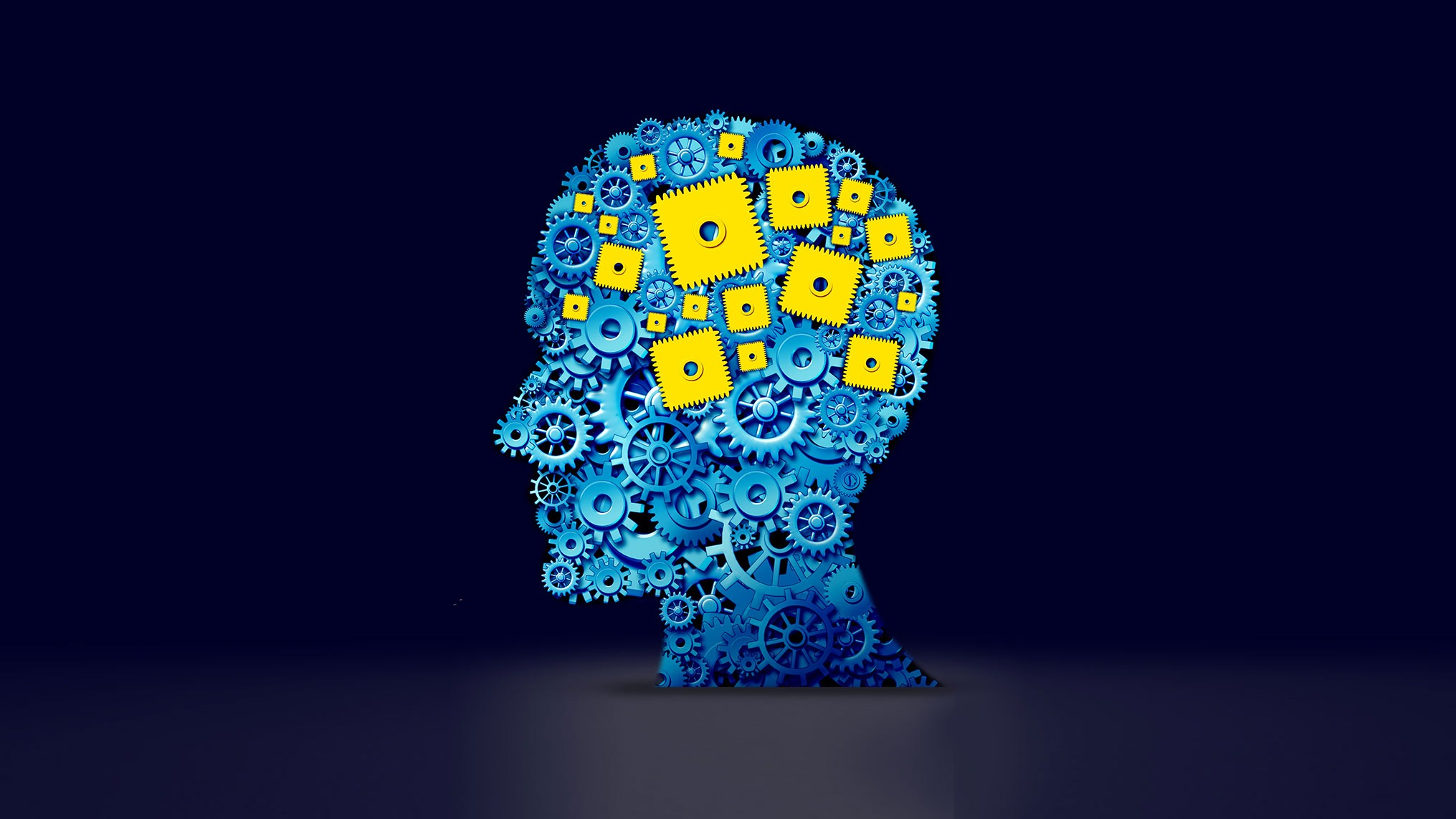
In Blink, Malcolm Gladwell explores one of the most fascinating and misunderstood dimensions of human psychology, the idea that some of our most important decisions happen in an instant, long before conscious reasoning fully catches up. The book examines the hidden power of rapid cognition, what Gladwell calls “thinking without thinking,” and argues that the human mind is capable of making astonishingly accurate judgments in the blink of an eye.
At first glance, this idea sounds almost irrational. Modern culture tends to glorify deliberate analysis, extended planning, spreadsheets, research, and conscious reasoning. We are taught that better decisions come from more information and more time. But Gladwell challenges this assumption repeatedly throughout the book. He argues that under the right conditions, snap judgments can be remarkably sophisticated because the unconscious mind is constantly processing patterns beneath conscious awareness.
Yet Blink is not a simplistic celebration of intuition. Gladwell also shows how rapid cognition can be distorted by fear, bias, stress, stereotypes, and emotional contamination. Thin slicing, the brain’s ability to extract meaningful patterns from tiny amounts of information, can either produce brilliance or catastrophe depending on the quality of the mental models shaping perception.
The book becomes less about intuition itself and more about understanding when instincts can be trusted, when they cannot, and how modern environments shape unconscious judgment in ways most people never fully recognize.
BUY THIS BOOK
The Getty Kouros and the Mystery of Instant Knowing
Gladwell opens the book with one of its most famous stories, the case of the Getty Kouros, an ancient Greek statue purchased by the J. Paul Getty Museum for nearly $10 million. Scientific testing suggested the sculpture was authentic. Geologists examined the stone. Historians analyzed its provenance. Experts conducted months of research.
Everything appeared legitimate.
Yet when several art experts first looked at the statue, they immediately felt something was wrong. One expert reportedly said, “I’m sorry to hear that,” after seeing it for the first time. Another sensed it was fake within seconds but could not initially explain why.
Eventually, after years of investigation, evidence emerged suggesting the kouros was indeed likely forged.
This story becomes the foundation for Gladwell’s central argument. Sometimes the unconscious mind detects patterns long before conscious reasoning can articulate them. Rapid cognition often operates through accumulated expertise, memory, and pattern recognition developed over years of experience.
The key insight is that intuition is not magic. It is compressed experience.
The brain is constantly making predictions and evaluations beneath awareness, drawing from thousands of subtle signals humans may not consciously notice.
Thin Slicing and the Power of Limited Information
One of Gladwell’s most important concepts is “thin slicing,” the mind’s ability to draw meaningful conclusions from very small amounts of information.
He cites research by psychologist John Gottman, who studied married couples and found he could predict with extraordinary accuracy whether couples would remain together simply by observing brief snippets of conversation. Tiny behaviors, facial expressions, tones of voice, contempt signals, and emotional micro reactions revealed underlying relational dynamics that conscious explanations often concealed.
Similarly, studies showed that students formed lasting impressions of professors after watching only a few seconds of silent video footage. Astonishingly, these judgments closely matched evaluations made by students who spent entire semesters with those professors.
The implication is profound.
Human beings are constantly interpreting emotional and social information at unconscious levels. We often believe our decisions come from rational analysis, but much of human judgment happens automatically and rapidly.
This explains many experiences people struggle to articulate logically. Walking into a room and sensing tension. Meeting someone and instantly trusting or distrusting them. Feeling uncomfortable in certain environments without immediately knowing why.
The unconscious mind notices patterns long before conscious thought organizes them into language.
The Warren Harding Error
While Blink celebrates intuitive brilliance, Gladwell also warns that snap judgments are highly vulnerable to bias and superficiality.
One of the book’s most memorable examples is Warren Harding, considered by many historians to be one of America’s worst presidents. Harding rose rapidly in politics largely because he looked presidential. He was tall, handsome, deep voiced, and carried himself with confidence. People unconsciously associated his appearance with competence and leadership.
Gladwell calls this phenomenon the “Warren Harding Error,” the tendency to mistake external signals for actual ability.
This section of the book becomes increasingly relevant in the modern world. Humans are deeply influenced by unconscious associations tied to attractiveness, race, height, confidence, charisma, and status. Much of what people interpret as instinct is actually socially conditioned bias operating beneath awareness.
This is one of the book’s most important warnings.
Intuition is not inherently wise.
The quality of snap judgments depends heavily on the quality of the unconscious patterns informing them.
A highly trained firefighter may intuitively sense a building is about to collapse because years of experience shaped his unconscious processing accurately. A hiring manager, meanwhile, may instinctively favor a candidate simply because they resemble previous successful executives.
Both experiences feel like intuition.
Only one reflects true expertise.
The Locked Door of the Unconscious
Gladwell repeatedly emphasizes that people often do not understand why they think what they think.
The unconscious mind is powerful but opaque.
He discusses the “locked door” phenomenon, where individuals make judgments rapidly yet cannot consciously explain the reasoning behind them. This creates both power and danger. People may possess valid instincts they struggle to articulate, but they may also rationalize unconscious prejudice after the fact.
One particularly fascinating example involves speed dating and attraction research. People often claim they desire specific qualities in romantic partners, intelligence, humor, stability, ambition, yet their actual behavior frequently reveals entirely different unconscious preferences.
The same dynamic exists in business, leadership, politics, and everyday decision making.
Humans are not fully transparent to themselves.
This idea quietly destabilizes much of modern culture’s faith in conscious self awareness. People assume they understand their motivations far more clearly than they actually do.
In reality, the unconscious mind shapes enormous portions of human behavior beneath conscious reasoning.
Stress and the Collapse of Good Judgment
One of the darker themes in Blink involves how stress and fear distort rapid cognition.
Gladwell discusses psychologist Paul Ekman’s work on facial expressions and emotional signals, showing how the brain rapidly interprets emotional cues. But under intense stress, perception narrows dramatically.
This becomes especially clear in Gladwell’s discussion of police shootings.
Under conditions of fear and high arousal, the brain shifts into survival mode. Cognitive complexity collapses. People experience tunnel vision, distorted time perception, impaired reasoning, and emotional overload. In these moments, unconscious bias becomes amplified because the brain relies more heavily on automatic pattern recognition rather than deliberate reasoning.
This section of the book is deeply unsettling because it reveals how quickly human cognition deteriorates under pressure.
Intelligence alone does not protect against distorted judgment.
Stress changes perception itself.
This insight extends far beyond policing. Leaders under pressure often make reactive decisions. Teams operating in fear become politically defensive. Individuals experiencing chronic anxiety lose cognitive flexibility.
The quality of thinking changes depending on emotional state.
This idea connects Blink to broader conversations about emotional intelligence, leadership psychology, and organizational behavior. Human cognition is not separate from emotion. It is profoundly shaped by it.
Simplicity Often Outperforms Complexity
Another recurring idea in Blink is that more information does not always produce better decisions.
In fact, excessive information can create paralysis and distortion.
Gladwell cites studies where simple predictive models often outperformed highly detailed analysis. Experts frequently became less accurate when overloaded with data because noise obscured the most meaningful signals.
This challenges one of modern society’s deepest assumptions, that complexity automatically improves decision quality.
Sometimes it does.
But often, clarity comes from identifying the few variables that matter most.
This principle appears repeatedly across high performance fields. Elite investors often rely on a handful of key indicators. Experienced coaches recognize patterns quickly. Skilled negotiators sense emotional dynamics instantly. Great leaders simplify complexity rather than drowning inside it.
The unconscious mind excels when trained to recognize meaningful patterns efficiently.
But this only works when expertise genuinely exists.
Expertise and the Development of Intuition
One of the book’s most important distinctions is that not all intuition deserves equal trust.
Good instincts are earned.
They are built through repetition, feedback, pattern exposure, and experience. A surgeon’s snap judgment differs profoundly from an amateur’s guess because years of accumulated expertise shape unconscious perception.
This explains why elite performers across industries often appear to make effortless decisions. Their unconscious minds have been trained through thousands of repetitions.
The experienced firefighter sensing danger.
The chess master recognizing patterns instantly.
The basketball player anticipating movement before it occurs.
The expert negotiator reading emotional shifts in a room.
What appears magical externally is often compressed pattern recognition operating at extraordinary speed.
This becomes one of Blink’s most optimistic insights. Human beings can train intuition.
The unconscious mind can become sharper, wiser, and more accurate through deliberate exposure and learning.
The Deeper Message of Blink
At its core, Blink is a book about the hidden architecture of human judgment.
It argues that the mind is simultaneously more powerful and more flawed than most people realize. Humans possess extraordinary unconscious capabilities, but those capabilities are shaped by emotional conditioning, cultural bias, stress, expertise, and environmental influence.
The book ultimately forces readers to confront an uncomfortable reality.
Thinking is not as conscious as people believe.
Much of life is navigated through rapid cognition operating beneath awareness. People continuously form impressions, predictions, and emotional evaluations before logic fully activates.
This realization creates both humility and responsibility.
Humility because people are less rational and self aware than they imagine.
Responsibility because unconscious judgment can be trained, refined, distorted, or manipulated depending on the environments shaping it.
Gladwell’s genius lies in making these psychological complexities accessible through storytelling. Blink is not merely about intuition. It is about understanding the invisible forces shaping perception itself.
And in an age increasingly overwhelmed by information, noise, and complexity, the book’s central question feels more relevant than ever:
When should we trust the mind’s first impression, and when should we fear it?
If You Liked This Article, You May Also Like …
- The Art of Learning: A Journey in the Pursuit of Excellence
- The Biggest Bluff: How I Learned to Pay Attention, Master Myself, and Win
- Human + Machine: Reimagining Work in the Age of AI