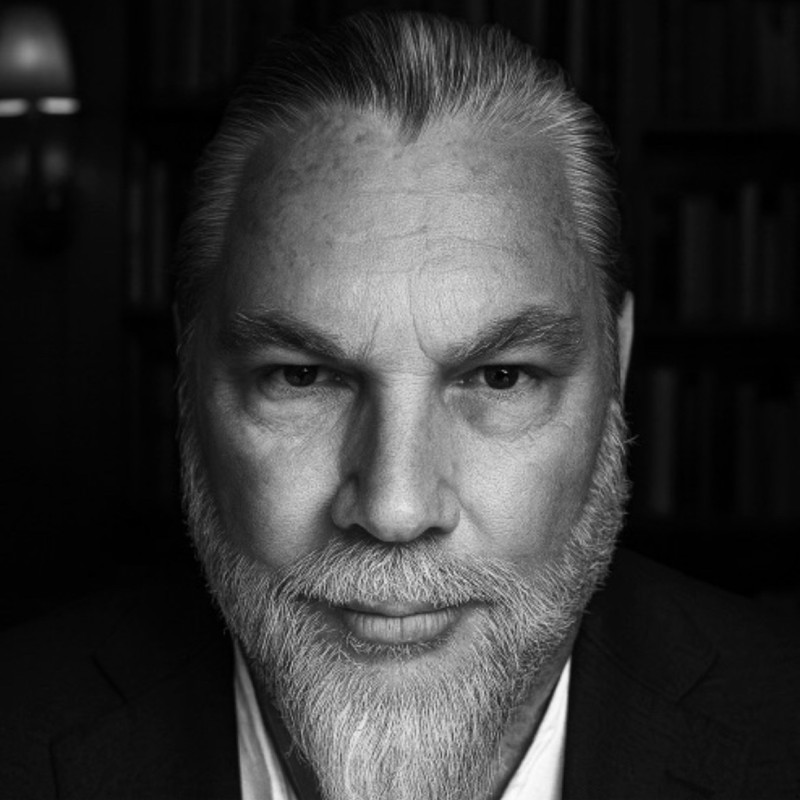
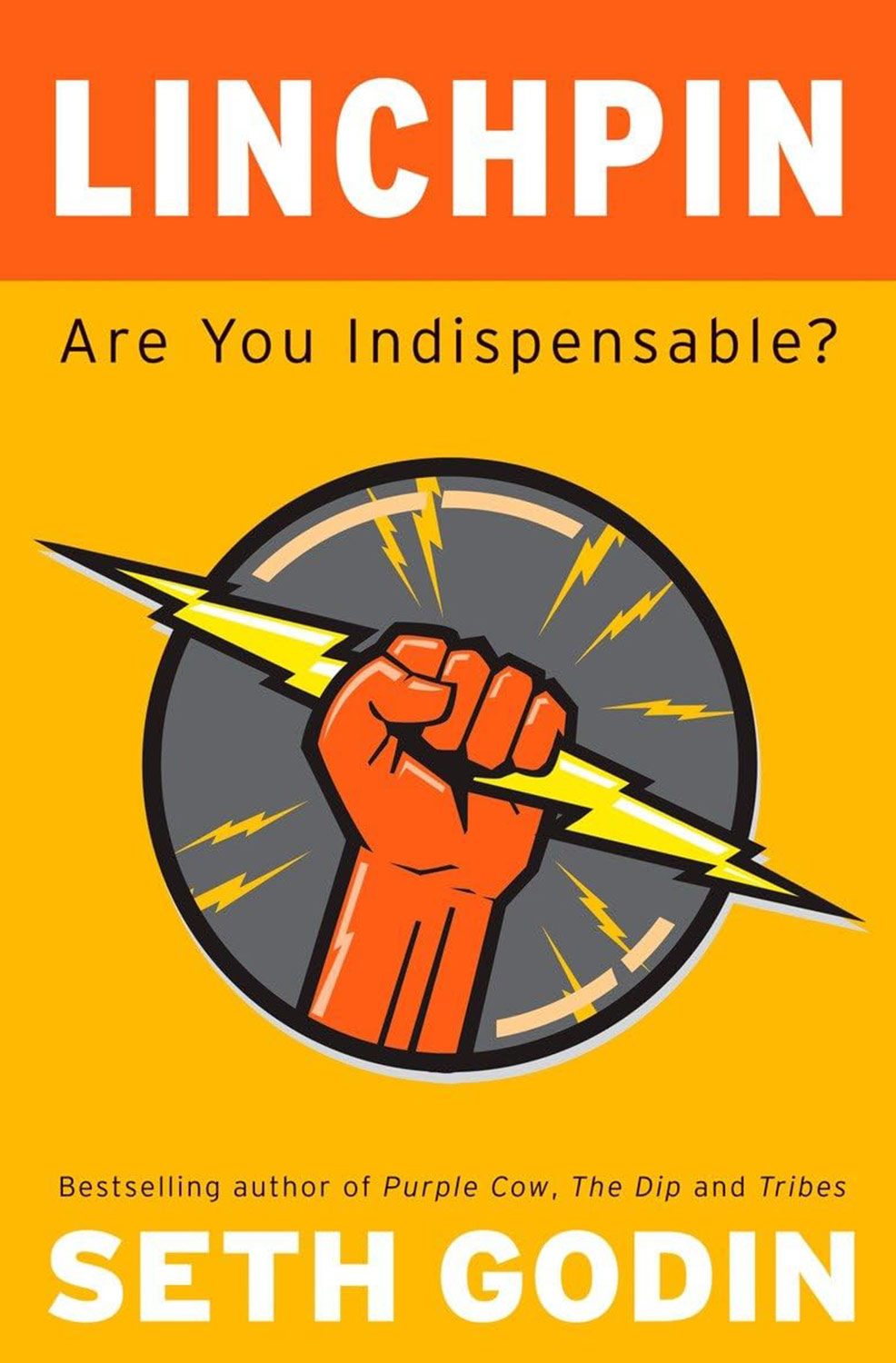
By Seth Godin
At the heart of Linchpin is a simple but disruptive idea: the most valuable people in today’s economy are not those who follow instructions well, but those who create value that cannot easily be replicated. Seth Godin argues that the traditional model of work, built during the industrial era, trained people to be compliant, predictable, and replaceable. That model rewarded obedience and punished deviation.
BUY THIS BOOK
In contrast, the modern economy rewards a different kind of individual, what Godin calls a “linchpin.” A linchpin is someone who makes themselves indispensable not through their job title or credentials, but through their ability to bring emotional labor, creativity, and unique insight to their work. They are the people who solve problems others avoid, who connect ideas in unexpected ways, and who elevate the organizations they are part of.
The shift is not just economic; it is psychological. The book challenges readers to rethink their relationship with work, identity, and value creation. Instead of asking how to fit into a system, the question becomes how to stand out in a way that matters.
The Industrial Model and the Birth of Replaceability
Godin begins by tracing the roots of modern work back to the industrial revolution. Factories required standardized processes, predictable outputs, and workers who could be easily trained and replaced. Schools were designed to support this system, teaching students to follow instructions, meet expectations, and avoid failure.
This model created efficiency, but it also created a workforce conditioned to seek safety over innovation. The implicit agreement was clear: if you do what you are told, you will be taken care of. Over time, this became the dominant mindset across industries.
However, globalization, automation, and technological advancement have eroded this agreement. Tasks that can be standardized can also be outsourced or automated. The very qualities that once made workers valuable now make them vulnerable.
Godin’s argument is that the industrial model is no longer sufficient. The world no longer needs more compliant workers. It needs people who can do work that cannot be easily replicated.
What Makes a Linchpin?
A linchpin is not defined by their role but by their behavior. They are individuals who bring something extra to their work, something that cannot be captured in a job description.
Godin identifies several key characteristics:
Emotional Labor
Linchpins engage in emotional labor, which involves caring deeply about the work and the people involved. This includes empathy, connection, and the willingness to go beyond what is required. Emotional labor is not about being nice; it is about being present, engaged, and invested in outcomes.
Creativity and Innovation
They do not simply follow processes; they improve them. Linchpins look for opportunities to create value, whether through new ideas, better solutions, or more effective ways of working. This aligns with longstanding research published in Harvard Business Review on motivating creative employees, which finds that the people doing the most distinctive work tend to feel deep ownership of their craft and respond more to autonomy and trust than to standard incentive structures.
Ownership and Initiative
Rather than waiting for direction, linchpins take responsibility. They identify problems and act on them. They do not hide behind ambiguity or defer to authority when action is needed.
Unique Perspective
They bring a distinct point of view. This is often the result of experience, curiosity, and a willingness to think independently. Their contributions are not interchangeable because their thinking is not generic.
Generosity
Godin places a strong emphasis on generosity, particularly through what he calls “gifts.” Linchpins give more than what is expected, not for immediate reward, but because it creates value and builds trust.
The Resistance: The Internal Barrier
One of the most important concepts in Linchpin is what Godin calls “the Resistance.” This is the internal voice that discourages risk, creativity, and vulnerability. It is the part of the brain that seeks safety and avoids exposure.
The Resistance manifests in many ways. It shows up as procrastination, self-doubt, perfectionism, and fear of criticism. It encourages individuals to stay within defined boundaries and to avoid standing out.
Godin argues that the Resistance is not a sign of weakness. It is a natural part of being human. However, it becomes a barrier when it prevents individuals from doing meaningful work.
Overcoming the Resistance is not about eliminating fear. It is about acting despite it. Linchpins are not fearless; they are willing to engage with fear in order to create value.
Art as Contribution
A central theme in the book is the idea of “art.” Godin redefines art not as something limited to traditional creative fields, but as any work that involves human connection, originality, and emotional impact.
Art, in this sense, is about making a difference. It is about creating something that changes how people think, feel, or act. This can happen in any role, from customer service to leadership.
The distinction between art and routine work is critical. Routine work can be standardized and replicated. Art cannot. It requires judgment, intuition, and a willingness to engage with uncertainty. A recent Harvard Business Review Analytic Services report on the creative edge reinforces this view, arguing that organizations gain a meaningful competitive advantage when they treat creativity as a transferable capability rather than a fixed trait, building the systems and culture needed to turn ideas into measurable impact.
Godin encourages readers to view their work through this lens. Instead of asking what tasks they need to complete, they should ask how they can contribute in a way that matters.
The Myth of the Map
Another key idea in Linchpin is the rejection of the “map.” In traditional careers, there was often a clear path to success. Follow the steps, meet the milestones, and progress would follow.
Godin argues that this map no longer exists. The world has become too dynamic, too interconnected, and too unpredictable for a single path to guarantee success.
This creates both anxiety and opportunity. Without a map, there is no predefined route. However, it also means that individuals are free to create their own path.
Linchpins embrace this uncertainty. They do not wait for instructions or guarantees. They experiment, adapt, and learn as they go. They understand that value is created not by following a path, but by navigating complexity.
The Value of Being Indispensable
Becoming indispensable is not about job security in the traditional sense. It is about creating value that others recognize and depend on.
Godin emphasizes that indispensability comes from relationships and impact. Linchpins build trust, solve meaningful problems, and contribute in ways that are difficult to replace.
This has practical implications. Organizations are more likely to invest in individuals who create value beyond their defined role. These individuals are often given more autonomy, more responsibility, and more opportunities.
However, indispensability also requires a shift in mindset. It involves moving away from a transactional view of work, where effort is exchanged for compensation, and toward a relational view, where value is created through contribution.
The Role of Gifts and Generosity
One of the more philosophical aspects of the book is the concept of gifts. Godin argues that the most meaningful work is often given, not sold.
This does not mean working for free. It means approaching work with a mindset of generosity. Linchpins give their best ideas, their attention, and their effort without holding back.
This creates a different kind of value. It builds trust, strengthens relationships, and differentiates individuals in ways that transactional work cannot.
The idea of gifts also challenges the fear of being taken advantage of. Godin suggests that generosity, when applied thoughtfully, leads to greater opportunities and deeper connections.
Breaking Free from the System
A recurring theme in Linchpin is the need to break free from the constraints of the industrial system. This does not necessarily mean leaving an organization. It means changing how one operates within it.
Linchpins do not wait for permission. They take initiative, challenge assumptions, and look for ways to create value. They understand that the system is not designed to encourage this behavior, but they act anyway.
This requires courage. It involves stepping outside of comfort zones and accepting the possibility of failure. However, it also creates the potential for meaningful impact.
Godin’s message is clear: the system will not change on its own. Individuals must choose to operate differently if they want different outcomes.
Practical Implications for Work and Leadership
While Linchpin is philosophical in nature, it also has practical implications for how individuals approach their work.
For employees, it means taking ownership of their role and looking for ways to contribute beyond what is expected. It involves developing skills that cannot be easily replicated, such as critical thinking, creativity, and emotional intelligence.
For leaders, it means creating environments where linchpins can thrive. This includes encouraging autonomy, valuing creativity, and recognizing contributions that go beyond standard metrics.
Organizations that rely solely on compliance and efficiency may struggle to retain and develop linchpins. Those that embrace flexibility and innovation are more likely to benefit from their contributions.
Conclusion: The Choice to Stand Out
Linchpin ultimately presents a choice. Individuals can continue to operate within the constraints of the industrial model, focusing on compliance and predictability, or they can choose to become indispensable by embracing creativity, ownership, and emotional labor.
The path of the linchpin is not easier. It involves risk, uncertainty, and the need to confront internal resistance. However, it also offers greater fulfillment and the opportunity to create meaningful impact.
Godin’s message is both a challenge and an invitation. The world does not need more interchangeable workers. It needs people who are willing to stand out, to contribute, and to bring something uniquely human to their work. He continues to develop these ideas on his daily blog, applying the linchpin framework to evolving questions about work, automation, and meaningful contribution in real time.
In an economy increasingly shaped by automation and standardization, the qualities that define a linchpin become more valuable, not less. The question is not whether these opportunities exist. It is whether individuals are willing to step into them.