By Mel Robbins
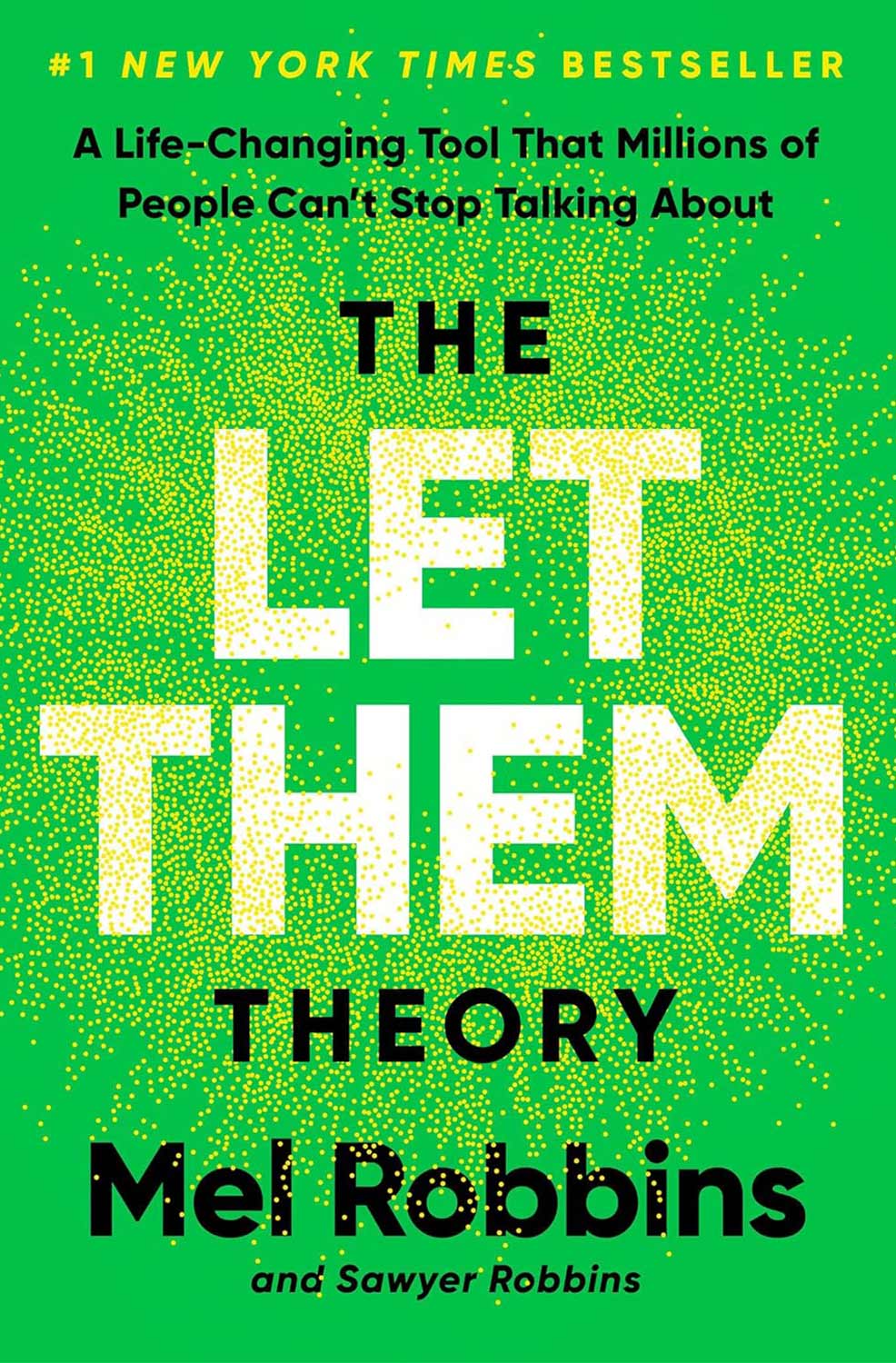
Mel Robbins’ The Let Them Theory revolves around a deceptively simple idea: much of our stress, resentment, and emotional exhaustion comes from trying to control what we were never meant to control. The book introduces a two-part mental shift — “Let Them” and “Let Me” — that reframes how we respond to other people’s behavior, expectations, and judgments. At its core, the book argues that peace and power are found not in influencing others, but in reclaiming ownership over our own responses.
While the phrase itself sounds almost trivial, Robbins builds a compelling psychological and practical case for why letting go of control is one of the most transformative habits a person can develop.
BUY THIS BOOK
The Core Concept: “Let Them”
The first half of the framework is disarmingly straightforward. When someone behaves in a way you dislike, disapprove of, or wish were different, the instruction is simple: let them.
- Let them misunderstand you.
- Let them leave.
- Let them judge.
- Let them decline the invitation.
- Let them make their own choices.
The “Let Them” principle is not about passivity or indifference. It is about releasing the illusion that you can manage, correct, persuade, or emotionally regulate other adults. Robbins emphasizes that much of our daily friction comes from subtle attempts to control — convincing someone to agree, nudging someone to show up differently, replaying conversations in our heads, trying to preempt criticism.
This behavior is often disguised as care. We tell ourselves we are being thoughtful, responsible, or relationally intelligent. In reality, we are entangled in outcomes that are not ours to govern.
“Let Them” interrupts that entanglement.
It forces a boundary between what belongs to you and what belongs to someone else. When someone declines an opportunity, chooses a different path, or reacts negatively, Robbins argues that your job is not to override their autonomy. Your job is to respect it.
This shift reduces emotional friction instantly because it ends the internal debate. Instead of asking, “How do I change their mind?” the focus becomes, “What do I do next?”
The Second Half: “Let Me”
The second half of the framework is where the empowerment lies.
If “Let Them” is about relinquishing control, “Let Me” is about reclaiming agency.
- Let me decide what I tolerate.
- Let me choose my response.
- Let me adjust my boundaries.
- Let me move forward.
Robbins makes it clear that letting others behave freely does not mean you must stay in situations that drain you. “Let Them” does not require acceptance of disrespect, neglect, or misalignment. Instead, it creates clarity. When someone shows you who they are, you are no longer distracted by trying to change them. You are free to evaluate your next move.
This is where “Let Me” activates. You decide whether to stay, disengage, clarify expectations, or pivot.
The power of the theory lies in this sequencing. Most people attempt to control first and adjust later. Robbins reverses that. Release first. Then choose deliberately.
Control as the Root of Stress
A central theme of the book is that control is the hidden source of anxiety. We attempt to manage how we are perceived. We attempt to preempt conflict. We attempt to engineer outcomes in relationships, workplaces, and social environments.
The problem is that human behavior is unpredictable.
Robbins argues that when we attach our peace to other people’s responses, we place ourselves in a state of chronic instability. Our mood fluctuates with approval, rejection, agreement, or silence. We become reactive.
By applying “Let Them,” we remove the emotional tether. If someone chooses not to support you, let them. If someone does not reciprocate effort, let them. If someone misjudges you, let them.
The relief comes from recognizing that their reaction does not require your intervention.
The shift is subtle but powerful. Instead of fighting reality, you acknowledge it.
Boundaries Without Drama
One of the more practical dimensions of the book is its emphasis on boundaries.
Robbins reframes boundaries not as declarations but as behaviors. You do not need to deliver grand speeches about your standards. You simply make different choices.
If someone consistently cancels plans, you stop rearranging your schedule. If someone undermines you, you reduce access. If someone disregards your time, you stop accommodating.
“Let Them” reveals the pattern. “Let Me” determines your adjustment.
This approach reduces confrontation while increasing clarity. You are not attempting to control someone else’s behavior. You are controlling your exposure to it.
The absence of drama is intentional. Robbins encourages readers to stop narrating every relational shift and instead act quietly in alignment with self-respect.
Reframing Rejection
A particularly powerful application of the theory appears in how Robbins addresses rejection.
Rejection is often interpreted as a verdict on worth. When someone does not choose us — professionally or personally — we search for explanations. We attempt to correct. We replay interactions.
Robbins suggests a simpler perspective. Let them not choose you.
This is not resignation. It is alignment.
If someone does not see your value, persuading them rarely produces lasting respect. Their decision provides information. It clarifies compatibility.
The emotional freedom that follows is significant. Instead of exhausting energy chasing validation, you redirect energy toward environments that recognize you naturally.
Rejection becomes filtration.
Workplace Dynamics
The theory extends effectively into professional environments. Robbins addresses scenarios such as leadership tensions, colleague disagreements, and career advancement frustrations.
If a manager prefers a different style, let them. If a colleague does not collaborate as expected, let them. If leadership makes decisions you disagree with, let them.
The release here is not apathy. It is strategic focus. Once you stop trying to reengineer others’ behavior, you gain clarity on what remains within your influence: your performance, your communication, your exit strategy if necessary.
“Let Me” in the workplace often means choosing growth over grievance.
Robbins emphasizes that career stagnation sometimes persists because individuals fixate on external validation rather than internal development. Let them underestimate you. Let me outgrow the limitation.
The tone is empowering without being confrontational.
Social Media and Perception
Another modern application of the theory lies in public perception.
In an era where visibility invites commentary, Robbins addresses the anxiety created by online judgment. If people misunderstand you, criticize you, or project assumptions, let them.
Attempting to correct every narrative becomes an endless drain. You cannot manage perception at scale.
The healthier alternative is clarity of identity. Let them think what they want. Let me remain aligned with my values.
This shift reduces digital anxiety and restores emotional equilibrium.
The Psychological Foundation
Although written in accessible language, the book aligns closely with established psychological principles.
The distinction between internal and external locus of control underpins the framework. When individuals fixate on external outcomes, stress increases. When attention shifts to internal choices, agency strengthens.
The theory also mirrors aspects of acceptance-based therapies. Acceptance does not imply endorsement. It acknowledges reality as it is rather than how we wish it to be.
By encouraging readers to stop resisting others’ autonomy, Robbins reduces emotional rumination. Less rumination leads to less stress.
The practical simplicity of the language makes these concepts immediately actionable.
Avoiding Misinterpretation
Robbins is careful to clarify what the theory is not.
It is not permission for others to mistreat you. It is not suppression of emotion. It is not disengagement from responsibility.
It is a filter.
You let others reveal themselves. Then you respond from self-respect rather than reaction.
Without the second step — “Let Me” — the theory could appear passive. But Robbins insists that the power lies in the response. Once you stop fighting reality, you are free to act strategically.
The Emotional Outcome
The ultimate promise of the book is emotional peace.
By reducing the number of battles you fight daily — internal and external — you conserve energy. You become less reactive. You detach from unnecessary conflict.
Robbins frames this not as withdrawal but as maturity.
Adults are allowed to make their own decisions. You are allowed to make yours.
The theory simplifies complexity. Instead of analyzing every dynamic endlessly, you return to two phrases. Let them. Let me.
The repetition is deliberate. It creates a cognitive interrupt. When frustration arises, the phrase provides immediate perspective.
Final Takeaway
The Let Them Theory succeeds because it addresses a universal human tendency: the desire to control what cannot be controlled. Robbins distills a psychologically grounded principle into language that is portable, memorable, and practical.
The genius of the framework lies in its sequencing. First, release the illusion of control. Second, reclaim agency.
It is not a strategy for withdrawal from life. It is a strategy for engaging life without unnecessary entanglement.
By shifting focus from external management to internal mastery, Robbins invites readers into a calmer, clearer way of moving through relationships, work, and personal ambition.
Let them be who they are.
Let me be who I choose to become.
If You Liked This Article, You May Also Like …
- Rising Strong: How the Ability to Reset Transforms the Way We Live, Love, Parent, and Lead
- Rising Strong: How the Ability to Reset Transforms the Way We Live, Love, Parent, and Lead
- The Art of Letting Go: Stop Overthinking, Stop Negative Spirals, and Find Emotional Freedom
CHECK OUT THIS WEEK’S DEEP DIVES ARTICLES

High Agency, High Empathy: The Rare Combination

The Anxiety of Optionality