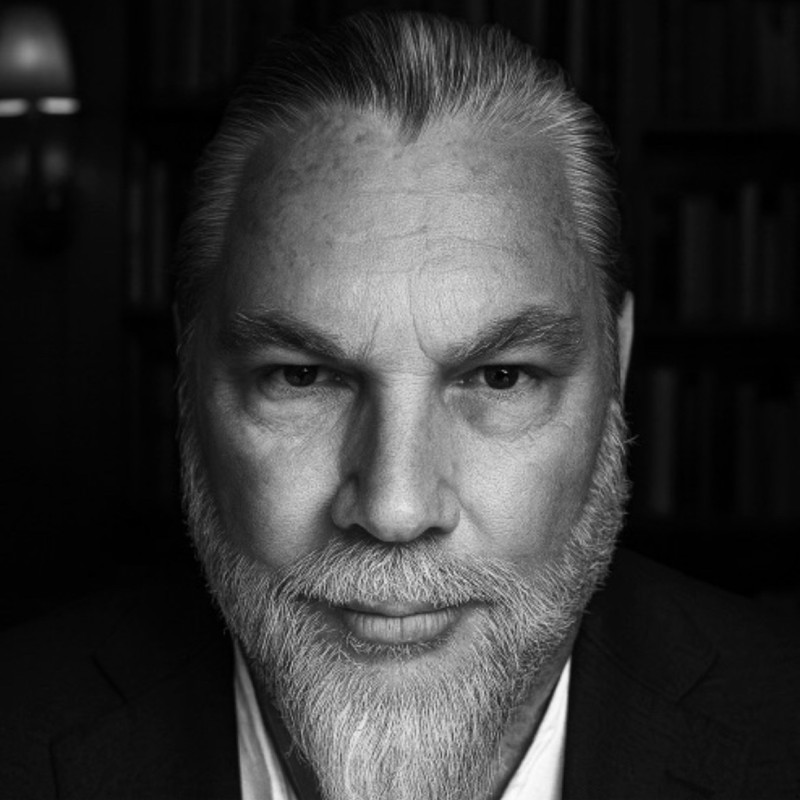
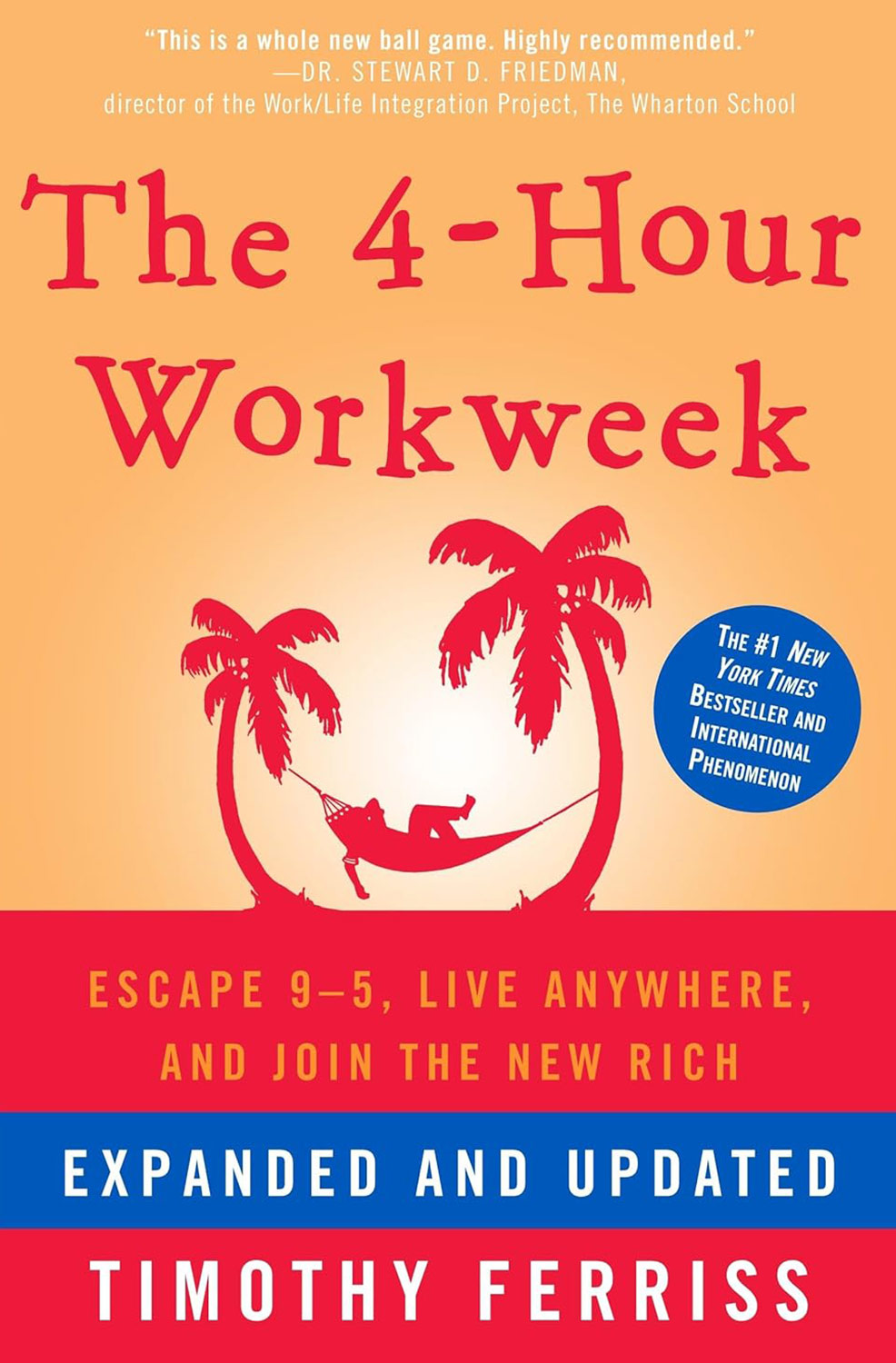
By Timothy Ferriss
The 4-Hour Workweek challenges one of the most deeply ingrained assumptions of modern life, that success requires long hours, delayed gratification, and a linear path of work followed by retirement. Timothy Ferriss, whose book became a New York Times bestseller, reframes this model entirely. Instead of working hard for decades to enjoy life later, he proposes designing a life where freedom, mobility, and meaningful experiences are integrated into the present.
BUY THIS BOOK
At the core of the book is the concept of the “New Rich.” This is not about accumulating wealth in the traditional sense, but about maximizing freedom. Time, mobility, and choice become the true currencies. Ferriss argues that many people are trapped not because they lack opportunity, but because they follow outdated rules about how work and life should be structured.
The book is organized around a framework called DEAL, Definition, Elimination, Automation, and Liberation. Each component builds on the previous one, offering a systematic approach to escaping the conventional 9 to 5 model.
Definition: Challenging Assumptions
Ferriss begins by dismantling traditional definitions of success. He questions the idea that retirement is the ultimate reward for decades of work. Instead, he introduces the concept of “mini-retirements,” periods of time throughout life dedicated to travel, learning, and personal growth.
He also challenges the notion that more money automatically leads to a better life. What matters, he argues, is not absolute income, but relative income, how much you earn relative to the time you invest. This shifts the focus from maximizing earnings to optimizing efficiency.
A key insight in this section is the difference between being busy and being productive, a distinction also examined in Harvard Business Review’s article Beware the Busy Manager. Many people equate long hours with importance. Ferriss argues that this is often a form of avoidance. Busyness can mask inefficiency and a lack of clarity about what truly matters.
He encourages readers to define their ideal lifestyle in concrete terms. Where do you want to live? How do you want to spend your time? What experiences do you value? By clarifying these elements, individuals can begin to design work around life, rather than the other way around.
Fear-setting is another important concept introduced here. Instead of focusing on goals alone, Ferriss suggests analyzing the worst-case scenarios associated with taking action. By breaking down fears into manageable components, individuals often realize that the risks are less severe than they initially appear.
Elimination: The Power of Focus
The second phase of the DEAL framework focuses on eliminating unnecessary work. Ferriss draws heavily on the Pareto Principle, also known as the 80/20 rule, which suggests that 80 percent of results come from 20 percent of efforts.
He encourages readers to identify the small number of activities that generate the majority of their results and to eliminate or reduce the rest. This requires a willingness to challenge existing workflows and question whether certain tasks are truly necessary.
Ferriss also introduces Parkinson’s Law, the idea that work expands to fill the time available for its completion. By setting shorter deadlines and creating constraints, individuals can often complete tasks more efficiently.
One of the most practical aspects of this section is the emphasis on selective ignorance. In a world saturated with information, Ferriss argues that not all information is valuable. Constantly consuming news, emails, and updates can create a false sense of productivity while actually reducing focus.
He advocates for limiting inputs, such as checking email at specific times rather than continuously, and avoiding unnecessary meetings. The goal is to create space for high-impact work by reducing distractions.
This section is not just about working less, but about working more intelligently. By focusing on what matters most and eliminating what does not, individuals can achieve better results with less effort.
Automation: Building Systems for Freedom
Once unnecessary work has been eliminated, the next step is automation. Ferriss introduces the concept of creating “muses,” small, automated businesses that generate income with minimal ongoing involvement.
The idea is to design systems that can operate independently, allowing individuals to decouple income from time. This often involves outsourcing tasks, leveraging technology, and creating scalable processes.
Ferriss provides detailed guidance on how to identify potential business opportunities. He emphasizes the importance of targeting niche markets with specific needs, rather than trying to appeal to a broad audience. By solving a clearly defined problem, it becomes easier to create a product or service that resonates.
Testing ideas quickly and inexpensively is another key principle. Instead of investing significant time and resources upfront, Ferriss suggests validating demand through small-scale experiments, such as simple websites or limited advertising campaigns.
Outsourcing plays a central role in this phase. Ferriss encourages readers to delegate tasks that do not require their direct involvement, often to virtual assistants. This allows individuals to focus on higher-value activities while reducing their overall workload.
The goal is not to build a large, complex business, but to create a streamlined system that generates consistent income with minimal effort. This provides the financial foundation for greater freedom.
Liberation: Breaking Free from Location and Time Constraints
The final phase of the DEAL framework focuses on liberation, the ability to work from anywhere and on your own terms. Ferriss explores strategies for negotiating remote work arrangements, including how to demonstrate value to employers and propose alternative work structures.
He emphasizes the importance of transitioning gradually. Rather than making abrupt changes, individuals can test remote work on a temporary basis, building trust and demonstrating productivity before making it permanent.
For those who choose to leave traditional employment, Ferriss outlines how to manage the transition to a location-independent lifestyle. This includes practical considerations such as travel logistics, cost of living, and maintaining productivity while on the move.
A central theme in this section is the idea of lifestyle design. Instead of conforming to a predefined structure, individuals are encouraged to create a life that aligns with their values and priorities. This may involve living in different countries, pursuing new experiences, or simply having more control over one’s time.
Ferriss also addresses common concerns, such as social isolation and maintaining relationships. He emphasizes the importance of building community and staying connected, even when living a more mobile lifestyle.
Key Themes and Insights
Time as the Ultimate Asset
One of the most important ideas in The 4-Hour Workweek is the redefinition of wealth. Time, not money, is the most valuable resource. Money is only meaningful to the extent that it enables freedom and choice.
This perspective shifts priorities. Instead of maximizing income at all costs, individuals are encouraged to optimize for time and flexibility. This may involve making trade-offs, such as earning less in exchange for greater freedom.
The Importance of Experimentation
Ferriss advocates for a mindset of experimentation. Rather than seeking perfect plans, individuals should test ideas quickly and learn from the results. This reduces risk and accelerates progress.
This approach applies not just to business, but to life design. Trying different lifestyles, exploring new environments, and adjusting based on experience allows for more informed decisions.
Challenging Social Norms
A recurring theme throughout the book is the importance of questioning assumptions. Many of the constraints people experience are self-imposed, based on societal expectations rather than actual limitations.
Ferriss encourages readers to critically examine these norms and consider alternative paths. This requires a willingness to think differently and, in some cases, to accept unconventional choices.
The Role of Systems
Efficiency is achieved through systems, not effort alone. By designing processes that reduce friction and automate repetitive tasks, individuals can achieve more with less work.
This principle is central to both business and personal productivity. Systems create consistency and scalability, enabling sustainable results.
Criticisms and Limitations
While The 4-Hour Workweek offers valuable insights, it is not without its criticisms. Some readers argue that the title is misleading, as achieving a four-hour workweek is not realistic for everyone. The strategies presented may be more applicable to certain industries and skill sets.
There are also ethical considerations related to outsourcing, particularly when it involves low-cost labor in other countries. While Ferriss emphasizes efficiency, some critics question the broader implications of these practices.
Additionally, the focus on lifestyle design may not resonate with individuals who derive fulfillment from traditional career paths. The book presents a specific vision of success, which may not align with everyone’s values.
Despite these limitations, the core principles remain relevant. The emphasis on efficiency, intentionality, and challenging assumptions can be applied in various contexts, even if the specific implementation differs.
Conclusion: Designing Life on Your Terms
The 4-Hour Workweek is less about working four hours a week and more about rethinking the relationship between work and life. It challenges readers to question conventional paths and consider alternative ways of achieving success.
The DEAL framework provides a structured approach to this process, guiding individuals through defining their goals, eliminating inefficiencies, automating income, and ultimately gaining greater freedom.
At its core, the book is about intentionality. It encourages readers to take control of their time, design their lives deliberately, and prioritize what truly matters. While not all strategies will apply universally, the underlying message is clear.
The default path is not the only path. With the right mindset and approach, it is possible to create a life that balances work, freedom, and personal fulfillment in a way that aligns with individual values.
In a world where busyness is often mistaken for success, Ferriss offers a different perspective. One that values efficiency over effort, freedom over convention, and design over default.
If You Liked This Book Summary, You May Also Like …
- Chillpreneur: The New Rules for Creating Success, Freedom, and Abundance on Your Terms
- Linchpin: Are You Indispensable?
- Mindset: The New Psychology of Success