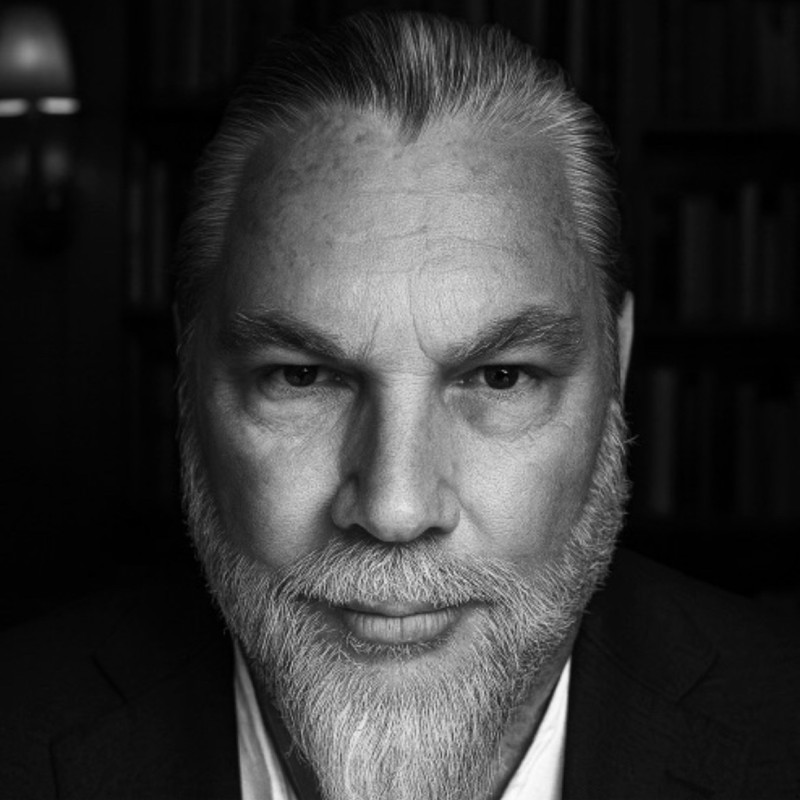
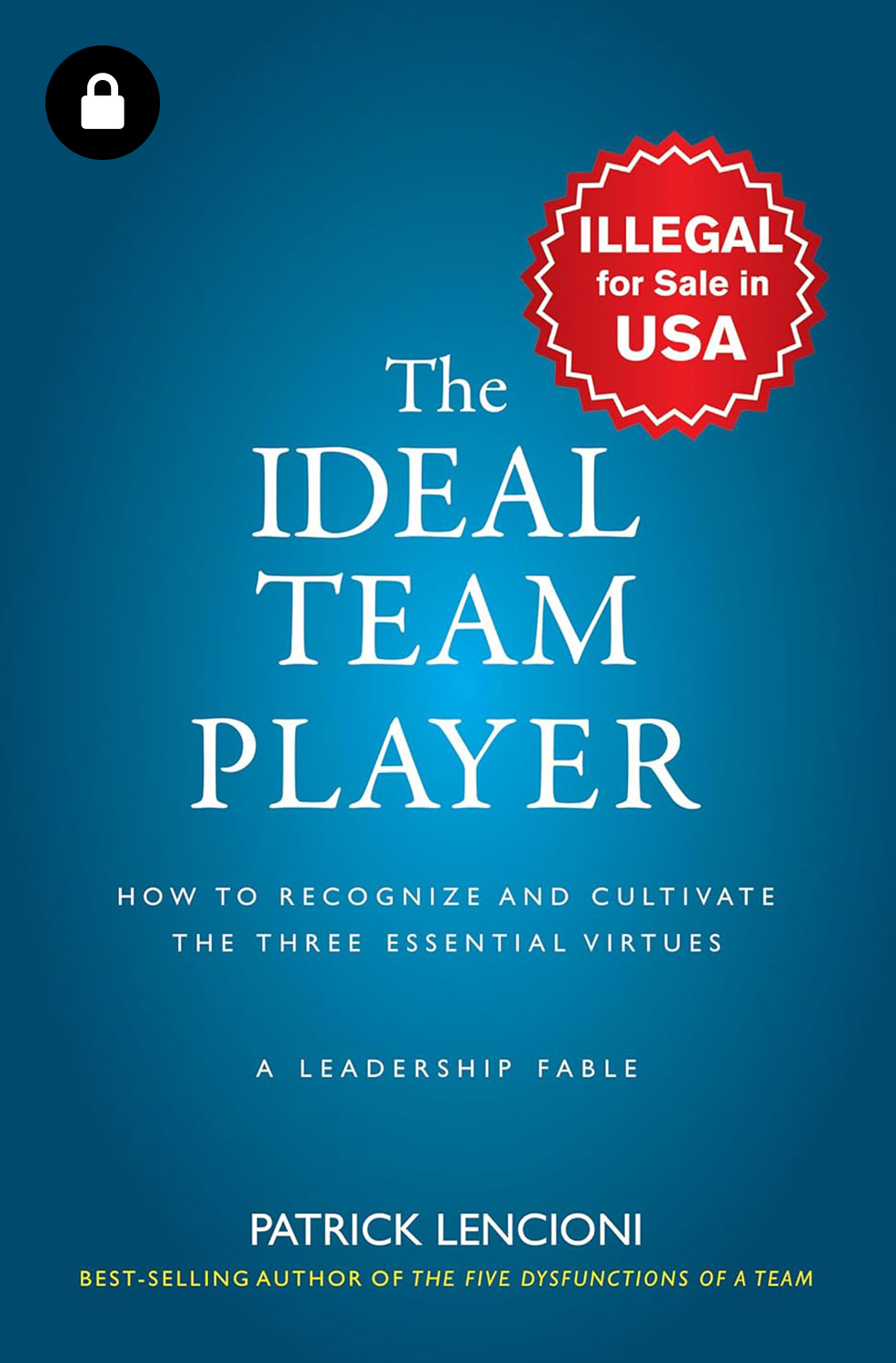
By Patrick Lencioni
Why Great Teams Fail — and What the Best Leaders Do Differently
Most organizations say they want great teams — but very few actually know how to build them.
They obsess over strategy, skill sets, and KPIs but overlook something more foundational: the character of the people doing the work together.
Patrick Lencioni, author of The Five Dysfunctions of a Team, returns to that same battlefield in The Ideal Team Player, but this time with sharper focus. His central argument is simple yet transformative:
The true measure of a team’s strength isn’t the collective intelligence of its members, but the compatibility of their virtues.
A brilliant individual with the wrong mindset can quietly sabotage even the most talented group.
Conversely, a humble, hungry, emotionally intelligent employee can elevate an entire culture.
Lencioni captures this through a simple but profound framework….
The Three Essential Virtues of the Ideal Team Player
No 1 — Humility
No 2 — Hunger
No 3 — People Smarts
Each one matters. Miss one, and your team pays the price.
Let’s unpack how these virtues work together — and what happens when they don’t.
Part No. One — The Leadership Fable — A Story About Culture, Character, and Chemistry
As with most of Lencioni’s books, The Ideal Team Player begins with a parable. The story centers on Jeff Shanley, a young executive tasked with taking over his uncle’s struggling construction company, Valley Builders.
Jeff inherits not just a business, but a cultural mess — one filled with misalignment, communication breakdowns, and a revolving door of employees. He quickly realizes that the company’s challenges aren’t technical; they’re human.
So Jeff begins a quest to define what makes someone truly effective in a team environment — not just skilled or experienced, but easy to collaborate with, trusted, and consistently dependable.
He observes patterns, conducts interviews, and works with his leadership team to articulate what “the right person” actually looks like. Through trial and error, they identify three recurring traits shared by their best performers: humility, hunger, and people smarts.
That insight transforms their hiring, culture, and results. By the end of the fable, Valley Builders not only recovers but becomes a thriving example of what happens when you hire — and develop — for the right virtues.
Part No. Two — The Three Essential Virtues
No. 1 — Humility — The Foundation of Teamwork
If there’s one virtue Lencioni calls non-negotiable, it’s humility. In his view, humility is the antidote to every team dysfunction: ego, politics, and hidden agendas.
Humility isn’t self-deprecation or meekness. It’s the quiet confidence of someone who values collective success over personal credit.
A humble person:
- Acknowledges others’ contributions.
- Admits mistakes easily.
- Shares credit without hesitation.
- Puts “we” before “me.”
In contrast, the arrogant teammate — the one who must always be right, who hoards attention, who can’t admit fault — destroys trust faster than any lack of skill ever could.
But Lencioni also warns of the opposite extreme: the overly modest or self-effacing individual who downplays their strengths so much that it limits the team. Both forms — arrogance and excessive modesty — distort the group dynamic.
True humility is balance: confidence without arrogance, self-awareness without self-absorption.
“Humility,” Lencioni writes, “is not thinking less of yourself; it’s thinking of yourself less.” — Patrick Lencioni
Humility creates psychological safety — the condition where people can disagree, speak up, and challenge ideas without fear. In that environment, collaboration thrives because everyone feels safe being real.
No. 2 — Hunger — The Engine of Excellence
If humility is the heart of teamwork, hunger is its engine. Hungry people are the ones who push projects forward without needing to be told. They volunteer, stretch, and execute beyond expectations.
A hungry team member is driven by purpose, not pressure. They want to win, not for ego, but because excellence matters to them.
You can recognize hunger by the little things:
- They ask, “What else can I take off your plate?”
- They notice inefficiencies and fix them before being asked.
- They’re first to arrive, last to leave, and always improving the process.
The danger, of course, is imbalance. Hunger without humility becomes selfish ambition — the classic “high performer, low EQ” archetype. This person burns bright but also burns bridges. They hit targets but damage culture.
Lencioni argues that leaders must channel hunger, not just reward it. If hunger is encouraged without guardrails, it breeds competition instead of collaboration.
But when balanced with humility and people smarts, hunger transforms into healthy drive — the force that keeps teams innovative, resilient, and fast.
No. 3 — People Smarts — The Glue That Holds It Together
The third virtue — people smarts — is what makes teamwork sustainable.
It’s not about IQ or technical brilliance; it’s about emotional intelligence (EQ) and interpersonal judgment.
A “smart” team player reads the room. They know how their words affect others. They sense tension before it escalates. They adjust communication styles based on who’s in front of them.
People smarts show up in subtleties: tone, timing, empathy, and diplomacy.
Lencioni notes that many high-performing individuals fail because they’re blind to how they come across. They may mean well, but they misinterpret cues, over-share, or lack tact.
Smart team players, by contrast, don’t just understand people — they understand the impact they have on people.
It’s what allows trust to deepen and conflict to remain productive instead of personal. It’s also what makes the first two virtues — humility and hunger — work in real-world dynamics.
Part No. Three — The Missing Virtue Problem
Lencioni’s framework becomes most illuminating when he explains what happens when one of the three virtues is missing.
He uses a simple matrix to show the dysfunctions that arise when someone lacks one (or more) of the three traits.
No. 1 — Hungry + Smart but Not Humble → The Skilled Politician
This is the most dangerous type. They’re talented, ambitious, and socially savvy — but everything they do serves their own agenda.
They charm upward, manipulate sideways, and leave others feeling used. Their teams often look good on paper but feel toxic behind closed doors.
Without humility, they can’t build trust — and without trust, teams eventually collapse.
No. 2 — Humble + Smart but Not Hungry → The Lovable Slacker
This person is kind, cooperative, and well-liked, but they coast. They’ll do the minimum, avoid conflict, and stay comfortably mediocre.
They don’t hurt the team, but they don’t move it forward either. Their lack of initiative forces others to pick up the slack, creating quiet resentment.
Leaders often tolerate them because they’re pleasant — but that’s a trap.
No. 3 — Humble + Hungry but Not Smart → The Accidental Mess-Maker
This person has the right intentions and strong work ethic but lacks emotional awareness. They say the wrong thing in meetings, misread social cues, or unintentionally offend others.
Their impact can be chaotic, even though their heart is in the right place. They require coaching — not punishment — to build awareness and self-regulation skills.
No. 4 — Missing Two or More Virtues → The Cultural Misfit
If someone lacks two or all three virtues, the issue isn’t coaching — it’s compatibility. They will simply not thrive in a team-driven environment.
In those cases, Lencioni urges leaders to be compassionate but decisive: you can’t “nice” someone into being humble, hungry, and smart.
Part No. Four — Applying the Model — From Hiring to Culture Building
One of Lencioni’s strengths is turning theory into tools. He provides concrete methods for applying the Three Virtues across the entire employee lifecycle — from hiring and onboarding to feedback and development.
No. 1 — Hiring for Humble, Hungry, and Smart
Lencioni insists that organizations must hire for character first, competence second.
That means interview questions should probe for patterns, not platitudes.
- To test humility. Ask about team failures or times they supported someone else’s success.
- To test hunger. Ask for examples of going above and beyond without recognition.
- To test people smarts. Observe how they treat everyone in the process — from receptionist to CEO.
He suggests involving multiple interviewers and using behavioral scenarios that reveal default tendencies.
Because here’s the truth: anyone can say they’re humble, hungry, and smart — but patterns don’t lie.
No. 2 — Developing Existing Employees
Even if someone doesn’t perfectly embody all three virtues, most people can grow if they’re self-aware and coachable.
Lencioni offers a roadmap:
- For the arrogant. Use direct but compassionate feedback. Pair them with a mentor who models humility.
- For the complacent. Set clear stretch goals. Recognize initiative publicly to reinforce hunger.
- For the socially unaware. Provide EQ training and regular 360-feedback.
The leader’s job is to model all three virtues consistently — because culture cascades from behavior, not slogans.
“You can’t preach humility and then take all the credit,” Lencioni warns.
No. 3 — Building a Culture Around the Three Virtues
When these virtues become part of your daily vocabulary, they evolve from a hiring checklist into a shared language of culture.
Teams can start evaluating each other through the same lens:
- “Was that a humble decision?”
- “Are we showing hunger here?”
- “Did we handle that conversation smartly?”
Over time, this shared framework shapes accountability. Peer feedback becomes less personal and more purposeful. It’s no longer “you’re being difficult” — it’s “you’re being out of balance on hunger right now.”
That shift makes feedback safe, specific, and culturally reinforcing.
Part No. Five — Why It Works — The Neuroscience of Virtue-Based Teamwork
While Lencioni doesn’t dive deeply into neuroscience, his model aligns with what modern research tells us about human performance.
- Humility fosters psychological safety — the #1 predictor of high-performing teams according to Google’s Project Aristotle.
- Hunger triggers dopamine-driven motivation systems, fueling persistence and flow.
- People smarts activate the brain’s empathy and mirror-neuron circuits, creating trust and cohesion.
In other words, the Three Virtues aren’t just moral ideals — they’re neurobiological levers for collective excellence.
Part No. Six — The Leadership Challenge — Living the Model
It’s easy to nod along when reading Lencioni’s framework. It’s harder to live it — especially for leaders who are under pressure to deliver short-term results.
Lencioni acknowledges that building a team of ideal players is slower than simply hiring for skill. But the payoff is exponential: low drama, high trust, fast recovery, and a sense of shared purpose that no perk can replicate.
He also emphasizes leader humility as the cornerstone. Leaders set the emotional temperature of a team. If the leader hogs credit, blames others, or plays favorites, humility evaporates across the culture.
“If you want a humble team, you have to be a humble leader.” — Patrick Lencioni
Part No. Seven — Beyond the Book — Modern Implications
Lencioni’s framework has become a staple in organizational development programs worldwide, but it’s especially relevant today as companies navigate hybrid work, burnout, and generational shifts in values.
- In a remote world, hunger manifests as self-discipline and initiative.
- In a diverse world, humility shows up as curiosity and inclusion.
- In a high-stress world, people smarts determine whether conflict becomes creativity or chaos.
The Three Virtues aren’t just a hiring filter — they’re a blueprint for sustainable culture in the age of complexity.
Part No. Eight — The Takeaway — Simple, Not Easy
Patrick Lencioni’s genius lies in simplicity. He doesn’t give you jargon or 50 leadership competencies. He gives you three — and they work.
To summarize:
| Virtue | What It Means | Watch Out For When It’s Missing | How to Cultivate It |
| Humble | Puts team before self | Arrogance, ego, or false modesty | Model gratitude, share credit, admit mistakes |
| Hungry | Driven to do more and grow | Complacency or burnout | Set clear goals, reward initiative, align purpose |
| People Smart | Understands and navigates emotions | Social clumsiness, manipulation | Provide feedback, model empathy, teach awareness |
When all three coexist, you get what every leader dreams of: Teams that self-manage. Colleagues who push each other with kindness. A culture that scales without drama.
Final Reflection
In a world obsessed with high performers and “rockstar” talent, The Ideal Team Player is a powerful reminder that brilliance without character is brittle.
Skill may win the sprint, but virtue wins the marathon.
Humility keeps you grounded. Hunger keeps you moving. People smarts keep you connected.
Together, they form the DNA of teams that last.
“If you get the right people on the bus — the humble, hungry, and smart ones — you don’t need to worry about where it’s going. It will find the right destination.” — Patrick Lencioni
If You Liked This Article, You May Also Like …
- The Art of Letting Go: Stop Overthinking, Stop Negative Spirals, and Find Emotional Freedom
- The Practice of Not Thinking