Leadership Series
There’s a strange silence in leadership literature about one of the most crucial — and least understood — roles in business: the number two.
Everyone wants to talk about being the CEO, the visionary, the one whose name headlines the press release. But few discuss the profound art of being the second-in-command — the leader who turns ideas into execution, chaos into cadence, and vision into velocity.
Stepping from the No. 1 chair in one organization into the No. 2 seat in another may look like a step down. In reality, it can be one of the most liberating — and strategically powerful — moves in a leader’s career.
Because the truth is this: the best No. 2’s quietly build empires while everyone else is watching the throne.
The Shift from “The” Leader to “A” Leader
Phil Cooke, in his essay The Importance of Being No. 2, calls the transition “a test of ego and maturity.”
“Leading from the second chair requires the confidence to know your influence isn’t diminished by not being in the spotlight. True leadership isn’t about visibility — it’s about responsibility.”
For executives who’ve led at the top — perhaps a CEO of a division, a founder, or a president of a region — moving into a No. 2 role in a multinational can feel disorienting at first. You’re no longer the ultimate decision-maker. Your power is more nuanced — relational, not positional.
But here’s the paradox: the No. 2 often wields more practical influence than the No. 1.
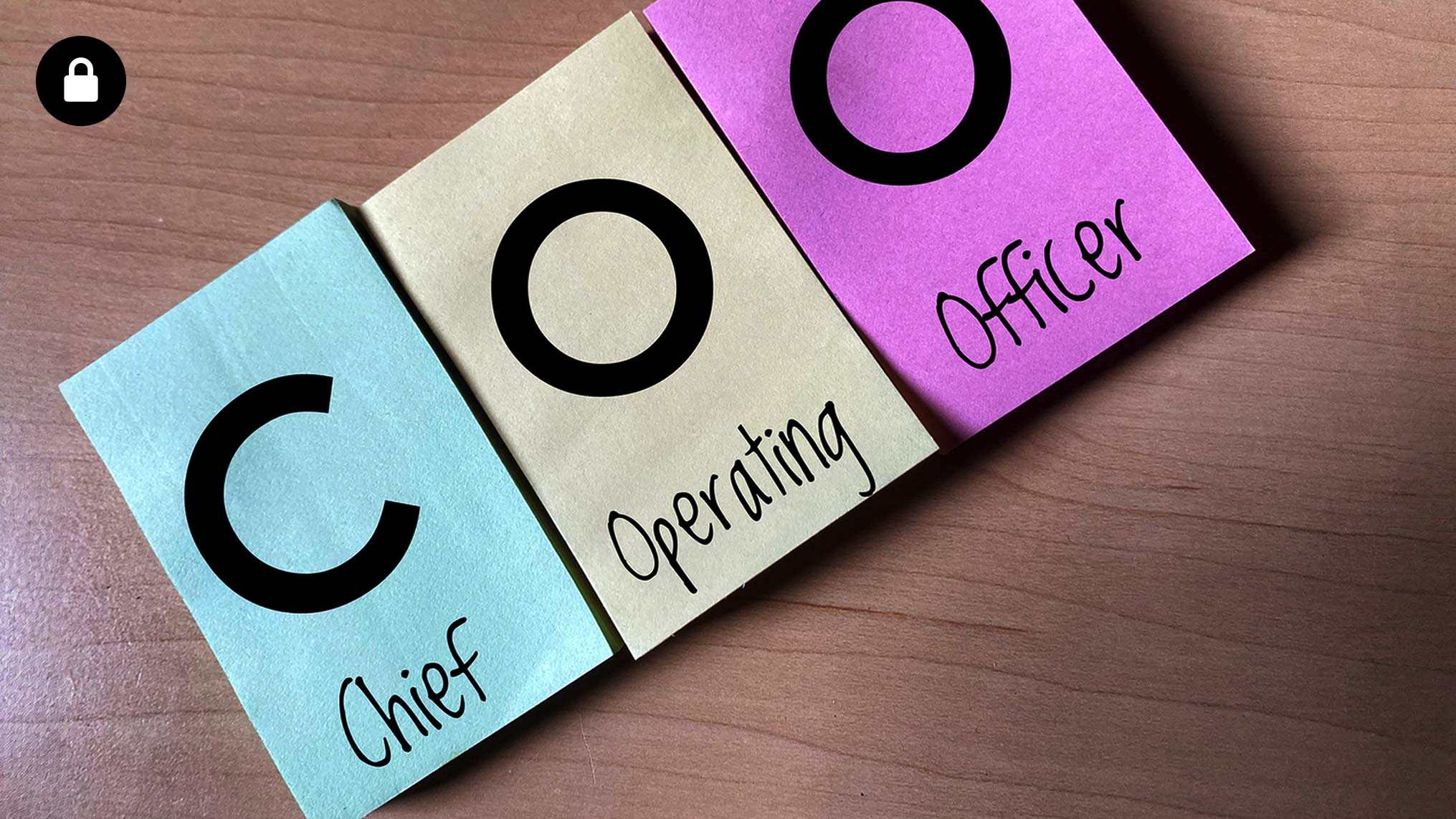
The CEO sets direction; the COO, president, or deputy ensures the entire organization actually gets there. They bridge the space between vision and execution—the gap where most strategies die.
As Harvard Business Review’s classic piece, The Misunderstood Role of the Chief Operating Officer, notes:
“The COO’s role is to convert the CEO’s strategic vision into reality — often by being the one person in the company who can say ‘no’ when everyone else says ‘yes.’”
The No. 2, in other words, becomes the truth-teller and the architect — the one who makes the impossible operational.
The CEO-COO Dynamic: Power Through Partnership
In theory, the CEO-COO partnership should be seamless — vision and execution dancing in perfect harmony.
In practice, it’s a fragile balancing act between ego, trust, and complementary skill sets.
McKinsey & Company calls it “a dual engine of performance,” where the CEO’s external focus (vision, investors, market positioning) must be matched by the COO’s internal command (people, process, performance).
When it works, it’s magic. When it doesn’t, it’s mutiny.
That’s why the relationship must be intentionally designed, not left to chance.
The best CEO-No. 2 pairings share three traits:
No. 1 — Radical clarity about roles and decision rights.
No. 2 — Constant communication — no surprises, no triangulation.
No. 3 — Mutual respect — neither resents the other’s power.
As one McKinsey partner put it …
“The most successful No. 2’s don’t compete with the CEO’s voice; they amplify it.”
A No. 2’s power isn’t in commanding the room — it’s in stabilizing it.
The Psychology of Letting Go
The hardest part of moving from No. 1 to No. 2 isn’t operational — it’s emotional.
When you’ve been the top leader, your identity becomes intertwined with authority. You get used to being the final word, the center of gravity, the one everyone looks to for direction.
Then suddenly, you’re not.
The room no longer pivots around your opinion. You have to learn to influence without control, to lead through counsel rather than command.
But as Cooke argues, that’s where true leadership maturity is forged:
“The measure of a great second-in-command is the ability to lead without ego — to hold power lightly and give credit freely.”
Those who master this shift discover a deeper kind of fulfillment: impact without insecurity.
Redefining Leadership: From Visionary to Integrator
In entrepreneurial companies, this dynamic is often described as the Visionary–Integrator model, popularized by Gino Wickman in Traction.
The visionary (No. 1) sees the future. The integrator (No. 2) makes it happen.
The same model applies inside multinationals. The CEO might be the public strategist — charismatic, idea-driven, outward-facing. The No. 2, often the COO or president, becomes the integrator — the operational soul who ensures the system doesn’t collapse under its own ambition.
As Harvard’s Second-in-Command article notes, the role can take several forms:
- The Executor (driving operations)
- The Change Agent (transforming culture)
- The Mentor (developing talent)
- The Partner (balancing the CEO’s blind spots)
Each form requires humility, strategic empathy, and the ability to turn abstract direction into tangible progress.
The best No. 2’s become what one HBR author called “the force of calm competence” in organizations addicted to speed.
Ego Management: The Quiet Power of Influence
In an interview for Forbes, leadership writer Frederick Allen said …
“The glory of being a great number two is realizing that leadership is not a contest of visibility — it’s a craft of amplification.”
That quote captures the heart of the No. 2 identity.
As the No. 2′, your impact comes through translation — turning lofty vision into operational rhythm. You are the filter through which chaos becomes clarity.
And to do that well, you must master the art of ego management — yours and others’.
Three truths define the psychology of a powerful No. 2:
No. 1 — Ego control creates trust. The CEO must know you don’t covet their seat.
No. 2 — Empathy creates influence. People follow those who understand them.
No. 3 — Consistency creates credibility. Every action should lower the organization’s anxiety, not add to it.
When you embody those traits, you become indispensable — not because you’re loud, but because you’re trusted.
From Operator to Multiplier
The Berkeley Haas article, Two in the Lead, offers a fascinating insight: organizations with dual leaders (like CEO/COO models) succeed or fail based on the quality of the relationship, not the clarity of the structure.
“When two leaders respect each other’s domains and collaborate authentically, the entire organization perceives coherence and stability.”
In other words: teams don’t need perfect hierarchies — they need healthy partnerships.
That’s the job of the No. 2 — to create coherence, both operationally and emotionally.
To use a musical analogy: the CEO writes the score, but the No. 2 conducts the orchestra. They ensure timing, harmony, and tempo — all invisible work that makes the music soar.
The Modern No. 2 — Data, Systems, and Human Psychology
Today’s No. 2’s are not just operators; they are translators of complexity.
According to McKinsey’s Delivering the Strategy: The COO Agenda, the modern second-in-command must:
- Run the business through data and systems, not sheer will.
- Identify patterns across silos and align execution to strategy.
- Build the connective tissue between departments, geographies, and personalities.
But just as importantly, the modern No. 2 must master the human system.
People are not spreadsheets. Culture isn’t code. Influence is earned through consistency, empathy, and emotional intelligence.
The best No. 2’s blend analytical rigor with relational fluency. They know when to press, when to pause, and when to persuade.
They make accountability feel like alignment, not punishment.
The Invisible CEO
In many of history’s most successful partnerships, the No. 2 was the secret engine.
- Steve Jobs had Tim Cook.
- Walt Disney had Roy Disney.
- Bill Gates had Steve Ballmer.
- Henry Ford had James Couzens.
Each visionary needed an operator. Each dreamer needed a doer.
Tim Cook, long before he became Apple’s CEO, was the quintessential No. 2 — an operational genius who turned Steve Jobs’ creativity into precision manufacturing and supply-chain mastery.
Jobs himself once said, “Tim’s not a numbers guy — he’s a systems thinker.”
That’s the highest compliment one visionary can pay another.
What Makes a Great No. 2
After studying hundreds of executive pairings, Harnish, McKinsey, and HBR converge on the same traits that define great No. 2’s:
Clarity of Role. You know exactly what you own — and what you don’t. You make decisions fast in your domain, but you defer gracefully when it’s the CEO’s call.
Emotional Maturity. You don’t need credit to feel valuable. You can be the stabilizer when others seek drama.
Operational Mastery. You live in systems, metrics, and cadences. You turn strategy into rhythm.
Trust Above All. You never leak confidence upward or downward. You’re the CEO’s safe space and the team’s anchor.
Strategic Empathy. You can read the CEO’s intent even when it’s unspoken — and articulate it to others without distortion.
These qualities don’t just make you an effective No. 2 — they make you the multiplier of everyone else’s potential.
Lessons for the Former No. 1
If you’ve spent years in the No. 1 chair, the instinct is to drive. To fix. To own.
As the new No. 2, your challenge is to shift from steering to scaling.
You don’t need to prove you’re capable of running things. You already are. Now your value lies in making the system better — helping your new CEO and organization function at a higher level than it could before you arrived.
That means:
- Focusing less on what gets done, and more on how sustainably it gets done.
- Becoming a student of the new culture before trying to lead it.
- Translating the CEO’s vision into language the organization can act on.
The job of a great No. 2 isn’t to replicate the CEO’s style — it’s to balance it.
If the CEO is the accelerator, you’re the steering wheel. If they’re the artist, you’re the engineer. If they’re the voice, you’re the echo that ensures it lands.
The Freedom of the No. 2 Chair
Here’s the great irony: many executives discover that being a No. 2 actually gives them more freedom than being a CEO.
As No. 1, everything is ultimately your problem.
As No. 2, you can focus on the craft — on the work itself — without the political theater that comes with the top seat.
You get to influence, build, and coach — without carrying the full existential weight of the enterprise.
As one former CEO turned COO told McKinsey,
“It’s the best of both worlds: I still lead, but now I sleep.”
Lead Without Needing the Credit
The greatest No. 2’s understand that legacy isn’t about headlines — it’s about systems that outlast you.
They trade spotlight for substance. They measure success not by how loud their name echoes, but by how seamlessly their teams perform.
In the end, the art of being No. 2 is the art of leading without needing to be seen.
It’s power without ego. Influence without insecurity. Leadership without applause.
And for those who master it, it’s not a demotion — it’s an evolution.
Because when you stop needing the title, you finally start leading at scale.
If You Liked This Article, You May Also Like …
- The 10 Types of Incompetent Leaders
- AI and EI: Redefining Leadership and Connection in a Tech-Driven Era
- No One Doing Better Than You Will Ever Criticize You: A Guide to Navigating Criticism and Knowing Whom to Listen To