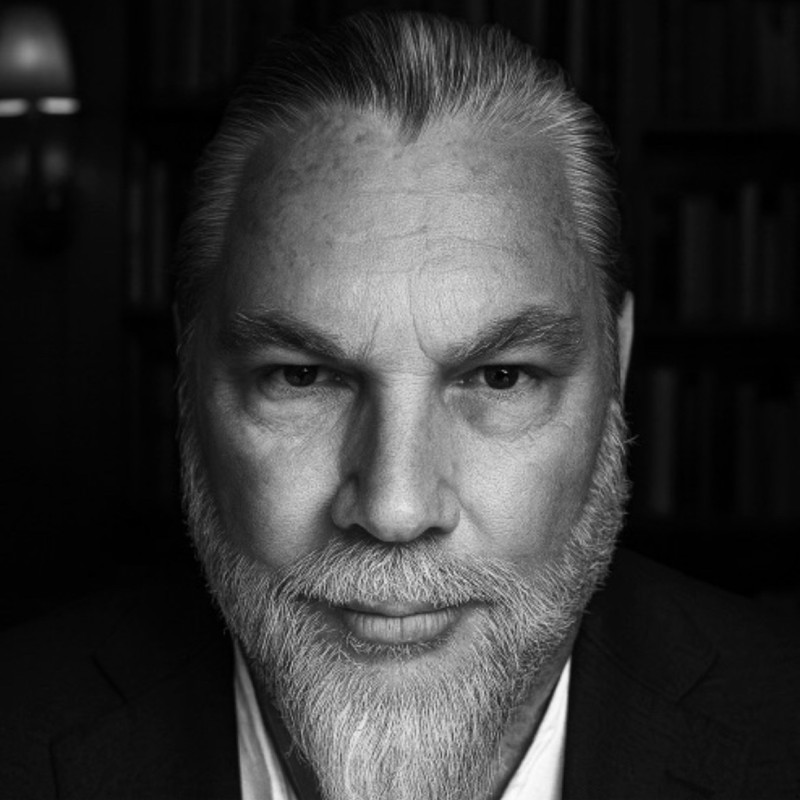

By Theordore Levitt
When Theodore Levitt published Marketing Myopia in Harvard Business Review in 1960 (later reissued as part of the HBR Classics series), he wasn’t writing a marketing article. He was writing a diagnosis.
Levitt’s core argument is deceptively simple and devastatingly timeless: companies fail not because markets dry up, but because leaders define their business too narrowly. They become obsessed with products instead of customers, production instead of purpose, efficiency instead of relevance. In doing so, they mistake short-term success for long-term security — and slowly engineer their own decline.
BUY THIS BOOK
More than sixty years later, Marketing Myopia remains one of the most influential pieces ever written about strategy, growth, and leadership precisely because it challenges how executives think, not just what they do.
This summary explores Levitt’s central ideas, his critiques of product-centric thinking, his definition of true marketing, and why his warnings are more relevant today than ever.
The Central Thesis: There Is No Such Thing as a Growth Industry
Levitt opens with a bold provocation: there is no such thing as a “growth industry.” There are only companies that create and sustain growth — and companies that don’t.
Industries that executives commonly describe as “mature,” “declining,” or “sunset” industries, Levitt argues, are not victims of inevitable market forces. They are victims of managerial shortsightedness. Leaders convince themselves that demand is drying up when, in reality, customer needs remain strong—just no longer aligned with the company’s outdated definition of what business it is in.
The classic example Levitt uses is the railroad industry. Railroads didn’t decline because Americans stopped needing transportation. They declined because railroad executives defined themselves as being in the railroad business rather than the transportation business. As automobiles, trucks, and airplanes emerged, railroads failed to adapt — not because the opportunity disappeared, but because they refused to see it.
The problem wasn’t technology. The problem was perception.
Product Orientation vs. Customer Orientation
At the heart of Levitt’s argument is a distinction between product-oriented companies and customer-oriented companies.
Product-oriented companies ask:
- How can we improve our product?
- How can we sell more of what we already make?
- How can we increase efficiency, scale, and output?
Customer-oriented companies ask:
- What job is the customer trying to get done?
- What problem are they really trying to solve?
- How might those needs evolve over time?
Levitt warns that success often breeds product obsession. When a product sells well, companies fall in love with it. They invest in better production, tighter controls, and incremental improvements — all while ignoring shifts in customer behavior, expectations, and alternatives.
Marketing myopia occurs when means replace ends. The product becomes the goal, rather than the customer’s need.
The Danger of Defining Business by Product
One of Levitt’s most enduring contributions is his insistence that companies must define their business by customer need, not by product category.
He famously illustrates this with examples:
- A movie studio is not in the “movie business”; it is in the entertainment business.
- An oil company is not in the “oil business”; it is in the energy business.
- A railroad is not in the “railroad business”; it is in the transportation business.
When companies define themselves narrowly, innovation becomes threatening rather than energizing. New technologies are seen as competitors instead of opportunities. Leaders protect the existing product rather than exploring adjacent or emerging ways to serve customers.
Levitt argues that this mindset leads organizations to defend yesterday’s success at the expense of tomorrow’s relevance.
The Myth of Automatic Growth
Another major theme in Marketing Myopia is Levitt’s rejection of what he calls the myth of automatic growth.
Many executives assume that because demand has grown historically, it will continue to grow indefinitely. They attribute success to favorable market conditions rather than to deliberate customer focus. As a result, they become complacent.
Levitt notes that when companies believe growth is guaranteed, they focus inward:
- improving production efficiency
- reducing costs
- optimizing operations
These activities feel productive, but they are defensive, not strategic. They do nothing to ensure long-term relevance.
Growth, Levitt insists, is never automatic. It must be created, sustained, and renewed through a relentless focus on the customer.
Production Efficiency Is Not a Strategy
Levitt is particularly critical of what he calls the production orientation — the belief that customers will favor products that are widely available and inexpensive, and that success therefore comes from mass production and cost efficiency.
While production efficiency matters, Levitt warns that it is often mistaken for strategy. Companies become obsessed with scale, throughput, and optimization, assuming that better production guarantees customer loyalty.
But customers don’t buy products because they are efficiently produced. They buy them because those products solve problems, fulfill desires, or create value.
When production becomes the primary focus, companies risk producing ever-better versions of something customers increasingly don’t want.
Marketing Is Not Selling
One of Levitt’s most important clarifications is the distinction between marketing and selling.
Selling focuses on persuading customers to buy what the company already makes. Marketing focuses on understanding what customers need and designing offerings around those needs.
Levitt argues that selling is reactive and short-term, while marketing is proactive and long-term. Selling begins after the product is made. Marketing begins before the product exists.
In truly marketing-oriented companies:
- Customer needs drive product development
- Research precedes manufacturing
- The entire organization aligns around customer value, not output
This reframing positions marketing not as a department, but as a company-wide philosophy.
The Role of Leadership in Avoiding Myopia
Levitt places ultimate responsibility for marketing myopia squarely on leadership. The problem is not a lack of intelligence or resources; it is a lack of imagination and humility.
Executives fall into myopia because:
- They overvalue past success
- They underestimate customer change
- They dismiss emerging alternatives
- They confuse technical excellence with market relevance
Levitt emphasizes that leaders must continually ask uncomfortable questions about what business they are really in and whether their assumptions still hold.
Without this discipline, even the most successful companies drift toward irrelevance.
Innovation Requires Customer Imagination
Contrary to popular belief, Levitt does not argue that innovation alone saves companies. He argues that customer-driven innovation does.
Technological breakthroughs are meaningless if they are not anchored to customer value. Companies that innovate for innovation’s sake often miss the mark, while those that innovate to better serve evolving customer needs remain resilient.
Levitt’s insight here is subtle but powerful: customers don’t demand innovation — they demand solutions. It is the company’s job to imagine how those solutions might be delivered in new ways.
Why Marketing Myopia Still Matters Today
Although written in 1960, Marketing Myopia feels eerily modern.
Many contemporary failures follow Levitt’s exact pattern:
- Companies disrupted by platforms they dismissed
- Brands overtaken by experiences they failed to understand
- Organizations optimized for efficiency but blind to shifting expectations
In today’s digital, AI-driven, experience-based economy, Levitt’s warning is amplified. Customer needs change faster. Alternatives emerge more quickly. Loyalty is more fragile.
The companies that survive and thrive are those that:
- Define themselves broadly
- Stay obsessed with customer problems
- Treat growth as a deliberate act, not a birthright
Marketing as a Way of Thinking
Perhaps Levitt’s most radical idea is that marketing is not a function — it is a way of thinking about business.
Marketing, properly understood, shapes:
- strategy
- innovation
- culture
- leadership decisions
It asks leaders to view the organization from the outside in, not the inside out.
When companies adopt this mindset, they become adaptive rather than defensive, curious rather than complacent, and resilient rather than fragile.
The Enduring Lesson
The enduring lesson of Marketing Myopia is not about marketing tactics or consumer psychology. It is about organizational self-awareness.
Companies fail when they stop asking:
- Who is the customer?
- What do they truly need?
- How might those needs change?
- Are we willing to change with them?
Levitt’s warning is not pessimistic — it is empowering. Growth is always possible for companies willing to redefine themselves around customer value.
The real danger is not disruption. The real danger is complacency disguised as confidence.
Final Reflection
Marketing Myopia endures because it challenges leaders at the level of identity, not execution. It forces executives to confront an uncomfortable truth: success can be the very thing that blinds you.
Levitt’s message remains clear and urgent: Businesses do not exist to make products. They exist to create and keep customers.
Everything else is secondary.