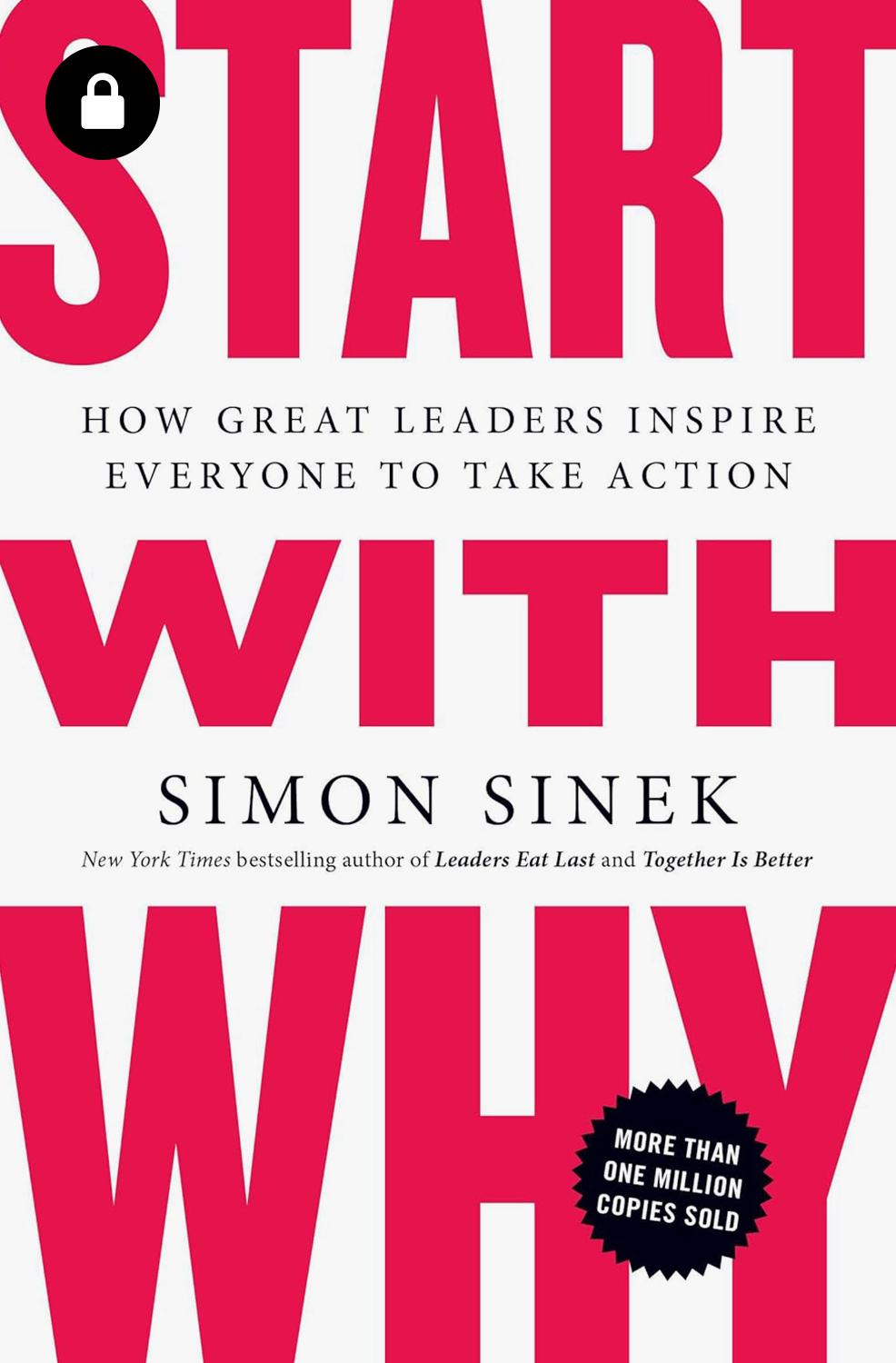
By Simon Sinek
Simon Sinek’s Start with Why: How Great Leaders Inspire Everyone to Take Action is a simple idea with surprisingly deep roots: people are moved by purpose, not products; by meaning, not metrics. When leaders and organizations start with why—their cause, belief, or reason for being—they ignite loyalty, inspire action, and build resilience that outlasts market swings and competitive copycats. When they don’t, they often end up leaning on short-term manipulations (discounts, pressure tactics, hype) that may boost results today but quietly erode trust tomorrow.
Below is a thorough, conversational tour of the book—what Sinek argues, why it matters, and how to put it to work.
The Big Idea: People Don’t Buy What You Do, They Buy Why You Do It
Sinek’s signature line sets the tone: “People don’t buy what you do; they buy why you do it.” Most companies obsess over what they sell (features, specs) and sometimes how they deliver it (processes, differentiators). The great ones—think Apple in its peak, the Wright brothers, or Martin Luther King Jr.—start by clearly expressing why they exist in the first place. That clarity acts like a magnet for people who share those beliefs. The result is not just customers or employees—it’s believers.
Why does this work? Because human decisions are not purely rational. We tell ourselves logical stories, but we choose with feeling and identity first. A clear why speaks directly to that deeper layer.
Manipulation vs. Inspiration
Sinek contrasts two engines of action:
- Manipulations: price cuts, promotions, fear, aspirational messaging, novelty, peer pressure. These can “work,” but they’re transactional. You train people to chase deals, hacks, and the next shiny thing. Over time, this gets expensive, exhausting, and easily imitated.
- Inspiration: a compelling why that resonates with people’s beliefs. This creates loyalty—a willingness to stick around when you stumble, pay a bit more when you’re not the cheapest, and forgive honest mistakes because you’ve earned trust.
Sinek doesn’t say never discount or advertise. He’s saying that without a why, manipulations become the only lever you have—and that’s a treadmill.
The Golden Circle: Why → How → What
Sinek packages his idea into the Golden Circle, three concentric rings:
- Why: your purpose or cause. Why do you exist? What change are you here to make?
- How: your distinguishing processes, values, and principles—the way you bring the why to life.
- What: the products, services, and measurable outputs—the tangible proof.
Most organizations communicate outside-in: “Here’s what we make, here’s how we’re different. Interested?” Inspired leaders go inside-out: “Here’s what we believe (why). Here’s how we put that belief into practice. Here’s what we’ve built as proof.” The order matters because it follows how people actually decide.
The Biology: Why This Feels Right (Literally)
Sinek grounds the Golden Circle in a simple bit of brain science. The neocortex (linked to language and rational thought) corresponds to the what level—features, facts, analysis. The limbic system (linked to feelings, trust, loyalty, and decision-making) maps to why and how. That’s why we can “feel” a decision is right even when we can’t fully explain it. When leaders speak why first, they’re talking to the part of the brain that decides; the rational story catches up afterward.
Clarity, Discipline, Consistency: The Three-Part Work
Starting with why is not a one-liner you slap on a wall. Sinek says it takes:
- Clarity of Why
You must be able to state your purpose simply and authentically—no jargon, no generic platitudes. “To be number one” or “maximize shareholder value” isn’t a why; it’s a result. A real why sounds like a cause you’d fight for. - Discipline of How
These are your guiding principles and methods—the specific ways you work when you’re at your best. They translate belief into behavior. - Consistency of What
Everything you produce—the products, the service experience, the brand cues—must prove the why over and over. Consistency builds trust; inconsistency breeds doubt.
When those three align, outsiders call it authenticity. Inside, it feels like integrity.
Trust and Authenticity: Earned Through Alignment
Trust doesn’t come from perfection; it comes from consistency. If your marketing says you believe in empowering the creative rebel, but your product is locked-down, your support is dismissive, and your policies punish experimentation, people sense the gap. Sinek calls this the “say-do gap.” Close it, and you’ll get trust. Widen it, and you’ll end up spending more and more on manipulations to compensate for the erosion.
The Law of Diffusion of Innovations: How Movements Spread
Sinek borrows Everett Rogers’ adoption curve to explain how ideas catch on:
- Innovators (2.5%) and Early Adopters (13.5%) are motivated by belief. They’re comfortable with gut calls and identity alignment. If your why resonates with them, they’ll support you before the majority “gets it.”
- The Early Majority (34%) wants proof and social validation; they follow once momentum is visible.
- The Late Majority and Laggards wait even longer.
Your job is not to convince everyone. It’s to speak clearly to people who already believe what you believe. If you win the left side of the curve with a strong why, they help you cross to the rest.
Case Studies You’ll Recognize
Apple
Sinek’s favorite example: Apple communicates from the inside out—“We believe in challenging the status quo and empowering individuals” (why). “We do that by making beautifully designed, simple-to-use products” (how). “And we just happen to make computers, phones, and music players” (what). Because people buy the belief, Apple earns permission to enter new categories. Most computer companies can’t credibly sell an MP3 player or a phone because they never made a case for why they exist beyond “we build computers.”
The Wright Brothers vs. Samuel Pierpont Langley
Langley had money, status, and top talent chasing powered flight. The Wrights had a bicycle shop, limited resources, and a deep why—a belief that flight would change the world and belong to everyone. The Wrights flew first. Langley quit right after; he wasn’t in it for the cause.
Martin Luther King Jr.
Dr. King didn’t deliver an “I Have a Plan” speech; he offered a dream. He articulated a moral why that galvanized people who already believed in a better future. People showed up in the hundreds of thousands not for him alone, but for the belief he gave voice to.
Southwest Airlines
Built around the why of democratizing air travel—making flying accessible, fun, and human. From simple fleets to cheeky humor, the hows and whats aligned. Competitors tried to copy Southwest’s tactics (the whats) without adopting the belief (the why) and rarely matched the results.
Leaders vs. Those Who Lead
Sinek draws a sharp line: leaders hold positions of authority; those who lead inspire us. We follow them by choice, not because of their title. Authority can coerce; inspiration invites. The latter is durable because it rests on shared belief, not control.
This is why vision matters. Vision says, “Here’s the world we’re trying to create.” Strategy and plans are necessary, but they’re in service of the vision. People rally behind a cause; they endure hardship, innovate, and commit because it means something.
Success Breeds a Dangerous Drift
Ironically, success can blur your why. Early on, founders make scrappy, belief-driven choices. As the company grows, revenue targets, process, and scale take center stage. Managers who weren’t part of the origin story may fixate on metrics and outputs (the what) and stop telling the story of why. That drift is subtle but costly: culture thins out, decisions feel mechanical, and customers sense the loss of soul.
Sinek’s antidotes:
- Keep telling origin stories—the struggle, the belief, the early proof points.
- Build rituals and artifacts that teach the why to new people.
- Promote leaders who embody the why, not just those who hit short-term numbers.
Hire and Partner for Belief, Then Train for Skill
“Great companies don’t hire skilled people and motivate them,” Sinek argues. “They hire motivated people and inspire them.” Translation: screen for belief first. Do candidates light up at your why? Do vendors and partners share your values? When the answer is yes, alignment cuts friction dramatically. Training can develop skills; it can’t install a soul.
For customers, the logic is similar. When you articulate your why, you attract people for whom your product is a form of self-expression. That’s why some fans tattoo motorcycle brands or line up overnight for product launches; they’re signaling identity, not just buying utility.
The Celery Test: A Simple Filter for Decisions
Sinek’s playful metaphor: Imagine gurus tell you to buy milk, cookies, celery, and rice milk to be successful. If your why is health, you’d pick celery and rice milk. When you get to the checkout, anyone watching can see what you value. The celery test keeps you from chasing every tactic because your shopping cart (decisions) must look like your why. It’s a test you can run on strategy, features, partnerships, marketing channels—everything.
Why-Types and How-Types: Visionaries Need Builders
Sinek says organizations thrive when they pair a WHY-type (the visionary who paints the world that doesn’t exist yet) with a HOW-type (the operator who turns that vision into systems, products, and repeatable processes). Think Walt Disney (why) and Roy Disney (how); Steve Jobs (why) and Woz/operational leaders (how). If you’re missing either half, you get chaos (all dream, no ship) or stagnation (all process, no purpose). A healthy culture honors both—and ties them together with the what that proves the promise.
Communicating the Why (So People Actually Hear It)
Practical pointers from the book:
- Lead with belief in your messaging. Say what you stand for before you say what you sell.
- Use plain language. If you can’t explain your why simply, you don’t yet know it.
- Tell real stories that dramatize your why in action—moments where you paid a price to stay true to it.
- Repeat yourself. Consistency builds familiarity; familiarity builds trust.
- Make the first followers heroes. Early adopters need recognition; they’re taking a social risk for you.
Measuring Without Losing the Plot
Starting with why doesn’t mean ignoring metrics. It means choosing metrics that reflect whether your actions are proving the belief. Ask:
- Are customers staying even when we’re not the cheapest?
- Do employees recommend us to their friends?
- Do our decisions pass the celery test?
- Are we saying “no” to enticing opportunities that don’t fit our why?
Numbers become more useful when you treat them as signals of alignment instead of ends in themselves.
Common Pitfalls and How to Avoid Them
Confusing Why with Results
Profit is a result. Market share is a result. Your why is a cause. Keep the order straight.
Generic Why Statements
“We value excellence and innovation” could be anyone’s slogan. Specificity is credibility.
Treating Why as a Marketing Slogan
If your internal behaviors don’t match your external words, people will sense it and disengage.
Shifting to Manipulations Under Pressure
Tough quarters tempt quick fixes. Use them sparingly and never as a substitute for belief-based leadership.
Founder Dependency
If the why lives only in the founder’s head, it dies when they leave. Institutionalize it through stories, symbols, hiring practices, and governance.
Finding (or Rediscovering) Your Why
Sinek insists your why is discovered, not invented. It’s rooted in formative experiences—moments you’re proud of, injustices you wanted to fix, times your efforts felt meaningful. Practical starting points:
- Origin Story Mining: What problem originally moved you to start or join this company? What did you want to change?
- Proudest Moments: Identify times you felt most alive at work. What belief shows up across those stories?
- Customer Love Letters: Look for phrases loyal customers use—often they describe your why better than you do.
- Values in Conflict: When did you choose principle over profit? That’s your why showing up under pressure.
Articulate your why as a simple, sentence-length belief. Then define 3–5 how principles (behaviors) that translate the belief into daily choices. Finally, audit your whats—products, processes, policies—to ensure they’re consistent proof.
Culture as the Daily Expression of Why
Culture is how people behave when no one is watching. A strong why becomes the gravitational center that shapes norms: how meetings run, how decisions get made, how you treat customers when it costs you, how you respond to mistakes. Culture is not perks or posters. It’s the lived pattern of behavior that either confirms your why or contradicts it.
Leaders are gardeners here: they pull weeds (behaviors that violate the why), plant seeds (stories and rituals that encode the why), and tend the soil (systems that reward the right things).
What Happens When You Actually Start with Why
When an organization truly starts with why, several things shift:
- Differentiation becomes durable. Competitors can copy your features; they can’t easily copy your belief or the trust you’ve built around it.
- Decision-making speeds up. The why acts as a filter. If a choice doesn’t align, it’s a no—even if it’s lucrative.
- Loyalty grows. Customers and employees give you the benefit of the doubt. They forgive honest missteps because you’ve earned goodwill.
- Innovation gets clearer. You can enter new categories more credibly when each move is an expression of the same belief.
- Leadership deepens. People follow you not because they have to, but because they want to be part of what you’re building.
A Mini Playbook to Put It into Practice
- Write Your Why (One Line):
“We exist to ____ so that ____.” Keep it human and specific. - Name Your Hows:
3–5 principle behaviors that, if you didn’t do them, you wouldn’t be you. - Audit Your Whats:
Products, policies, pipeline, brand cues—what needs to change to better prove the why? - Bake It into People Systems:
Hiring scorecards, onboarding, performance reviews, promotion criteria—tie them to the why and hows. - Tell Origin Stories Relentlessly:
New hires, all-hands, customer communications—use stories to keep the belief alive. - Run the Celery Test on Decisions:
Use the why to say no to misaligned opportunities (even attractive ones). - Celebrate Belief-Driven Behavior:
Recognize employees and customers who embody the why; make them visible heroes. - Avoid the Manipulation Trap:
If you run a promo, say why it exists beyond “more sales.” Tie it to the mission.
Final Takeaways
- Start with Why is not a branding trick; it’s a leadership operating system.
- The Golden Circle—Why → How → What—mirrors how the human brain chooses, which is why inside-out communication feels so compelling.
- Trust comes from consistency between what you say (why), how you act (how), and what you produce (what).
- Focus on the believers first (innovators and early adopters). They help your movement cross the chasm to the mainstream.
- Guard against drift as you grow. Codify the why so it survives success, scale, and succession.
- Use the celery test to keep strategy focused and coherent.
- Pair why-types and how-types to turn vision into reality, repeatedly.
In essence, Sinek is reminding leaders of something timeless: human beings want to belong to something bigger than themselves. When you start with why—and prove it through how and what—you don’t just win customers; you earn advocates. You don’t just fill roles; you attract mission-driven talent. And you don’t just sell products; you lead people toward a future they’re proud to help build.