
Deep Dives Articles
DEEP DIVES ARTICLE — EMOTIONAL INTELLIGENCE

Emotional Contagion in Teams: How One Nervous System Hijacks the Room
This is a sneak peek of this week’s Deep Dives article — published today!
Charisma gets attention. Emotional consistency builds empires. In volatile environments, the leaders who win long term aren’t the loudest or most inspiring — they’re the most predictable under pressure. In the full Deep Dive, we unpack why steadiness becomes a strategic advantage, how nervous system volatility erodes trust, and the practical behaviors that turn emotional regulation into competitive edge. If you want to understand why predictable leaders quietly outperform charismatic ones, the full analysis is waiting inside Deep Dives.
DEEP DIVES ARTICLE — PERSONAL DEVELOPMENT

Micro-Quitting: The Tiny Acts of Avoidance That Compound Over Years
This is a sneak peek of this week’s Deep Dives article — published today!
Careers rarely implode. They erode. Not through dramatic failure, but through small, repeated acts of avoidance — postponed conversations, softened standards, delayed courage. In the full Deep Dive, we unpack how micro-quitting compounds over years, how emotional debt builds beneath the surface, and how to reverse subtle disengagement before it reshapes your trajectory. If you suspect that growth stalls quietly rather than loudly, this is one you’ll want to read in full.
DEEP DIVES ARTICLE — LEADERSHIP
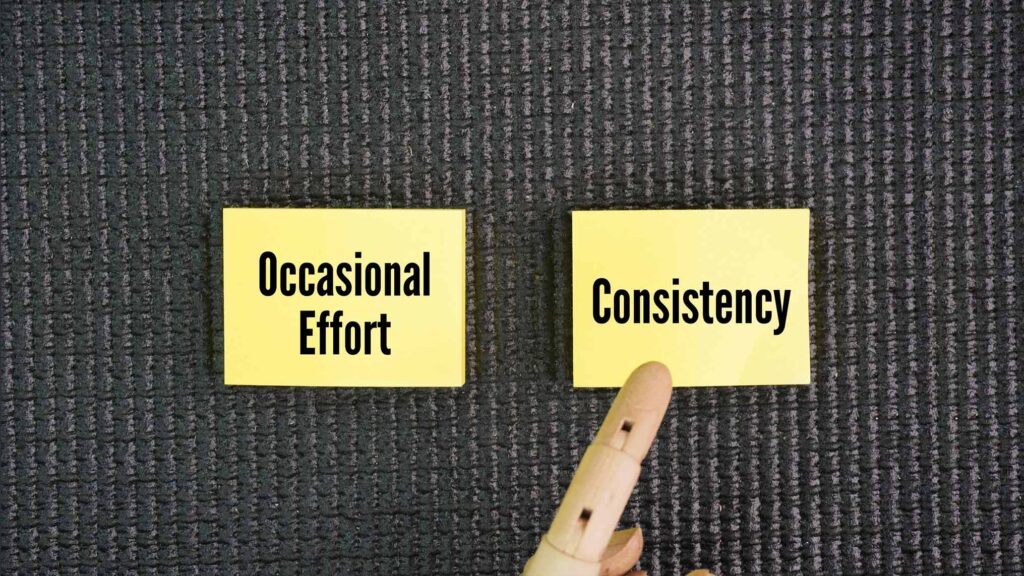
Emotional Consistency as Strategy: Why Predictable Leaders Outperform Charismatic Ones in Volatile Environments
This is a sneak peek of this week’s Deep Dives article — published today!
One anxious nervous system can hijack an entire room. One regulated presence can stabilize it. In this Deep Dive, we explore how polyvagal theory plays out in boardrooms, how mood spreads through micro-signals, and why leaders often underestimate the emotional climate they’re creating. If you want to understand how energy, tension, and tone shape performance more than strategy slides ever will, unlock the full breakdown inside Deep Dives.
Deep Dives Book Summary
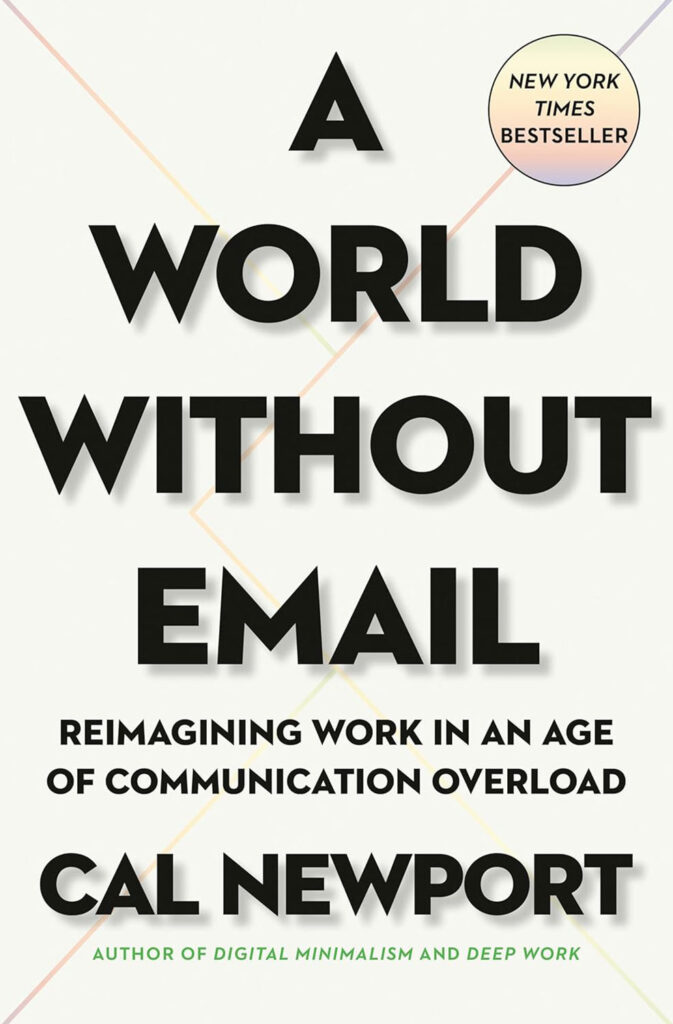
This is a sneak peek of this week’s Deep Dives Book Review — published today!
What if the biggest productivity problem in your organization isn’t your people — but your inbox? In A World Without Email, Cal Newport challenges the “hyperactive hive mind” that keeps modern teams trapped in constant communication and shallow work. In our full 2,000-word Deep Dive summary, we break down his core principles, practical frameworks, and what this means for leaders trying to protect focus and performance in a distracted world.
Quick Reads
quick read — Emotional intelligence

Emotional Recovery Speed: The Hidden KPI of High Performers
There is a performance metric almost no one talks about, yet it quietly determines who rises, who plateaus, and who burns out. It is not intelligence. It is not grit. It is not even resilience in the way we usually define it. It is emotional recovery speed.
Emotional recovery speed is the rate at which you return to clarity after disruption. After criticism. After a deal falls through. After a tense exchange in a meeting. It is the time between emotional activation and cognitive clarity. And while most organizations obsess over output metrics, very few measure how long their leaders and teams stay emotionally hijacked.
The Myth of the Unshakeable Performer
We often romanticize high achievers as emotionally unflappable. But elite performers feel the same surge of emotion everyone else does. Their nervous systems react. Their bodies tighten. Their thoughts accelerate.
The difference is not in what they feel. The difference is in how long they stay there.
Some people replay conversations for hours or days. They rehearse rebuttals. They subtly withdraw or overcompensate. Others experience the same surge but metabolize it quickly — they process the emotion, extract insight, and regain perspective. Over time, that difference compounds.
Why Recovery Speed Matters More Than Resilience
When you are emotionally flooded, your prefrontal cortex loses influence. You become more binary in your thinking. You interpret ambiguity as threat. You confuse discomfort with danger.
Recovery speed determines how long that impairment lasts.
If it takes you two days to stabilize after difficult feedback, that is two days of compromised clarity. If frustration from one meeting bleeds into the next, it distorts that interaction. In fast-moving environments, the person who resets quickly often outperforms the person who simply works harder.
Slow recovery also creates what I call emotional drag — rumination disguised as processing, low-grade irritation that alters your tone, hesitation when boldness is required. Each hour spent in emotional residue is an hour of diminished clarity. Over months and years, this compounds. The gap widens not because of talent, but because of wasted emotional bandwidth.
Identity and Recovery
There is a deeper layer. When your sense of worth is tightly fused to being right, admired, or in control, disruptions feel existential. Feedback does not feel like information — it feels like a verdict. Recovery takes longer because the trigger threatens who you believe yourself to be.
When identity is more flexible, emotional activation dissipates more quickly. The less energy you spend protecting a fixed self-image, the more energy you have for growth and execution.
Training Your Recovery Speed
If emotional recovery speed is a hidden KPI, it can be strengthened like any other capacity.
First, awareness. After a destabilizing event, notice how long it takes you to feel genuinely clear again. That duration is your current recovery rate.
Second, precision in emotional language. Vague labels like “stressed” prolong activation. When you name the emotion accurately — frustrated, embarrassed, threatened — the nervous system settles more quickly.
Third, interrupt rumination intentionally. Give yourself a defined window to process. Then shift toward action. Unstructured replay keeps the stress response alive.
Finally, regulate physically. Slow breathing, movement, adequate sleep — these influence how quickly your nervous system returns to baseline. Emotional mastery is not purely cognitive. It is physiological.
The Leadership Multiplier
For leaders, recovery speed is contagious. Teams mirror the emotional tone of the person in authority. If a leader remains unsettled for days after a setback, the team absorbs that instability. If the leader processes quickly and returns to centered decision-making, the team feels safer and more adaptive.
The Real Competitive Edge
Performance is not determined by how often you are disrupted. Disruption is inevitable. Performance is determined by how long you remain disrupted.
If we began to measure not just output, but the time it takes to return to clarity after adversity, we might discover that the highest performers are not those who avoid emotional waves — but those who shorten them.
And that is a metric worth tracking.
quick read — Personal development

The Myth of Morning Routines: Why Consistency Beats Perfection, and Why Environment Design Matters More Than Discipline
If you spend any time in high-performance circles, you would think the quality of your life hinges on what you do between 5:00 and 7:00 a.m. Cold plunge. Gratitude journal. Meditation. Workout. No phone.
The modern morning routine has become a moral scoreboard. But here is the uncomfortable truth: most people do not fail because they lack the perfect morning routine. They fail because they mistake intensity for consistency and discipline for design.
The Seduction of the Perfect Start
Morning routines are appealing because they promise control. There is also something psychologically satisfying about stacking visible wins before most people wake up.
But when routines become elaborate and rigid, they require ideal conditions. And ideal conditions are fragile. A late night. A sick child. Travel. Suddenly the sequence collapses — and many people then do something destructive: they abandon the entire system because they cannot execute it perfectly.
Perfection becomes the enemy of continuity.
Consistency Is Boring — and Powerful
The real driver of progress is repeated behavior under imperfect conditions. Consistency beats perfection because consistency compounds.
A fifteen-minute walk done five days a week for a year will outperform a heroic ninety-minute workout done sporadically. Ten minutes of daily writing will outproduce occasional creative marathons fueled by guilt. Consistency lowers friction. It builds identity slowly and quietly. High performers often look disciplined from the outside. What they actually master is sustainability.
Discipline Is Overrated Without Design
Discipline is a finite resource influenced by sleep, stress, and cognitive load. If your entire system depends on willpower, it will eventually fail.
Environment design is far more powerful. Instead of asking, “How can I be more disciplined?” it asks, “How can I make the desired behavior the easiest option available?”
If your phone is the first thing you touch when you wake up, it is not a character flaw — it is proximity. If workout clothes are at the end of the bed, movement becomes more likely. Human behavior is shaped more by cues and friction than by inspiration. The people who appear disciplined often simply removed obstacles in advance.
Rigid Sequences Break
When routines are too structured, they lack elasticity. If one element falls apart, the rest collapses, creating all-or-nothing thinking.
Elastic systems are superior. Instead of a fixed ninety-minute ritual, imagine three small anchors in any order: move your body, center your mind, create something. Even if one shrinks to five minutes, the identity remains intact.
Identity Over Ritual
The real power of a morning routine is not the ritual itself. It is the identity it reinforces. When you move your body, you reinforce the identity of someone who values health. When you journal, you reinforce deliberate thinking. The specifics matter less than the signal.
When identity is clear, rituals can flex. When identity is weak, rituals become brittle.
The Hidden Cost of Optimization Culture
We live in an era of optimization. Every behavior must be maximized. Every habit must be hacked. Morning routines have been pulled into that orbit. Instead of asking what grounds us, we ask what gives us the highest ROI.
The relentless pursuit of the “best” routine often leads to endless experimentation and minimal stability. Stability builds momentum. Novelty burns energy.
Designing for Reality
Reduce friction. Make the first healthy action obvious and easy. Remove the first unhealthy distraction. Then build optional layers — extend the practice on good days, shrink it on chaotic days, but never eliminate it.
This shifts the focus from heroic mornings to durable systems. Durability wins.
Winning the morning does not require two hours of curated self-improvement. It requires one or two intentional acts that align you with who you want to be.
Perfection is fragile. Consistency is powerful. Discipline fades. Design endures.
More often, it is ordinary mornings, repeated with quiet consistency, that shape who we become.
quick read — LEADERSHIP

Authority vs. Influence: Why Many Executives Have the Title But Not the Power
How Credibility Is Built and Lost in High-Performance Teams
There is a quiet tension inside many organizations that almost no one names directly. Someone holds the title. Their name is on the org chart. Decisions run through them. And yet, when they speak, the room does not shift.
People comply. They nod. They execute. But there is no real gravity. No voluntary momentum.
That is the difference between authority and influence. Authority is granted by position. Influence is earned by credibility. And in high-performance teams, credibility determines whether strategy moves or stalls.
The Illusion of Power
Titles create structural power — decision rights, resource allocation, direction-setting. But structural power is not relational power.
An executive can mandate compliance. They cannot mandate belief. They can require attendance. They cannot require engagement. Influence determines whether people lean in or merely fall in line.
In high-performance environments, authority without influence creates quiet resistance. People execute the minimum. They withhold ideas. They protect themselves instead of advancing the mission.
How Influence Is Built
Influence is credibility over time, built at the intersection of competence, consistency, and character.
Competence matters because people need to trust your judgment. Consistency matters because unpredictability breeds anxiety. Character matters because trust is moral before it is strategic. If people suspect hidden agendas, favoritism, or ego-driven decisions, credibility fractures quickly.
Influence accumulates slowly and disappears quickly.
The Credibility Leak
Most executives lose influence through subtle, repeated credibility leaks: overpromising and underdelivering, shifting strategy without explanation, tolerating underperformance selectively, or reacting emotionally under pressure after insisting on composure from others.
Each moment seems small. Over time, they form a pattern. High-performance teams are especially sensitive. Credibility is not what you say about yourself. It is what the room concludes about you when you are not there.
Compliance Is Not Commitment
When authority operates without influence, performance becomes transactional. People meet stated expectations but do not stretch beyond the minimum.
Commitment requires belief — trust that the leader’s direction is thoughtful, stable, and aligned with something larger than ego. In high-performance teams, discretionary effort is everything. Authority can compel attendance. Influence inspires contribution.
The Emotional Dimension
People do not grant influence solely based on intellect. They grant it based on how they feel in your presence. Do they feel safe to challenge you? Do they feel clarity? Do they feel respected, even when corrected? Do they feel you are steady under pressure?
Emotional volatility erodes influence faster than strategic error. Leaders who remain emotionally consistent build influence organically. Emotional maturity is not softness. It is credibility.
The Fragility of Title-Based Power
Relying too heavily on title-based authority is risky, especially in modern organizations where talent has mobility. High performers do not need to stay. They stay because they believe.
When leaders rely on positional power rather than earned influence, they experience a slow drain of top talent. The most capable individuals disengage first. They stop volunteering ideas. They stop challenging assumptions. Eventually, they stop staying. What remains is compliance culture — and compliance culture rarely drives innovation.
How Influence Is Lost — and Rebuilt
Influence is lost when leaders violate fairness, clarity, or integrity. When it is lost, leaders often respond by tightening control and increasing oversight. Ironically, this accelerates the erosion.
Building durable influence requires aligning words and actions relentlessly, absorbing pressure before transmitting it, making reasoning visible, and modeling accountability symmetrically.
The true measure of power is not whether people obey you when you are present. It is whether they advocate for your direction when you are absent. In a world where talent has options, belief is the real currency of power.
Quotes of the Week
QUOTE — EMOTIONAL INTELLIGENCE

QUOTE — PERSONAL DEVELOPMENT

QUOTE — LEADERSHIP

Reframe

Shame or Guilt? The Emotional Fault Line That Shapes Performance
There are two emotions that look almost identical from the outside, yet produce radically different outcomes inside a team.
One shuts people down. The other helps them step up.
One corrodes confidence. The other strengthens accountability.
That difference is the line between shame and guilt.
Most leaders don’t intend to trigger either one. They believe they are simply giving feedback, correcting course, or reinforcing standards. But the emotional tone beneath their words often determines whether performance improves or quietly deteriorates.
Understanding the difference between shame and guilt is not a soft skill. It is a performance lever.
The Subtle but Critical Distinction
Shame and guilt both emerge when something goes wrong. A target is missed. A mistake is made. A commitment isn’t kept.
But psychologically, they operate very differently.
Guilt says, “I did something wrong.” Shame says, “I am something wrong.”
That distinction may seem semantic. It isn’t.
Guilt focuses on behavior. Shame attaches to identity.
When guilt is activated, the brain stays relatively open. The person can reflect, repair, and adjust behavior. When shame is activated, the nervous system shifts into protection mode. Defensiveness rises. Withdrawal increases. Cognitive bandwidth narrows.
Guilt can motivate change. Shame often suppresses it.
What Happens in the Brain
Neuroscience gives us a clearer lens into this difference.
When guilt is experienced, the emotional response is linked to a specific action. The individual can mentally separate the mistake from their core sense of self. This allows for problem-solving. The prefrontal cortex, responsible for reasoning and planning, remains more accessible.
Shame, however, triggers a deeper threat response. Because it targets identity, it activates the same neural circuits associated with social rejection and exclusion. From an evolutionary standpoint, social exclusion meant danger. So the nervous system reacts accordingly.
When shame floods the system, thinking narrows. Creativity drops. People become more focused on self-protection than correction.
This is why two employees can make the same mistake and respond very differently depending on how feedback is delivered.
Guilt Drives Accountability
Healthy guilt is uncomfortable, but productive.
It creates an internal tension between who you want to be and what you did. That tension often motivates repair. Apology. Adjustment. Improvement.
In high-performing cultures, guilt plays a critical role. It reinforces standards without attacking identity. It says, “That action didn’t meet the bar. Let’s fix it.”
Because the individual’s sense of self remains intact, they can take ownership without collapsing.
They can say, “I missed this. Here’s how I’ll correct it.”
That is accountability in action.
Guilt, when proportionate and specific, strengthens performance.
Shame Silences Growth
Shame operates differently.
When someone feels shamed, their internal narrative shifts from behavior to worth. Instead of thinking, “I need to fix this,” they begin thinking, “I am not good enough,” or worse, “I need to protect myself.”
Protection can take many forms. Withdrawal. Defensiveness. Blame-shifting. Overcompensation. Silence.
In organizations, shame often hides beneath phrases that sound direct but feel personal.
“This is disappointing.”…. “I expected more from someone like you.”…. “How could you let this happen?”
Even subtle facial expressions or tone shifts can communicate disappointment in the person rather than the action.
When shame takes hold, improvement slows. People become cautious. Risk tolerance drops. Innovation declines. No one wants to expose themselves to further identity threat.
Shame creates compliance. Guilt creates correction.
How Leaders Accidentally Trigger Shame
Most leaders do not intend to shame. They intend to raise standards.
But emotional impact often overrides intent.
Shame is triggered when feedback becomes global instead of specific. When it moves from “this report lacked clarity” to “you’re not strategic.” When it shifts from “this deadline was missed” to “you’re unreliable.”
Even comparisons can trigger shame. “Everyone else figured this out.” That statement may feel motivational, but it isolates.
Public correction is another common trigger. Addressing performance issues in front of peers can amplify social threat. Even if the content is accurate, the context can transform guilt into shame.
Tone matters as much as content. Sharpness, sarcasm, or visible frustration can push the nervous system into defense before the message is even processed.
The Long-Term Cultural Impact
The difference between shame-based and guilt-based cultures becomes visible over time.
In shame-based cultures, people hide mistakes. They filter information. They delay surfacing problems because exposure feels dangerous. Feedback flows upward slowly, if at all.
Innovation suffers because risk feels personally costly.
In guilt-based cultures, mistakes are surfaced earlier. Conversations are more direct. People separate error from identity. Standards remain high, but safety remains intact.
Over time, one culture tightens and contracts. The other adapts and evolves.
The difference is not in how often mistakes occur. It is in how they are emotionally processed.
The Role of Identity
At a deeper level, shame is powerful because it fuses performance with identity.
If an employee’s sense of worth is heavily tied to competence or achievement, harsh feedback can feel like an existential threat. If a leader’s identity is fused to being right, they may unconsciously shame others to protect their own standing.
Identity rigidity amplifies shame responses.
Leaders who model separation between action and identity create healthier environments. When they admit mistakes openly and frame them as learning moments rather than personal failures, they signal that growth does not threaten belonging.
Belonging is the antidote to shame.
How to Intentionally Evoke Guilt, Not Shame
If guilt fuels accountability and shame shuts it down, the practical question becomes: how do you consistently trigger the former without activating the latter?
First, be behavior-specific. Focus feedback on observable actions and outcomes, not personality traits. “The analysis missed key variables” is very different from “you’re not thorough.”
Second, keep correction proportional. Overreaction magnifies threat. Calm, measured tone preserves cognitive access.
Third, reinforce belonging while addressing behavior. Statements like “I know you’re capable of better work than this” can be motivating when delivered sincerely and privately. They signal belief rather than condemnation.
Fourth, separate public recognition from private correction. Praise can be shared. Critique is best delivered in controlled, respectful settings.
Finally, model repair yourself. When leaders acknowledge their own missteps without collapsing into self-criticism, they normalize guilt without shame.
Accountability Without Humiliation
There is a persistent myth that high standards require harshness. That people will not improve unless they feel intense discomfort.
Discomfort, yes. Humiliation, no.
Guilt is uncomfortable. It signals misalignment. It invites correction. But it does not undermine dignity.
Shame undermines dignity.
Teams perform best when accountability is strong and identity is secure. When people believe that mistakes do not jeopardize their belonging, they are more willing to take responsibility quickly.
The fastest path to performance correction is not fear. It is clarity combined with respect.
The Emotional Lever Leaders Control
Every time a leader gives feedback, they are pulling an emotional lever.
They may think they are addressing a metric or a process. But emotionally, they are shaping how the individual interprets the event.
Will this person leave the conversation thinking, “I need to improve that behavior”? Or will they leave thinking, “Maybe I don’t belong here”?
That difference determines whether performance rises or retreats.
In high-performance teams, leaders who master this distinction create cultures where accountability is strong but dignity remains intact. Standards stay high without eroding confidence.
Guilt keeps people aligned with their values. Shame disconnects them from themselves.
The question is not whether you hold people accountable. The question is how.
Because the emotional difference between shame and guilt may be subtle in language, but its impact on performance is profound.