
Deep Dives Articles
DEEP DIVES ARTICLE — EMOTIONAL INTELLIGENCE

Why “Calm” Is the New Power Skill (And Drama Is a Career Liability)
This is a sneak peek of this week’s Deep Dives article — published today!
In an age of constant urgency and emotional noise, calm has become a rare — and powerful — signal. This article unpacks why emotional regulation now outperforms intensity, why drama drains credibility faster than incompetence, and how calm leaders quietly gain influence without raising their voice. The full Deep Dive explores why composure, not charisma, is becoming the defining leadership advantage.
DEEP DIVES ARTICLE — PERSONAL DEVELOPMENT

The Personal Development Trap: When Growth Becomes Another Form of Avoidance
This is a sneak peek of this week’s Deep Dives article — published today!
Personal growth promises clarity, progress, and freedom — but for many, it turns into endless self-optimization without real change. This piece explores how constant “working on yourself” can become a sophisticated form of avoidance, keeping you busy but stuck. The full Deep Dive goes deeper into why true growth often looks quieter, more uncomfortable, and far less marketable than the self-improvement industry suggests.
DEEP DIVES ARTICLE — LEADERSHIP

The Collapse of Charismatic Leadership and What’s Replacing It – When Presence Used to Be Enough
This is a sneak peek of this week’s Deep Dives article — published today!
Most leadership breakdowns aren’t caused by lack of skill, vision, or intelligence — they’re driven by something far quieter and harder to confront: ego. This piece explores how the need to be right, admired, or in control quietly erodes trust, decision quality, and culture, even in well-intentioned leaders. The full Deep Dive examines why ego is the invisible force behind most leadership failures — and why the leaders who scale best are often the least performative.
Deep Dives Book Summary
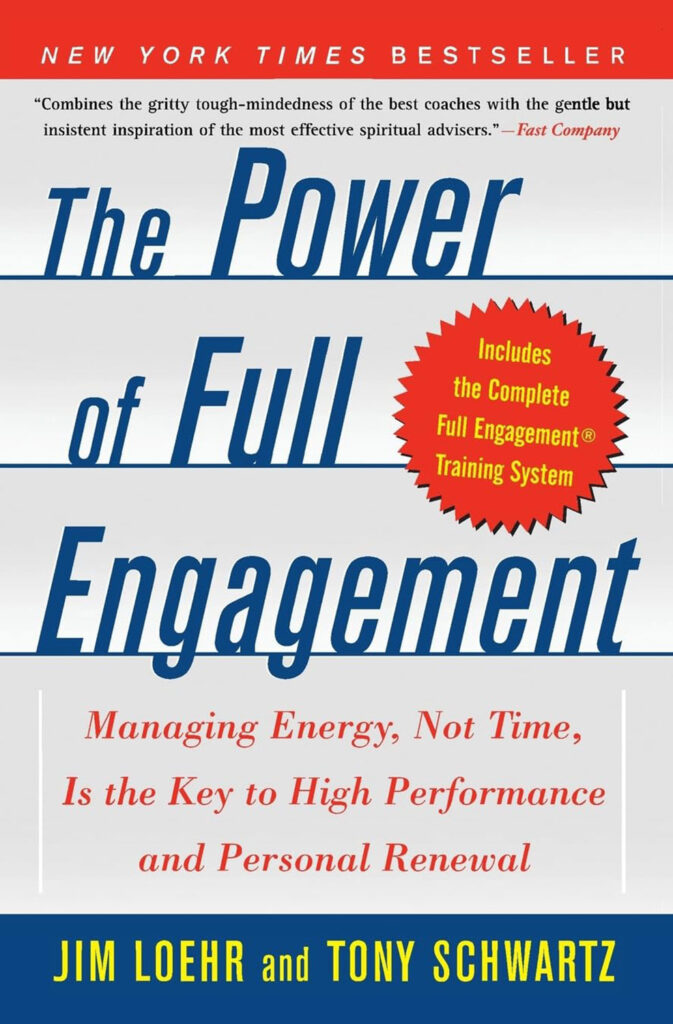
This is a sneak peek of this week’s Deep Dives Book Review — published today!
Most productivity advice assumes time is the problem. The Power of Full Engagement makes a far more uncomfortable claim: your real constraint is energy. In this Deep Dive, we unpack why burnout isn’t a motivation failure, why balance is the wrong goal, and how sustainable high performance is built on rhythms of stress and recovery — not constant effort. If you’re doing everything “right” and still feel depleted, this one will reframe the entire game.
Quick Reads
quick read — Emotional intelligence

Emotional Minimalism: Stop Feeling Everything, Start Feeling What Matters – The Exhaustion of Emotional Overload
Somewhere along the way, we decided that emotional health meant feeling everything. Every reaction. Every micro-offense. Every passing mood. What started as a corrective to emotional repression quietly turned into emotional saturation.
And many of us are tired.
Not because life is harder than it used to be, but because we are carrying far more emotional weight than necessary. We feel things that do not deserve our energy. We confuse awareness with obligation and introspection with depth.
Emotional minimalism is not about becoming cold or detached. It is about being intentional — recognizing that emotional energy is finite and treating it with the same respect we give our time and attention. Not everything deserves a reaction. Not everything deserves space inside you.
When Emotional Awareness Becomes Emotional Hoarding
There is a difference between emotional intelligence and emotional hoarding. Emotional intelligence allows you to notice, name, and navigate feelings wisely. Emotional hoarding convinces you that every feeling must be fully processed and displayed.
The problem is not that we feel too much. The problem is that we assign meaning too quickly.
A fleeting irritation becomes a character flaw in someone else. A moment of self-doubt becomes an identity crisis. A bad day becomes a narrative about burnout. We elevate temporary emotional weather into permanent conclusions.
As Viktor Frankl wrote, “Between stimulus and response there is a space. In that space is our power to choose our response.” Emotional minimalism is about expanding that space — pausing long enough to ask whether a feeling is information or just noise.
Feelings Are Signals, Not Commands
One of the quiet lies of modern emotional culture is that feelings must be obeyed. If you feel it, it must be true. If it hurts, something must be wrong.
But feelings are not commands. They are signals. And signals require interpretation.
Anxiety may be signaling uncertainty, not danger. Anger may be signaling a boundary, not a battle. When we react immediately, we collapse meaning into impulse. When we slow down, we gain choice.
Emotional minimalism asks a simple but radical question: What is this feeling asking me to understand, not act on?
The Cost of Making Everything Personal
One of the biggest drains on emotional energy is personalization. We assume tone equals intent. Silence equals rejection. Feedback equals judgment.
Most of the time, it is none of those things.
Emotional minimalism teaches you to stop turning neutral events into emotional verdicts. Not every look is a message. Not every delay is a slight. You address what is real instead of reacting to what is imagined.
Depth Comes From Fewer, Truer Feelings
Depth is not created by emotional volume. It is created by emotional precision.
When you stop reacting to everything, you start noticing what truly moves you. What genuinely matters. What carries weight instead of noise.
Love becomes clearer. Values sharpen. Grief becomes honest instead of performative. Joy becomes quieter but more stable. You feel fewer things, but the things you feel go deeper.
This is where emotional minimalism surprises people. It does not make life dull. It makes it more meaningful.
Choosing What Deserves You
At its core, emotional minimalism is about choice. You still feel. You just choose what earns your energy.
You allow grief when there is real loss. You allow anger when there is real violation. You allow joy when it is genuine. And you let the rest pass without commentary.
You stop treating every internal reaction as sacred. You start living instead of constantly interpreting.
And in doing so, you reclaim something rare: emotional freedom.
Not the freedom from feeling, but the freedom to feel what actually matters.
quick read — Personal development

Why Discipline Beats Motivation and Always Has – The Seduction of Motivation
Motivation has a great PR team. It is exciting, emotional, and feels powerful in the moment. We love the surge of energy that comes from a compelling speech or a sudden wave of inspiration that convinces us this time will be different.
But motivation has one fatal flaw. It does not last.
Motivation is reactive. It depends on mood, circumstances, and external input. When things feel good, motivation shows up. When things get uncomfortable or boring, it quietly disappears.
If motivation were enough, most goals would already be accomplished. Gyms would be empty, books would be finished, relationships would be healthier. The truth is simpler and harder to accept: what actually drives progress is not how inspired you feel, but what you do when inspiration is gone.
Discipline Is What Remains When Motivation Fades
Discipline does not ask how you feel. It asks what you committed to.
This is why discipline works when motivation fails. Discipline is not emotional — it is structural. It depends on agreement, not excitement. An agreement you make with yourself about who you are and what you will do, regardless of mood.
As Aristotle observed, “We are what we repeatedly do. Excellence, then, is not an act, but a habit.” Discipline turns intention into habit. Motivation cannot do that on its own.
Why Motivation Is Emotionally Expensive
When you depend on motivation, you constantly have to generate energy. You have to hype yourself up. You have to convince yourself to care.
That is exhausting.
Discipline conserves emotional energy. When something is non-negotiable, it requires no debate. No inner argument. No waiting to feel ready. You simply do the thing because that is who you have decided to be.
This is why disciplined people often appear calm rather than driven. They are not wrestling with themselves every day. The decision has already been made.
Motivation Follows Action, Not the Other Way Around
Another uncomfortable truth: motivation is often the result of action, not the cause of it. We tell ourselves we will start when we feel motivated, but motivation frequently shows up after we begin.
Progress creates momentum. Momentum creates confidence. Confidence creates motivation. Discipline is what starts the cycle.
Waiting to feel motivated before acting is like waiting for your car to move before turning the key. Action comes first. Feeling follows.
Discipline and Identity
The most powerful form of discipline is identity-based. It is not about forcing behaviors. It is about aligning actions with who you believe you are.
Motivation asks, “Do I feel like doing this?” Discipline asks, “Is this who I am?”
That shift changes everything.
The Quiet Power of Doing the Work
Discipline is not flashy. It does not announce itself. It rarely gets credit. But it is the reason anything meaningful gets built.
It is the reason relationships deepen. The reason skills compound. The reason trust forms. The reason progress continues long after motivation has moved on to something else.
Motivation may get you started. Discipline is what carries you through.
And it always has.
quick read — LEADERSHIP

The Rise of the Emotionally Literate Leader
For decades, leadership was measured almost entirely by intellect, execution, and results. Emotions were something to manage privately, if at all. The best leaders were composed, decisive, and distant.
That era is ending.
Not because performance no longer matters, but because performance without emotional literacy is no longer sustainable. Teams are more complex, work is more ambiguous, and people are no longer willing to leave their humanity at the door.
Leaders who cannot read the emotional landscape they operate in are finding themselves outpaced — not by smarter competitors, but by more aware ones.
What Emotional Literacy Actually Means
Emotional literacy is often confused with being “nice” or endlessly empathetic. It is neither. Emotional literacy is the ability to accurately recognize emotions in yourself and others, understand what those emotions signal, and respond in ways that serve the moment rather than escalate it.
It is precision, not indulgence.
An emotionally literate leader does not absorb every emotion in the room, but they notice it. They understand that emotions carry information about trust, safety, and misalignment. Ignoring that information does not make it go away. It just makes it louder later.
As Daniel Goleman noted, “If your emotional abilities aren’t in hand, no matter how smart you are, you are not going to get very far.”
Why Emotional Illiteracy Is Now a Liability
In a high-velocity world, emotional blind spots travel fast. A dismissive comment, an unaddressed conflict, or a leader’s unmanaged stress can ripple through an organization in hours.
Emotionally illiterate leadership creates friction that shows up as disengagement, quiet quitting, and burnout. People may comply, but they stop contributing fully. They do the work, but they withhold themselves.
The cost is enormous — not just emotionally but operationally. Teams lose speed. Decision-making slows. Innovation declines.
Emotional Literacy as a Competitive Advantage
Emotionally literate leaders make better decisions under pressure. They can tolerate uncertainty without rushing to control. They can sit with dissent without taking it personally. They can deliver hard feedback without triggering unnecessary defensiveness.
This creates speed.
When emotions are handled cleanly, less time is spent managing fallout. Conversations are shorter, clearer, and more productive. Alignment happens faster because people feel safe enough to be honest.
Emotional literacy does not slow execution. It removes hidden drag.
What Strength Looks Like Now
The image of the stoic, emotionally distant leader is giving way to something more grounded. Strength now looks like steadiness. It looks like restraint. It looks like leaders who can hold tension without dramatizing it.
The emotionally literate leader is not led by emotion, but they are not afraid of it either. They understand that emotions are part of the system they lead, whether they acknowledge them or not.
And the leaders who learn this language fluently will not just be more trusted. They will be more effective.
Quotes of the Week
QUOTE — EMOTIONAL INTELLIGENCE

QUOTE — PERSONAL DEVELOPMENT

QUOTE — LEADERSHIP

Reframe

Leadership Without Ego: The Competitive Advantage No One Trains For – The Invisible Force Behind Most Leadership Failures
Most leadership failures are not caused by a lack of intelligence, strategy, or effort. They are caused by ego. Not the obvious, loud kind that dominates a room, but the quieter kind that hides behind certainty, defensiveness, and the need to be right.
Ego shows up when leaders equate disagreement with disrespect. When feedback feels like a threat. When changing one’s mind feels like weakness. It shows up when leaders protect their identity instead of the outcome.
What makes ego so dangerous is that it rarely announces itself. It disguises itself as confidence, conviction, or “high standards.” And because it feels justified from the inside, it often goes unexamined.
Why Ego Thrives in Leadership Roles
Leadership environments unintentionally reward ego. Titles create distance. Authority reduces challenge. Past success hardens beliefs. Over time, leaders stop being tested in the ways that once made them sharp.
Ego fills the gaps where curiosity once lived.
The more power a leader accumulates, the easier it becomes to confuse being in charge with being right. Decisions stop being questioned. Assumptions go unchallenged. The room grows quieter, not because alignment has improved, but because people have learned what is safe to say.
This is not a character flaw. It is a structural risk of leadership. And the leaders who fail to manage it eventually pay for it in trust, speed, and execution.
Leadership Without Ego Is Not Leadership Without Confidence
Ego-free leadership is often misunderstood as passivity or lack of conviction. In reality, it requires far more confidence than ego-driven leadership ever does.
Leading without ego means being willing to say, “I don’t know.” It means changing course when new information emerges. It means letting better ideas win, even when they are not yours.
As Jim Collins famously observed, “The best leaders channel their ego needs away from themselves and into the larger goal of building a great company.” That shift—from self-protection to mission-protection—is what separates good leaders from exceptional ones.
The Speed Advantage of Ego-Free Leadership
Ego slows everything down.
When leaders need to defend their ideas, meetings become debates. When leaders need to save face, mistakes get hidden. When leaders need to look competent, learning stops.
Ego-free leadership removes friction. Feedback moves faster because it is not personal. Decisions improve because dissent is welcomed. Problems surface earlier because people are not afraid of how the leader will react.
This creates an advantage that is difficult to replicate. Competitors can copy strategies, systems, and tools. They cannot easily copy a culture where truth travels quickly and ego does not block it.
Psychological Safety Starts at the Top
Teams take their emotional cues from leadership. If a leader reacts defensively, the team learns to withhold. If a leader punishes candor, the team learns to perform alignment. If a leader needs to be the smartest person in the room, the room stops being smart.
Ego-free leaders create psychological safety not by being permissive, but by being secure. They can tolerate disagreement without escalation. They can hear critique without retaliation. They can sit with discomfort without rushing to control.
This does not make them softer. It makes them steadier.
Ego and the Illusion of Control
Ego is deeply tied to control. The need to be right often masks a deeper need to feel safe. But control gained through ego is fragile. It depends on compliance rather than commitment.
Ego-free leadership recognizes that control is not the same as influence. Influence is earned through trust, consistency, and credibility. And trust grows when leaders show that outcomes matter more than appearances.
Paradoxically, leaders who loosen their grip often gain more traction. When people feel trusted, they take ownership. When they feel heard, they invest more fully. Ego lets go of that leverage. Humility activates it.
Why No One Trains for This
Most leadership development focuses on skills, frameworks, and behaviors. Very little attention is given to the internal dynamics that sabotage those skills under pressure.
Ego is uncomfortable to examine. It requires self-awareness without self-judgment. It requires leaders to confront how their identity shapes their reactions. That kind of work does not fit neatly into a workshop or a slide deck.
And yet, it is the work that determines whether everything else sticks.
The Leaders Who Win Long-Term
The most effective leaders over time are rarely the loudest or most certain. They are the ones who keep learning. Who remain open. Who do not confuse their role with their worth.
They are willing to be wrong in service of being effective. They prioritize progress over pride. And they understand that leadership is not about being admired, but about building something that outlasts them.
In a world obsessed with visibility and authority, leadership without ego remains one of the most undertrained—and most powerful—competitive advantages available.