
Deep Dives Articles
DEEP DIVES ARTICLE — EMOTIONAL INTELLIGENCE

EQ in Crisis: How Emotionally Intelligent Leaders Navigate Collective Trauma
This is a sneak peek of this week’s Deep Dives article — published today! Become a Deep Dives Member to get access to the full article.
When crisis hits, what people need isn’t perfection—it’s presence. In moments of collective trauma—layoffs, loss, uncertainty—it’s emotionally intelligent leadership that separates chaos from calm. In this Deep Dive, we explore how the best leaders steady their teams with empathy, groundedness, and clear communication. Want to lead through the storm without losing trust or momentum?
👉 Subscribe to our Deep Dives Membership to unlock the full article.
DEEP DIVES ARTICLE — PERSONAL DEVELOPMENT

The Myth of the Finished Self: Why Reinvention is a Lifelong Obligation
This is a sneak peek of this week’s Deep Dives article — published today! Become a Deep Dives Member to get access to the full article.
You are not a final draft. The self isn’t something you find once—it’s something you’re called to continually shape. In this Deep Dive, we challenge the idea that personal growth ends when you “figure yourself out,” and reveal why reinvention is a lifelong necessity—not a midlife crisis.
👉 Become a Deep Dives Member to read the full article and rediscover the courage to evolve.
DEEP DIVES ARTICLE — LEADERSHIP

Invisible Leadership: How Culture is Shaped by the Behaviors You Don’t See
This is a sneak peek of this week’s Deep Dives article — published today! Become a Deep Dives Member to get access to the full article.
Culture isn’t built by slogans—it’s built in silence. The micro-moments of leadership—how you respond to mistakes, how you listen, how you show up when no one’s watching—shape your team more than any policy ever could. In this Deep Dive, we reveal the subtle but powerful ways leaders mold culture through unspoken behaviors.
👉 Unlock the full piece by subscribing to the Deep Dives Membership today.
Deep Dives Book Summary
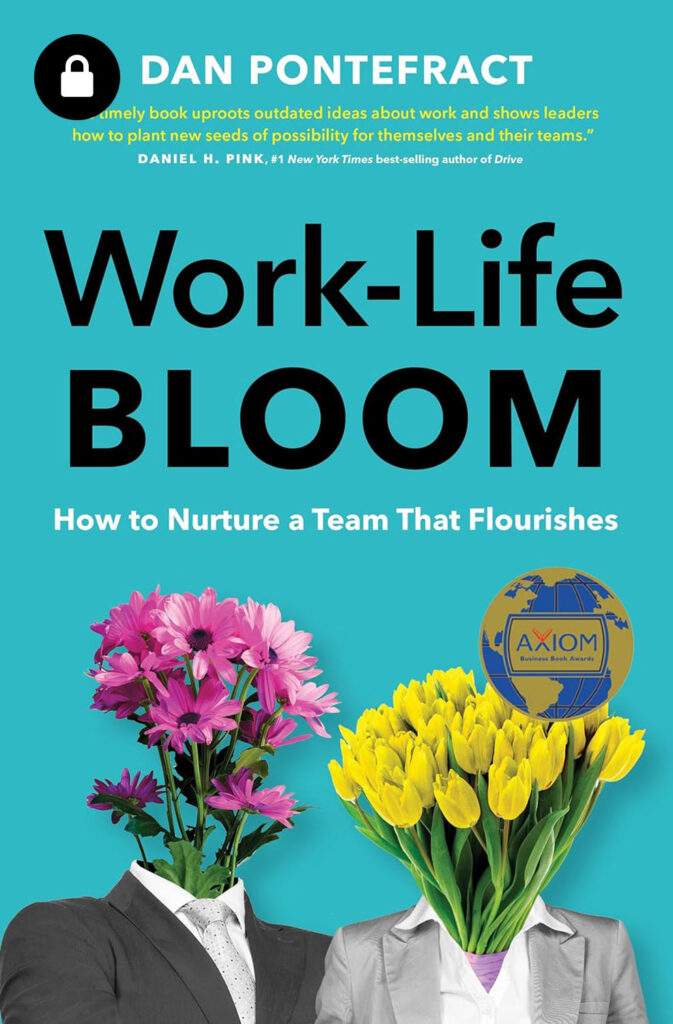
Work-Life Bloom: How to Nurture a Team that Flourishes
By Dan Pontefract
This is a sneak peek of this week’s Deep Dives Book Review — published today! Become a Deep Dives Member to get access to the full Book Summary.
In Work-Life Bloom, leadership thinker Dan Pontefract offers a bold new framework for building teams that thrive with purpose, energy, and connection. He reveals how leaders can create workplaces where vitality, agency, belonging, and growth aren’t afterthoughts, but the foundation of success. Want to discover how to turn your team into a flourishing ecosystem — and why it matters more than ever?
👉 Subscribe to our Deep Dives Membership for the full, in-depth summary that unpacks Pontefract’s powerful insights and practical tools.
Quick Reads
quick read — Emotional intelligence

Silent Signals: How Emotionally Intelligent People Read What’s Not Being Said
In high-stakes conversations, the most important information is often not spoken. It’s hinted at. It flickers across a face. It sits awkwardly between words. It’s what’s not being said—the pause before an answer, the hesitation in eye contact, the forced smile or subtle shift in posture—that reveals the truth behind the words.
Emotionally intelligent people know this.
They don’t just listen with their ears—they listen with their eyes, their gut, and their awareness. They understand that real connection and influence often live in the silent signals beneath the surface of conversation.
If you want to become a better leader, partner, or communicator, this is your edge: the ability to pick up on emotional subtext and read the room before it speaks.
Here’s how emotionally intelligent people do it, why it matters, and how you can sharpen your ability to read what’s not being said.
Why the Unspoken Matters
Communication is far more than words. In fact, research by Albert Mehrabian suggests that when conveying emotion, only 7% of the message is delivered through words, while 38% comes through tone of voice, and 55% through body language.
This doesn’t mean we ignore what people say—but it does mean we should give significant weight to how they say it, what’s left unsaid, and the emotional cues tucked between the lines.
Why this matters:
- In negotiations, reading silent signals can reveal hesitation, uncertainty, or hidden concerns.
- In leadership, it helps you detect burnout, disengagement, or unspoken conflict early.
- In personal relationships, it’s how you sense tension, discomfort, or unexpressed needs.
- In sales, it’s often what wins the deal—knowing when someone is truly interested vs. being polite.
Words may shape the surface of conversation, but subtext drives the meaning.
The Components of Silent Signals
Emotionally intelligent people are skilled at interpreting three key elements of unspoken communication:
No. 1 — Microexpressions
Microexpressions are brief, involuntary facial expressions that flash across a person’s face for just a fraction of a second—typically 1/25 to 1/15 of a second. They reveal true emotions, even when someone is trying to hide or mask them.
Examples:
- A quick flash of disgust when a colleague agrees to your idea.
- A momentary sadness in someone’s eyes before they say, “I’m fine.”
- A split-second anger before someone composes themselves.
These are windows into real feelings—and once you learn to spot them, they give you a tremendous advantage in reading the emotional landscape of any interaction.
No. 2 — Body Language
Body language includes posture, gestures, proximity, eye contact, and movement. It reflects a person’s openness, defensiveness, anxiety, confidence, or discomfort.
Some key cues:
- Crossed arms may indicate defensiveness or withdrawal.
- Leaning in often signals interest or emotional engagement.
- Fidgeting or foot-tapping might reflect anxiety or impatience.
- Avoiding eye contact can signal discomfort, guilt, or lack of confidence.
- Mirroring (subtly mimicking your posture) suggests connection and rapport.
Emotionally intelligent people learn to read these cues holistically—not in isolation, but in clusters and in context.
No. 3 — Tone, Pauses, and Silence
The way something is said often reveals more than what is said. Pay attention to:
- Pauses before answering. This may suggest internal conflict, hesitation, or discomfort.
- Changes in vocal tone. Rising pitch can signal stress, while a monotone may suggest disengagement.
- Silence. Silence isn’t empty—it’s charged. It can signal resistance, processing, or emotional overwhelm.
EI-savvy communicators use silence as data, not dead space. They ask themselves, “What’s happening emotionally during this pause?”
How to Train Yourself to Read Silent Signals
Like any skill, reading emotional subtext can be cultivated with practice and intentionality. Here’s how to get better at it:
No. 1 — Slow Down and Observe
We miss most silent signals simply because we’re rushing to speak, think, or move on. Emotional intelligence begins with presence.
Try this:
- In your next meeting or conversation, focus on observing the other person’s face and body language for the first 60 seconds before jumping in.
- Notice their tone, energy, and micro-reactions when you speak.
- Ask yourself: What are they feeling but not saying?
No. 2 — Study the Basics of Nonverbal Communication
There’s science behind all this. Books like “What Every BODY Is Saying” by Joe Navarro or “The Dictionary of Body Language” provide practical breakdowns of nonverbal cues.
Consider practicing with:
- Microexpression training tools like the ones developed by Dr. Paul Ekman.
- Watching interviews or speeches on mute to guess emotions based on body language alone.
No. 3 — Ask Reflective Questions
Emotionally intelligent people don’t just observe—they check their interpretations. Instead of assuming, they create space for clarity.
Say things like:
- “I noticed a pause there—what’s coming up for you?”
- “You said yes, but your face says maybe. Want to talk about it?”
- “You seem a bit off—anything you need?”
These questions show empathy and emotional attunement while inviting honesty.
No. 4 — Build Your Self-Awareness First
To read others well, you have to first become fluent in your own nonverbal and emotional cues. Reflect on:
- How you show stress physically
- What your “tell” is when you’re disengaged
- How others might misread your body language
Self-awareness helps you read the emotional mirror more accurately in others.
No. 5 — Use Silence Strategically
Silence makes space for truth. Emotionally intelligent leaders don’t rush to fill every pause. They understand that silence often coaxes out what words can’t.
When in doubt, pause.
Then ask, “What are we not saying that needs to be said?”
Why This Skill Sets Great Leaders Apart
In today’s fast-moving, hyper-distracted world, the ability to tune into silent signals is a rare and powerful leadership trait.
- It helps you navigate tension before it erupts.
- It lets you coach and support team members with more empathy.
- It builds trust, because people feel seen by you—even when they’re not speaking.
At a time when burnout, disengagement, and emotional suppression are rising in the workplace, your ability to read between the lines might just be what sets you apart.
Listen With More Than Your Ears
The loudest signals in communication are often the quietest. And emotionally intelligent people know that real connection, real leadership, and real growth come not from dominating the conversation—but from noticing what others are trying to say without words.
So the next time you’re in a room, a meeting, or a moment—pause. Observe. Feel. Ask yourself, “What’s being said in the silence?” Because the people who listen with more than their ears? They lead with more than just their words.
And that makes all the difference.
quick read — Personal development

The Identity Compromise: Micro-Drifts That Derail Your Authentic Self
Most people don’t wake up one day and realize they’ve abandoned who they are. It happens slowly. Quietly. Incrementally. It happens in the small decisions, the subtle compromises, the almost imperceptible micro-drifts that shift us from authenticity to adaptation.
One day, you look in the mirror and ask: Who have I become? And when did I get so far from who I meant to be?
This is the identity compromise. It doesn’t come with fanfare or crisis. It arrives silently, wearing the mask of responsibility, practicality, or belonging. And if we’re not careful, it becomes the operating system of our entire life.
The Anatomy of a Micro-Drift
A micro-drift is a small deviation from your core identity. It might look like:
- Saying “yes” when you meant “no”
- Staying silent to keep the peace
- Choosing security over purpose
- Hiding your quirks to seem more “professional”
- Pursuing goals you don’t believe in because they’re impressive
Individually, these choices don’t seem harmful. But over time, they compound. And the result isn’t just a misaligned life—it’s an exhausted soul.
Why We Drift
Humans are wired for connection, safety, and social acceptance. From a young age, we learn how to read the room. We adjust. We please. We perform. In many ways, this is a strength. But when adaptation becomes identity, we lose touch with our truest self.
There are a few forces that make identity drift more likely:
No. 1 — Survival Instincts. When your environment feels unstable, it’s natural to shrink parts of yourself. You start editing who you are to avoid rejection, judgment, or risk.
No. 2 — Social Conditioning. From school to the workplace to social media, we’re bombarded with messages about who we should be. Success is defined for us. Worth is measured externally. Authenticity takes a backseat to assimilation.
No. 3 — Burnout Culture. When doing takes precedence over being, there’s no space to check in. You’re too busy to question if the life you’re building is one you actually want.
No. 4 — Fear of Disruption. Sometimes we know we’re out of alignment, but the idea of rocking the boat—changing careers, ending relationships, speaking up—feels too costly. So we drift, hoping things will somehow recalibrate on their own.
The Cost of Compromise
At first, identity compromise might feel strategic. You’re making choices that seem smart, that keep you safe, that help you get ahead. But long-term, the cost is steep:
No. 1 — Emotional Fatigue. Pretending is exhausting. So is performing.
No. 2 — Chronic Discontent. Even when things look good on paper, they feel hollow inside.
No. 3 — Relationship Disconnection. If people only know your curated self, true intimacy is impossible.
No. 4 — Loss of Creativity and Joy. When you’re out of alignment, you lose access to your natural vitality.
You might feel burnt out and not know why. You might feel like you’re constantly chasing something but never arriving. Often, the root issue isn’t external. It’s the slow erosion of self.
Signs You’ve Drifted from Your Core Identity
- You’re succeeding by someone else’s definition, but feel empty.
- You feel unseen, even by those closest to you.
- You’re constantly editing your personality depending on who you’re with.
- You no longer recognize your own desires, values, or opinions.
- You fantasize about radically changing your life—not out of inspiration, but desperation.
How to Reclaim Your Identity
The good news? Micro-drifts are reversible. You don’t need to burn it all down to come home to yourself. But you do need to wake up.
Here’s how:
No. 1 — Get Quiet Enough to Hear Yourself
Busyness is the enemy of self-awareness. Create white space in your life. Journal. Meditate. Take walks without headphones. Let your inner voice speak—and listen without interruption.
Ask yourself:
- What parts of me have I silenced?
- Where am I out of alignment with what I value?
- What do I miss about the person I used to be?
No. 2 — Audit Your Commitments
Make a list of everything you’ve said yes to. For each item, ask: Is this aligned with who I want to be? Or is it a performance, a habit, or an obligation?
Begin to say no. Reclaim your energy. Not every opportunity deserves a piece of you.
No. 3 — Practice Micro-Corrections
You don’t have to leap into a new life. Start with small, brave acts:
- Tell the truth when it’s uncomfortable.
- Ask for what you need.
- Dress in a way that feels like you.
- Share your real opinion.
- Take the risk you’ve been avoiding.
Authenticity isn’t a switch you flip—it’s a muscle you strengthen.
No. 4 — Surround Yourself with Truth-Tellers
Your environment either reinforces the drift or supports your return. Seek out people who reflect your truest self back to you. People who value depth over polish. People who call you out when you stray.
No. 5 — Forgive the Drift
Self-betrayal happens slowly. Don’t beat yourself up for drifting. You were doing your best with what you knew at the time. Now that you know more, you can choose differently.
Forgiveness clears the path for change.
Your Core Self is Not Lost—Just Buried
Even if you feel far from your authentic self, know this: you haven’t lost it. Your core identity is still there—beneath the layers of adaptation, people-pleasing, fear, and fatigue.
You don’t need to invent a new you. You need to return to the real you.
Every time you say yes to alignment, every time you speak a small truth, every time you honor what you feel over what’s expected—you get closer.
Final Word
Life will always try to pull you off course. That’s not failure. That’s reality. The key is to notice the drift before it becomes a destination.
Because the life you want? It doesn’t live in someone else’s version of success. It lives in the quiet integrity of being exactly who you are—no mask, no compromise, no apology.
Come home to that.
Again and again and again.
quick read — LEADERSHIP

Leading When You’re Not Okay: The Ethics of Transparency in Tough Times
Leadership comes with pressure, expectations, and—let’s be honest—a heavy dose of emotional labor. You’re supposed to set the tone, carry the vision, and keep everyone steady. But what happens when you’re not okay?
What if you’re grieving, burned out, anxious, or simply running on empty? Should you say something? Should you push through? Will being honest make you look weak—or worse, shake the confidence of the very people you’re supposed to lead?
This is the quiet dilemma many leaders face behind closed doors. How much should I share when I’m struggling?
The truth is, the best leaders aren’t superhuman—they’re emotionally intelligent. And in tough times, that means learning how to be appropriately transparent—not to offload, not to center yourself, but to model humanity in a way that fosters trust and resilience in your team.
Let’s explore how to navigate this delicate line with ethics, empathy, and clarity.
The Myth of the Invincible Leader
We’ve long been sold the image of the stoic, unshakeable leader—someone who never cracks, never falters, and never shows fear. That model may have worked in the industrial era, but in today’s complex, human-centered workplaces, perfectionism breeds disconnection.
Teams don’t need robotic optimism. They need authenticity. They need to know their leader isn’t pretending while everything burns behind the curtain.
That said, authenticity isn’t about oversharing. It’s about leading with emotional integrity—the willingness to say “I’m not at my best right now,” without emotionally unraveling or putting the burden on others.
Why Honesty Matters (When Done Right)
No. 1 — It Builds Psychological Safety
When leaders acknowledge their own challenges, it gives others permission to do the same. This doesn’t mean turning your team into a group therapy session. It means creating a culture where honesty isn’t punished and vulnerability isn’t taboo.
No. 2 — It Deepens Trust
People can spot inauthenticity a mile away. If you’re struggling but pretending you’re fine, it creates a trust gap. Ironically, sharing some of your struggle can increase your credibility, not weaken it—because it shows you’re human and self-aware.
No. 3 — It Models Emotional Intelligence
When you name your emotions without being consumed by them, you teach your team how to regulate theirs. It shows that acknowledging difficulty isn’t a threat to productivity—it’s a path to resilience.
The Risks of Overexposure
Of course, transparency comes with boundaries. There is such a thing as too much honesty, especially if it’s unfiltered or emotionally raw.
Here’s where oversharing becomes problematic:
- When it centers the leader over the team (“I’m just having a rough time. I need you all to step up for me.”)
- When it creates emotional instability (“I don’t know how we’re going to get through this.”)
- When it lacks a clear path forward (“Everything is falling apart. I just wanted you to know.”)
These moments may feel cathartic for the leader, but they often leave teams feeling uncertain, anxious, or even responsible for your emotional state. And that’s not fair—or effective.
So… When Should You Say Something?
There’s no one-size-fits-all answer, but here are a few signs that it’s the right time to be real:
- Your emotional state is affecting your energy, tone, or behavior in a way others have noticed.
- You’re showing up less consistently, and your team is feeling the impact.
- You’re facing a challenge (personal or professional) that affects your leadership presence—and it would be disingenuous to pretend otherwise.
In these cases, naming it—briefly and thoughtfully—can be a leadership act.
How to Be Honest Without Destabilizing the Team
Here’s a framework to help you share what’s real without making it heavy:
No. 1 — Acknowledge Without Overexplaining
You don’t have to go into personal details. A simple statement like, “I’m navigating a few personal challenges right now, and I appreciate your patience if I seem less present than usual” goes a long way.
No. 2 — Anchor It with Reassurance
Balance honesty with a reaffirmation of stability. “I’m not at 100% this week, but I’ve got the support I need, and I’m still fully committed to our goals.”
No. 3 — Redirect the Focus to the Team
Don’t center yourself for long. Briefly share, then shift the attention to the team’s strengths or progress. “What you’re all building right now matters—and I want you to know how much I value that.”
No. 4 — Create Space, Don’t Demand It
Transparency shouldn’t become a request for emotional caretaking. If a team member checks in, thank them—don’t offload. And if you need deeper support, seek it outside the team (coaching, therapy, mentors).
No. 5 — Follow Up with Presence
After sharing something vulnerable, show up with steadiness. You don’t have to fake energy, but be intentional about your consistency. That’s what builds emotional safety around your honesty.
Real-World Example: A Leader Doing It Right
When Airbnb had to lay off 25% of its workforce in 2020, CEO Brian Chesky wrote a heartfelt letter explaining the decision. He acknowledged his personal grief, the difficulty of the decision, and his commitment to helping affected employees.
What stood out was his balance: he didn’t wallow, but he didn’t sugarcoat. He was human without being helpless. And it earned Airbnb widespread praise—not just for the decision, but for how it was handled.
That’s emotionally intelligent transparency in action.
The Ethics of Emotional Responsibility
Here’s the hard truth: your team is not your therapist.
It’s not ethical to burden them with emotional weight they can’t carry—especially if it impacts their ability to stay focused and feel safe.
Ethical leadership means:
- Being honest without being heavy.
- Naming your struggle without naming your team as your support system.
- Modeling vulnerability without destabilizing your people.
What to Do When You’re Deeply Struggling
Sometimes the struggle is more than a passing rough patch. Maybe you’re dealing with burnout, grief, or a personal crisis.
In those moments:
- Take space if you need it. Stepping back briefly is better than pushing through and breaking down.
- Be transparent with key stakeholders. Let trusted team members know what to expect.
- Set clear boundaries. Protect your privacy, but don’t disappear without explanation.
- Get real support. Therapy, coaching, or even medical leave might be what’s truly needed.
Taking care of yourself is leadership. There’s nothing weak about protecting your mental health.
You Don’t Have to Be Okay to Be a Great Leader
Being a strong leader doesn’t mean being unshakable. It means being grounded in truth, even when that truth is messy.
When you lead from that place—with emotional integrity, compassion, and boundaries—you give your team a gift: the permission to be human and the inspiration to keep moving forward.
So the next time you’re not okay, remember: You don’t have to pretend. You don’t have to collapse. You just have to lead with care—for them, and for yourself. Because real leadership isn’t about hiding the cracks.
Quotes of the Week
QUOTE — EMOTIONAL INTELLIGENCE

QUOTE — PERSONAL DEVELOPMENT

QUOTE — LEADERSHIP

Reframe

Rest Is Not a Reward—It’s a Responsibility: Reframing Rest as a Strategic Asset in a Hustle-Obsessed World
In a world where exhaustion is worn like a badge of honor and back-to-back Zoom calls feel like proof of ambition, rest has become an endangered concept. We’ve glamorized the grind, internalized the hustle, and convinced ourselves that only after we’ve pushed to the brink of burnout do we deserve a break. But what if we’ve had it backwards all along?
What if rest isn’t a luxury? What if it’s not a treat, a reward, or a sign of weakness?
What if rest is a responsibility?
This reframe isn’t just poetic—it’s essential. Because the truth is: sustainable success, clear thinking, and effective leadership aren’t born from chronic exhaustion. They are built on rhythms of renewal.
The Problem with Earning Your Rest
Hustle culture has deeply conditioned us to believe that rest must be earned. It whispers:
- “You can rest after you finish everything.”
- “Only slackers take breaks.”
- “Sleep is for the weak.”
This mindset doesn’t just affect our productivity. It erodes our mental health, impairs our creativity, and strains our relationships. We treat burnout like a rite of passage, not a warning light.
A recent study by the World Health Organization classified burnout as an “occupational phenomenon” characterized by chronic workplace stress. In the U.S. alone, stress-related productivity losses are estimated to cost businesses over $300 billion annually. That’s not just bad for individuals; it’s catastrophic for companies.
The irony? Most people perform worse when they’re sleep-deprived, emotionally depleted, and chronically stressed. Yet many leaders still wear their exhaustion like a status symbol.
The Science of Strategic Rest
Numerous studies confirm what most of us feel in our bones: rest fuels high performance. Neuroscience shows that rest is critical for memory consolidation, emotional regulation, and problem-solving. The prefrontal cortex—the part of the brain responsible for decision-making and focus—needs downtime to function optimally.
Athletes have long known this. Recovery is baked into their training regimens. They don’t earn rest after they’ve collapsed—they schedule it to avoid collapse.
Leaders and knowledge workers would do well to adopt the same mindset.
Rest as a Responsibility
Here’s the hard truth: if you’re in a leadership role, rest isn’t just about you. It’s about your team.
- When you’re running on fumes, you make reactive decisions.
- When you’re tired, you communicate poorly and listen even worse.
- When you’re stretched too thin, you stop seeing nuance—and your emotional intelligence drops.
You set the tone. If you treat rest as optional, your team will follow suit—even if it burns them out.
Choosing rest is an act of leadership. It signals:
- I trust my team enough to pause.
- I value quality over constant motion.
- I understand that clarity requires space.
Reframing Rest in Daily Life
So how do we shift from reactive rest (collapse) to proactive rest (capacity building)?
Here are five mindset shifts that make the difference:
No. 1 — Schedule rest like a meeting. Put it on your calendar. Protect it like you would a client call. Treat it with the same urgency you give to performance reviews and investor pitches.
No. 2 — Define what rest actually means for you. It might be a walk outside, a screen-free hour, a weekend off-grid, or even just 10 minutes of stillness. Rest isn’t always sleep. It’s anything that restores your nervous system and resets your perspective.
No. 3 — Stop apologizing for taking time off. You don’t owe the world a justification for preserving your well-being. Normalize saying, “I’m unplugging to recharge.”
No. 4 — Lead by example. When leaders normalize rest, it liberates teams. Don’t just encourage others to recharge—show them what that looks like.
No. 5 — Treat rest as a performance strategy. Your brain is not a machine. It’s an ecosystem. Rest is what allows that ecosystem to adapt, respond, and flourish under pressure.
The ROI of Rest
Want to make a data-driven case for this mindset? Consider:
- NASA research shows that a 26-minute nap can enhance performance by 34% and alertness by 54%.
- The Harvard Business Review found that companies encouraging work-life balance see greater employee retention and engagement.
- Studies from Stanford University revealed that productivity declines sharply after 50 hours of work per week, and falls off a cliff after 60.
In other words, grinding doesn’t scale. But renewal does.
From Hustle to Rhythm
Let’s be clear: this isn’t an argument against hard work. It’s a case for wise work.
Hustle is unsustainable. Rhythm is scalable. The best leaders don’t sprint endlessly. They move with cycles of intensity and recovery.
We need a new model of high performance—one that doesn’t equate exhaustion with excellence. A model that values presence over busyness, clarity over chaos, and longevity over intensity.
Rest is not the reward at the end of your to-do list. It’s the foundation under it. It’s not something you give yourself when you’ve earned it. It’s something you protect because you matter.
So pause. Breathe. Reset.
Because you don’t need to burn out to prove your worth. You just need to show up clear, whole, and ready—and that starts with rest.