Personal Development Series
We live in a culture obsessed with identity. From personality tests to purpose-driven branding, we’re inundated with the message that we need to “find ourselves.” The implication? That once we arrive at some fully formed, well-labeled, and optimized version of who we are, the work is done.
But what if that’s not only wrong—but dangerous?
The idea of the “finished self” is a myth. And believing in it can quietly sabotage your growth, lock you into outdated narratives, and strip you of the very adaptability that makes us human. In truth, the most fulfilled, impactful people aren’t the ones who find themselves once and for all. They’re the ones who master the art of constant reinvention.
The Cultural Trap of “Finding Yourself”
The phrase “find yourself” sounds noble. It promises clarity, peace, purpose. But it’s also static. It implies there’s one fixed self out there—a single destination that, once discovered, will unlock your best life.
This is a seductive but flawed belief. Why? Because it ignores the fact that we are evolving creatures living in an ever-changing world. Your values shift. Your experiences reshape you. Your circumstances transform. So why would your identity remain frozen in time?
Treating identity as a destination creates two dangerous outcomes:
- Premature Closure: Once people believe they’ve “found themselves,” they often stop exploring, stop questioning, stop growing. They settle into a box labeled “who I am” and defend it, even when it no longer fits.
- Shame in Transition: If you believe you’re supposed to be one clear, consistent thing, then any pivot, breakdown, or reinvention can feel like failure—when it may be the healthiest move you can make.
Identity is Not a Noun. It’s a Verb.
Instead of thinking of identity as a fixed noun, think of it as a dynamic verb.
You don’t just have a self. You self.
You self through choices, habits, environments, relationships, and stories. You self every day, consciously or unconsciously. And just like any living process, that means you can reself—if you choose to.
Reinvention isn’t just allowed. It’s essential. It’s what keeps your life aligned with who you’re becoming instead of who you used to be.
The Cost of Clinging to a Finished Self
Consider this: How many people stay in jobs they’ve outgrown because “this is just who I am”? How many relationships drag on in silent misery because someone is clinging to a version of themselves that no longer feels true?
We often talk about comfort zones, but the real trap is identity zones. You begin to mistake consistency for integrity. You prioritize the story you’ve told about yourself over the truth of what you feel now.
That gap creates quiet suffering.
It shows up in Sunday night dread, in creative stagnation, in midlife crises, in quiet addictions. Because deep down, your soul knows when you’ve stopped evolving.
The Science of Change: Neuroplasticity and the Reinventable Brain
Neuroscience backs this up. The concept of neuroplasticity shows that our brains remain malleable well into adulthood. We can form new habits, rewrite patterns, and adopt entirely new perspectives. In other words, change isn’t just possible—it’s biological.
Research from Dr. Carol Dweck also supports the idea of a growth mindset: the belief that your basic qualities are things you can cultivate through effort. People who embrace this mindset are more resilient, more open to learning, and more likely to thrive through change.
Reinvention isn’t failure. It’s evolution in action.
Historical Proof: Reinventors Who Changed the Game
Some of the most admired figures in history were serial reinventors:
- Maya Angelou was a fry cook, singer, dancer, journalist, and civil rights activist before becoming a world-renowned poet and author.
- Nelson Mandela went from prisoner to president without abandoning his values—but with a profound personal transformation that shaped his leadership.
- Steve Jobs, after being ousted from Apple, reinvented himself through Pixar and then returned to redefine an entire company and culture.
These people didn’t cling to old versions of themselves. They used every setback and transition as fuel for evolution.
The Anatomy of Reinvention
Reinvention doesn’t always require dramatic external change. Sometimes it starts quietly:
- Choosing to think differently about your past.
- Changing how you react in moments of stress.
- Taking on a new perspective, role, or habit that aligns more closely with who you want to be.
Here’s a simple framework to initiate reinvention:
No. 1 — Recognize the Drift
Identify the gap between your current self and your desired self. Where are you living on autopilot? What’s become performative or outdated?
No. 2 — Name the Shift
Get clear about what needs to change. Is it your environment? Your mindset? Your relationships? Your daily rhythm?
No. 3 — Ritualize the Change
Reinvention sticks when it’s practiced. Create new rituals that support your shift. Morning routines, language changes, calendar priorities—these build the muscle of your new identity.
No. 4 — Surround Yourself with Reinventors
You become who you spend time with. Seek out communities and individuals who embrace growth, who normalize evolution, and who challenge you to keep becoming.
No. 5 — Tell the New Story
Language shapes identity. Start introducing yourself differently—not with a resume, but with a direction. “I’m someone who’s learning to…” or “I’m exploring…” gives you permission to be in motion.
The Courage to Be Fluid
Reinvention requires courage. It means letting go of the safety of who you’ve been, and risking the uncertainty of becoming.
It means being willing to confuse some people.
It means being willing to disappoint those who only knew a certain version of you.
But what’s the alternative? Living a script someone else wrote for you? Staying loyal to a version of yourself that no longer feels alive?
You were not born to be finished. You were born to be in motion.
Reinvention Isn’t Flakiness. It’s Integrity.
Let’s be clear: reinvention isn’t about being inconsistent or lacking commitment. It’s about alignment. It’s about noticing when your current way of being no longer fits, and having the integrity to respond.
The tree doesn’t apologize for shedding its leaves each fall. The caterpillar doesn’t ask permission to become something else. Why should you?
The Journey Is the Self
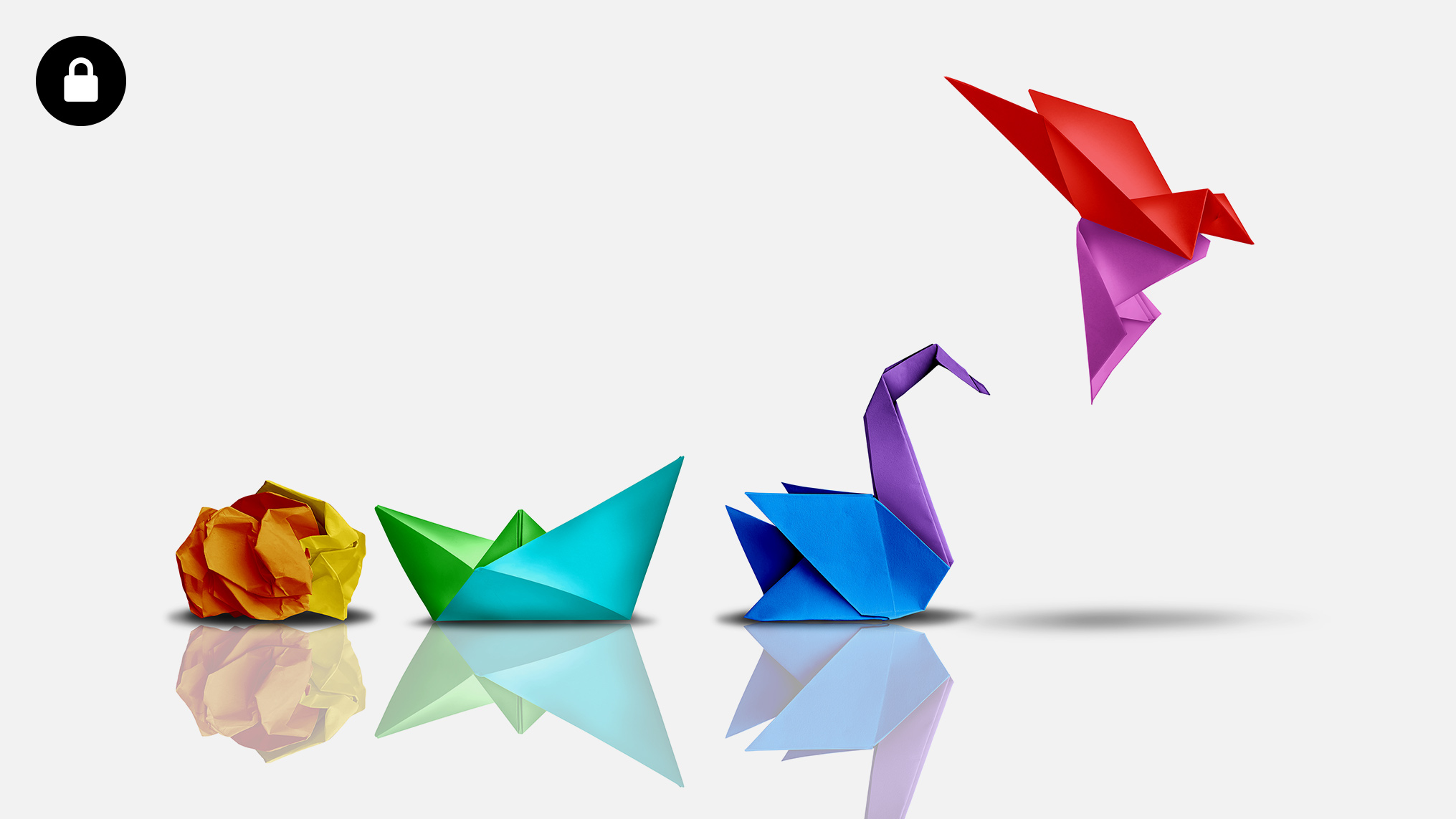
If you’re waiting to “arrive” at your final, fully developed self—stop. The point of life is not to become one thing. The point is to become many things, on purpose.
Your identity is not a statue to preserve. It’s a canvas to keep painting. A song to keep remixing. A life to keep reimagining.
You don’t find yourself. You make yourself. Again. And again. And again.
So let go of the myth of the finished self.
Start living like the masterpiece you are: always in progress, always becoming, and never, ever done.