
Deep Dives Articles
DEEP DIVES ARTICLE — EMOTIONAL INTELLIGENCE
The Emotional Cost of Living a Life Designed for Other People
This is a sneak peek of this week’s Deep Dives article. Published today!
What if the exhaustion you feel has nothing to do with how hard you’re working and everything to do with whose life you’re living? Many people spend decades chasing goals, titles, expectations, and definitions of success they never consciously chose. From the outside, everything looks impressive. On the inside, something feels missing. In this thought-provoking Deep Dive, we explore how family expectations, social pressure, cultural programming, and the pursuit of approval can slowly disconnect us from our authentic selves, often without us even noticing. The question is not whether you’re successful. The question is whether the life you’ve built is actually yours.
DEEP DIVES ARTICLE — PERSONAL DEVELOPMENT
The Brutal Freedom of Being Honest with Yourself
This is a sneak peek of this week’s Deep Dives article. Published today!
Most people believe they want the truth. What they actually want is reassurance. The most consequential lies in life are rarely told to others; they are told quietly to ourselves through rationalizations, excuses, and carefully constructed narratives that protect us from uncomfortable realities. But what happens when we stop defending those stories and confront the truth head-on? This Deep Dive examines the psychology of self-deception, the hidden cost of avoiding reality, and why genuine freedom begins where self-protection ends. The journey is uncomfortable, but it may be the most important conversation you will ever have.
DEEP DIVES ARTICLE — LEADERSHIP
The Credibility Crisis: How Leaders Lose Trust One Small Compromise at a Time
This is a sneak peek of this week’s Deep Dives article. Published today!
Most leadership failures do not begin with scandal, corruption, or catastrophic decisions. They begin with small compromises that seem harmless in the moment. A promise delayed. A difficult conversation avoided. A standard applied inconsistently. Over time, these seemingly insignificant choices accumulate, quietly eroding the one asset every leader depends upon: trust. In this Deep Dive, we explore why credibility is lost long before anyone notices, how successful leaders unknowingly create their own trust deficits, and why organizational culture often reflects the integrity of those at the top. If leadership is influence, credibility is the currency. The question is whether you’re spending it faster than you’re earning it.
Deep Dives Book Summary
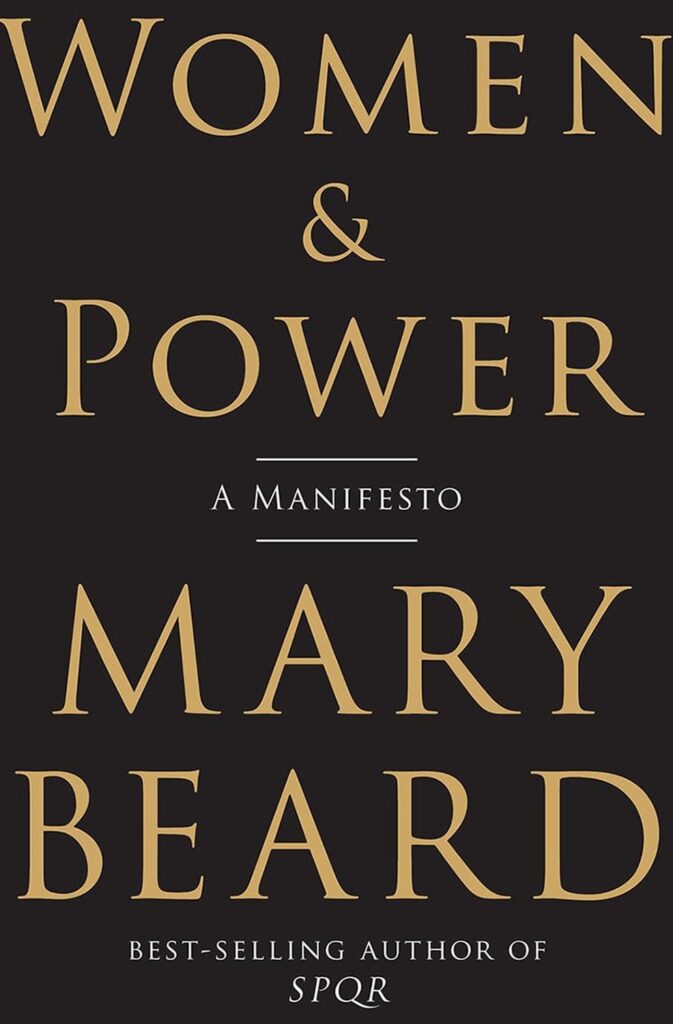
Women & Power: A Manifesto
By Mary Beard
This is a sneak peek of this week’s Deep Dives article. Published today!
Why do female leaders still face resistance in the boardroom, the political arena, and public life, despite decades of progress? According to Mary Beard, the answer may lie far deeper than modern politics or workplace culture. It may be rooted in stories, myths, and assumptions that have shaped Western civilization for more than two thousand years. In this fascinating Deep Dive, we explore Beard’s powerful argument that women have historically been excluded not only from power itself, but from the very right to speak with authority. From Homer and Medusa to modern CEOs and politicians, this thought-provoking book challenges us to reconsider what power looks like, who gets to wield it, and whether our definition of leadership is overdue for reinvention.
Quick Reads
quick read — Emotional intelligence
Emotional Intelligence and the Art of Telling the Truth
We live in an age obsessed with emotional intelligence. Executives attend empathy workshops, organizations invest millions in leadership development, and bookshelves overflow with promises of self-awareness. Yet one uncomfortable question rarely gets the attention it deserves: why do so many emotionally intelligent people struggle to tell the truth?
Not factual truth. Most people can accurately report what happened in a meeting. The harder truth is the kind that carries consequences, the kind that risks rejection, creates discomfort, and forces us to choose authenticity over approval.
Emotional intelligence is often described as understanding feelings, our own and those of others. That is part of it. But it may be better understood as the ability to navigate reality without becoming captive to illusion. If that is true, then honesty is not simply a virtue. It is a prerequisite. The paradox is that the more socially skilled we become, the easier it is to avoid difficult truths. We learn to soften messages, manage impressions, and read a room. These are valuable abilities, yet they can also become sophisticated tools for self-deception.
Why We Avoid the Truth
The tendency to avoid difficult truths is deeply human. Psychologist Leon Festinger’s theory of cognitive dissonance helps explain why. When reality conflicts with our beliefs about ourselves, the resulting discomfort creates tension. Rather than changing our beliefs, we often change our interpretation of reality. An employee who dislikes their job convinces themselves they are “waiting for the right opportunity.” A leader who fears confrontation calls avoidance “being diplomatic.” The human mind often acts less like a scientist seeking truth and more like a lawyer defending a client.
Modern culture amplifies this. Social media rewards presentation over authenticity. Professional environments frequently reward political correctness over candor. Image management has become a skillset, and many people spend more energy managing perceptions than examining reality.
Kindness, Candor, and Leadership
One of the most misunderstood aspects of emotional intelligence is the relationship between honesty and kindness. We assume honesty is harsh and kindness is gentle. In practice, dishonesty frequently masquerades as kindness. Managers avoid difficult feedback to spare feelings. Friends stay silent while someone makes destructive choices. Silence appears compassionate, yet truth delayed is rarely truth avoided. It simply accumulates interest. Kindness without honesty is often a form of self-protection. The goal is not brutal honesty, which becomes a weapon, but candor balanced with compassion: saying what needs to be said in a way that preserves dignity while respecting reality.
This matters most in leadership. The space shuttle Challenger disaster, the collapse of Enron, and the financial crisis of 2008 shared a common theme. Warning signs existed, information was available, and concerns were raised, yet individuals chose silence over candor. Organizational psychologist Amy Edmondson’s research on psychological safety shows that high-performing teams are not defined by constant agreement but by an environment where people feel safe speaking difficult truths. When leaders become attached to certainty, subordinates conceal doubts, and organizations begin living inside their own mythology. The most dangerous leader may be the one most insulated from uncomfortable truths, because reality does not care about hierarchy.
The Inner Conversation
Perhaps the hardest truths are the ones we tell ourselves. Most people live inside a private negotiation between who they are and who they wish to be, and the temptation is to resolve that tension through narrative rather than action. We are not procrastinating, we are preparing. We are not afraid, we are being cautious. Socrates argued that the unexamined life is not worth living, a call not for self-criticism but for intellectual honesty. The examined life is not comfortable, but it is real.
Honesty often begins with a simple phrase that is becoming increasingly rare: “I might be wrong.” The willingness to revise our beliefs in the face of new evidence is not weakness but intellectual maturity. In a world dominated by performance and carefully curated identities, authenticity may be one of the rarest forms of courage. The challenge facing each of us is deceptively simple: are we using our intelligence to understand reality, or are we using it to avoid it?
quick read — Personal development
The Pursuit of Approval and the Loss of Self
Most people believe they are pursuing happiness. Many are actually pursuing approval. The two travel together in the early stages of life, then gradually diverge. As children, approval from parents, teachers, and peers is essential for survival and social development. We learn quickly that praise feels good and rejection feels bad, and we adapt. There is nothing inherently wrong with this. The problem emerges when approval stops being a tool and becomes a destination. Somewhere along the way, people begin trading authenticity for acceptance, conviction for belonging, individuality for social safety. These exchanges happen gradually and unconsciously, until one day they wake up feeling strangely disconnected from their own life, having achieved what was expected of them while remaining uncertain whether the life they built was ever theirs.
Why We Crave Approval
The desire for approval is not a character flaw. It is deeply rooted in human evolution. For most of human history, exclusion from the tribe carried serious consequences, and social acceptance was directly connected to survival. Our brains still carry the architecture of that ancient environment. Neuroscientific research has shown that social rejection activates many of the same neural pathways associated with physical pain. The brain processes rejection as a genuine threat, which helps explain why people go to extraordinary lengths to avoid criticism, embarrassment, or disapproval.
Modern society has dramatically expanded the number of people whose approval we seek. For most of human history, individuals were concerned with the opinions of a few dozen people. Today, through social media, we are exposed to the judgments, expectations, and comparisons of thousands every day. Our evolutionary wiring was never designed for that level of scrutiny, and approval becomes not merely desirable but addictive.
The Performance Culture and the Disappearing Self
Social media did not invent status-seeking, but it created a measurable, continuous, and highly visible approval system. Likes, followers, comments, and ratings transformed validation into a quantifiable currency. Increasingly, people approach life itself as a performance. Experiences become content, accomplishments become announcements, and personal beliefs become branding exercises. Many now spend more energy curating how they appear than examining who they are. The result is a strange paradox: people become increasingly visible while becoming less known, even to themselves.
The danger of approval-seeking is that it rarely feels dangerous. A young professional chooses a prestigious path rather than a meaningful one. An executive suppresses an unpopular opinion. A parent conforms to norms they privately disagree with. No single decision seems catastrophic, but they accumulate. Psychologist Carl Jung warned about this through his concept of the persona, the social mask individuals develop to navigate society. The mask serves a useful purpose, but problems arise when it becomes mistaken for the person. The result is often anxiety, dissatisfaction, burnout, or an inexplicable sense of emptiness. The problem is not that life is failing. The problem is that the wrong person is succeeding.
Success, and the Courage to Disappoint
Few ideas are more culturally celebrated than success, yet society rarely asks a crucial question: success according to whom? Many people spend decades climbing ladders they never consciously chose, pursuing goals inherited from parents, peers, and institutions. Research on life satisfaction consistently shows that beyond a certain threshold, additional income contributes less to happiness than relationships, purpose, autonomy, and personal meaning. External markers of approval deliver diminishing emotional returns, and the pursuit itself becomes endless. Approval functions much like a horizon: no matter how far you travel, it remains in the distance.
The alternative is not rebellion or indifference. It is the willingness to disappoint people, not recklessly but deliberately. Every meaningful life eventually requires decisions that conflict with the expectations of others. This becomes particularly important for leaders, who become trapped when they prioritize being liked over being effective. History rarely remembers leaders who merely reflected public opinion. Recovering authenticity is not romantic self-discovery but self-honesty: asking which beliefs are genuinely mine, which goals actually matter to me, and what I would do if I were not concerned about how it would be perceived. A person who no longer depends entirely on external validation can tolerate disagreement, withstand criticism, and change their mind without losing themselves. An impressive life earns admiration. An authentic life earns peace. The real challenge is not whether others approve of who we are, but whether we approve of who we have become. If nobody were watching, who would I choose to be?
quick read — LEADERSHIP
The Leadership Mask: What Happens When Image Replaces Character
Modern leadership has become increasingly visual. Social media, video conferencing, and personal branding have amplified this, but the deeper shift is that leaders are now judged less by the substance of their character than by the quality of their presentation. This creates a dangerous temptation. Many leaders become extraordinarily skilled at managing perception while investing far less in the qualities that make leadership sustainable: integrity, humility, courage, self-awareness, and judgment. They learn to project confidence, communicate vision, and deliver polished presentations, while beneath the surface the qualities that ultimately determine effectiveness remain underdeveloped.
The result is what might be called the leadership mask, the public persona leaders construct to gain influence and credibility. The mask itself is not inherently problematic. Every leader must adapt their style to different audiences and circumstances. The danger arises when the mask becomes more important than the person wearing it. At that point, leadership ceases to be an expression of character and becomes a performance.
Why Image Became So Powerful
For most of human history, leaders were known primarily through direct experience. Employees worked alongside them, and reputation was built slowly through repeated interactions and behavior under pressure. Today, leaders often reach thousands who have never met them, through interviews, podcasts, posts, keynote speeches, and carefully managed communication. People often encounter the image of a leader long before they encounter the leader themselves, which creates a powerful incentive to optimize perception. A compelling story attracts attention faster than consistent behavior. Charisma creates influence more quickly than credibility. The challenge is that while image can be manufactured relatively quickly, character cannot.
Reputation Is Not Character
Reputation is what other people believe about you. Character is what remains true when nobody is watching. The two are related, but they are not the same. A leader can possess a strong reputation and weak character, as corporate scandals, financial frauds, and ethical failures repeatedly demonstrate. In many cases, their public image remains intact for years before reality catches up with perception.
This surprises observers because of the halo effect: when individuals excel in one area, we assume they possess strengths in others as well. Charisma becomes confused with wisdom, confidence with competence, public visibility with leadership ability. The leadership mask exploits these assumptions, and the greater the gap between image and character, the more dangerous the mask becomes.
The Hidden Cost of Performance
Many leadership failures do not begin with malicious intent. They begin with an increasing dependence on maintaining a particular image. Once leaders become invested in how they are perceived, admitting mistakes threatens the image of competence, seeking advice risks revealing uncertainty, and constructive criticism becomes unwelcome. Gradually, the leader stops pursuing truth and starts managing appearances. This transition is rarely obvious, even to the leader. Organizations become less honest as employees learn which truths are acceptable and which are dangerous. Feedback becomes distorted, dissent is discouraged, and problems remain hidden longer than they should. Eventually, reality diverges from the narrative, and the leader’s carefully constructed image becomes their greatest vulnerability.
Character Reveals Itself Under Pressure
One reason character matters so much is that it cannot remain hidden indefinitely. Economic downturns, organizational crises, public criticism, and personal setbacks reveal qualities that years of success can conceal. A leader who appears decisive during stability may become defensive during uncertainty. A leader celebrated for confidence may reveal insecurity when challenged. This explains why many leaders seem different during crises. The crisis did not change them. The crisis revealed them. Warren Buffett famously observed that when the tide goes out, you discover who has been swimming naked. Charisma can inspire people during favorable conditions. Character sustains trust when conditions deteriorate.
Leadership development frequently focuses on communication skills, executive presence, and personal branding, which are often easier to teach than integrity, humility, accountability, and courage. As a result, organizations sometimes produce leaders who know how to look like leaders without fully understanding what leadership requires. But followers are remarkably perceptive over time. They compare words with actions and observe how leaders behave when outcomes are uncertain. Trust emerges when people repeatedly observe alignment between what a leader says and what a leader does. Character, in other words, is credibility accumulated over time.
Image can attract followers. Character earns trust. Image can create attention. Character creates credibility. Image may open the door. Character determines what happens after people walk through it. The question facing every leader is therefore not whether they have built a compelling image, but whether the person behind the image is worthy of the trust it inspires. Because eventually every mask encounters reality.
Quotes of the Week
QUOTE — EMOTIONAL INTELLIGENCE
QUOTE — PERSONAL DEVELOPMENT
QUOTE — LEADERSHIP
Reframe
The Person You Become When No One Is Watching
The Character Test Nobody Sees
Modern life is filled with audiences.
We perform for employers, colleagues, friends, customers, family members, and increasingly for strangers online. Through social media, professional networking platforms, and digital communication, much of our lives now unfolds in public view. We are constantly aware of how we are perceived, evaluated, and judged.
This creates an interesting question.
Who are you when nobody is looking?
Not who you appear to be. Not who your resume says you are. Not who your social media profiles suggest you are. Not even who your friends and colleagues believe you are.
Who are you when there is no audience, no reward, no recognition, and no possibility of applause?
The answer to that question may reveal more about a person’s character than any public accomplishment ever could.
Society places enormous emphasis on reputation. We celebrate visible success, public achievements, and external validation. Yet history repeatedly reminds us that reputation and character are not the same thing. Reputation is what other people think about you. Character is what remains when external incentives disappear.
The distinction is easy to overlook because public life often rewards appearance. Private life, however, reveals substance.
And substance is ultimately what determines the trajectory of a life.
The Hidden Architecture of Character
Character is rarely formed in dramatic moments.
Most people imagine character being tested during major crises, ethical dilemmas, or life-changing decisions. While those moments certainly matter, character is more often built through ordinary choices repeated over long periods of time.
It is shaped by whether you keep promises you made only to yourself.
It is revealed by what you do with your time when nobody is monitoring your behavior.
It emerges through the standards you maintain when there are no consequences for lowering them.
The philosopher Aristotle argued that excellence is not an act but a habit. His observation remains remarkably relevant. Human beings are not defined primarily by isolated actions. They are shaped by recurring patterns of behavior.
The individual who chooses discipline when laziness would be easier becomes a different person over time.
The individual who chooses honesty when deception would be more convenient becomes a different person over time.
The individual who chooses learning over distraction, responsibility over excuses, and integrity over expediency gradually develops qualities that become embedded in their identity.
These decisions often go unnoticed by others.
That is precisely why they matter.
The Difference Between Compliance and Integrity
One of the most important distinctions in personal development is the difference between compliance and integrity.
Compliance occurs when behavior is shaped by external pressure. Rules are followed because there are consequences for violating them. Standards are maintained because someone is watching.
Integrity operates differently.
Integrity is the alignment between values and behavior regardless of observation.
A person who behaves ethically only when monitored does not possess integrity. They possess compliance.
A student who studies only because grades are being recorded is demonstrating compliance.
An employee who works diligently only when their manager is present is demonstrating compliance.
A leader who acts according to their principles only when doing so is politically advantageous is demonstrating compliance.
Integrity begins when external enforcement ends.
This distinction matters because life eventually presents situations where nobody is watching. There is no supervisor. No referee. No audience.
At those moments, character becomes the governing force.
The quality of a person’s life is often determined by how they behave in those situations.
The Modern Challenge of Constant Visibility
Paradoxically, one of the greatest challenges of modern society may be that people spend too much time being observed.
Technology has created unprecedented levels of visibility. Individuals now document experiences, share opinions, broadcast achievements, and curate personal brands on a scale that would have been unimaginable a generation ago.
This environment subtly alters behavior.
When people know they are being watched, they often become more focused on appearance than substance. Effort shifts toward managing perception rather than cultivating character.
The danger is not that visibility is inherently harmful. The danger is that individuals can begin confusing public approval with personal growth.
These are not the same thing.
A person can build an impressive online reputation while neglecting their private development.
A leader can cultivate an image of confidence while privately avoiding difficult truths.
A professional can project competence while secretly becoming complacent.
The gap between appearance and reality can grow surprisingly large.
Eventually, however, reality tends to prevail.
The person you are in private inevitably influences the person you become in public.
The Conversations You Have With Yourself
One reason solitude is so revealing is that it removes distractions.
Without audiences, expectations, and social pressures, individuals are forced into a relationship with themselves.
For some people, this is uncomfortable.
Blaise Pascal, the seventeenth-century philosopher, famously suggested that many of humanity’s problems stem from our inability to sit quietly alone in a room. While the statement may sound exaggerated, it contains an important insight.
Many people fill their lives with activity, entertainment, and noise partly because silence invites reflection.
Reflection raises difficult questions.
Are you becoming the person you intended to become?
Are your daily habits aligned with your long-term aspirations?
Are your actions consistent with your values?
What excuses have you been accepting from yourself?
These questions have no audience. There is nobody to impress with the answers.
The conversation is entirely internal.
Yet these private dialogues often shape the future more profoundly than public interactions ever will.
Success in Private Before Success in Public
Many people focus intensely on visible outcomes.
They want promotions, financial success, influence, recognition, and achievement. These ambitions are understandable. There is nothing inherently wrong with pursuing external success.
Problems emerge when individuals focus exclusively on outcomes while neglecting the private behaviors that produce them.
Every meaningful achievement rests upon invisible foundations.
Before there is expertise, there are countless hours of practice.
Before there is leadership, there are years of self-discipline.
Before there is credibility, there is a long history of honoring commitments.
Before there is trust, there is consistency.
Most of this work occurs in private.
Nobody applauds it.
Nobody celebrates it.
Nobody even notices it.
Yet it is the invisible work that creates visible results.
The world often rewards what can be seen, but it is shaped by what cannot.
The Freedom of Authenticity
There is another reason the person you become when no one is watching matters.
It determines whether you experience internal peace.
People whose public image differs dramatically from their private reality often live with a subtle but persistent tension. They must constantly maintain appearances. They worry about exposure. They invest energy managing perceptions.
Authenticity eliminates much of this burden.
When private behavior and public behavior align, life becomes simpler.
The individual no longer needs to remember which version of themselves they presented to which audience.
Their values remain consistent regardless of circumstance.
Their identity becomes integrated rather than fragmented.
This does not mean perfection.
Authenticity is not about being flawless. It is about reducing the gap between who you claim to be and who you actually are.
The smaller that gap becomes, the greater the sense of personal freedom.
The Ultimate Measure
At the end of life, most external markers of success become surprisingly secondary.
Titles disappear. Positions change. Wealth fluctuates. Public recognition fades. Even reputations evolve over time.
What remains is character.
The habits developed in private become the person you are.
The promises kept or broken become the story of your life.
The standards maintained when nobody was watching become the foundation upon which everything else was built.
This is why character remains one of the most important forms of investment a person can make. Unlike status, it cannot be taken away. Unlike popularity, it does not depend upon public opinion. Unlike achievement, it does not fluctuate with circumstances.
Character belongs entirely to the individual who develops it.
The question is not whether other people believe you are successful.
The question is whether the person you become in private is someone you genuinely respect.
Because eventually every audience disappears.
The applause ends.
The titles fade.
The performance concludes.
And what remains is the person you became when no one was watching.