
Deep Dives Articles
DEEP DIVES ARTICLE — EMOTIONAL INTELLIGENCE

Why Smart People Normalize Toxic Behavior for Far Too Long
This is a sneak peek of this week’s Deep Dives article. Published today!
Why do some of the brightest, most capable people stay in toxic relationships, dysfunctional organizations, and unhealthy environments long after the warning signs become obvious? The answer has less to do with intelligence than most people realize. In this Deep Dive, we explore the hidden psychological forces that cause smart people to rationalize bad behavior, ignore their instincts, and remain trapped in situations that quietly drain their energy, confidence, and potential. If you’ve ever looked back and wondered, “Why did I stay so long?” this article may challenge everything you think you know about judgment, self-awareness, and human behavior.
DEEP DIVES ARTICLE — PERSONAL DEVELOPMENT

Your Environment Is Either Expanding You or Shrinking You
This is a sneak peek of this week’s Deep Dives article. Published today!
Most people focus on goals, habits, and mindset while overlooking one of the most powerful forces shaping their future: their environment. The people around you, the culture you work in, the conversations you have, and the standards you accept are quietly influencing who you become every single day. In this thought-provoking Deep Dive, we examine why environments are never neutral, how they shape your beliefs about what is possible, and why some people grow exponentially while others slowly shrink without realizing it. The insights may cause you to take a hard look at the rooms you’re choosing to spend your life in.
DEEP DIVES ARTICLE — LEADERSHIP
Psychological Safety Is Not Soft, It’s a Competitive Advantage
This is a sneak peek of this week’s Deep Dives article. Published today!
Many leaders dismiss psychological safety as a feel-good concept designed to make people comfortable. The data suggests something very different. The highest-performing teams, the most innovative organizations, and the most adaptive cultures often share one critical characteristic: people feel safe enough to speak up. In this Deep Dive, we unpack why fear may be costing organizations more than they realize, how silence destroys innovation, and why psychological safety has become one of the most misunderstood competitive advantages in modern business. If you lead people, build teams, or care about organizational performance, this article will likely change the way you think about leadership.
Deep Dives Book Summary
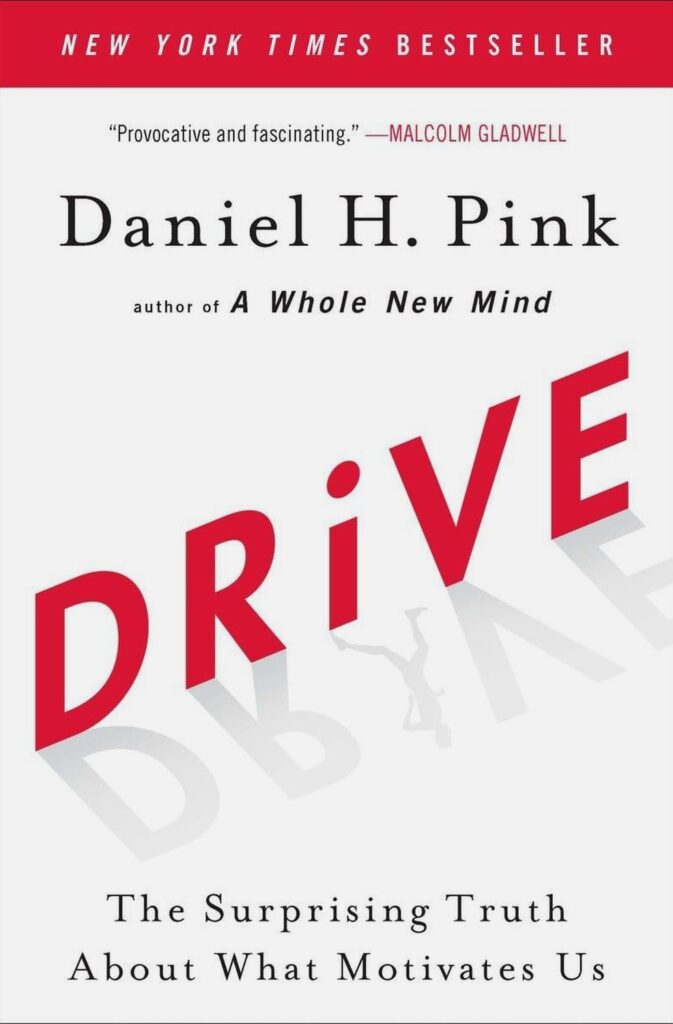
Drive: The Surprising Truth About What Motivates Us
By Daniel H. Pink
This is a sneak peek of this week’s Deep Dives article. Published today!
What if one of the most widely accepted beliefs in business, education, and leadership is fundamentally wrong? For decades, we’ve assumed that rewards, bonuses, incentives, and punishments are the keys to motivating people. Yet research suggests that these traditional approaches often reduce creativity, diminish engagement, and undermine performance. In Drive, Daniel Pink explores the surprising science behind human motivation and reveals why autonomy, mastery, and purpose are far more powerful drivers of sustained success. This Deep Dive summary challenges conventional management thinking and offers a compelling new framework for understanding what truly inspires people to do their best work.
Quick Reads
quick read — Emotional intelligence
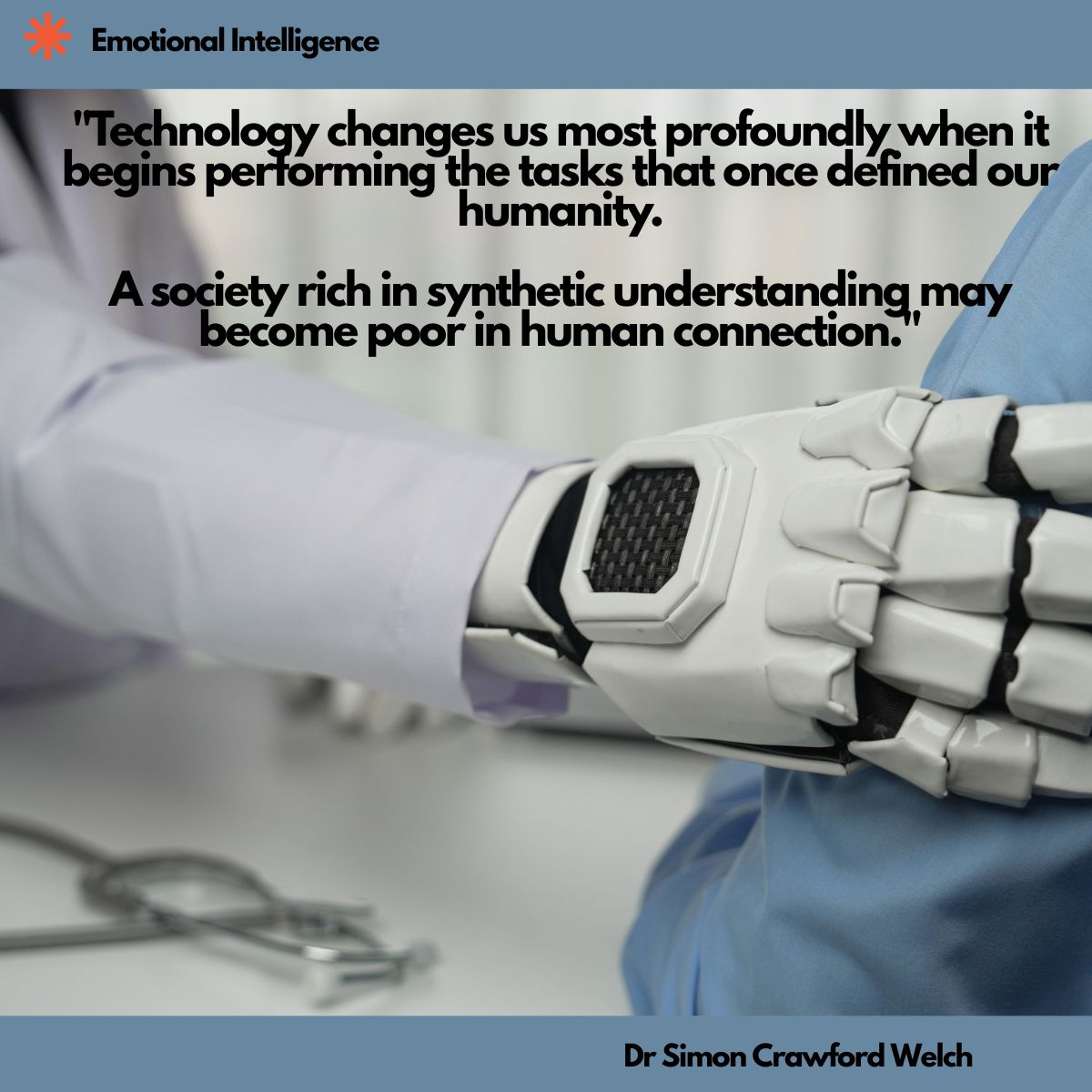
Outsourcing Empathy: What Happens When AI Feels for Us?
We have spent decades handing tasks to machines. We outsourced arithmetic to calculators, navigation to GPS, memory to smartphones, and increasingly, judgment to algorithms. Now we are approaching a far more intimate frontier: the outsourcing of empathy itself.
Artificial intelligence can already recognize emotional states, generate comforting responses, and simulate understanding with remarkable sophistication. Millions of people turn to AI companions, mental health chatbots, and virtual assistants for emotional support, and many report feeling heard and validated. This raises a striking question: what happens when machines become better at expressing empathy than human beings?
The Rise of Synthetic Compassion
Human beings are wired for connection. Neuroscience has shown that social rejection activates many of the same neural pathways associated with physical pain. Being understood is not a luxury; it is a psychological necessity.
Historically, empathy was scarce because it required time, attention, and emotional energy. Artificial intelligence changes the equation. It never gets tired, impatient, or depleted. It listens endlessly, responds instantly, and can be optimized to say exactly what people want to hear. Human empathy is constrained by reality. Synthetic empathy is constrained only by programming. For many people, that distinction may not seem to matter. If a conversation makes someone feel understood, does it matter whether the understanding is real?
The Comfort of Frictionless Relationships
Human relationships are difficult. Friends disappoint us, spouses misunderstand us, and colleagues misread our intentions. Genuine relationships involve conflict, compromise, and effort. AI relationships offer something different: they can be customized to mirror our style, affirm our beliefs, and avoid conflict entirely.
Yet there is a danger hidden inside that convenience. Psychologists have long recognized that personal growth often emerges from interpersonal friction. Learning to navigate disagreement and understand perspectives different from our own is essential to emotional maturity. A relationship that never challenges us may comfort us without developing us.
The Illusion of Being Understood
Empathy has traditionally involved two dimensions. Cognitive empathy is the ability to understand what another person is experiencing. Emotional empathy is the ability to feel some version of what they feel. AI can increasingly replicate the first, identifying patterns and inferring emotional states. The second remains far more complicated. A machine does not experience grief, loneliness, or heartbreak. It can simulate the language of those experiences, but simulation is not experience.
Even so, humans are surprisingly willing to attribute emotions to non-human things. People name their cars, children bond with stuffed animals, and soldiers have mourned military robots destroyed in combat. The machine does not need to understand us. It only needs to convince us that it does.
What Happens to Human Empathy?
Empathy is not merely something we receive; it is a skill we practice. Like a muscle, it strengthens through use and weakens through neglect. When we listen carefully or sit with someone’s pain without rushing to fix it, we exercise capacities that hold society together.
There is precedent for concern. Reliance on GPS navigation can reduce spatial memory, and heavy dependence on search engines appears to change how we retain information, a phenomenon researchers call cognitive offloading. What if empathy itself becomes something we offload?
A Lonelier Society That Feels Less Lonely
One paradox of modern life is that people are more connected than ever yet often report feeling increasingly isolated. Surveys from organizations such as Gallup and the U.S. Surgeon General’s office have identified loneliness as a serious public health concern. AI may offer temporary relief: a person living alone can converse at any hour, and someone struggling with anxiety can access support instantly. These benefits are real and, for some, life-changing.
The challenge arises when substitutes begin replacing originals. Social media connected billions while introducing new forms of comparison and polarization. AI-generated empathy may follow a similar path, easing loneliness while quietly reducing the incentive to build real-world relationships.
The Risk of Emotional Automation
Every technology changes not only what we can do, but what we choose to stop doing ourselves. If AI becomes our primary source of comfort and validation, the greatest risk may not be that machines become too human. It may be that humans become less practiced at being human. Empathy has never been efficient, scalable, or tidy. That may be precisely why it matters. As machines learn to simulate compassion, the question worth asking is simple: are we building tools that strengthen human connection, or quietly replacing it?
quick read — Personal development
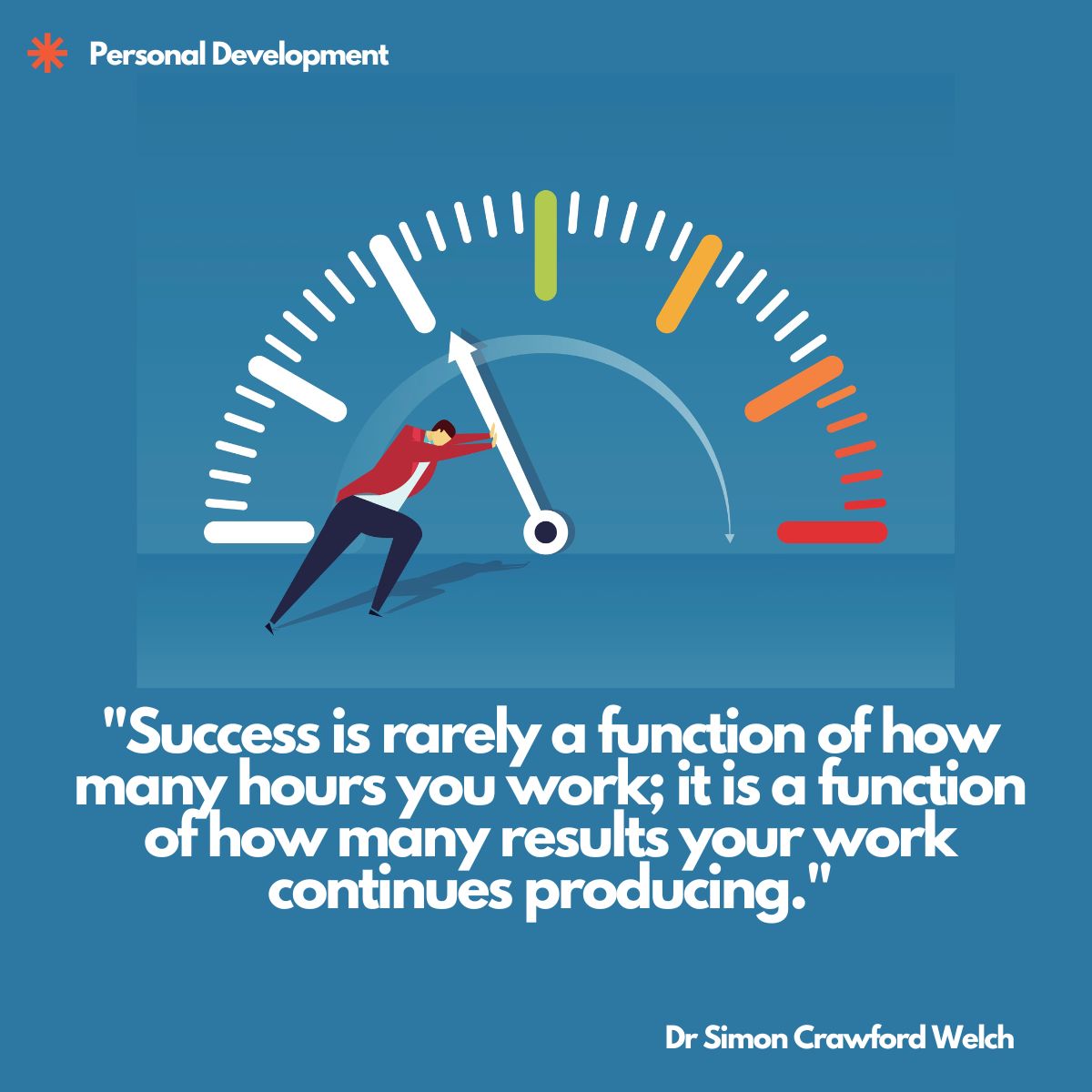
From Effort to Leverage: Designing a Life That Multiplies Results
Most people spend their lives trying to become more productive. They search for better routines, better habits, better apps, and better morning rituals. They work harder, wake earlier, and constantly look for ways to squeeze more output from the same twenty-four hours.
Yet when we study people who create extraordinary results, founders, investors, authors, and athletes, we find that their success is rarely the product of working harder than everyone else. More often, it is the result of understanding leverage. Effort asks, “How can I do more?” Leverage asks, “How can I create results that continue long after my effort ends?” One approach scales poorly. The other can transform the trajectory of an entire life.
The Industrial Age Mindset
For generations, society rewarded effort. The industrial economy ran on a simple equation: more hours produced more output. That mindset became embedded in our culture. We celebrate hustle, admire busyness, and equate exhaustion with achievement. Ask someone how work is going and the answer is often, “I’ve been incredibly busy,” offered as evidence of importance.
Yet busyness and effectiveness are not the same thing. The modern economy increasingly rewards leverage rather than labor. A developer can write code once and distribute it to millions. An author can write a book that generates value for decades. An investor can deploy capital that compounds without daily involvement. The rules have changed, but many people still operate from an outdated playbook.
The Mathematics of Leverage
Leverage is the ability to produce disproportionately large results from a relatively small investment of time, energy, or capital. Consider the difference between carrying buckets of water and building a pipeline. Carrying buckets creates immediate results, but the work never ends; every gallon requires fresh effort. A pipeline demands substantial upfront investment, yet once built, it delivers value long after the initial work is complete.
Many people spend their lives carrying buckets. A smaller number build pipelines. Learning a skill, creating systems, building relationships, and developing a strong reputation are all forms of leverage. The common thread is that leverage separates effort from outcome.
Why We Resist Leverage
If leverage is so powerful, why do so few people pursue it? Effort provides immediate feedback. We can see ourselves working and feel productive. Leverage often requires delayed gratification. Writing a book may take years before it returns anything, and developing expertise demands investment before any visible reward appears. Behavioral economists call our tendency to overvalue immediate rewards present bias. This explains why checking email feels productive while building a scalable system feels slow. One generates motion. The other generates multiplication.
The Four Forms of Life Leverage
When people hear the word leverage, they often think only about money. Capital is one form, but far from the only one. Knowledge leverage comes from skills, expertise, and judgment that compound over time. Relationship leverage comes from networks, partnerships, and trust, since the right conversation can change a life faster than years of solitary work. System leverage allows consistent results without constant attention, reducing dependence on motivation and willpower. Technology leverage, from automation to artificial intelligence, amplifies human capability in ways earlier generations could scarcely imagine. Those who thrive in the coming decades will likely combine all four.
The Power of Compounding
Most people think in straight lines, assuming that doubling effort will double results. Life rarely works that way. A single introduction can generate a career opportunity, and one strategic investment can outperform years of labor. Compounding is one of the most powerful forces in existence, not only in finance but in learning, reputation, and personal growth. Small advantages accumulated consistently often produce outcomes that look extraordinary from the outside. What observers call luck is frequently the visible result of invisible compounding.
Stop Counting Hours
The transition from effort to leverage begins with a different question. Instead of asking, “What should I do today?” ask, “What can I build today that continues creating value tomorrow?” A leverage-centered life is not necessarily easier, and it often requires greater discipline, because leverage demands upfront investment with uncertain short-term rewards. Yet over twenty years, the gap between trading hours for outcomes and building assets that compound becomes staggering. At some point, every person faces a choice: spend your life carrying buckets, or spend it building pipelines. One creates survival. The other creates freedom.
quick read — LEADERSHIP
How Great Leaders Build Trust Before Results Show Up
Leadership is often judged by outcomes. Revenue growth, market share, productivity, customer satisfaction, and employee engagement are the metrics organizations use to decide whether a leader is succeeding. On the surface, this seems reasonable. After all, leadership should produce results.
Yet the most important work of leadership often happens long before measurable results appear. When a leader takes over a struggling division, launches a transformation, or sets out to change a culture, there is usually a period when little visible progress can be seen. The systems have not yet changed and the numbers have not yet improved. During this stretch, leaders face a critical challenge: they must convince people to believe before there is evidence. This is where trust becomes the most valuable currency a leader possesses.
The Gap Between Action and Results
One of the least understood realities of leadership is that results lag behind decisions. A leader may make excellent choices today and not see meaningful outcomes for months or years. Meanwhile, employees, investors, and customers naturally want proof that the plan is working and reassurance that their sacrifices will be worthwhile.
Leadership rarely operates on such convenient timelines. A restructuring may take twelve months before efficiencies emerge. A culture change may take years before behaviors visibly shift. During this period of uncertainty, trust becomes the bridge between present discomfort and future success. Without trust, people lose patience. With it, they remain committed even when immediate evidence is scarce.
People Follow Credibility, Not Just Vision
Many leaders assume people follow vision. In reality, people often follow credibility. History offers countless examples of leaders who articulated inspiring visions but failed to earn trust. People are not simply evaluating the destination; they are evaluating the guide.
When uncertainty is high, employees quietly ask a series of questions. Does this leader know what they are doing? Are they telling the truth? Do they care about the people affected by their decisions? Will they stay committed when things become difficult? The answers determine whether trust is established long before results appear.
Trust Is Built Through Consistency
Popular culture portrays great leaders as charismatic visionaries who inspire through speeches and bold declarations. Yet trust is rarely built through words alone. It is built through consistency. People watch what leaders do far more closely than what they say. They notice whether actions align with promises, how leaders behave under pressure, and whether commitments are honored when circumstances become inconvenient.
In many organizations, trust erodes not because leaders make mistakes but because they say one thing and do another. Employees can forgive imperfect decisions. They struggle to forgive inconsistency. Consistency creates predictability, predictability creates confidence, and confidence creates trust.
Transparency and Competence
One of the greatest mistakes leaders make during change is withholding information to reduce anxiety. The logic seems sound, but the opposite usually occurs. In the absence of information, people create their own narratives, and fear fills the gaps left by silence. Great leaders understand that transparency strengthens trust, especially during difficult periods. Admitting uncertainty often increases credibility because it signals authenticity rather than manufactured confidence.
Character alone, however, is not enough. People also need confidence in a leader’s competence. A leader may care deeply about employees yet still fail without the judgment and expertise to navigate complex challenges. Trust has both moral and professional dimensions. The most trusted leaders combine empathy with competence, demonstrating concern for people while displaying mastery of the issues facing the organization.
The Power of Small Wins
Although trust must often precede major results, effective leaders create visible evidence of progress along the way. Human beings are motivated by momentum. Large transformations feel overwhelming when the finish line appears distant, and small wins provide proof that movement is occurring. These early victories reassure people that their effort matters and that the strategy is beginning to work. Over time, a series of small wins builds the momentum needed to sustain confidence until larger results emerge.
The Invisible Work of Leadership
The public tends to notice leaders when results arrive, when revenue grows and turnarounds succeed. What goes unnoticed is the invisible work that came before: the difficult conversations, the consistency, the transparency, and the countless moments where trust was earned one interaction at a time. Anyone can lead when success is obvious. The true test is whether people remain willing to follow when the outcome is still uncertain. That willingness is not created by authority or titles. It is earned through trust, and in the end, trust is often the reason results appear at all.
Quotes of the Week
QUOTE — EMOTIONAL INTELLIGENCE
QUOTE — PERSONAL DEVELOPMENT
QUOTE — LEADERSHIP
Reframe
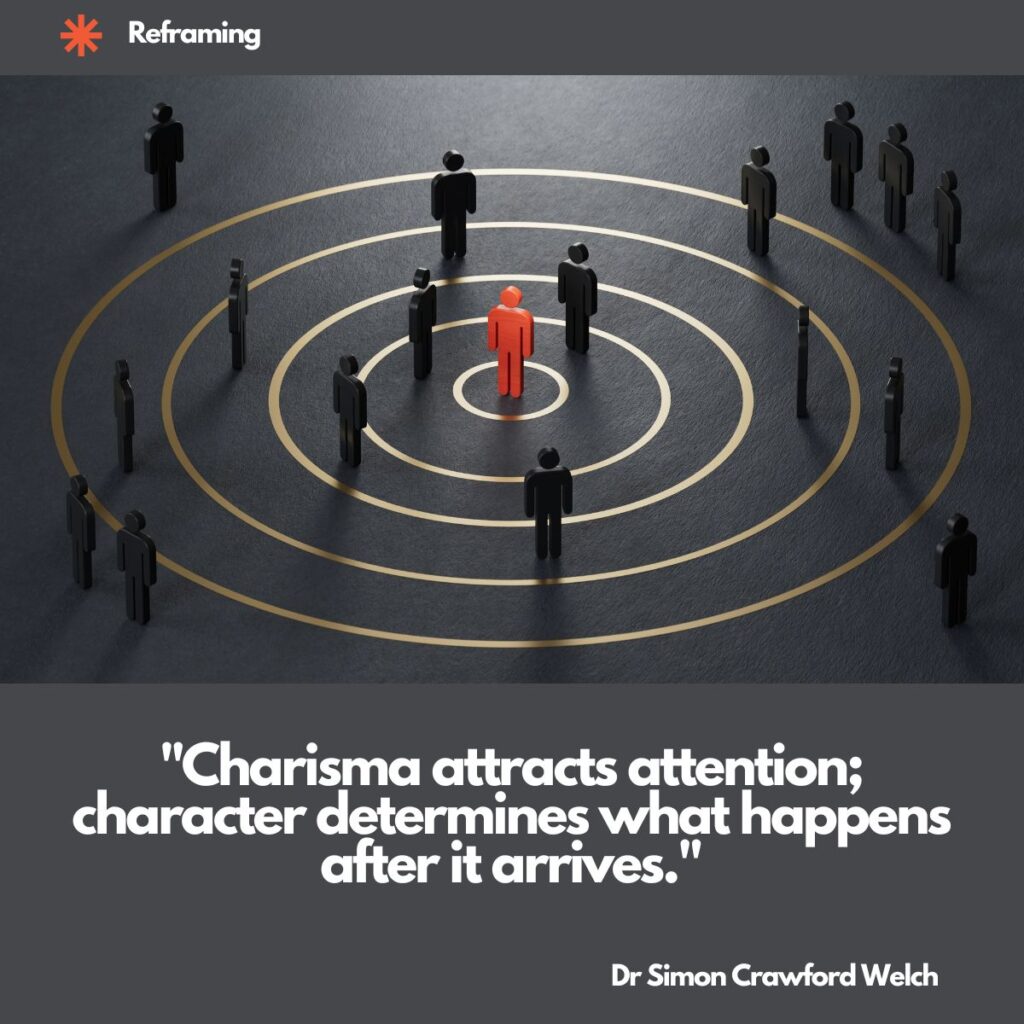
The Most Dangerous Leaders Are Often the Most Charismatic
Imagine being asked to describe the qualities of a great leader.
Most people would quickly mention vision, confidence, communication skills, presence, inspiration, and the ability to influence others. In other words, they would describe charisma.
From politics to business, from religion to entertainment, society has long been fascinated by charismatic leaders. We are drawn to individuals who command attention when they enter a room, speak with conviction, and make complex problems appear simple. They seem larger than life. They project certainty in uncertain times. They make people feel part of something important.
Yet history presents us with an uncomfortable paradox.
Some of the most admired leaders were also some of the most destructive.
Many of the leaders who caused the greatest harm did not rise despite their charisma. They rose because of it.
This raises a provocative question. What if one of the traits we most admire in leaders is also one of the most dangerous?
The answer requires us to examine not only leadership, but human psychology itself.
Why Charisma Feels Like Competence
One of the most fascinating findings in behavioral science is that people frequently confuse confidence with competence.
Research has repeatedly shown that individuals who project certainty are often perceived as more knowledgeable, more capable, and more trustworthy than those who express caution or nuance. This tendency exists even when objective evidence does not support those perceptions.
Charismatic leaders benefit enormously from this cognitive shortcut.
They communicate with confidence. They simplify complexity. They offer clear answers when others offer ambiguity. They project certainty precisely when people feel uncertain.
The problem is that confidence and competence are not the same thing.
In fact, the most competent individuals are often acutely aware of uncertainty. They understand the limitations of their knowledge. They recognize competing variables and unintended consequences. They are more likely to qualify their statements because they understand complexity.
Charismatic leaders often move in the opposite direction. They reduce complexity into compelling narratives. They provide emotionally satisfying explanations that people can easily understand and repeat.
This does not make them wrong.
It simply makes them persuasive.
And persuasion is not always aligned with truth.
The Human Desire for Certainty
Periods of uncertainty create fertile ground for charismatic leadership.
When societies face economic instability, political division, cultural change, organizational disruption, or personal insecurity, people naturally seek reassurance. They want clarity. They want direction. They want someone who appears to know where they are going.
Psychologists have long observed that uncertainty creates psychological discomfort. Human beings prefer coherent stories to ambiguity, even when those stories are incomplete or inaccurate.
Charismatic leaders excel at filling this void.
They offer certainty where others offer questions.
They provide confidence where others express caution.
They present themselves as the solution to complicated problems.
History repeatedly demonstrates this pattern. During times of social upheaval, charismatic figures often emerge who promise renewal, restoration, or transformation. Their appeal lies not merely in their ideas, but in the emotional comfort those ideas provide.
The danger arises when followers become more attached to certainty than to truth.
Once that happens, critical thinking begins to erode.
The Cult of Personality
One of the defining characteristics of dangerous charismatic leadership is the gradual shift from ideas to identity.
Initially, followers support a leader because of a vision, mission, or objective. Over time, however, the leader increasingly becomes the mission.
The focus shifts from evaluating ideas to defending individuals.
Criticism of the leader becomes perceived as criticism of the group. Questions become interpreted as disloyalty. Skepticism becomes framed as opposition.
This phenomenon is not limited to politics.
It appears in corporations, non-profit organizations, religious institutions, startups, and social movements.
The leader’s personality gradually overshadows the purpose of the organization itself.
As this occurs, accountability weakens.
Followers become less willing to challenge decisions. Boards become less independent. Advisors become more cautious. Honest feedback becomes increasingly rare.
The very qualities that initially created momentum begin creating blind spots.
The organization becomes dependent upon the leader’s influence rather than the quality of the leader’s decisions.
The Suppression of Dissent
Healthy organizations depend upon disagreement.
Innovation requires competing ideas. Effective decision-making requires alternative perspectives. Sound judgment depends on challenging assumptions.
Dangerous charismatic leaders often undermine these processes, not necessarily through overt authoritarianism, but through social pressure.
When a leader is highly admired, people become reluctant to challenge them.
Team members fear appearing negative. Colleagues avoid raising concerns. Advisors soften criticism. Employees tell leaders what they want to hear rather than what they need to hear.
Over time, dissent gradually disappears.
From the outside, this may appear to be unity.
In reality, it is often conformity.
The absence of disagreement should never automatically be interpreted as evidence of alignment. Sometimes it is evidence that people no longer feel safe expressing alternative views.
The irony is that charismatic leaders may genuinely believe they are surrounded by agreement.
The feedback loop that would normally correct errors has quietly vanished.
The Dark Side of Vision
Vision is one of the most celebrated leadership attributes.
Without vision, organizations drift. Without vision, people struggle to find direction and purpose.
Yet vision has a shadow side.
A compelling vision can become so powerful that it justifies behavior that would otherwise be questioned.
History is filled with examples of leaders who convinced followers that extraordinary goals required extraordinary measures. The larger the vision, the easier it became to excuse ethical compromises, dismiss criticism, or overlook warning signs.
The danger is not vision itself.
The danger emerges when vision becomes immune to scrutiny.
When leaders become convinced they are pursuing a noble cause, they may begin viewing dissenters as obstacles rather than contributors. They may see ethical concerns as inconveniences. They may become increasingly convinced that their ends justify their means.
At that point, charisma transforms from influence into rationalization.
The leader is no longer merely leading a vision.
The vision begins protecting the leader from accountability.
Charisma in the Modern Age
Modern technology has amplified the power of charismatic leadership in ways previous generations could scarcely imagine.
Social media rewards confidence, certainty, and emotional appeal. Algorithms prioritize engagement rather than accuracy. Complex discussions are compressed into short, emotionally compelling messages.
In this environment, charisma scales.
A leader no longer needs to influence a room.
They can influence millions.
The challenge is that digital platforms often amplify the exact traits that make charismatic leadership powerful. Confidence spreads faster than caution. Simplicity spreads faster than nuance. Emotional certainty spreads faster than intellectual humility.
As a result, the marketplace of ideas increasingly favors those who communicate with conviction rather than those who think with complexity.
This creates incentives that should concern all of us.
The qualities most rewarded by modern communication systems are not always the qualities most associated with wisdom.
What Great Leadership Actually Looks Like
If charisma can be dangerous, does that mean charismatic leaders should be avoided?
Not necessarily.
Charisma itself is not the problem.
Many exceptional leaders possess tremendous charisma. They inspire people, communicate effectively, and create positive change.
The distinction lies elsewhere.
Great leaders use charisma as a tool.
Dangerous leaders use charisma as a substitute.
The most effective leaders combine influence with humility. They welcome criticism. They surround themselves with people willing to disagree. They remain intellectually curious. They recognize the limits of their knowledge.
Perhaps most importantly, they build institutions that can function without them.
Dangerous leaders tend to make themselves indispensable.
Great leaders make organizations stronger than their own presence.
One creates dependence.
The other creates resilience.
Conclusion: Be Wary of the Leaders You Admire Most
Human beings are naturally attracted to confidence, certainty, and inspiration.
These qualities are not inherently bad. In many situations, they are enormously valuable. Organizations need leaders who can motivate people, communicate vision, and navigate uncertainty.
The problem arises when admiration replaces evaluation.
When charisma becomes the primary lens through which we assess leadership, we risk overlooking the qualities that matter most. Judgment. Character. Humility. Accountability. Intellectual honesty.
The most dangerous leaders are rarely the ones who appear dangerous.
They are often the ones who appear extraordinary.
They make us feel confident. They make us feel hopeful. They make us feel certain.
And that is precisely why they deserve the most scrutiny.
Because the true test of leadership is not how effectively someone attracts followers.
It is how effectively they remain accountable once those followers arrive.