
Leadership
For decades, modern business rewarded a relatively predictable set of leadership strengths. Intelligence mattered. Experience mattered. Industry knowledge mattered. Operational competence mattered. Leaders rose by mastering information, making decisions faster than competitors, and executing consistently under pressure.
But something fundamental is changing.
Information itself is losing scarcity value.
Artificial intelligence can now summarize reports, analyze trends, draft strategy memos, generate marketing campaigns, write software code, automate workflows, and surface insights faster than most humans ever could. Knowledge that once differentiated executives now exists within seconds of retrieval. Entire industries are being reshaped by systems capable of processing and synthesizing information at superhuman speed.
As this shift accelerates, one leadership capability is becoming disproportionately important.
Judgment.
Not intelligence alone. Not expertise alone. Judgment.
Because in a world overflowing with information, the defining question is no longer whether leaders can access answers. The defining question is whether they can discern which answers matter, which signals are trustworthy, which tradeoffs are acceptable, and which paths align with reality rather than merely sounding persuasive.
This is a far more difficult skill than most people realize.
Especially now.
Intelligence and Judgment Are Not the Same Thing
Modern culture often treats intelligence and judgment as interchangeable. They are not.
A person can be intellectually brilliant while possessing remarkably poor judgment. History is full of highly educated executives, politicians, investors, and technologists who made catastrophically flawed decisions despite possessing extraordinary analytical ability.
Intelligence processes information.
Judgment interprets reality.
That distinction matters enormously because modern environments are becoming increasingly difficult to interpret clearly. Leaders no longer operate inside stable information ecosystems. They operate inside overwhelming complexity, accelerated communication cycles, algorithmically amplified narratives, and continuous uncertainty.
Under those conditions, raw intelligence can actually become dangerous without sound judgment guiding it.
A highly intelligent leader can rationalize almost anything. They can build convincing narratives around flawed assumptions. They can optimize for the wrong variables with extraordinary sophistication. They can mistake fluency for truth.
This is partly why many organizations today feel strangely overanalyzed yet underwise.
They possess more dashboards, more analytics, more predictive models, and more information than ever before. Yet many still struggle with basic clarity around priorities, culture, incentives, trust, and long term direction.
The issue is not lack of data.
It is lack of discernment.
The AI Era Changes the Leadership Equation
Artificial intelligence is accelerating this shift dramatically because it changes the economic value of many traditional cognitive skills.
Historically, leaders often differentiated themselves through information access and processing capability. They knew more than others. They synthesized faster. They had accumulated expertise through years of exposure and pattern recognition.
AI increasingly compresses those advantages.
A junior employee with strong prompting skills can now access strategic analyses, operational frameworks, and market research that previously required large teams or elite consulting firms. Information asymmetry is collapsing quickly.
This creates a strange new leadership challenge.
If everyone can access answers, leadership increasingly depends on the ability to evaluate answers wisely.
This is where judgment becomes irreplaceable.
AI can generate possibilities. It cannot fully determine which possibilities align with human values, organizational realities, emotional dynamics, ethical consequences, or second order effects, which is why McKinsey argues the premium is shifting toward distinctly human leadership.
It can simulate confidence extraordinarily well.
That may actually increase the importance of judgment rather than reduce it.
The danger of highly fluent AI systems is not merely misinformation. It is persuasive plausibility. People increasingly encounter outputs that sound authoritative regardless of whether the underlying reasoning is truly grounded in reality.
In this environment, leaders capable of distinguishing between what is technically impressive and what is strategically wise become extraordinarily valuable, a reflection of the irreplaceable value of human decision making in the age of AI.
The future may reward not those who know the most, but those who can see most clearly through noise, ambiguity, and synthetic certainty.
Judgment Requires More Than Analysis
One reason judgment is difficult to teach is because it operates across multiple dimensions simultaneously.
Good judgment is not merely analytical reasoning. It is contextual awareness, emotional intelligence, pattern recognition, ethical calibration, timing sensitivity, and probabilistic thinking interacting together.
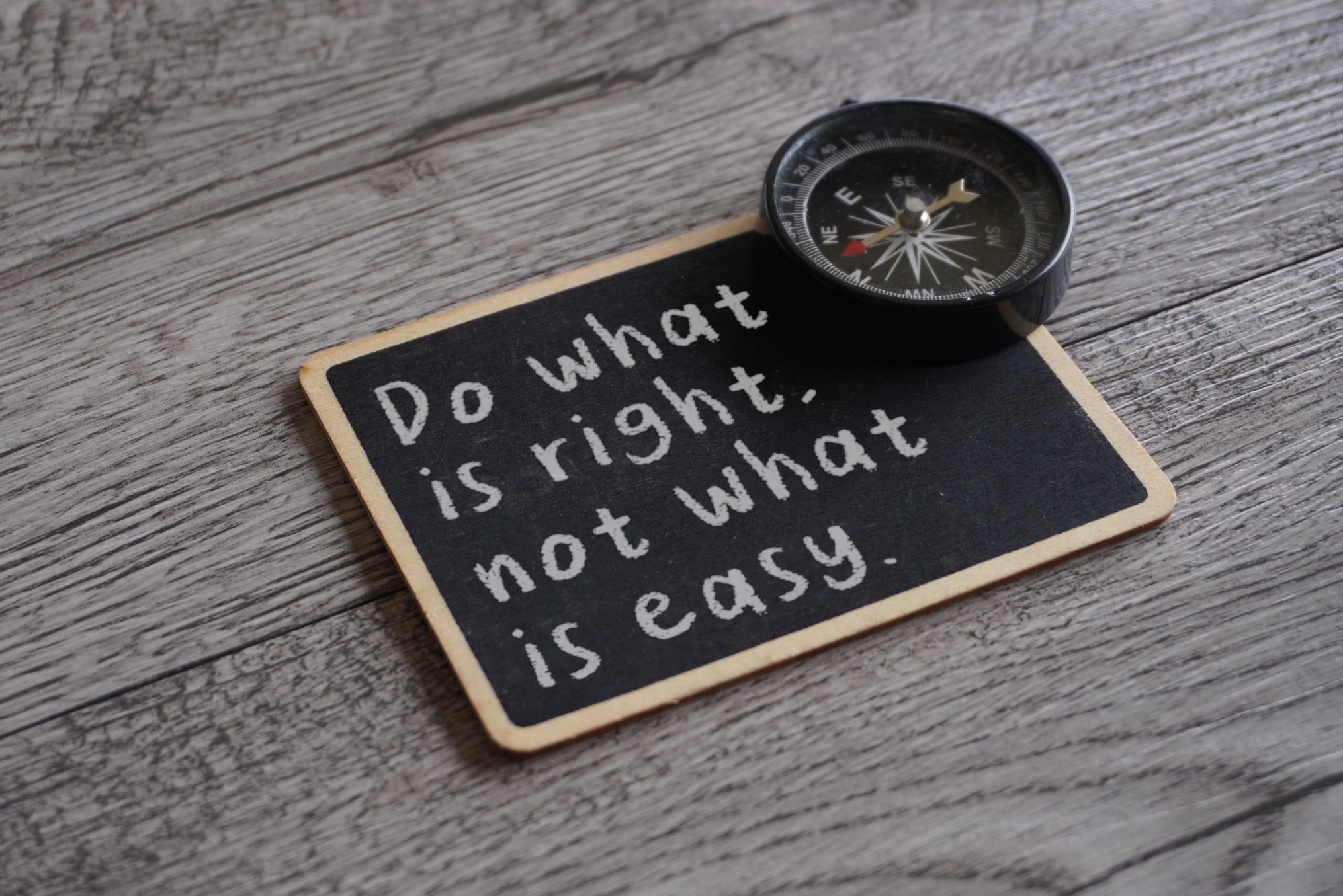
In many ways, judgment resembles navigation more than calculation.
A leader with strong judgment recognizes that decisions do not occur inside controlled laboratory conditions. They occur inside messy human systems shaped by incomplete information, political incentives, emotional dynamics, unintended consequences, and shifting realities.
This is why leadership frameworks often fail when applied rigidly. Reality itself is fluid.
The psychologist Daniel Kahneman spent much of his career studying how cognitive biases distort human decision making. His work demonstrated repeatedly that humans are remarkably poor at evaluating uncertainty objectively. We overweight recent events, seek confirming evidence, anchor on initial assumptions, and confuse confidence with accuracy constantly.
Strong judgment requires compensating for those distortions consciously.
Importantly, this does not mean becoming emotionally detached. In fact, many poor leaders misunderstand judgment as purely rational detachment. But humans do not operate purely rationally, and organizations certainly do not.
Good judgment incorporates human reality rather than pretending emotion does not exist.
The best leaders understand incentives, fear, trust, ego, fatigue, ambition, morale, and psychology because those forces shape organizational outcomes as much as strategy itself.
The Speed Problem
Modern leadership environments also suffer from a severe speed distortion.
Technology accelerated communication so dramatically that many organizations now operate in continuous reaction cycles. Messages arrive instantly. Opinions form instantly. Crises amplify instantly. Leaders feel pressure to respond immediately to nearly everything.
This creates dangerous conditions for judgment.
Good judgment usually requires reflection, synthesis, emotional regulation, and contextual thinking. But modern systems reward speed far more aggressively than wisdom. Fast responses often appear decisive even when they are poorly considered.
Social media intensified this dynamic culturally. Entire populations now experience reality through accelerated outrage cycles where emotional immediacy outruns thoughtful interpretation constantly.
Organizations increasingly mirror the same behavior internally.
Leaders react publicly before understanding fully. Companies shift direction prematurely based on short term narratives. Decision cycles compress beyond the nervous system’s ability to process complexity intelligently.
The consequence is not merely operational instability.
It is judgment erosion.
The faster the environment moves, the easier it becomes for leaders to substitute emotional reactivity, social conformity, or narrative management for actual discernment.
This may be one reason emotionally regulated leaders increasingly stand out, a theme echoed in research on leadership development in the age of artificial intelligence. Calmness itself has become strategically differentiating because emotional regulation protects judgment under pressure.
Panic narrows perspective.
Fear distorts tradeoffs.
Urgency reduces reflection.
The ability to remain cognitively clear while others become emotionally reactive may become one of the defining competitive advantages of modern leadership.
Judgment Is Deeply Moral
One of the most overlooked aspects of judgment is that it is not purely intellectual. It is also moral.
Every significant leadership decision contains embedded value assumptions. Which stakeholders matter most? What tradeoffs are acceptable? What risks deserve tolerance? What forms of behavior get rewarded? What kind of culture gets normalized?
Even seemingly technical decisions shape human lives profoundly.
This is why judgment cannot be reduced to optimization algorithms alone. Algorithms can maximize measurable variables. They cannot fully determine which variables deserve maximization in the first place.
The philosopher Hannah Arendt warned extensively about the dangers of thoughtless systems where individuals stop critically evaluating the moral implications of decisions because procedural logic replaces human reflection.
Modern organizations face similar risks.
As AI systems become more capable, leaders may become increasingly tempted to outsource difficult judgment processes entirely to models, analytics, and predictive systems. But leadership ultimately requires responsibility for consequences, not merely efficiency of execution.
Judgment matters because reality is not only technical.
It is human.
Experience Alone No Longer Guarantees Judgment
Traditionally, experience served as one of the primary pathways toward leadership wisdom. Years in an industry produced pattern recognition and situational understanding.
That still matters.
But the accelerating pace of technological and cultural change creates a new complication. Past experience increasingly contains outdated assumptions.
Leaders cannot rely solely on historical pattern matching because the operating environment itself keeps changing rapidly. Consumer behavior changes faster. Technology evolves faster. Communication norms shift faster. Workforce expectations evolve faster.
This creates a difficult tension.
Leaders need enough experience to recognize patterns, but enough intellectual flexibility to recognize when old patterns no longer apply.
Judgment increasingly depends on adaptive thinking rather than static expertise.
The leaders who struggle most may not be the inexperienced ones.
They may be the ones overly confident that yesterday’s assumptions still map cleanly onto tomorrow’s reality.
The Future Belongs to Clear Thinkers
As artificial intelligence reshapes knowledge work, many traditional forms of competitive advantage will continue compressing. Information access will matter less. Technical fluency will become more democratized. Operational execution will become increasingly automated.
What remains scarce is wise discernment.
The ability to interpret reality clearly.
The ability to balance short term incentives against long term consequences.
The ability to recognize emotional distortion inside decision environments.
The ability to navigate ambiguity without collapsing into panic or simplistic certainty.
The ability to integrate ethics, psychology, strategy, timing, and complexity simultaneously.
In other words, judgment.
This is why leadership in the coming decade may become simultaneously more technologically augmented and more profoundly human.
Because no matter how sophisticated the tools become, someone still has to decide what matters, what tradeoffs are worth making, what risks deserve taking, and what kind of future is actually worth building.
That responsibility cannot be automated fully.
At least not without surrendering something fundamentally human in the process.
If You Liked This Article, You May Also Like …
- When Data Overwhelms Judgment: Why EQ Matters More Than Ever
- When Thinking Becomes Optional: The Quiet Erosion of Judgment in the Age of AI
- Leaders Who Say “Challenge Me,” Then Punish It