
Deep Dives Articles
DEEP DIVES ARTICLE — EMOTIONAL INTELLIGENCE

Why Listening Is Harder When Everyone Is Flooded With Information
This is a sneak peek of this week’s Deep Dives article. Published today!
You’re probably investing in your body, your habits, even your emotional intelligence, but what about the system running all of it, your mind? Cognitive fitness is the hidden layer determining how well you think, decide, and perform under pressure, and most people are letting it quietly degrade. If you’ve ever felt mentally scattered, overwhelmed by complexity, or stuck at a plateau you can’t explain, this is why. The full article breaks down exactly how your thinking is being rewired, and how to take control of it before it costs you.
DEEP DIVES ARTICLE — PERSONAL DEVELOPMENT
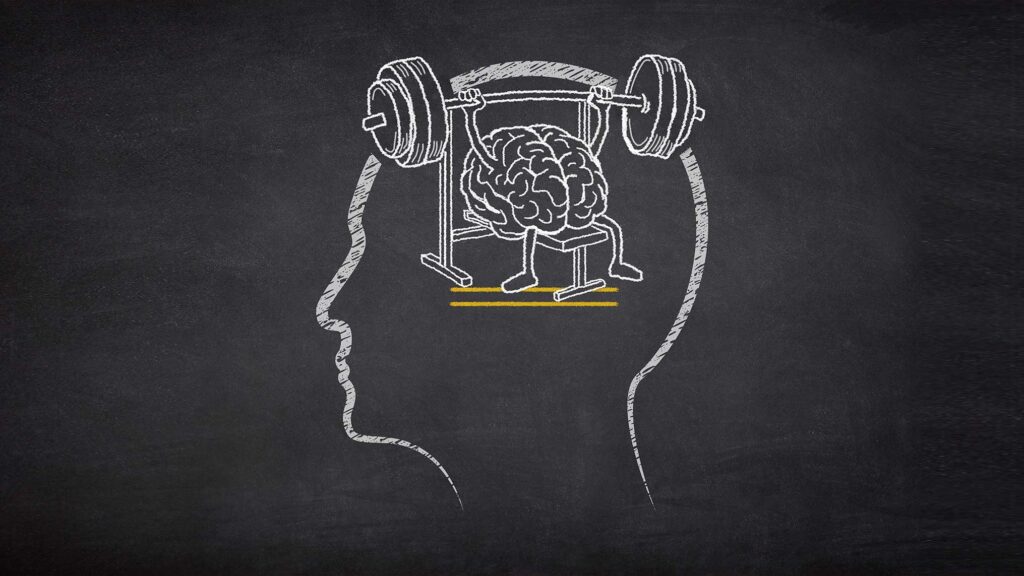
Cognitive Fitness: The Personal Development Skill We Can’t Ignore
This is a sneak peek of this week’s Deep Dives article. Published today!
You’ve probably noticed it, conversations that look productive but go nowhere, meetings where everyone speaks but no one truly hears, feedback that gets shared but never lands. It’s not because people don’t care. It’s because the modern environment is quietly destroying our ability to listen. This piece unpacks the cognitive and cultural forces making deep listening harder than ever, and why that breakdown is costing more than we realize. If you want to understand what’s really happening beneath the surface of communication, and how to fix it, subscribe to Deep Dives to read the full article.
DEEP DIVES ARTICLE — LEADERSHIP
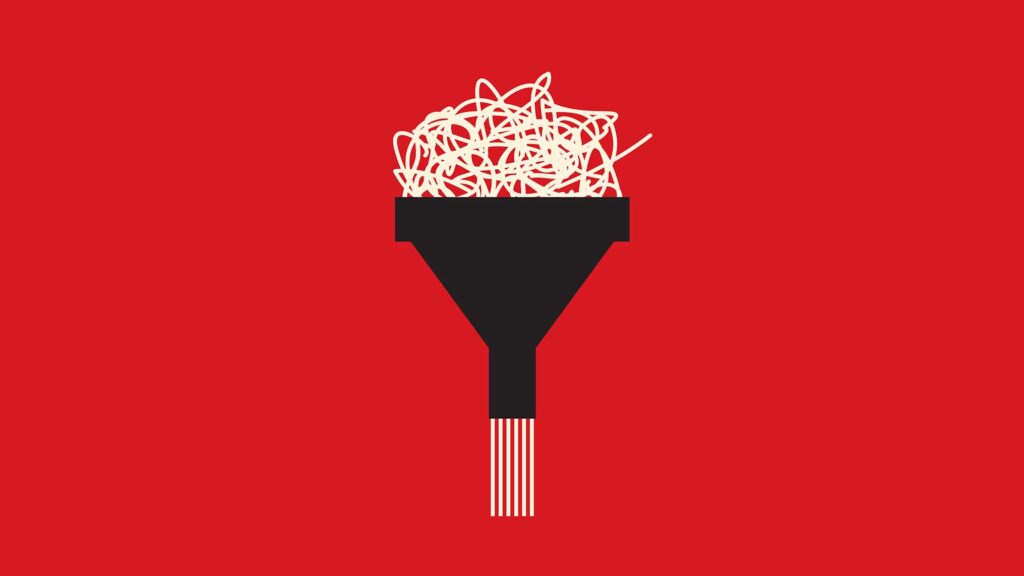
Why Leaders Need Better Filters, Not More Data
This is a sneak peek of this week’s Deep Dives article. Published today!
If more data actually led to better decisions, most organizations would be operating at peak performance by now. They’re not. In fact, many are slower, more confused, and increasingly reactive despite having dashboards for everything. The problem isn’t a lack of information, it’s a failure to filter it. This article challenges one of the most ingrained assumptions in modern leadership and exposes why more visibility is often making leaders worse, not better. If you want to understand how to cut through the noise and make sharper, faster decisions, subscribe to Deep Dives and unlock the full breakdown.
Deep Dives Book Summary
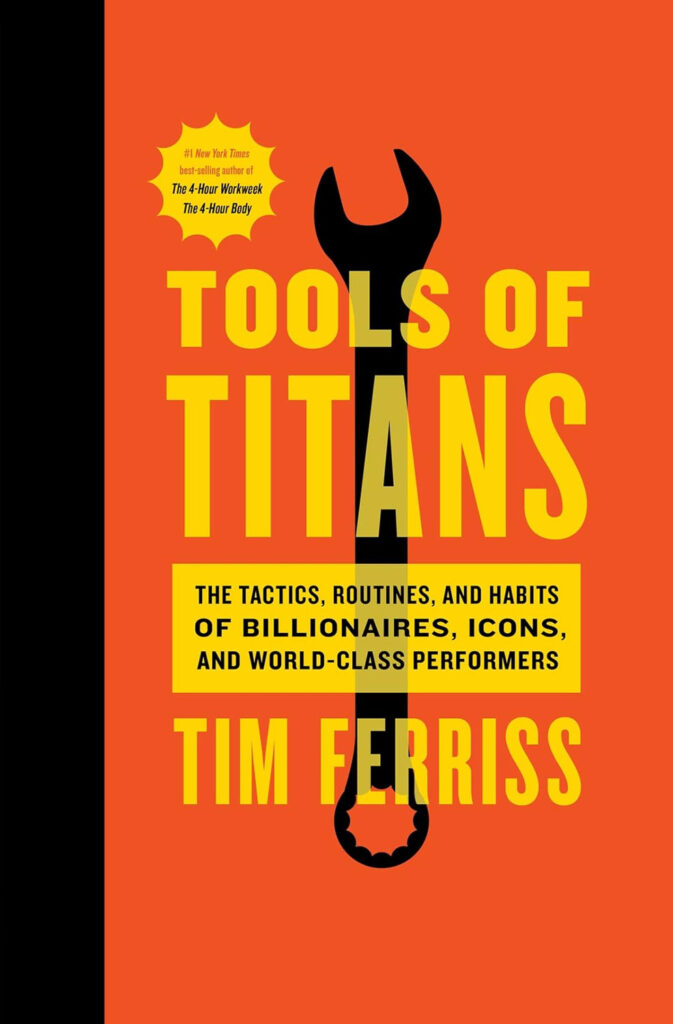
This is a sneak peek of this week’s Deep Dives Book Review. Published today!
Most people read books like Tools of Titans for inspiration, a few good ideas, maybe a habit or two. That’s not what this is. This is a distillation of patterns from world-class performers that reveals something far more useful, how they actually think, decide, and operate under pressure. The difference between those who perform at a high level and those who plateau isn’t access to information, it’s how they apply it. If you want more than surface-level takeaways, if you want the underlying frameworks that drive real performance, subscribe to Deep Dives and unlock the full summary.
Quick Reads
quick read — Emotional intelligence
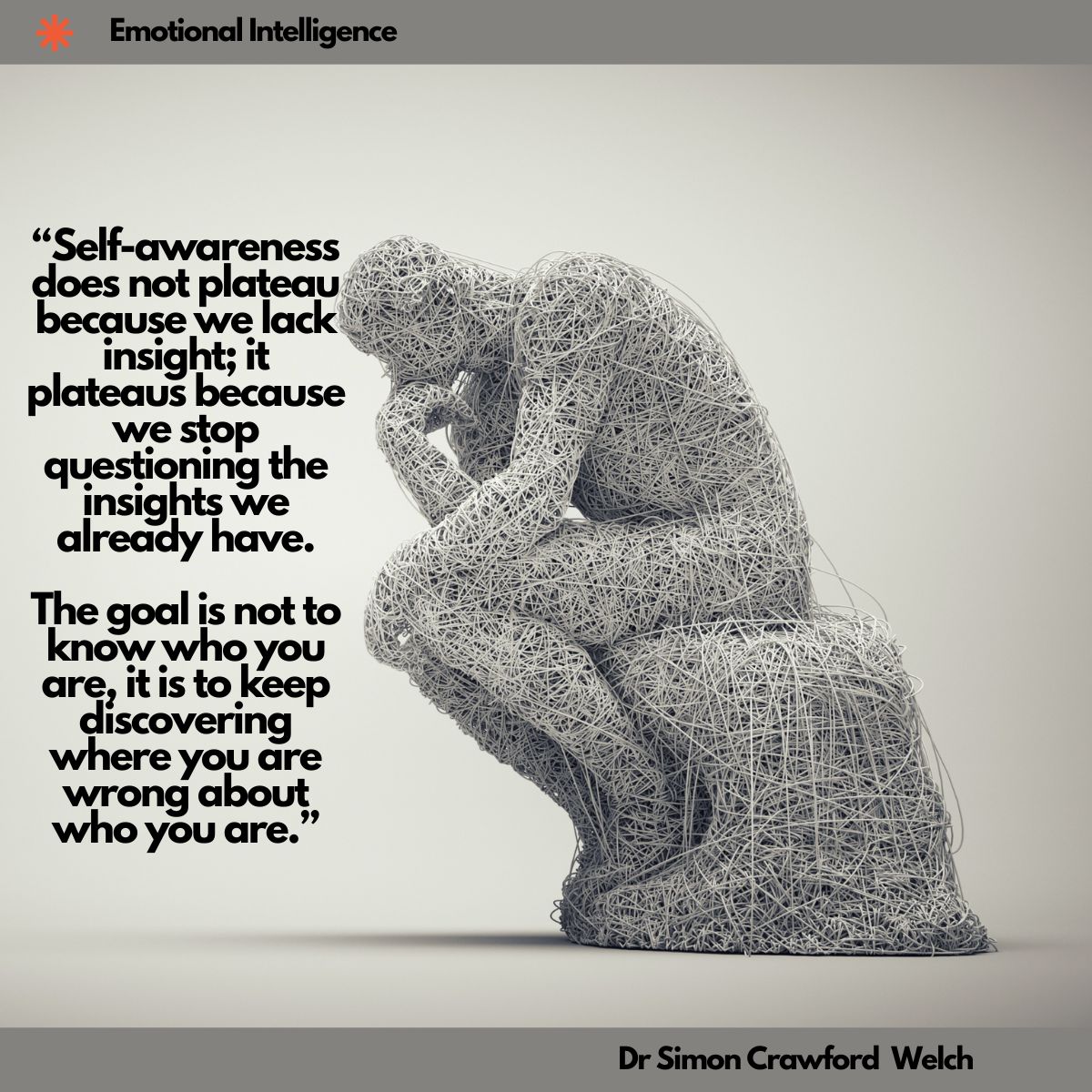
Scaling Self-Awareness: Why Most People Plateau Emotionally
Most people treat self-awareness as a destination. They read a few books, take a personality assessment, sit through a workshop, and emerge with the quiet confidence that they now understand themselves. It feels like growth. In reality, it is often the beginning of a plateau.
The moment someone becomes aware enough to recognize patterns in their thinking is often the same moment they stop evolving those patterns. Awareness becomes identity. Insight becomes conclusion. The process freezes.
The Comfort of Coherent Narratives
Humans are storytelling machines. We build narratives about who we are and what our past means. These narratives provide coherence, and coherence feels like clarity. But coherence is not accuracy.
Research in cognitive psychology, particularly the work of Daniel Kahneman, highlights how the mind prioritizes a consistent story over a correct one. Once a narrative is formed, the brain selectively filters information to support it. This is confirmation bias, and it plays a significant role in why self-awareness stops evolving.
Consider how often someone says, “That’s just how I am.” It sounds like self-awareness, but it is often a declaration of closure. The language of self-awareness becomes the mechanism that shuts it down.
Social Reinforcement of Identity
Modern social structures amplify the problem. Social media, professional networks, and workplace cultures reward consistency of persona. People are encouraged to define themselves clearly and communicate that definition repeatedly. Over time, this creates an external feedback loop that stabilizes identity.
When others expect a certain version of you, deviation becomes uncomfortable. Growth requires contradiction, but contradiction disrupts expectations. Many individuals unconsciously choose stability over evolution. The system rewards emotional consistency, not emotional expansion.
The Trap of Early Insight
Early insights feel disproportionately powerful. The first time someone recognizes a behavioral pattern, it creates a sense of breakthrough. But early insight is usually shallow. It identifies the pattern but not the underlying drivers.
Someone might realize they avoid conflict. That insight is useful but incomplete. It does not answer the deeper questions about emotional cost, formative experiences, or how avoidance shifts under pressure. Without continued probing, the initial insight becomes a stopping point rather than a starting point.
Emotional Efficiency Versus Depth
True self-awareness is cognitively and emotionally expensive. To continually question your motives requires energy and slows decision-making. Over time, the brain seeks efficiency. People develop shortcuts and rely on established interpretations to navigate quickly.
These shortcuts are necessary, but they often replace deeper reflection entirely. Emotional efficiency allows smooth operation, but at the cost of depth. The plateau reveals itself not in everyday interactions, but in moments of pressure where the internal model fails to adapt.
The Role of Friction
Growth requires friction. It challenges narratives, introduces uncertainty, and forces the mind to reconcile conflicting information. Historically, periods of significant personal growth are tied to disruption: career setbacks, relationship challenges, or major life transitions.
In modern life, many have become adept at avoiding this friction. They curate environments to minimize discomfort and seek perspectives that align with their own. Deliberate friction is necessary. It involves actively seeking feedback that contradicts your self-perception, placing yourself where default patterns are exposed, and being willing to be wrong repeatedly.
From Awareness to Calibration
Self-awareness should not be framed as awareness alone, but as continuous calibration. Awareness is static. Calibration is dynamic. It acknowledges that the self is not a fixed entity but a system interacting with changing conditions.
This reframes growth as ongoing adjustment rather than a series of breakthroughs. It means asking not just “What am I like?” but “When does this show up, and why?” Self-awareness is not about arriving at a definitive answer, but about refining the question.
The goal is not to become perfectly self-aware. The goal is to remain in motion. Because the moment you feel certain you understand yourself is often the moment you have stopped trying.
quick read — Personal development
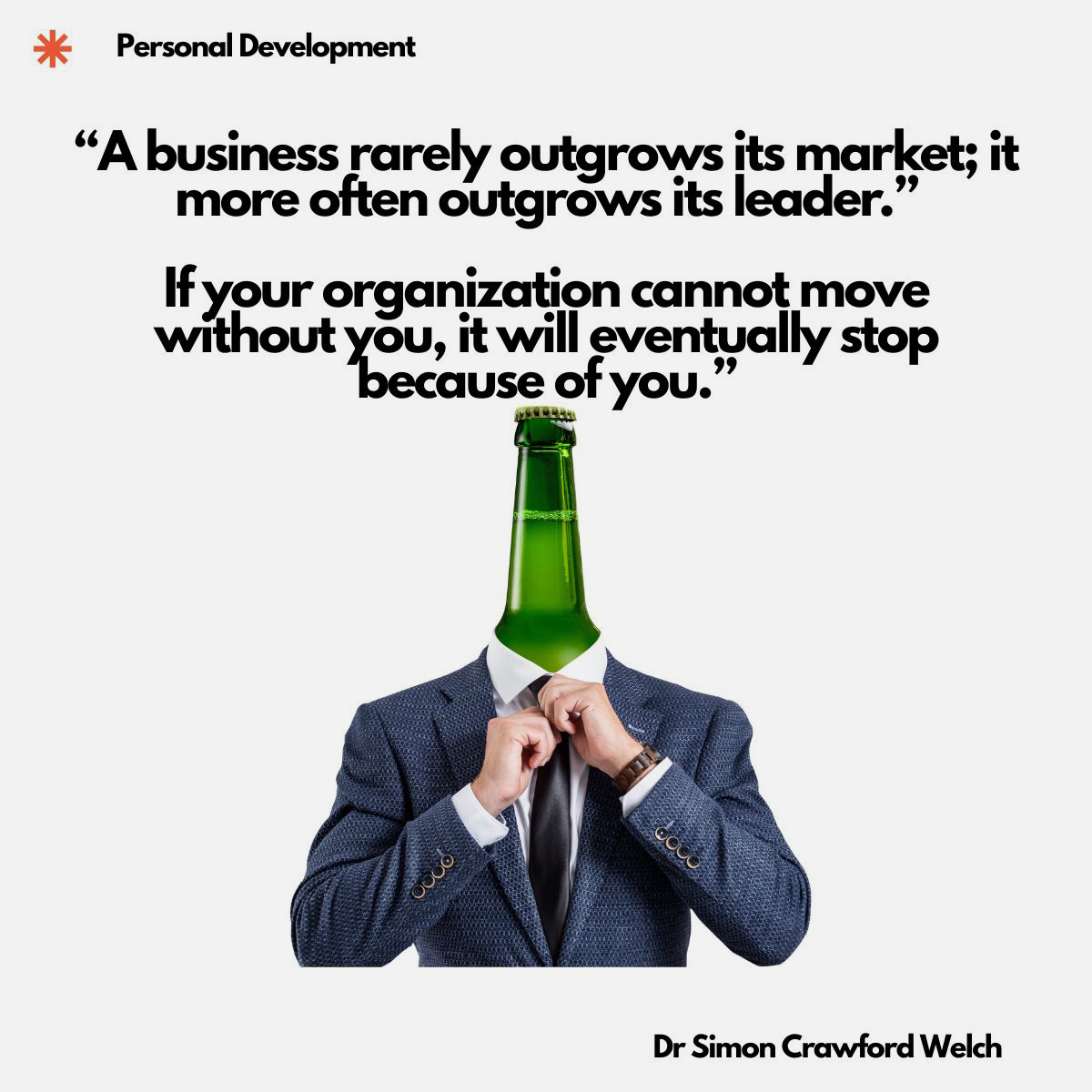
The Bottleneck Is You: When Growth Outpaces Self-Development
Growth is intoxicating. Revenue climbs, teams expand, opportunities multiply. From the outside, it looks like momentum. From the inside, it often feels like pressure.
At a certain point, something subtle shifts. Decisions take longer. Communication frays. Problems that should be simple begin to loop. The organization is still growing, but it is no longer flowing.
Most leaders respond by looking outward, questioning the team, the strategy, the systems, or the market. Rarely do they consider the more uncomfortable possibility that the constraint is internal. The bottleneck is you.
This is not a criticism. It is a structural reality. Organizations scale at the rate of their leaders’ ability to evolve. When growth outpaces self-development, friction is inevitable.
The Asymmetry of Growth
Businesses can scale quickly. Capital accelerates expansion, technology multiplies output, and talent increases capacity. Personal development, however, is nonlinear, often slow, and resistant to shortcuts. It requires reflection, feedback, and the difficult process of unlearning.
The business moves faster than the individual leading it. Research in organizational psychology consistently highlights this. The concept often referred to as the “leadership ceiling” suggests that leaders reach a point where their current capabilities limit further organizational performance. Without deliberate development, they become the constraint.
Symptoms of Being the Constraint
The signs are subtle. Decision-making slows because too many decisions route through one person. Delegation exists in theory but not in practice. Leaders hold on to control under the assumption that they are maintaining quality, when in reality they are creating dependency.
Communication becomes increasingly complex, requiring layers of clarification. Teams spend more time aligning than executing. There is also growing cognitive fatigue. The leader is involved in too many domains, making too many decisions, carrying too many unresolved variables.
Recurring problems are addressed but return in different forms. The organization solves symptoms rather than root causes. These are not operational failures. They are reflections of a leadership model that has not evolved to match the scale of the business.
Identity and the Fear of Letting Go
The bottleneck is rarely just structural. It is psychological. Many leaders build their sense of value around being the one who knows, decides, or fixes. This identity is reinforced during early growth, where hands-on involvement is necessary and effective.
Scaling requires a shift in identity from operator to architect, from solving problems directly to designing systems that solve them. This transition feels like a loss of relevance. Leaders hold on longer than they should, inserting themselves into decisions that could be made elsewhere. Control becomes a proxy for importance.
The Illusion of Busyness
Being the bottleneck often feels like productivity. Leaders overwhelmed with meetings and decisions interpret this as effectiveness. They are busy, therefore they are contributing. But busyness is not leverage.
Excessive involvement signals a lack of leverage. The system depends on a single node rather than distributed across capable individuals and processes. The leader is not amplifying output; they are becoming the gate through which output must pass. High-performing leaders are not defined by how much they do, but by how much they enable others to do without them.
From Operator to Multiplier
The path forward is transformation. Leaders must transition from operators to multipliers. This concept, explored by researchers like Liz Wiseman, emphasizes the ability to amplify the intelligence and capability of others rather than relying solely on one’s own.
This shift begins with clarity. What decisions truly require your involvement? Everything else becomes a candidate for delegation, not as a task, but as ownership. Teams must be developed to operate with autonomy and accountability. Systems should reduce dependency on individuals and create consistent outcomes.
This also requires personal development that matches the pace of organizational growth. There is no external system that can compensate for an internal limitation indefinitely. Eventually, the gap shows.
The idea that the bottleneck is you is not a judgment. It is a mirror. Every stage of growth reveals a new version of the leader that is required. The question is not whether you are the bottleneck. At some point, every leader is. The question is whether you recognize it quickly enough to do something about it.
Because growth does not stop when you become the constraint. It simply slows down to match you.
quick read — LEADERSHIP
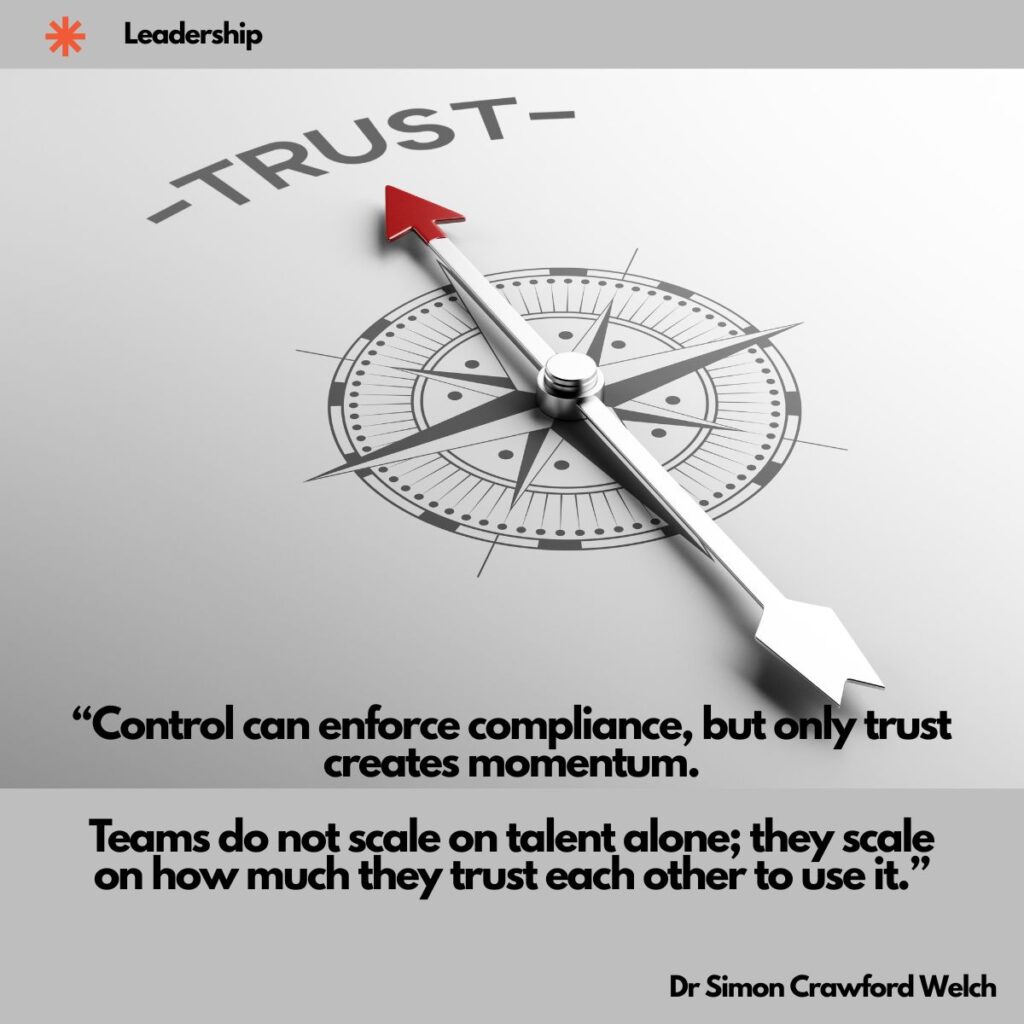
The Trust Equation: Why Low-Trust Teams Don’t Scale
Most conversations about scaling focus on strategy, capital, talent, and systems. If growth stalls, leaders look to pricing models, hiring pipelines, or operational efficiency. Rarely do they begin with trust.
That omission is not accidental. Trust is difficult to quantify, uncomfortable to confront, and easy to assume. Yet it is one of the most decisive variables in whether a team can scale effectively. Not because it sounds good in theory, but because it determines how quickly and accurately work actually moves through an organization.
Low-trust environments do not fail loudly. They degrade quietly. Decisions slow down, communication becomes guarded, and execution begins to fragment. On paper, everything may still look functional. In practice, the organization is carrying friction in every interaction.
Defining the Equation
Trust is often misunderstood as a feeling. In reality, it is a calculation. Trust is a function of credibility, reliability, and alignment of intent.
Credibility answers the question of competence. Do you know what you are doing? Reliability addresses consistency. Do you follow through on what you say? Alignment of intent speaks to motive. Are you acting in a way that serves shared outcomes rather than personal agendas?
When these elements are present, trust compounds. When one is missing, trust erodes, often faster than leaders expect. The equation operates continuously, recalculated in every interaction. There is no neutral state.
The Cost of Low Trust
Low trust introduces a form of tax. Communication becomes less efficient. People hedge their language, withhold information, or over-explain to protect themselves. Decision-making slows. When trust is low, decisions require more validation, more stakeholders, and more layers of approval. Collaboration weakens as teams optimize for their own outcomes rather than the collective result.
A study by the Harvard Business Review found that employees in high-trust organizations report significantly higher levels of productivity, engagement, and job satisfaction. Conversely, low-trust environments are associated with increased stress, burnout, and turnover. Trust is not just a cultural preference. It is an economic variable.
Why Low-Trust Teams Cannot Scale
Scaling requires speed, alignment, and adaptability. Low trust undermines all three.
Speed is compromised because every action requires verification. Progress becomes sequential rather than parallel. Alignment suffers because shared understanding breaks down. People interpret information through a defensive lens, second-guess direction, and fill gaps with assumptions. Adaptability is constrained because experimentation feels risky. Mistakes are punished or politicized, so individuals wait for explicit direction.
Low-trust teams often handle early-stage growth reasonably well. When the organization is small, proximity compensates for the lack of trust. As the organization expands, those mechanisms break down.
The Control Paradox
Leaders often assume that control is the antidote to low trust. The instinct is to increase oversight, tighten processes, and become more involved. This response is counterproductive. Control may create short-term stability, but it signals a lack of confidence in the team’s capability or intent.
There is a paradox at play. The more leaders centralize decision-making, the more the organization relies on them. What begins as an attempt to solve a trust problem ends up amplifying it.
Psychological Safety
One of the most researched dimensions of trust is psychological safety. The concept, popularized by organizational scholar Amy Edmondson, refers to the belief that one can speak up, take risks, and admit mistakes without fear of negative consequences.
Psychological safety is not about comfort. It is about permission. In low-trust environments, this permission is absent or inconsistent. People become selective in what they share, avoid difficult conversations, and prioritize self-protection over collective progress. Problems remain hidden. Ideas remain untested. Learning slows.
Building Trust as an Operating System
Trust must be designed into the operating system of the organization. This begins with clarity. Roles, expectations, and decision rights must be explicitly defined. Ambiguity is one of the fastest ways to erode trust because it creates space for misinterpretation.
Consistency is equally important. Leaders must align their actions with their stated values. Inconsistency, even in small moments, introduces doubt. Transparency also plays a critical role. Information should flow freely unless there is a clear reason for restriction.
Finally, accountability must be balanced. High-trust environments do not avoid accountability; they enforce it fairly.
The Compounding Effect
In high-trust environments, small positive interactions build on each other. A delivered commitment reinforces reliability. A transparent decision reinforces alignment of intent. Over time, these signals create a foundation that allows the organization to move faster and with greater confidence.
Low-trust environments experience the opposite. Each missed commitment, each unclear decision, each perceived misalignment adds friction. The organization becomes heavier, slower, and less responsive. The difference is not marginal. It is exponential.
Leaders who ignore trust often find themselves compensating in other areas. They add layers of management, increase process complexity, and invest in tools to solve problems that are fundamentally relational. These solutions may provide temporary relief, but they do not address the root cause.
Because in the end, low-trust teams do not struggle to scale because they lack talent or ambition. They struggle because they are carrying too much friction to move at the speed growth demands. And friction, left unaddressed, always wins.
Quotes of the Week
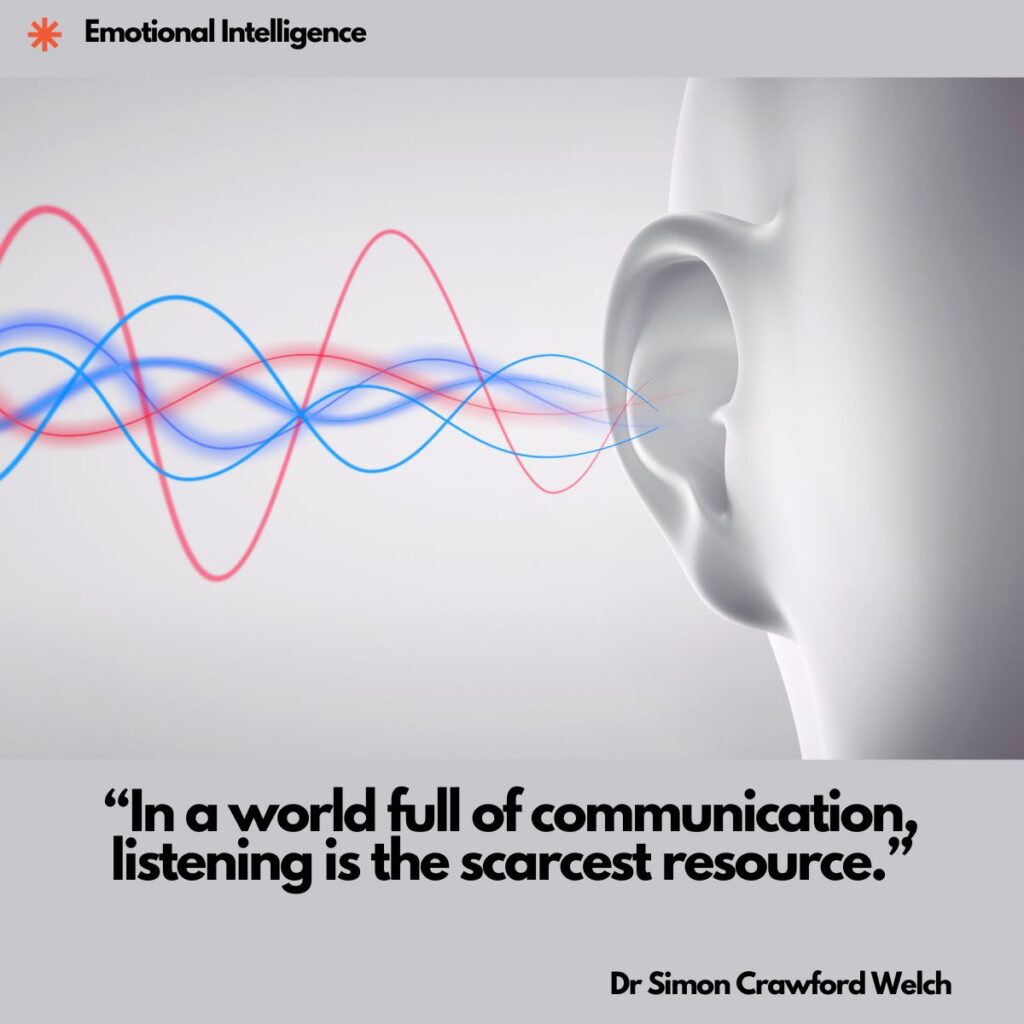
QUOTE — EMOTIONAL INTELLIGENCE
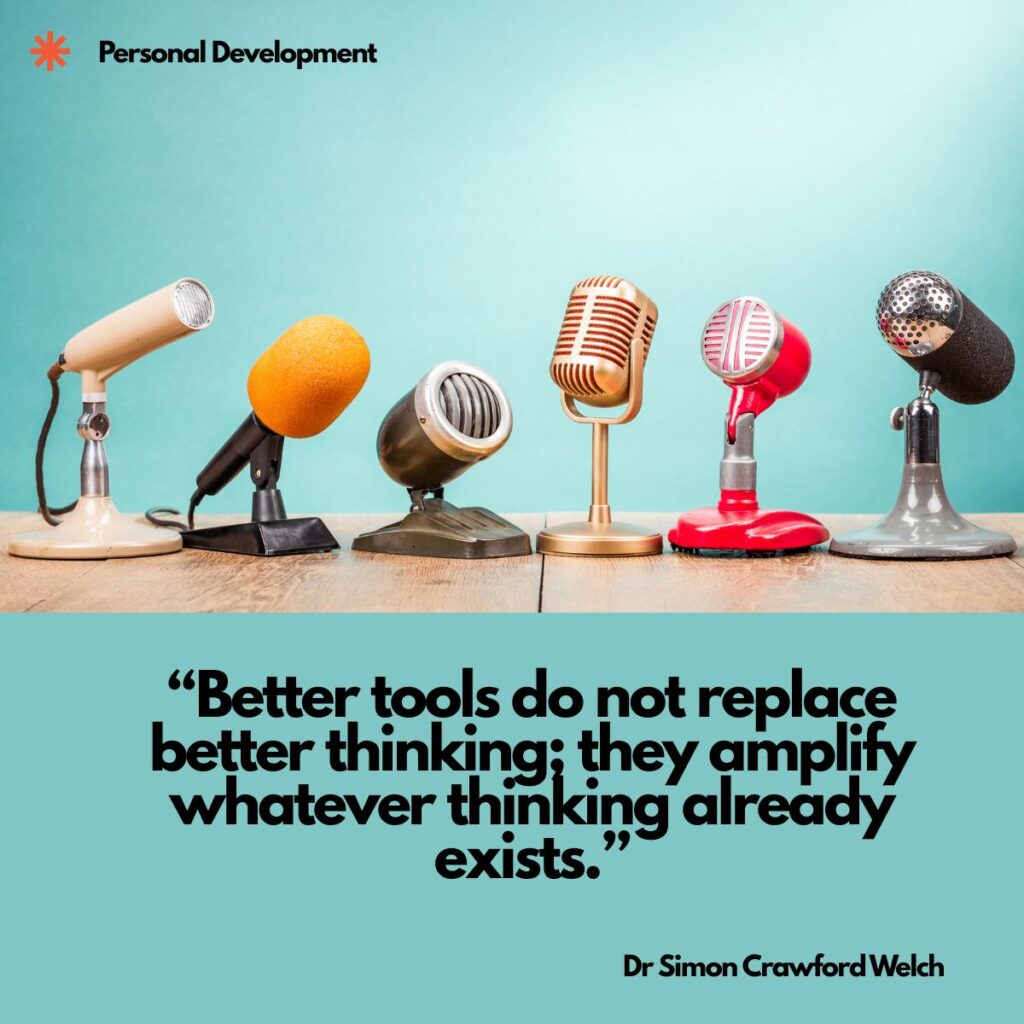
QUOTE — PERSONAL DEVELOPMENT
QUOTE — LEADERSHIP
Reframe
From Reaction to Reflection: Training the Brain to Pause in a Fast World
Modern life is optimized for immediacy. Messages arrive instantly, decisions are expected quickly, and the pace of information leaves little room for hesitation. In this environment, speed becomes synonymous with competence. The faster you respond, the more capable you appear.
But there is a hidden cost to this acceleration. When everything moves quickly, reflection is often the first casualty.
The human brain is remarkably adaptable, but it is not immune to the environments it operates in. When consistently exposed to high-speed inputs, it begins to favor reaction over reflection. Decisions become more automatic, responses more habitual, and thinking more compressed.
This is not inherently negative. Reaction has its place. It allows for efficiency, enables quick action in familiar situations, and reduces cognitive load. The problem arises when reaction becomes the default, even in moments that require deeper consideration.
In a fast world, the ability to pause is no longer natural. It is a trained skill.
The Neuroscience of Reaction
To understand why reflection is so easily overridden, it helps to examine how the brain processes information.
At a basic level, the brain operates through two complementary systems. The first is fast, intuitive, and automatic. The second is slower, more deliberate, and analytical. This framework, popularized by psychologist Daniel Kahneman in his work on decision-making, highlights the tension between efficiency and accuracy.
The fast system is designed for survival. It relies on patterns, past experiences, and emotional cues to generate immediate responses. It is highly efficient, but it is also prone to bias and error.
The slower system, by contrast, requires effort. It engages higher-order thinking, evaluates alternatives, and considers long-term implications. It is more accurate, but it is also more demanding.
In a high-speed environment, the fast system dominates. Not because it is better, but because it is easier. Over time, this creates a neurological bias toward reaction. The brain becomes conditioned to respond quickly, often before the slower system has a chance to engage.
This conditioning is subtle but powerful. It shapes not only how we think, but how we perceive the act of thinking itself.
The Illusion of Clarity
One of the more deceptive consequences of constant reaction is the illusion of clarity. Quick decisions feel decisive. Immediate responses feel confident. There is a sense of momentum that can be mistaken for understanding.
However, speed often compresses complexity.
When the brain reacts, it simplifies. It reduces nuanced situations into familiar patterns, relying on existing mental models to generate a response. This can be effective in routine scenarios, but it becomes problematic in situations that require new thinking.
Research in cognitive science consistently shows that humans are prone to overconfidence in rapid judgments. The faster the response, the more certain it often feels, even when that certainty is not justified.
This creates a feedback loop. Quick decisions reinforce the belief that speed is effective, which further reduces the likelihood of pausing. Over time, reflection begins to feel unnecessary, even inefficient.
The result is a form of cognitive compression, where depth is sacrificed for velocity.
Emotional Reactivity and the Cost of Immediacy
The impact of constant reaction extends beyond cognition. It shapes emotional responses as well.
Emotions are closely tied to the brain’s fast system. They provide immediate signals about perceived threats, rewards, or social dynamics. In many cases, these signals are useful. They allow for rapid assessment and action.
However, when reaction dominates, emotional responses are less likely to be examined. They are expressed rather than processed.
This can lead to a range of outcomes. Misinterpretations escalate into conflict. Temporary feelings are treated as permanent truths. Decisions are influenced by momentary states rather than considered judgment.
In professional environments, this dynamic is particularly costly. Leaders who react emotionally can create instability, even if unintentionally. Teams begin to anticipate reactions rather than engage in open dialogue. Communication becomes cautious, and trust can erode.
The ability to pause, therefore, is not just a cognitive skill. It is an emotional one.
The Cultural Bias Toward Speed
Beyond the neurological and emotional dimensions, there is a cultural force reinforcing reactivity.
Modern work environments often reward responsiveness. Quick replies are interpreted as engagement. Immediate decisions are seen as leadership. Delays, even when intentional, can be perceived as uncertainty or lack of competence.
Technology amplifies this bias. Communication tools create an expectation of constant availability. Notifications demand attention. The boundary between urgent and important becomes blurred.
This creates a paradox. The conditions that require thoughtful decision-making are the same conditions that discourage it.
Leaders, in particular, are caught in this tension. They are expected to move quickly while also making high-quality decisions. Without deliberate intervention, speed wins.
Training the Pause
If reaction is the default, then reflection must be trained.
This begins with awareness. Recognizing the moments where reaction is likely to occur is the first step. These moments often share common characteristics. They involve pressure, ambiguity, or emotional intensity. They create a sense of urgency that feels real, even when it is not.
Once identified, the goal is not to eliminate reaction, but to insert a pause between stimulus and response.
This pause does not need to be long. In many cases, it can be measured in seconds. What matters is the shift it creates. It allows the slower system to engage, even briefly, before a decision is made.
Simple practices can support this. Asking a clarifying question before responding. Taking a breath before speaking. Writing a response and revisiting it before sending. These actions may seem minor, but they introduce friction into the automatic process.
Over time, this friction becomes a new pattern. The brain begins to associate certain triggers with reflection rather than immediate reaction.
From Habit to Discipline
Training the pause is not a one-time adjustment. It is a discipline.
Habits of reaction are deeply ingrained, reinforced by both biology and environment. Changing them requires consistency. It involves repeated practice, even when it feels inconvenient or unnecessary.
There is also a need for intentional design. Environments can be structured to support reflection. This might include setting expectations around response times, creating space for asynchronous communication, or establishing decision-making frameworks that prioritize quality over speed.
At an individual level, reflection can be formalized. Regular periods of review, whether daily or weekly, create opportunities to examine decisions and responses. This process helps identify patterns, reinforcing awareness and enabling adjustment.
The goal is not perfection. It is progress. Each instance of pausing strengthens the capacity for reflection.
The Strategic Advantage of Slowing Down
In a fast world, the ability to slow down strategically becomes a competitive advantage.
Organizations that cultivate reflection are better positioned to navigate complexity. They make fewer reactive errors, adapt more effectively to change, and build stronger alignment across teams. Their decisions may take slightly longer in the moment, but they often require less correction over time.
At the leadership level, the impact is even more pronounced. Leaders who pause create space for others to think. They model a different standard, one that values depth over immediacy. This shifts the culture, encouraging more deliberate and thoughtful engagement.
Slowing down, in this context, is not about reducing pace. It is about improving precision.
A Different Relationship with Time
Ultimately, training the brain to pause requires a shift in how we relate to time.
Instead of viewing time as something to be compressed, it becomes something to be allocated. Not every moment requires the same speed. Some decisions benefit from immediacy, while others demand reflection.
The challenge is discerning the difference.
This discernment is itself a form of awareness. It requires understanding the stakes, the complexity, and the potential consequences of a given situation. It involves resisting the impulse to treat all inputs as equally urgent.
In doing so, individuals reclaim a degree of control over their thinking. They move from being driven by the pace of the environment to actively shaping their response to it.
The Power of the Pause
The pause is often underestimated because it is small. It does not produce visible output. It is not easily measured. Yet its impact is significant.
It creates space for better thinking. It allows emotions to settle. It introduces intentionality into action.
In a world that rewards speed, the pause can feel counterintuitive. It may even feel like a disadvantage. But over time, its effects compound.
Decisions improve. Communication becomes clearer. Relationships strengthen. The quality of thought increases.
The goal is not to eliminate reaction. It is to ensure that reaction is a choice, not a reflex.
Because in the end, the difference between reacting and reflecting is not just a matter of timing.
It is a matter of control.