Personal Development Series
Personal development has become a crowded space. There is no shortage of frameworks, habits, and philosophies designed to help individuals grow. Physical health is tracked with precision. Emotional intelligence is widely discussed. Productivity systems are endlessly refined.
Yet one dimension remains underdeveloped, despite quietly shaping all the others.
Cognitive fitness.
We assume thinking is automatic. We believe that because we are constantly processing information, we are improving at it. In reality, the opposite is often true. The modern environment is placing unprecedented strain on our cognitive systems, while offering very little in the way of structured training.
The result is a paradox. At a time when thinking matters more than ever, most people are not actively strengthening their ability to think.
Defining Cognitive Fitness
Cognitive fitness is not intelligence. It is not about how much you know or how quickly you can recall information. It is about how effectively your mind operates under real-world conditions.
It includes the ability to focus, to reason, to adapt, to manage cognitive load, and to make sound decisions in the presence of uncertainty. It is the functional performance of the brain, not its raw capacity.
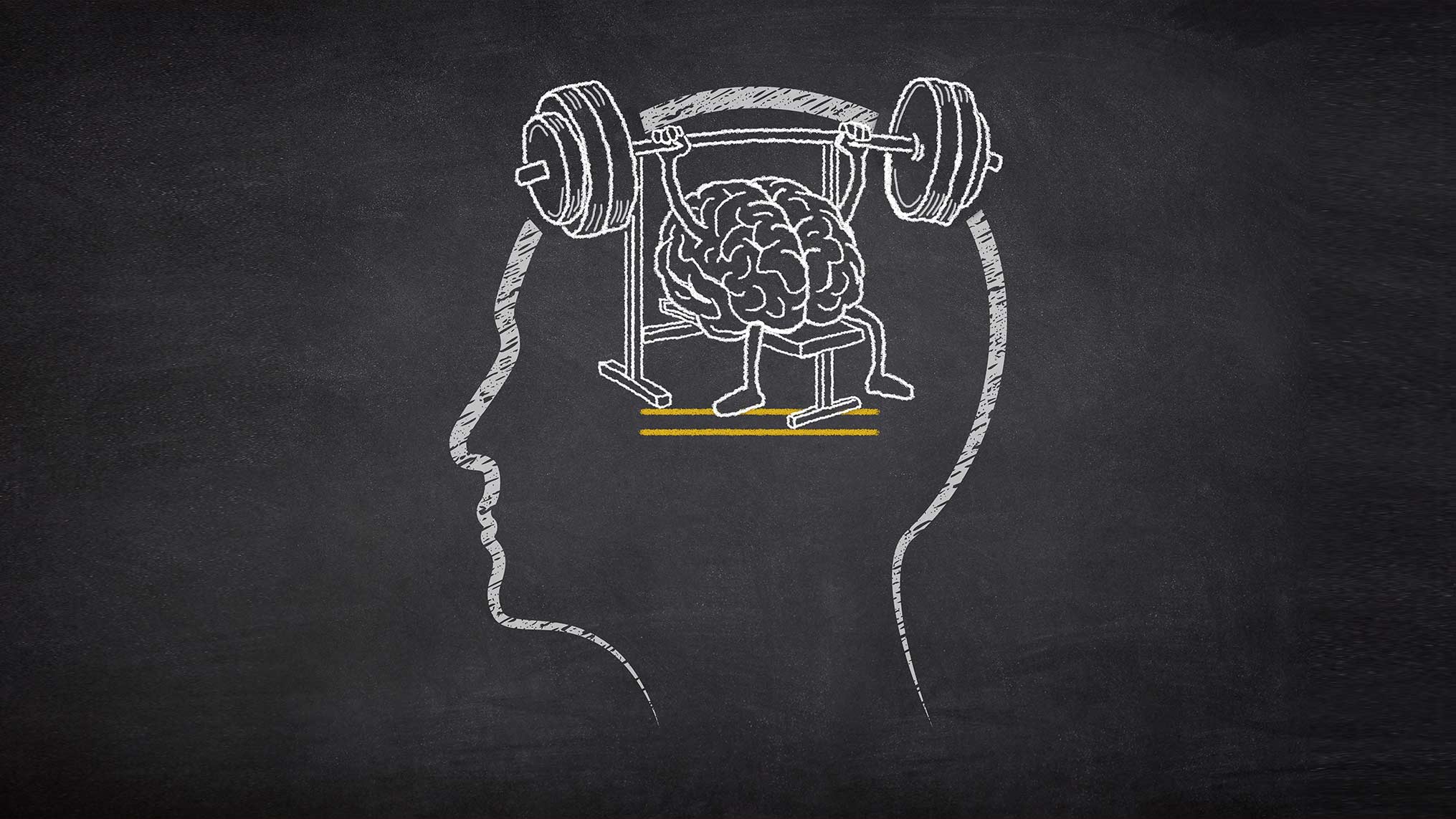
In many ways, it is similar to physical fitness. A person may have the potential for strength, but without training, that potential remains unrealized. Similarly, cognitive potential does not translate into performance without deliberate practice.
What makes cognitive fitness particularly important is that it underpins every other domain. Emotional regulation depends on it. Decision-making relies on it. Learning is constrained by it.
And yet, it is rarely trained directly.
The Environment Is Rewiring the Mind
To understand why cognitive fitness is becoming more critical, it is necessary to look at the environment in which modern thinking occurs.
We are exposed to more information in a single day than previous generations encountered in weeks or months. Digital platforms compete for attention, optimizing for engagement rather than depth. Tasks are fragmented, and interruptions are constant.
This environment is not neutral. It shapes how the brain functions.
Neuroscientific research has shown that repeated exposure to high levels of stimulation can alter attention patterns, reducing the ability to sustain focus over extended periods. Studies referenced by the National Institutes of Health suggest that chronic multitasking is associated with decreased cognitive control and increased susceptibility to distraction.
In practical terms, this means that the default state of the modern mind is shifting. Focus becomes harder to maintain. Shallow processing becomes more common. Depth requires effort.
Without intentional countermeasures, cognitive performance degrades, even as cognitive demands increase.
The Illusion of Mental Strength
One of the challenges in addressing cognitive fitness is that its decline is not always obvious.
People continue to function. They complete tasks, attend meetings, and make decisions. From the outside, everything appears normal.
However, there are subtle indicators. Increased mental fatigue. Difficulty concentrating. A tendency to rely on shortcuts or heuristics rather than deliberate reasoning. A growing sense of overwhelm when faced with complexity.
These signs are often misattributed. Individuals may assume they are simply busy or under pressure. They may not recognize that their cognitive systems are operating below optimal levels.
There is also an illusion of competence created by access to information. With answers readily available, the need to think deeply can feel reduced. This creates a false sense of capability.
The danger is not that people lack intelligence. It is that they are not exercising it in a way that maintains or enhances its effectiveness.
The Core Components of Cognitive Fitness
If cognitive fitness is to be taken seriously, it must be understood in terms of its components.
First, there is attention control. This is the ability to direct and sustain focus on a task without being pulled away by distractions. It is foundational. Without it, other cognitive functions are compromised.
Second, there is working memory. This refers to the capacity to hold and manipulate information in the mind over short periods. It is critical for reasoning, problem-solving, and comprehension.
Third, there is cognitive flexibility. This is the ability to shift perspectives, adapt to new information, and update mental models. In a rapidly changing environment, flexibility is essential.
Fourth, there is metacognition. This is the awareness of one’s own thinking processes. It allows individuals to evaluate their reasoning, identify biases, and adjust strategies.
Finally, there is decision quality. This encompasses the ability to weigh options, consider consequences, and make choices under uncertainty.
These components interact. Weakness in one area can affect performance in others. Strengthening them requires deliberate and varied forms of training.
The Cost of Neglect
Neglecting cognitive fitness has consequences that extend beyond individual performance.
At a personal level, it limits growth. Individuals may find themselves plateauing, not because they lack ambition, but because their cognitive systems cannot support more complex thinking.
In professional settings, the impact is amplified. Poor decision-making, miscommunication, and reduced adaptability can affect entire teams and organizations. Leaders who are cognitively strained may default to reactive thinking, increasing the likelihood of errors.
There is also a broader societal dimension. As information becomes more abundant, the ability to process it critically becomes more important. Without cognitive fitness, individuals are more susceptible to misinformation, oversimplification, and polarized thinking.
The stakes are higher than they appear.
Training the Mind Intentionally
If cognitive fitness is analogous to physical fitness, then it follows that it can be trained.
The first step is reclaiming attention. This involves creating environments that support focus. Reducing unnecessary distractions, setting boundaries around digital consumption, and dedicating time to deep work are practical starting points.
Next is challenging the brain. Just as muscles require resistance to grow, the mind requires complexity. Engaging with difficult material, solving unfamiliar problems, and exploring new domains all contribute to cognitive development.
Memory can be strengthened through deliberate practice. Techniques such as spaced repetition and active recall have been shown to improve retention and comprehension.
Cognitive flexibility can be developed by exposing oneself to diverse perspectives and actively questioning assumptions. This requires a willingness to be uncomfortable, to entertain ideas that may conflict with existing beliefs.
Metacognition can be enhanced through reflection. Regularly reviewing decisions, identifying patterns in thinking, and seeking feedback all contribute to greater self-awareness.
Importantly, these practices must be consistent. Cognitive fitness, like physical fitness, deteriorates without maintenance.
The Role of Recovery
An often overlooked aspect of cognitive fitness is recovery.
The brain, like any system, requires rest. Sleep plays a critical role in memory consolidation and cognitive performance. Chronic sleep deprivation has been linked to impaired attention, reduced decision-making ability, and increased emotional reactivity.
Downtime is equally important. Periods of rest allow the brain to process information, integrate learning, and reset. In a culture that values constant activity, this can feel counterintuitive.
However, without recovery, training is less effective. Cognitive fatigue accumulates, reducing the capacity for focus and reasoning.
Balancing effort and recovery is essential for sustained performance.
Cognitive Fitness as a Leadership Imperative
For leaders, cognitive fitness is not optional. It is a core competency.
Leadership involves navigating complexity, making decisions with incomplete information, and guiding others through uncertainty. These demands place significant strain on cognitive systems.
Leaders who prioritize cognitive fitness are better equipped to handle these challenges. They can process information more effectively, think more strategically, and maintain clarity under pressure.
They also set a standard for their organizations. By valuing depth of thought and intentional decision-making, they create environments where cognitive fitness is recognized and developed.
Conversely, leaders who neglect this dimension may inadvertently create cultures of reactivity and superficial thinking.
A New Standard for Development
The broader implication is that personal development must evolve.
Traditional approaches often focus on acquiring knowledge or building habits. While these are important, they do not address the underlying system that processes information.
Cognitive fitness shifts the focus to how we think, not just what we think or do.
This requires a change in mindset. Thinking becomes an active process rather than a passive one. It becomes something to be trained, evaluated, and refined.
Organizations may need to reconsider how they develop talent. Training programs that incorporate cognitive skills, critical thinking, and decision-making may become increasingly valuable.
The same applies at an individual level. Investing in cognitive fitness is an investment in long-term capability.
The Discipline of Better Thinking
Ultimately, cognitive fitness is about discipline.
It is the discipline to focus in a distracted world. The discipline to think deeply when shallow processing is easier. The discipline to question assumptions and seek clarity.
This discipline is not easy to maintain. It requires intention, effort, and consistency. However, the returns are significant.
Better thinking leads to better decisions. Better decisions lead to better outcomes.
In a world where complexity is increasing, this becomes a competitive advantage.
The Mind as an Asset
We often think of assets in terms of capital, skills, or relationships. The mind, however, is the asset that shapes how all others are used.
If it is neglected, its effectiveness diminishes. If it is trained, its capacity expands.
Cognitive fitness is not a luxury. It is a necessity.
The challenge is that it does not demand attention in the same way as more visible aspects of development. It requires a deliberate choice to invest in something that operates largely behind the scenes.
Yet its impact is pervasive.
Every decision, every interaction, every moment of insight is influenced by the state of the mind.
A Final Reflection
The modern world is not slowing down. Information will continue to expand. Complexity will increase. The demands on our cognitive systems will grow.
The question is not whether we can keep up by working harder or moving faster.
It is whether we can think better.
Cognitive fitness offers a path forward. Not by simplifying the world, but by strengthening our ability to navigate it.
Because in the end, the quality of our thinking determines the quality of everything that follows.