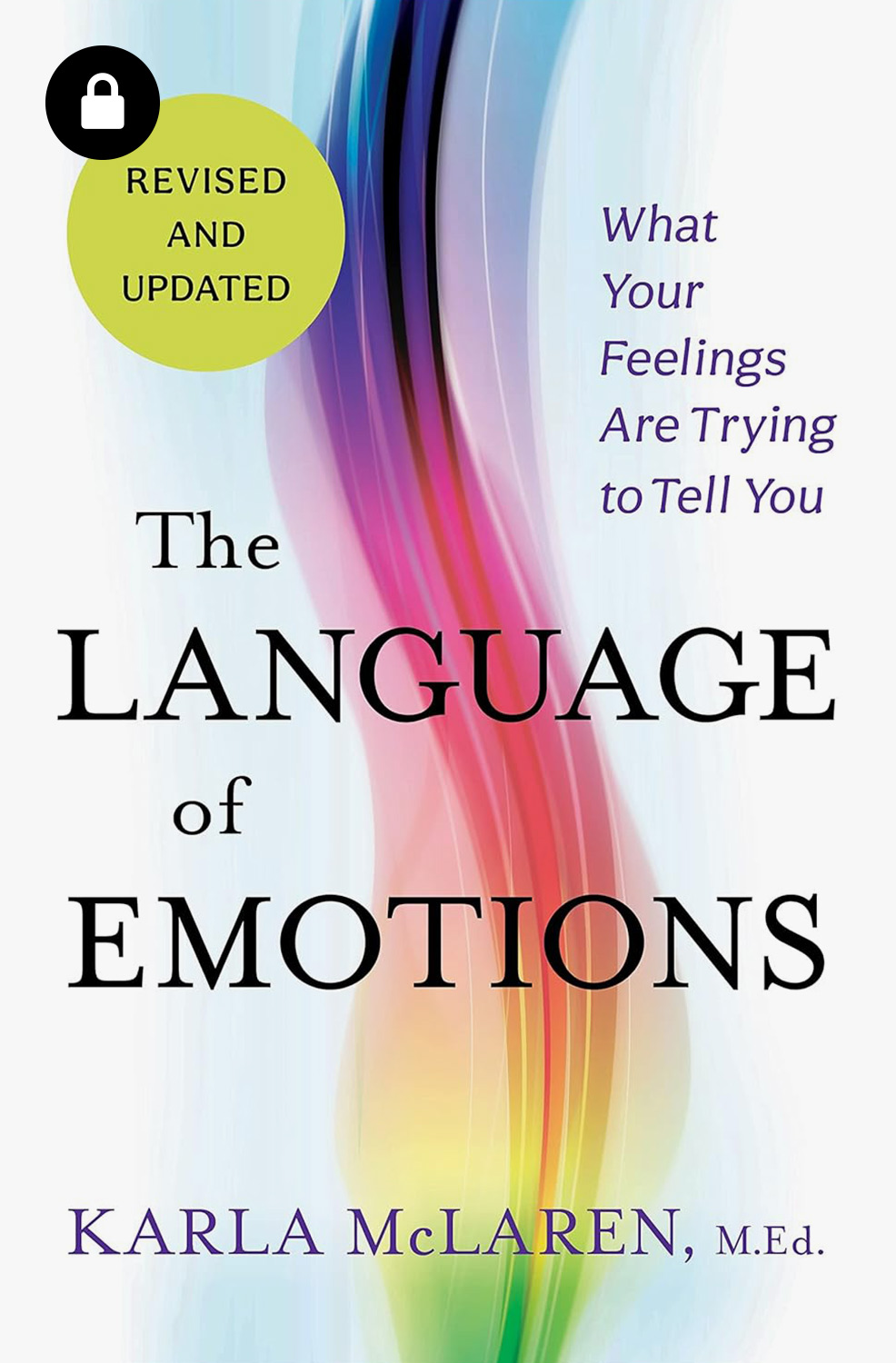
By Karla McLaren
Big idea, simple promise
McLaren’s central claim is disarmingly straightforward: every emotion is intelligent. None are “negative” and disposable; none are “positive” and always welcome. Each emotion is a messenger with a specific function. Your job isn’t to suppress or perform your way around feelings — it’s to listen, translate, and respond. The book is essentially a field guide to doing exactly that.
What makes her approach refreshing is that she refuses the two common extremes: “control your emotions” on one side and “let it all out” on the other. Instead, she teaches emotional skills — practical tools that help you collaborate with your inner life so you can stay ethical, grounded, and clear.
How the Revised Edition Helps
If you skimmed an older version years ago, the updated edition is more precise and more usable. It cleans up the maps of what each emotion is for, adds sharper “internal questions” to ask each feeling, and streamlines practices you can deploy in regular life —on your commute, in tough conversations, before a presentation, during conflict at home. The ethos is the same — work with emotions — but the on-ramps are easier.
The Map — Each Emotion as a Specialist
McLaren treats emotions like members of a team. Each one has a specialty, a gift, and a predictable way it can get obstructed or misused. The moment you see the emotional “org chart,” overwhelm starts to fade because you can sort signals from noise.
Anger — The Sentry at the Gate
Gift. Boundaries, self-respect, protection of values.
Internal Questions. What do I value? What must be protected and restored?
When Obstructed. Either boundary collapse (people-pleasing, resentment) or explosive reactivity.
Healthy Action. Set or restore a clear boundary, name the value at stake, and take calm, congruent action. In this frame, anger isn’t cruelty; it’s clarity with a backbone.
Fear — Your Situational Radar
Gift. Precision, vigilance, and readiness in the present moment.
Internal Questions. What am I sensing, and what action fits reality right now?
When Obstructed. Either numbness to risk or hypervigilance that floods
Healthy Action. Orient to concrete cues (What’s the layout? Where are the exits? Who can help?), take the next small protective step, and recheck your assumptions.
Anxiety — The Project Manager
Gift. foresight, prioritization, task-completion energy.
Internal Questions. What truly needs doing, and what’s the first small step?
When Obstructed. Rumination, doom-scrolling, deadline avoidance, or frantic busyness that never lands.
Healthy Action. Convert anxious energy into structure — make a small list, time-box a starter step (five to ten minutes), and ship a sliver of progress. Anxiety wants closure; give it milestones.
Sadness & Grief — The Art of Letting Go
Gift. Relaxation, surrender, honoring what’s ended, integrating change.
Internal Questions. What’s over? What must be released or honored?
When Obstructed. Clinging to what’s gone, or getting stuck in despair without ritual or support.
Healthy Action. Allow the down-shift — cry, breathe, soften your schedule, create a small ritual of goodbye, and let your body complete the “down wave.” After grief, capacity returns.
Jealousy & Envy — Relationship and Resource Radar
Jealousy’s Gift. Protecting agreements and intimacy.
Envy’s Gift. Clarifying desires and fairness — what you admire and want to grow.
Internal Questions. What commitment needs clarity or repair? (jealousy) and What do I want more of, and how can I pursue it ethically? (envy).
Healthy Action. Move from comparison to conversation and from longing to practice: negotiate boundaries, request what you need, or build a plan to develop the envied skill.
Shame & Guilt — Ethics and Repair
Guilt’s Gift. Points to specific behavior that needs amends: What did I do, and how do I repair it?
Shame’s Gift. Shines a light on identity-level conflicts and inherited rules: Which message is running me, and does it fit my values now?
When Obstructed. Global self-attack, perfectionism, secrecy, retaliation, or moral posturing.
Healthy Action. With guilt, make repair; with shame, interrogate the script and update it. The north star is alignment you can live with, not impossible purity.
Panic & Terror — Survival Systems
Gift. Immediate protection (fight/flight) and, when appropriate, immobilization for safety (freeze).
Internal Questions. Where is the threat? What action restores safety?
Healthy Action. Measure your exposure, widen support, and don’t shame the alarm. Panic and terror are not character defects; they’re intense signals that need containment and care.
Apathy & Confusion — Protective Masks
Internal Questions. What am I protecting myself from right now? Which emotion is underneath?
Healthy Action. Treat them as timeouts. Often apathy hides exhausted anger; confusion hides unexamined fear or anxiety. Rest, then interview the deeper emotion.
Joy, Contentment, Happiness — Resourcing States
Gifts. Connection, renewal, motivation.
Caution. Even bliss needs boundaries. Unmoored positivity can drown out necessary signals (like anger about a violated value or anxiety about an ignored deadline).
Healthy Action. Enjoy fully—and keep your antenna up for the next messenger.
Depression (situational) — The Emergency Brake
Gift. Protective stillness when a plan or life structure is no longer viable.
Internal Questions. What is unworkable? What must stop so something wiser can start?
Healthy Action. Inventory multiple domains (sleep, nutrition, workload, relationships, finances, environment) to locate the pressure points outside the story “I’m broken.” Seek clinical help when needed; the book’s tools complement, not replace, professional care.
The Core Skills — How You “Speak” emotions
McLaren’s magic is turning philosophy into practice. She offers a set of structured exercises that keep you grounded and ethical while you work with strong feelings.
No. 1 — Grounding, Centering, and Boundary-Setting
Before you “do” anything with a feeling, you locate yourself. Grounding (feeling your weight, breath, and contact with the environment) lowers reactivity. Centering focuses attention. Then you set an internal boundary — an agreement with yourself about how you intend to behave (for example: “I will speak firmly and respectfully; I won’t threaten or mock.”). That combination lets you engage anger without aggression, anxiety without avoidance, grief without collapse.
No. 2 — Conscious Complaining
This is a structured vent with rules, a start, and an end. You step aside (or ask a partner for permission), set a short timer, and say the unvarnished truth of your frustration — no solutions, no pretending. When the timer ends, you shake it off, breathe, and return to regular life. The benefit is twofold: you stop repressing (which creates rumination) and you stop dumping (which damages relationships). It’s especially effective for “stuck” anxiety and low-grade irritability.
No. 3 — Burning Contracts
Many of us live under old, unspoken rules—internal “contracts” we never consciously signed: I must never disappoint anyone. Anger is dangerous. I only deserve help when I’m perfect. This ritual has three parts: (1) name the contract clearly, (2) honor what it tried to do for you (keep you safe, win approval, maintain belonging), and (3) ceremonially release or revise it so it fits your current ethics and capacities. Burning a contract doesn’t erase conscience; it removes the shame-based enforcement mechanism so genuine values can lead.
No. 4 — Ethical Empathic Gossip
If you’re going to talk about someone who isn’t in the room, do it on purpose and with ethics. The protocol: name your feelings and needs, reality-check your story with a trusted ally, and plan a direct, respectful conversation or boundary. The aim is to transform covert triangulation into prep for honest repair or separation.
No. 5 — Vocabulary Building and Tracking
Granularity is regulation. The book encourages you to expand your emotion vocabulary (irritated vs. incensed; uneasy vs. alarmed) and track which emotions show up in which contexts. Over time, patterns emerge: perhaps your “Sunday dread” is actually anxiety asking for a planning ritual; maybe your “bad mood” at dinner is clean anger about a repeated disrespect. When you can name precisely, you can intervene precisely.
Working With “Difficult” Emotions Up Close
Anger in the Wild
Try this two-step script when anger flares:
No. 1 — Name the value. “Respect matters to me.”
No. 2 — Set a clean boundary. “I’m available for solutions; I’m not available for insults. Let’s reset, or we can pause and revisit.”
Notice what’s missing: blame spirals, character assassination, vague threats. Clean anger is surgical and specific.
Fear and Anxiety at Work
Treat fear as situational intel: What am I picking up right now? Treat anxiety as project fuel: What do I need to plan and start? A 10-minute micro-sprint converts jittery energy into progress. If anxiety spikes, consciously complain for three minutes, shake it out, then take the smallest doable step that closes a loop.
Shame Without Self-destruction
When shame arrives, ask: Is this pointing to a real misalignment I want to address — or is this an inherited rule that doesn’t fit anymore? If it’s behavior, make repair. If it’s an impossible rule, consider a Burning Contracts session and write a kinder, livable ethic you can stand behind.
Grief that Moves
Grief wants time, space, and witness. Create a simple ritual — light a candle, speak what was good and what is gone, and name what you’re carrying forward. Then schedule small, nourishing actions (walks, sleep, music, sunlight, conversation) that support your nervous system while it reorganizes.
Applying the Book in Daily Life
At Work
Boundaries Without Drama. Let anger help you separate people from problems. “I value focus; I’m blocking notifications during deep-work hours. If you need me urgently, call.”
Anxiety as a Closer. Before a big deliverable, ask anxiety to help you triage: “What must be done today to protect tomorrow?” Then finish one tiny slice and mark it as done.
Guilt to Fuel Repair. If you blew a deadline, name it, apologize cleanly, and propose a new plan. Guilt’s job is to point you to action, not to humiliate you.
Ethical Empathic Gossip as Prep. Talk through a conflict with a trusted peer so you can enter the real conversation with clarity, empathy, and a boundary — rather than a case file and a grudge.
At Home
Jealousy as a Commitment Check. “I’m noticing jealousy. Can we restate our agreements about time and attention this week?”
Envy as Growth Plan. “I envy how confident you are with guests; I’m going to practice hosting dinner twice this month.”
Sadness as the Permission to Soften. Cancel a non-essential obligation, cry if you need to, take a bath, and choose a gentle activity that honors the loss.
A 30-day Practice Plan (Plug-and-Play)
Week 1 — Foundations
- Each day, pause for two minutes to ground (feel feet, breath, and the room).
- Name one dominant emotion of the day and ask it its question.
- Take a single action in response (set a boundary, plan a step, request help, rest).
Week 2 — Protective Emotions (Anger, Fear, Anxiety, and Their Masks)
- Try one Conscious Complaining session every other day (two to five minutes).
- Use a 10-minute timer to convert anxiety into a starter step.
- Practice a boundary line once per day—short, respectful, specific.
Week 3 — Social Emotions (Shame, Guilt, Jealousy, and Envy)
- Do one Burning Contracts session on an inherited rule that keeps you small.
- Before a tough talk, do Ethical Empathic Gossip with a trusted ally to clarify your ask.
- Log one guilt event and one repair action.
Week 4 — Grief, Depression, and Renewal
- If you feel flattened, run a brief life inventory (sleep, food, movement, connection, finances, workload, environment). Choose one gentle fix.
- Schedule an hour of “resourcing” (joy, contentment, play) and keep it.
- Choose a small weekly ritual (walk at sunrise, Sunday soup, Friday music) that returns you to yourself.
Micro-scripts you can steal
- When Anger Spikes. “What value was crossed? Boundary: ‘I’m available for solutions, not sarcasm. Let’s reset.’”
- When Anxiety Whirls. “What 10-minute step moves this forward? Do that, then reassess.”
- When Shame Smothers. “Is this a behavior to repair or an old rule to retire?”
- When Jealousy Bites. “Which commitment needs clarity?”
- When Envy Pinches. “What do I admire, and what practice will I adopt this week?”
- When Grief Swells. “What must be honored and released? Who can witness this with me?”
Common Pitfalls (and How the Book Guards Against Them)
Pitfall 1 — Chasing constant positivity.
Joy is wonderful, but it isn’t the boss of the system. If you treat positivity as a mandate, you’ll ignore crucial signals (like anger’s boundary call). The adult stance is grounded responsiveness: enjoy good states and keep listening.
Pitfall 2 — Using emotion to justify harm.
“Hey, I was just angry” doesn’t absolve you. In McLaren’s model, emotions lead to ethical behavior—clear boundaries, clean repair, honest requests—not character assassination or intimidation.
Pitfall 3 — Venting as a lifestyle.
Conscious Complaining is a tool, not a personality. It has containers, rules, and endings so you don’t turn your relationships into dumping grounds.
Pitfall 4 — Moralizing depression.
Sometimes depression is a wise immobilizer that says, “Stop.” Instead of declaring yourself defective, you examine the system you’re in and make adjustments or seek help.
Pitfall 5 — Confusing numbness for strength.
Apathy and stoicism may look composed, but they often hide exhausted anger or unaddressed fear. Treat them as signals to rest and to interview the real emotion underneath.
Why This Model Sticks
It’s Non-pathologizing. You’re not broken because you feel; you’re receiving a message.
It’s Precise. Each emotion has a job and a question, which naturally points you to a next step.
It’s Relational. The practices anticipate conversations, power dynamics, and the realities of teams and families.
It’s Body-aware. Grounding and ritual help you metabolize emotion, not just think about it.
It’s Ethical. The goal isn’t catharsis for its own sake; it’s congruent action that respects you and the people around you.
The Lived Experience of Using It
Spend a week with this method and life gets less foggy. The “bad mood” in your afternoon becomes clean anger about a crossed line, which becomes a two-sentence boundary. Sunday night “dread” turns into anxiety asking for a plan, which becomes a 15-minute sprint and a quick list for Monday morning. A biting pang of envy becomes a practice plan. A surge of shame becomes a burning-contracts ritual and a new, livable ethic. Instead of either suppressing or exploding, you start partnering with your inner life. The result isn’t numbness—it’s fluency.
Bottom Line
The Language of Emotions reframes feelings as a working language—clear signals with clear jobs. The revised edition gives you crisp maps (what each emotion is for), guiding questions (how to interview the feeling), and practice kits (from Conscious Complaining and Burning Contracts to Ethical Empathic Gossip and vocabulary tracking) so you can use emotions as intended: to protect what matters, to plan wisely, to mourn honestly, to repair cleanly, and to reconnect with vitality. If you treat emotions as allies, they’ll stop hijacking you and start helping you lead yourself—and others—with more steadiness, clarity, and care.