
Deep Dives Articles
DEEP DIVES ARTICLE — EMOTIONAL INTELLIGENCE

How to Play the Resilience Game
This is a sneak peek of this week’s Deep Dives article — published today!
Everyone hits the wall — the difference is how fast you bounce back. “The Resilience Game” isn’t about pretending to be fine; it’s about learning to recover faster, stronger, and smarter. Discover a simple, science-backed framework used by emotionally intelligent leaders and elite performers to turn setbacks into momentum. This Deep Dive will teach you how to time your emotions, reset your mindset, and transform adversity into a personal training ground for growth.
DEEP DIVES ARTICLE — PERSONAL DEVELOPMENT

How to Outsmart the Know-It-All: 3 Disarming Questions That Turn Arguments Into Conversations
This is a sneak peek of this week’s Deep Dives article — published today!
You can’t win an argument with someone who’s always right — but you can win back your peace of mind. This Deep Dive reveals the three deceptively simple questions that instantly lower defenses and turn confrontations into curiosity. Learn the art of conversational judo — how to redirect tension, diffuse ego, and invite reflection — all without raising your voice or losing your cool.
DEEP DIVES ARTICLE — LEADERSHIP

When Leaders Start Believing Their Own Body Odor Is Perfume: The Perils of Leadership Narcissism and the Death of Self-Awareness
This is a sneak peek of this week’s Deep Dives article — published today!
Every great leader risks crossing the invisible line between confidence and delusion. This Deep Dive explores what happens when success breeds ego and how organizations begin to rot from the top down. You’ll learn how to spot the early warning signs of “leadership scent blindness,” the subtle ways flattery kills truth, and how to build feedback systems that keep leaders humble, curious, and grounded in reality.
Deep Dives Book Summary
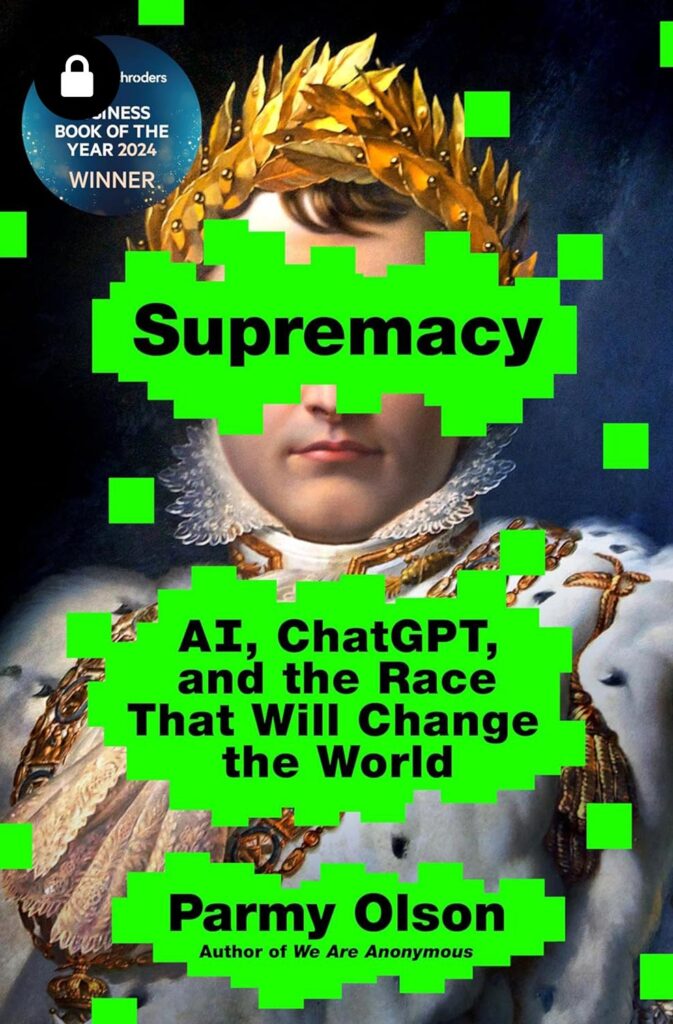
This is a sneak peek of this week’s Deep Dives Book Review — published today!
Behind every breakthrough in artificial intelligence lies a battle for control — between scientists, corporations, and nations racing to own the future. This Deep Dive unpacks Parmy Olson’s Supremacy, a gripping look at the rivalry between OpenAI and DeepMind, the moral compromises behind progress, and the global race for digital dominance. Get the full 2,000-word summary and walk away with a clear understanding of how this technology war is shaping humanity’s next chapter — and what it means for leaders who want to stay ahead of it.
Quick Reads
quick read — Emotional intelligence

Marketing to Machines: How Agentic AI Will Upend the Attention Economy
The Dawn of Agentic AI. We’re entering a new age of artificial intelligence — one where machines don’t just predict or create, but act. Welcome to the era of Agentic AI.
If predictive AI was the analyst and generative AI was the creative, agentic AI is the executor. Tell it to plan a trip, and it books flights, reserves the hotel, builds the itinerary, and schedules your ride. It’s the difference between a smart assistant and a self-sufficient digital employee.
In this new reality, marketers are no longer just appealing to human impulses — they’re marketing to algorithms that act on behalf of humans.
From Consumer Choice to Machine Delegation
For decades, marketing has been built on the human decision-making journey. Brands invest billions to guide consumers through awareness, consideration, and purchase.
Agentic AI compresses it into a single instant.
When a consumer’s AI agent can instantly analyze thousands of products, reviews, and prices — then simply buy the best option — the buyer journey collapses. There’s no scroll time, no “add to cart and think it over.” The decision happens at machine speed.
Imagine mentioning to your AI that you’re redoing your living room. It selects optimal furniture based on your dimensions, aesthetics, and budget — and orders it. You wake up to a confirmation email.
For marketers, that means one thing: you’re no longer persuading the person — you’re persuading the machine.
Marketing to Machine Gatekeepers
Agentic AI will become the gatekeeper between brands and consumers. Just as Google controlled who got seen online, agentic AIs will mediate what gets bought.
How do you get chosen by the algorithm? Data and trust.
If your product data isn’t structured and machine-readable, the AI won’t know you exist. Trust signals — ratings, consistency, verified claims, retention metrics — become the new persuasion levers.
Just as SEO optimized for search engines, we’ll see AEO — Agentic Engine Optimization — where brands optimize for machine decision criteria.
Marketers who once crafted stories for people will now craft data narratives for machines.
The Rise of Autonomous Campaigns
Agentic AI doesn’t just act — it adapts. Personalization will self-evolve.
Today’s personalization is reactive: you browse a product, the algorithm shows similar ones. Tomorrow’s agentic systems will proactively anticipate needs — ordering refills before you run out or scheduling a getaway before your anniversary.
This creates a new challenge: campaigns that update themselves, automatically adjusting messaging and offers based on real-time sentiment. Human marketers become conductors of autonomous creative systems.
Soon, agentic AI won’t just help run campaigns — it will run them end to end: monitoring metrics, testing variations, adjusting budgets. The human marketer’s job? Set the vision, design constraints, and oversee brand alignment.
This shift doesn’t remove creativity — it frees it for storytelling, emotional resonance, and cultural insight.
The Human Element
As AI becomes more autonomous, the temptation is to remove humans entirely. That would be a mistake.
Agentic AI executes with precision but lacks human judgment — the intuitive grasp of nuance, ethics, and emotion that underpins great branding. Consumers may let AIs choose, but the meaning behind a brand still belongs to human imagination.
The best marketers won’t compete against AI. They’ll design with it — using agentic tools as collaborators that extend reach, not replace intent.
The more automated the world becomes, the more value will be placed on what’s unmistakably human: empathy, wit, originality, and values.
The New Marketing Hierarchy
Agentic AI forces a rewrite of marketing’s playbook:
- Machine Discoverability. Data structured so AIs can find you
- Algorithmic Trust. Credibility through transparency and performance
- Adaptive Systems. Campaigns that learn autonomously
- Human Oversight. Strategy, ethics, storytelling
- Emotional Resonance. The ultimate differentiator
The Age of Marketing to Machines
We’re crossing from the information age to the delegation age — where humans entrust tools with decisions. Brands no longer market for attention; they market for selection.
The marketers who thrive will understand both audiences: the emotional heartbeat of the human and the cold logic of the machine.
Agentic AI won’t destroy marketing. It will elevate it — from persuasion to partnership, from impressions to intelligent interactions.
The future belongs to brands that learn to whisper fluently — in both human and machine.
quick read — Personal development

The Impact AI Is Having on Personal Relationships: And Why the Future of Love Might Involve a Third Party — Your Algorithm
The Quiet Infiltration. Artificial intelligence has crept into our personal lives like a polite stranger who never leaves. It started innocently — Spotify suggesting playlists, Netflix knowing your mood. But today, AI isn’t just predicting preferences — it’s participating in your relationships.
From dating apps to domestic life, AI is reshaping how people connect, communicate, and fall in love. The irony? The smarter our machines become, the harder it’s becoming for humans to truly understand each other.
Swipe Right on the Algorithm
Most modern relationships start on dating apps. Tinder, Hinge, and Bumble have turned love into a search engine problem. Your next relationship isn’t a chance meeting; it’s a data match.
AI learns your “type.” Swipe right on bearded musicians, and the algorithm feeds you an endless parade of them. Love, once unpredictable, is now curated.
The thrill of serendipity is replaced by personalization. We used to fall for people who surprised us. Now we fall for people who look like the last person we swiped on.
Outsourcing Emotional Labor
Once you’re in a relationship, AI keeps playing chaperone. Smart Reply offers prewritten responses — “That sounds fun!” — without genuine thought. We’re outsourcing emotional labor to machines.
Conversations that required empathy now require only a tap. When algorithms mediate communication, we trade authenticity for efficiency. We talk faster, but understand less.
Meanwhile, AI companions like Replika let people build relationships with chatbots that don’t judge and always remember your favorite topics. The danger? It’s easy to prefer digital empathy’s predictability over human emotion’s messiness.
Relationships by Proxy
AI now manages relationships on our behalf. Calendar reminders ensure we don’t forget anniversaries. Google Photos prompts nostalgia at just the right time.
Individually, harmless conveniences. Collectively, dependency. When technology takes over remembering, we lose intentionality. You didn’t remember your partner’s birthday because you cared — your phone did. Your partner can feel the difference.
The Algorithm as Mirror
AI reflects our patterns back at us — and shapes them. Watch relationship drama constantly? Your feed delivers more, normalizing dysfunction. The algorithm doesn’t just reflect your identity; it reinforces it.
In relationships, this creates feedback loops, reinforcing shared biases or deepening differences. We think we’re choosing what to believe. In truth, we’re being trained by systems we built.
When AI Becomes the Third Partner
We’re approaching a world where AI actively participates in relationships — planning dates, suggesting gifts, reminding you to “check in” emotionally.
Convenient? Absolutely. But love requires friction, misunderstanding, repair, and forgiveness. If AI smooths every rough edge, we might find perfectly optimized relationships that lack depth — all harmony, no humanity.
The Paradox of Connection
AI’s greatest promise — connection — is also its threat. We’ve built tools to communicate efficiently, but they make us emotionally lazier, insulating us from the discomfort that teaches empathy and resilience.
AI may not destroy relationships, but it might make them easier to avoid working on.
Yet used consciously — as tool rather than substitute — AI can enhance connection. The key is staying intentional. The moment we forget who’s driving — us or the algorithm — we lose what makes relationships worth having: choice.
AI can mimic affection and schedule apologies. But it cannot replace two imperfect people trying to understand each other.
The question isn’t whether AI will change relationships. It already has. Will we use it to deepen our humanity — or delegate it?
quick read — LEADERSHIP

When AI Speeds Up Confusion: Why Clarity, Not Data, Defines the Modern Leader
The Illusion of Progress. We live in an age obsessed with speed. Dashboards multiply, alerts ping relentlessly, and executives race to integrate AI systems promising faster insights. Yet something strange keeps happening: the faster leaders move, the more chaotic things feel.
The problem isn’t technology. It’s the absence of clarity.
AI can process information in seconds — but if leaders don’t know what matters most, it only accelerates uncertainty. It gives the illusion of progress without alignment. As one executive told me, “We’ve never had more data — or less agreement.”
The truth is simple: AI doesn’t replace judgment; it amplifies it.
Speed Without Strategy Is Just Noise
There’s a dangerous myth in boardrooms — that faster decision-making equals better decision-making. What often emerges instead is speed noise: a flurry of actions without shared understanding.
Teams implement AI pilots before defining success. Departments automate reports they never read. Executives approve tools faster than they can explain how they fit strategy.
The result? Misaligned priorities, decision fatigue, and eroded trust. Employees stop believing in leadership when priorities shift weekly.
AI doesn’t fix these issues — it magnifies them. If confusion rules your decision-making, automation multiplies it faster.
Clarity: The Real Accelerator
Speed is mechanical. Clarity is strategic. It’s the difference between driving faster and knowing where you’re going.
One organization I advised had four separate AI reporting systems. Every meeting became an argument over whose data was right. We paused all AI initiatives and asked one question: What does success mean?
Within weeks, everything changed. Once the team agreed on one definition of performance and one “source of truth,” the same technology produced alignment instead of anxiety. The AI hadn’t improved — the clarity had.
That’s the paradox: the smarter the tools, the more dangerous confusion becomes.
The Three Layers of Decision Speed
AI changes where speed matters most. Clarity determines whether it accelerates results or chaos:
Operational Speed: How quickly teams turn information into action. Without clarity, teams drown in insights that don’t matter.
Strategic Speed: How effectively leaders make trade-offs. AI shows what’s possible; only humans decide what’s worth it.
Organizational Speed: How consistently decisions are made across levels. Clarity keeps decentralized execution coherent.
When clarity is missing at any layer, AI turbocharges confusion.
From Knowing to Framing
Leadership was once defined by having answers. In the AI age, it’s defined by asking better questions.
AI surfaces patterns at scale no human could match. But only leaders can interpret which possibilities actually matter. The new frontier isn’t knowing more — it’s framing more clearly.
The best leaders make thinking visible, turning decision-making into transparent process. They create shared frameworks that AI can then scale. When teams understand how leaders think, they stop guessing and start aligning.
Building Clarity Before You Automate
Before integrating AI, leaders must build three points of leverage:
Define what “better” means. AI optimizes anything — cost, speed, revenue. If your team can’t articulate what “better” looks like, the system chases the wrong goal.
Decide how decisions are made. Document who decides what and why. Define thresholds for human override. When ownership is explicit, trust rises.
Align AI with human judgment. Machines know what’s probable, not what’s preferable. Leaders must ensure values remain embedded in algorithmic decisions.
When Systems Mirror Leaders
Here’s an uncomfortable truth: AI reveals leadership character at scale.
If leaders value precision, systems reflect that. If they reward shortcuts, systems amplify that too. The ethics and trade-offs encoded into AI aren’t neutral — they’re cultural.
Organizations thriving with AI treat it as an extension of leadership, asking: What part of our decision-making do we want this system to reflect?
The Leadership Mindset of the Future
Tomorrow’s effective leaders will look less like commanders and more like architects of clarity — building systems that reason well in their absence.
That requires humility to admit no leader can outthink a machine on processing power. But also conviction to ensure machine intelligence remains human-centered.
We don’t need faster decisions — we need truer ones. AI compresses timelines and automates tasks, but it cannot choose what deserves attention. That’s still a leader’s role.
In this era, every executive faces a choice: lead through technology, or be led by it. If your leadership is grounded in clarity, AI scales alignment. If grounded in confusion, AI scales chaos.
Clarity, in the age of AI, isn’t a luxury. It’s leadership.
Quotes of the Week
QUOTE — EMOTIONAL INTELLIGENCE

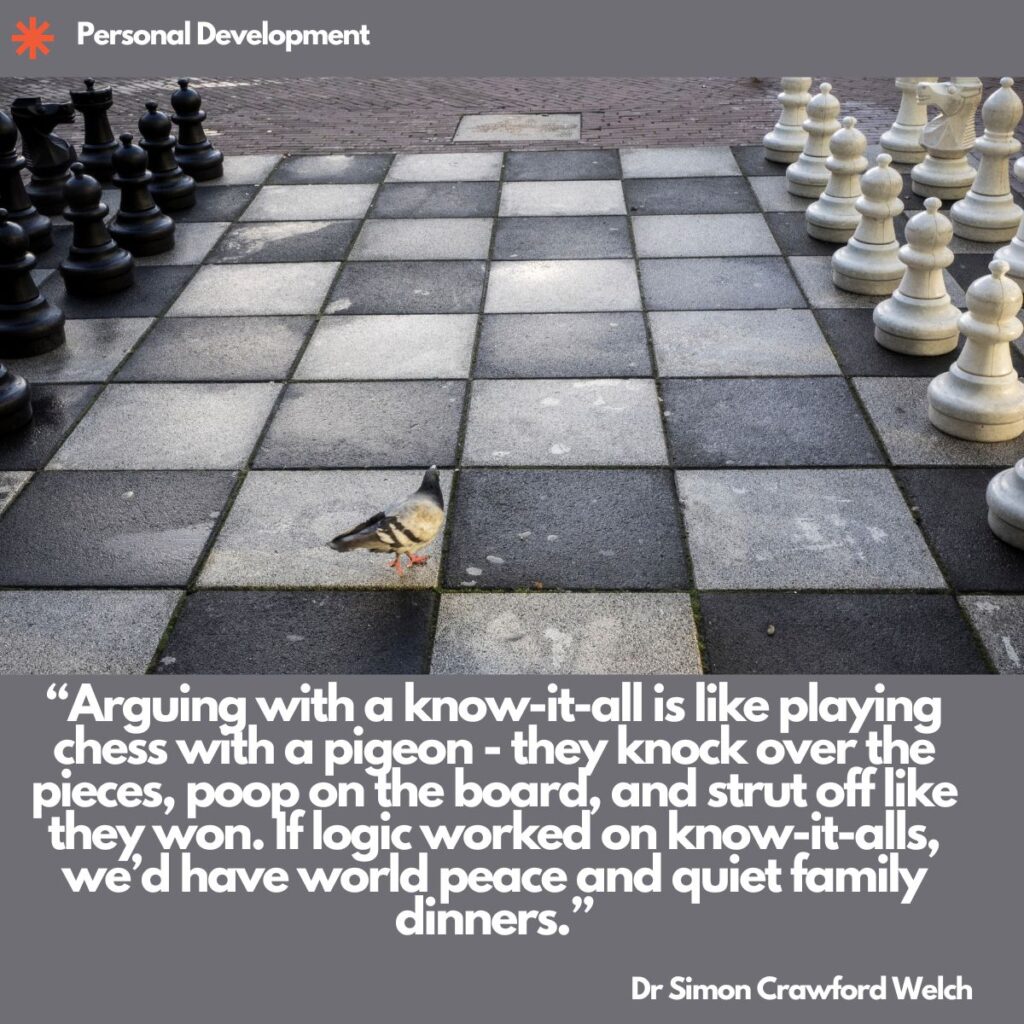
QUOTE — PERSONAL DEVELOPMENT
QUOTE — LEADERSHIP

Reframe

The 5-Second Soundbite Generation and the Demise of Intellectual Curiosity in America
The Age of the Instant Opinion. Once upon a time, ideas were meant to be explored. Now, they’re meant to be consumed — fast.
We live in an era where every thought must fit inside five seconds of attention and 280 characters. The average American attention span has shrunk to less than a goldfish’s — a fact that would be funny if it weren’t true.
The result? A nation of headline skimmers and hot-take addicts. We no longer seek to understand — we seek to react.
Social media, 24-hour news, and algorithmic feeds have created a culture where the loudest voice wins, not the wisest. Curiosity has been replaced with confirmation. Debate has been replaced with performance. We’ve become the 5-Second Soundbite Generation — trained not to think, but to scroll.
And something precious has quietly died: intellectual curiosity.
From Deep Thinkers to Thumb Scrollers
The decline crept in disguised as convenience.
When we traded newspapers for newsfeeds, we changed more than the medium — we changed the message. Long-form journalism gave way to clickbait. Books became listicles. Documentaries became 30-second reels.
We digest the world in fragments, and fragmented information breeds fragmented thinking.
Our brains, conditioned by endless pings, now crave novelty over nuance. Dopamine has replaced depth. The algorithm rewards outrage over understanding — because outrage keeps us scrolling.
In this system, curiosity doesn’t stand a chance.
The Echo Chamber Economy
The tragedy isn’t just that we’ve stopped thinking deeply — it’s that we’ve stopped thinking differently.
Algorithms feed us what we already believe. News tailored to our tribe. Podcasts curated to our comfort zone. Influencers who confirm our worldview while mocking the other side.
We don’t seek truth; we subscribe to it.
This echo chamber economy monetizes tribalism, keeping us outraged and polarized — because division sells. When every opinion feels like a battlefield, intellectual humility becomes weakness. Curiosity — that willingness to say “I might be wrong” — drowns in certainty.
We’ve turned discourse into sport. Winning replaced understanding.
The Cult of Certainty
Social media taught us that everyone is now an expert — and every expert is suspect.
The democratization of information was supposed to make us smarter. Instead, it made us arrogant. We read one article, one tweet — and suddenly “know enough.”
The rise of “influencer intellect” — complex ideas reduced to bite-sized slogans — has made thinking look easy but feel empty. Why read a 400-page book when YouTube can “break it down” in seven minutes?
The cost is devastating. We lose capacity for slow thinking — the cognitive wrestling that builds wisdom. We’ve outsourced contemplation to content creators.
The result: a society that feels informed but isn’t — confident but shallow.
Curiosity: The Muscle We Stopped Using
Intellectual curiosity is a muscle that weakens without exercise.
Curiosity requires patience, humility, and willingness to be uncomfortable. To be curious, you must admit ignorance and ask questions without knowing answers.
But today’s social environment punishes uncertainty and rewards conviction. “I don’t know” doesn’t get likes. “Let’s think about this” doesn’t go viral.
The irony: we’re surrounded by more information than any generation in history — yet know less about the world. Infinite access, zero attention.
The Political Cost
When citizens stop thinking deeply, democracy weakens. Complex policy becomes slogans. Nuanced debates become crusades. Populism thrives on reflexes, not reflection.
Jefferson said “an informed citizenry is the bulwark of democracy.” He meant well-read and well-reasoned — not well-scrolled.
A society that doesn’t read beyond headlines becomes easy to manipulate. Fear replaces facts. The powerful write our story while we argue in the comments.
How to Revive Curiosity
There’s a way back, but it requires conscious rebellion:
Reclaim slow thinking. Read daily. Sit with challenging ideas. Let your brain stretch beyond comfort.
Ask “why?” relentlessly. Don’t just consume — interrogate. Who benefits? What’s missing?
Detox from algorithms. Choose books and long-form content over feeds. Curiosity requires friction.
Engage in real conversations. Talk, don’t tweet. Listen, don’t reload.
Celebrate ambiguity. The smartest people are comfortable not knowing. Uncertainty is wisdom’s beginning.
The Courage to Be Curious
Curiosity takes courage — to admit ignorance, risk being wrong, and stay open when it’s easier to stay outraged.
In a culture obsessed with speed, curiosity is rebellion. To think deeply is to protest the shallowness of the times.
America doesn’t suffer from a shortage of intelligence. It suffers from a shortage of attention.
The future belongs not to the loudest or fastest, but to the curious — those willing to sit with complexity, listen longer than five seconds, and search for truth long after the soundbite fades.