
Deep Dives Articles
DEEP DIVES ARTICLE — EMOTIONAL INTELLIGENCE

The Rise of the Emotionally Disconnected Leader: When Empathy Fatigue Hits the C-Suite
This is a sneak peek of this week’s Deep Dives article — published today!
We’ve spent a decade teaching leaders to lead with empathy — to listen deeply, show care, and bring their whole selves to work. But what happens when that emotional labor becomes too heavy to carry? Behind the polished culture decks and motivational slogans, many executives are quietly running on empty. This piece explores the new epidemic of empathy fatigue — how leaders lose their emotional connection not from indifference, but from overexposure. And more importantly, how to rebuild presence, resilience, and humanity without burning out in the process.
DEEP DIVES ARTICLE — PERSONAL DEVELOPMENT

The Myth of Finding Yourself: Why Reinvention Is the New Self-Discovery
This is a sneak peek of this week’s Deep Dives article — published today!
The old advice said, “Find yourself.” But what if there’s nothing to find? What if your “true self” isn’t buried under layers of confusion, but something you’re meant to build — one choice, one chapter, one reinvention at a time? In this article, we dismantle the myth of self-discovery and reveal why identity isn’t a fixed destination but a design project in progress. Drawing from neuroscience, psychology, and philosophy, we explore how the ability to redefine yourself — again and again —is the real superpower of our era.
DEEP DIVES ARTICLE — LEADERSHIP

Authority 2.0: Why the Best Leaders Are Now Philosophers, Not Managers
This is a sneak peek of this week’s Deep Dives article — published today!
The age of command-and-control leadership is over. The best leaders today aren’t taskmasters — they’re meaning-makers. They don’t just tell people what to do; they help them understand why it matters. In an era of disillusionment, where charisma without coherence falls flat, the most powerful form of authority is now philosophical: clarity of values, consistency of purpose, and the courage to interpret chaos into sense. This is Authority 2.0 — leadership redefined for an age that’s starving for meaning.
Deep Dives Book Summary
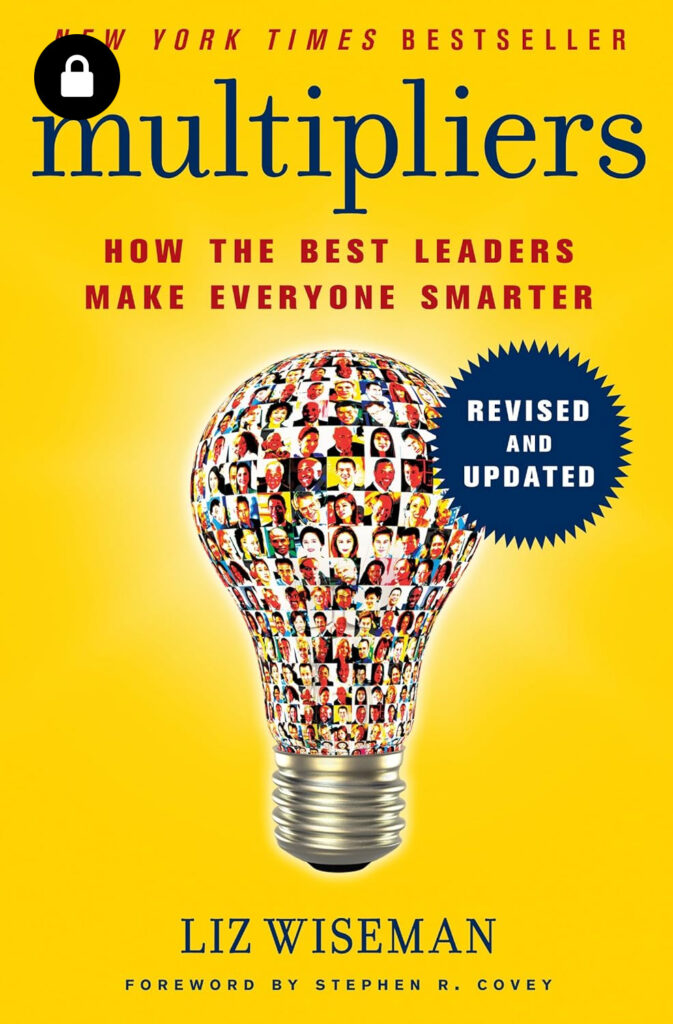
Multipliers: How the Best Leaders Make Everyone Smarter
By Liz Wiseman
This is a sneak peek of this week’s Deep Dives Book Review — published today!
We’ve all worked for two kinds of leaders: the ones who drain intelligence from a room — and the ones who seem to amplify it. Liz Wiseman calls them Diminishers and Multipliers, and her research reveals a powerful truth: the best leaders don’t have all the answers — they create the conditions for others to find them. This Deep Dive unpacks Wiseman’s five disciplines of the Multiplier mindset — from unlocking people’s natural genius to stretching teams beyond what they think they’re capable of — and shows why the smartest leaders are the ones who make everyone else smarter.
Quick Reads
quick read — Emotional intelligence
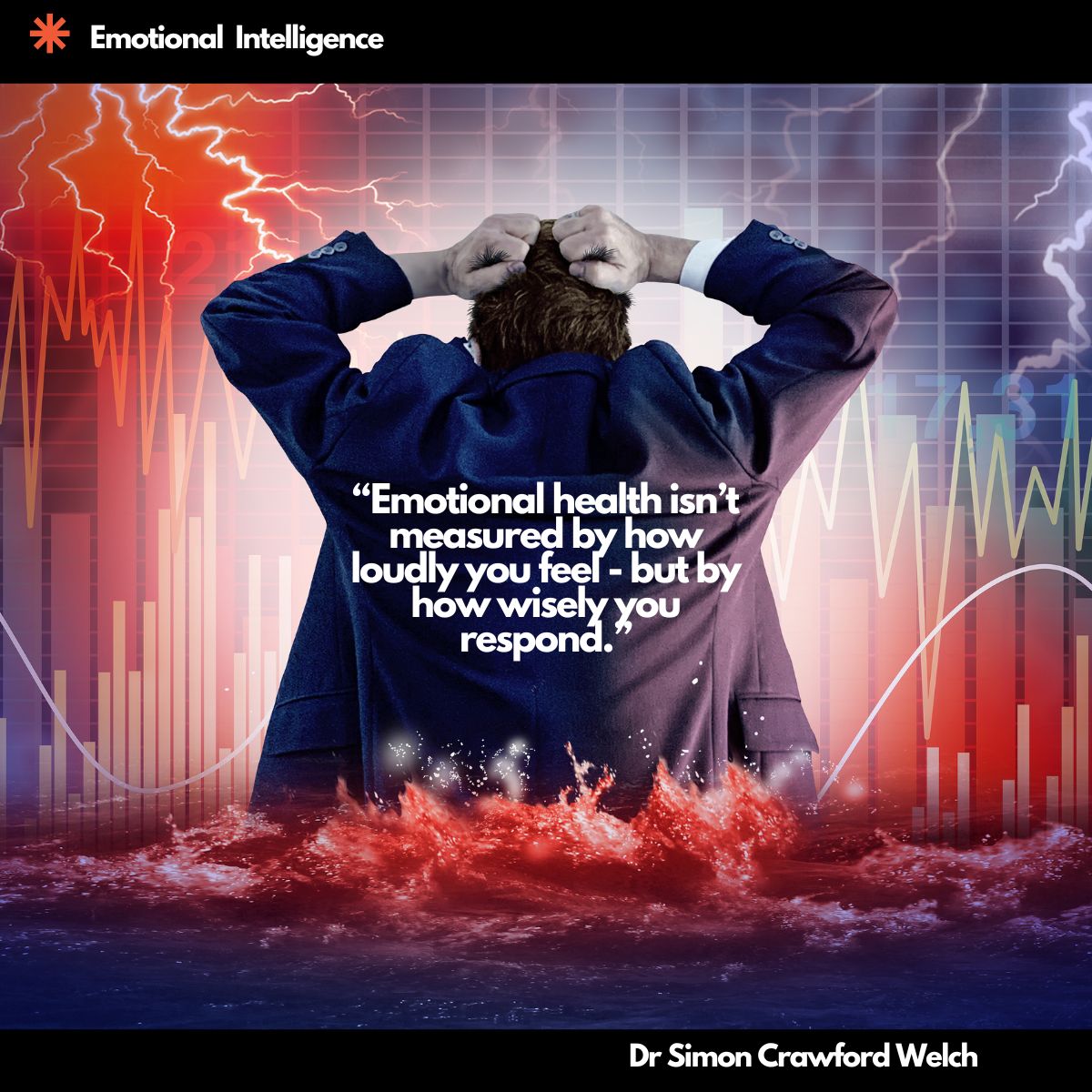
Emotional Inflation: Why Everyone Feels Everything All the Time
We live in the age of feelings. Scroll any social feed and you’ll find a rolling parade of vulnerability: confessions, breakdowns, trauma dumps, teary car videos. Our culture has turned emotional transparency into a badge of authenticity.
And yet, amid all this emotional openness, people are more anxious, more reactive, and more fragile than ever. The paradox is glaring: if expressing our emotions is supposed to make us healthier, why does everyone feel so perpetually unwell?
Welcome to the era of emotional inflation — where the price of feelings has dropped because everyone is spending them all the time.
The Economics of Emotion
Emotional inflation works much like economic inflation. When currency floods the market, its value declines. Similarly, when every feeling is declared urgent, public, and sacred, the emotional marketplace becomes saturated.
Social media accelerated this shift. Platforms designed for connection became confession booths, rewarding vulnerability with validation. But when emotions become content, they’re performative. And performative emotion loses potency with repetition.
We’ve become emotional day traders, buying and selling feelings for attention. The result? Emotional burnout disguised as authenticity.
The Age of Over-Sharing
The pendulum swing toward openness wasn’t a mistake. For decades, emotional suppression caused harm. The problem is that we overcorrected.
Therapists now report an explosion of “vulnerability without boundaries.” We no longer ask, Is this helpful to express? We simply assume that more expression equals more health.
But constant self-disclosure can deepen distress by keeping us locked in the emotional loop. As Dr. Lisa Feldman Barrett puts it, “Emotions are not truths to be broadcast; they are signals to be interpreted.”
The Social Consequences
Culturally, emotional inflation has changed how we relate.
In workplaces, feedback often feels like a personal attack. Constructive tension gets mislabeled as toxicity.
In relationships, partners become emotional dumping grounds. The result? Fatigue disguised as intimacy.
And in society, outrage has become our shared language—a collective inability to distinguish genuine injustice from mere discomfort.
When everything is felt deeply, nothing is processed deeply.
The Lost Art of Emotional Regulation
We’ve mistaken emotional regulation for repression. But they’re not the same. Regulation is the ability to feel fully without being hijacked by the feeling.
The healthiest people discern what to express, when, and to whom. Harvard psychologist Susan David warns that over-identifying with emotions (“I am angry”) instead of observing them (“I notice anger”) traps us in cycles of reactivity.
Ironically, in an age of emotional fluency, many people have less emotional discernment.
When Feelings Lose Their Gravity
A drizzle of annoyance gets described as “rage.” Mild stress becomes “trauma.” When everything is described in superlatives, it becomes hard to know when someone is truly in distress.
Toward Emotional Maturity
How do we recalibrate?
- Re-value restraint. Sometimes, not reacting immediately is the most emotionally intelligent response.
- Differentiate emotion from identity. You have feelings; you are not your feelings.
- Re-establish emotional privacy. Some emotions are meant to be metabolized quietly.
- Practice emotional fasting. The brain needs rest days from emotionally charged content.
- Cultivate meaning, not mood. Anchor your life in meaning, not emotional weather.
Resilience isn’t the absence of feeling — it’s the presence of perspective.
The Emotional Economy Reset
We don’t need to feel less; we need to feel wisely. The next evolution of emotional intelligence won’t be about expressing more, but discerning better.
In a world of emotional inflation, restraint becomes rare — and valuable. The leaders who will stand out are those who can restore gravity to feeling: who bring steadiness to storms and thoughtfulness to expression.
Because emotional health isn’t measured by how loudly we feel — but by how gracefully we metabolize what we feel.
And maybe the most radical act left in a world addicted to disclosure… is quiet self-possession.
quick read — Personal development
The Productivity Hangover: How the Hustle Culture of the 2010s Broke Our Brains And Why Gen Z is Rewriting Success Around Energy, Not Hours
For nearly a decade, the soundtrack of success was a grinding hum. “Rise and grind.” “Sleep when you’re dead.” The 2010s were the decade of hustle — when busyness became both identity and virtue.
But as we stumble out of that era, the hangover is hitting hard. The world that worshiped productivity is waking up groggy, burnt out, and wondering: What exactly were we trying to prove?
The Cult of the Grind
In the mid-2010s, “hustle” wasn’t just a verb — it was a lifestyle brand. Influencers turned 18-hour workdays into aspirational content. Tech founders bragged about sleeping under their desks.
The logic was seductive: work harder than everyone else, and success will follow. But hidden beneath was a toxic equation — that worth equals output.
Smartphones blurred work and life. The gig economy romanticized self-exploitation. Social media made comparison constant. By 2019, burnout became a public health crisis.
The Psychology of “Never Enough”
Psychologists call it the Hedonic Treadmill: the more you accomplish, the higher your expectations climb. Hustle culture fed this with caffeine and cortisol.
Every email answered, every 5 a.m. wake-up became proof you were still in the game. But the goalposts always moved. The reward for hard work wasn’t rest — it was more work.
Dr. Adam Grant said, “We confuse activity with achievement.” We measured life by throughput rather than impact. Even leisure became a metric.
We weren’t living — we were optimizing.
When Work Becomes Identity
Hustle culture fused identity with output. We stopped asking “Who am I?” and started asking “What can I produce?”
But identity built on performance is fragile. When your self-worth is tied to output, rest feels like guilt. Many workplaces rewarded visibility over value — the midnight emailer over the efficient 5 p.m. finisher.
The Great Burnout Reckoning
Then came 2020. The pandemic forced an uncomfortable reckoning. When everything slowed, many discovered they didn’t know who they were outside of work.
The collective exhaustion birthed new vocabulary: quiet quitting, career cushioning, bare minimum Mondays. Beneath the memes was a generational refusal to keep sacrificing health and sanity on the altar of “grind.”
Gen Z’s Counterculture: Energy Over Hours
Enter Gen Z, the first post-hustle generation. They watched millennials burn out and are redefining success.
For them, productivity isn’t about hours logged — it’s about energy alignment. The question isn’t “How long did I work?” but “What did I create while I was at my best?”
Gen Z doesn’t chase titles; they chase autonomy. They treat mental health as business strategy. Nearly 70% prioritize work-life balance over pay. Flexible workers report 29% higher productivity.
The new status symbol isn’t the corner office — it’s time sovereignty.
From Time Management to Energy Management
If the 2010s were about time management, the 2020s are about energy management. We’re moving from calendars to circadian rhythms, from task lists to flow states.
Research shows productivity declines sharply after 90 minutes of focused work. Elite performers train in short bursts, then rest deeply.
Companies like Atlassian and Basecamp have reduced meetings and capped work hours. The results? Higher engagement, lower burnout, better work.
The new equation: Energy × Focus > Time × Effort.
Redefining Success
What we’re witnessing isn’t laziness — it’s evolution. The next era will be defined not by stamina, but by sustainability.
Rest isn’t the opposite of work; it’s a force multiplier. Boundaries aren’t barriers; they’re fuel lines. The productivity hangover taught us that running on fumes isn’t heroic — it’s inefficient.
The most radical act in a world obsessed with output? Protecting your energy as if it were capital.
The Morning After
The hustle decade gave us innovation — but also exhaustion and loss of meaning. Now we’re sobering up, realizing that doing more isn’t the same as living well.
The next wave of success will belong to those who manage their energy, master their attention, and measure progress not by how much they do, but by how deeply they live.
The question of the 2020s isn’t “How productive are you?” It’s “How alive do you feel while doing it?”
quick read — LEADERSHIP
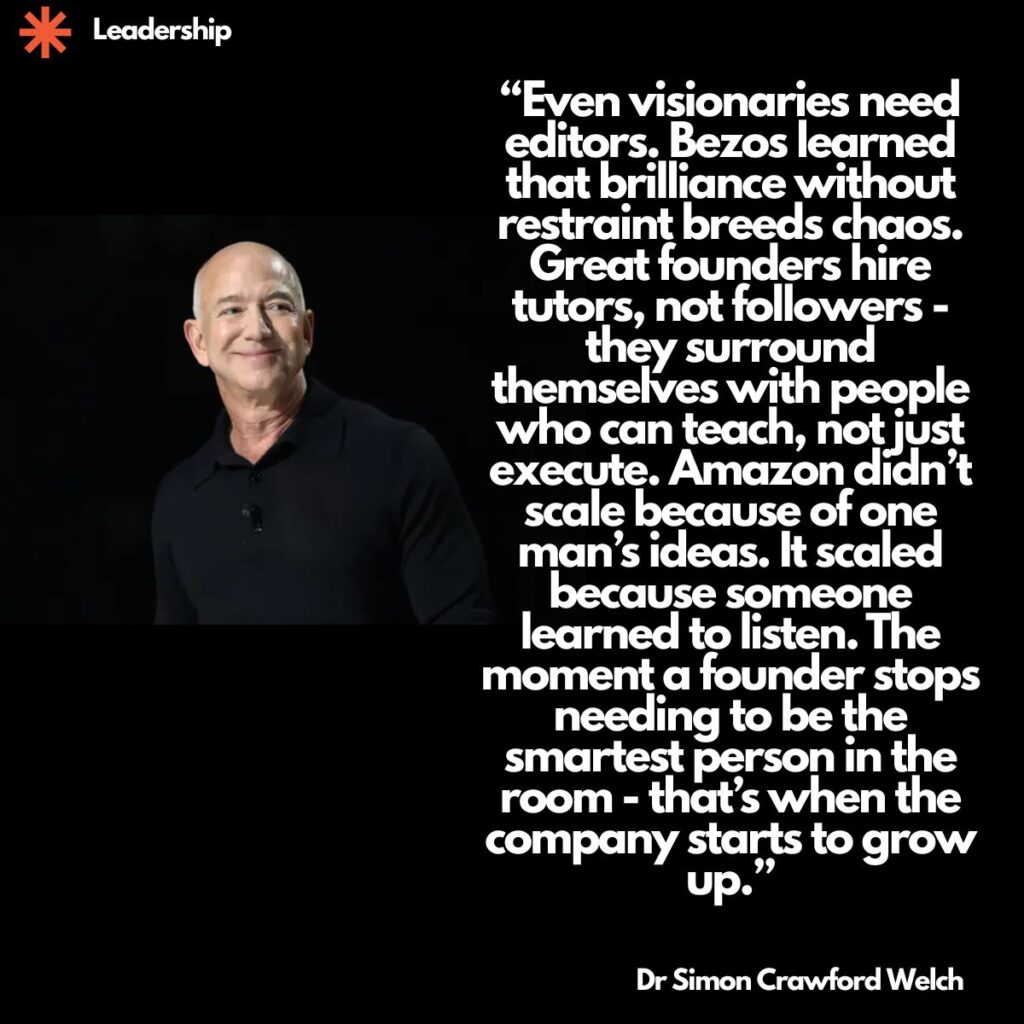
The Leadership Lesson That Saved Amazon from Its Own Founder
When Jeff Bezos says one of the smartest things he ever did was “hire his tutors,” you stop and listen. Yet, in reflecting on Amazon’s rise, Bezos doesn’t credit luck, timing, or genius. He credits humility — the willingness to hire people smarter than him and treat them like teachers.
Early in Amazon’s history, Bezos had a torrent of ideas — sometimes a hundred before lunch. “Put me in front of a whiteboard and I can come up with 100 ideas in half an hour,” he said.
But as senior executive Jeff Wilke once told him bluntly, “You have enough ideas to destroy Amazon.”
When Vision Becomes Volume
Every entrepreneur starts as the visionary. But vision without discipline can become a liability. For Bezos, the turning point came when he realized his creativity was overwhelming the system he built.
“Every time I released an idea, I was creating a backlog of work in process. It was adding no value. It was creating a distraction.”
More ideas don’t equal more progress. They often equal more confusion.
Wilke helped Bezos see that organizations have a bandwidth limit. Ideas must be released at a rate the system can absorb. Push too many at once, and you paralyze your team.
So Bezos learned to slow down. To prioritize. To filter. That restraint became one of Amazon’s greatest strengths: a balance between innovation and disciplined execution.
The Most Teachable Leader Wins
Bezos’ “hire your tutors” philosophy challenges a common leadership myth — that founders must be the smartest person in every room. The best leaders build rooms full of people who know things they don’t.
He didn’t see experience as a threat — he saw it as an accelerator for his learning. When he brought in executives like Wilke, he hired them to educate him.
Tech founders often get trapped by founder’s bias — believing the person who started the company automatically knows what’s best. Bezos flipped that logic.
He treated Amazon like a university — and himself as a student. That mindset created a culture where learning flowed in every direction.
Slow Ideas, Fast Decisions
Bezos’ evolution wasn’t about suppressing creativity — it was about pacing it.
Ideas are like seeds: plant too many at once, and none will take root. Space them out and nurture each one, and they grow stronger.
Amazon moved methodically from books to e-commerce to AWS to Alexa. Each expansion was sequenced, not random.
Innovation requires intellectual patience — the discipline to hold back an idea until the infrastructure exists to support it.
Releasing Work at the “Right Rate”
Wilke’s advice — “release work at the right rate so the organization can accept it” — might be one of the most important sentences in business leadership.
Too much change overwhelms people. Too many priorities dilute focus. Too many experiments drain resources.
Bezos learned to create organizational rhythm — the pulse at which the company could absorb new initiatives without breaking existing systems.
Amazon grew in waves of controlled acceleration. That pacing became its strategic superpower.
The Paradox: Slower Is Faster
The irony is that slowing down actually made Amazon faster.
When Bezos stopped flooding the company with ideas, execution improved. Teams had space to deliver excellence instead of sprinting toward half-baked innovation.
The lesson: speed without sequencing is sabotage. Real progress isn’t about how many initiatives you launch — it’s about how many succeed.
The Hidden Power of Restraint
Most people associate success with action — doing more, faster. But Bezos’ story proves that restraint is its own form of leadership.
Not saying every idea, not launching every initiative, and not chasing every opportunity often leads to better outcomes.
Restraint signals confidence. It tells your team, “We don’t need to do everything to win — we just need to do the right things.”
Final Takeaway: Hire People Who Challenge You
The brilliance of Jeff Bezos isn’t that he had all the answers — it’s that he built an ecosystem full of people who would tell him when he was wrong.
Wilke’s honesty could have offended a lesser leader. Instead, Bezos treated it as a gift.
So if you’re leading a team — take a page from Bezos’ playbook:
- Hire people smarter than you.
- Treat them like your teachers.
- Release ideas at the rate your organization can absorb them.
- Leadership isn’t about being the source of every idea — it’s about being the steward of the right ones.
Because as Bezos learned, a single good idea, executed well, can build an empire. A hundred unfiltered ones can destroy it.
Quotes of the Week
QUOTE — EMOTIONAL INTELLIGENCE

QUOTE — PERSONAL DEVELOPMENT

QUOTE — LEADERSHIP

Reframe
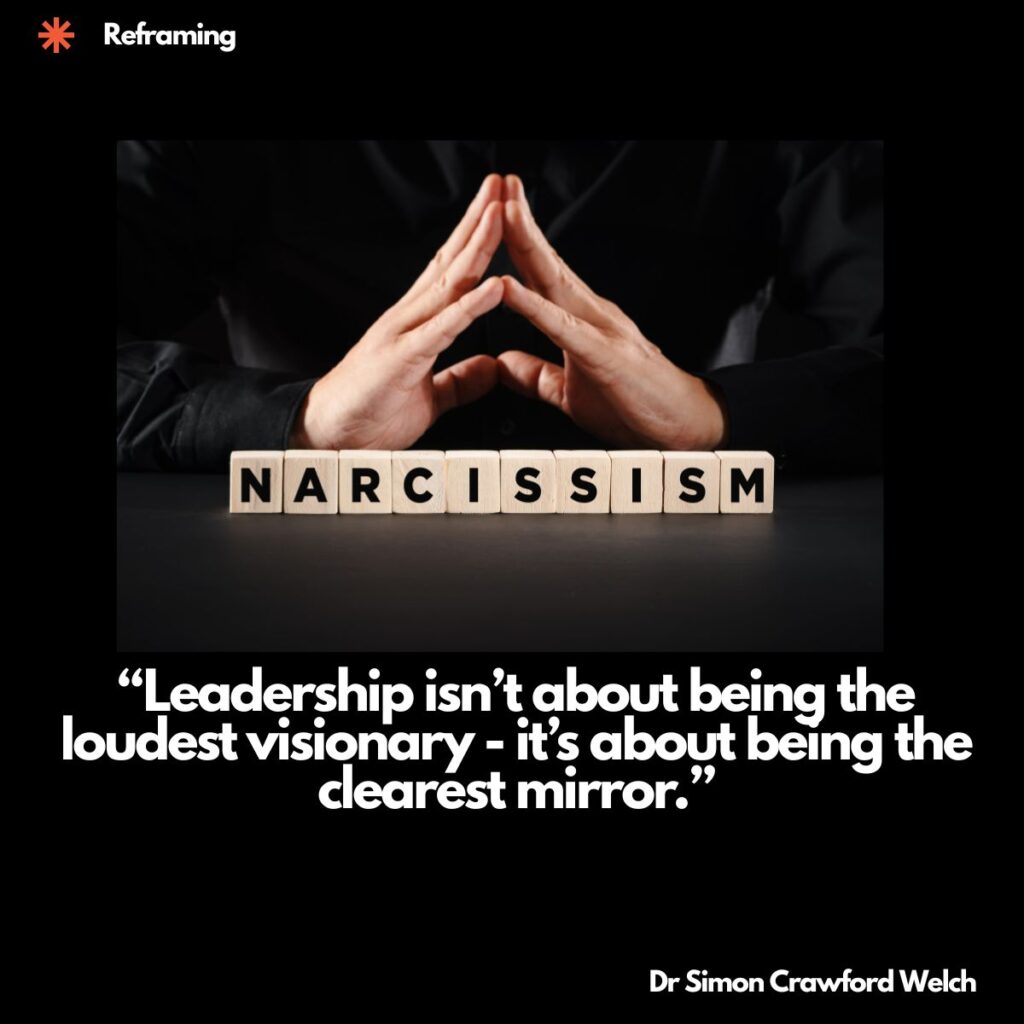
The Anti-Visionary, Leading Without the Narcissism of Grand Ideas: Why the Best Leaders Aren’t Prophets; They’re Builders of Clarity, Consistency, and Trust
For decades, leadership culture has worshipped the visionary — the charismatic dreamer with the grand idea. Visionary leadership became the gold standard: bigger dreams, bolder bets, louder missions.
But lately, the myth is cracking. A quieter, steadier kind of leader is emerging — one less obsessed with disruption and more focused on direction.
Call them the Anti-Visionaries.
They don’t traffic in spectacle. They traffic in sense. And while their ideas may not trend on Twitter, their teams often outperform those led by self-proclaimed visionaries.
Because in an age oversaturated with noise and narcissism, the rarest leadership skill isn’t inspiration — it’s clarity.
The Problem with “Visionary” Leadership
We’ve romanticized the visionary to dangerous extremes. But there’s a thin line between vision and vanity. Many “visionary” leaders mistake magnitude for meaning.
In truth, grandiosity often hides insecurity. Look at Elizabeth Holmes, Adam Neumann, and others who believed charisma could substitute for coherence. Their companies became stage plays — dramatic visions with fragile realities.
A great vision can inspire people. A false vision can destroy them.
The Discipline of Clarity
Charisma has always been the easiest shortcut to leadership legitimacy. But charisma, untethered from consistency, burns trust faster than it builds it.
True leadership isn’t about how well you speak the vision; it’s about how well you sustain it.
The Anti-Visionary doesn’t lead through seduction; they lead through structure. Their power comes from repetition, not reinvention.
Because charisma may get you attention, but consistency earns you loyalty.
The Hidden Power of the Anti-Visionary
Anti-Visionaries believe that the most transformative work often looks ordinary up close.
They don’t stand on stages predicting the future. They sit in meetings clarifying the present. They don’t promise revolutions; they deliver reliability.
These leaders focus on:
- Clarity of purpose. Everyone knows the why behind the work.
- Consistency of direction. Strategy stays coherent, not constantly shifting.
- Integrity of follow-through. Turning promises into patterns.
In a 2023 Deloitte survey, 78% of employees said they value predictable leaders more than inspirational ones. In a world of constant flux, predictability is safety.
Leadership as Sense-Making
In chaotic systems, people don’t need more inspiration — they need interpretation. They need someone who can say, “Here’s what’s happening, here’s what it means, and here’s what we’ll do next.”
The Anti-Visionary is a sense-maker. They cut through noise and turn ambiguity into alignment.
If the visionary paints murals, the Anti-Visionary draws maps.
Grounded Vision
This isn’t an argument against vision. It’s an argument against vision without grounding.
Satya Nadella, CEO of Microsoft, didn’t promise a new world order. He reframed the company around one philosophy: “empower every person and organization to achieve more.” Then he built systems that reinforced that purpose daily.
Real vision isn’t a speech — it’s a system that survives the speech.
Why “Small” Visions Scale Better
People can’t emotionally attach to abstract, massive visions. The human brain struggles to connect with “world domination.” It connects with tangible, immediate meaning.
When Patagonia commits to repairing clothes instead of selling more, people believe it. The Anti-Visionary doesn’t ask people to change the world. They ask them to change something specific today.
And paradoxically, that’s what changes the world.
The Ego Detox
The cult of the visionary appeals to ego. But the Anti-Visionary doesn’t need to be the hero. They’re more interested in building systems that outlast them than legacies that glorify them.
They find satisfaction not in being admired but in being useful.
The Leadership Shift Ahead
The next era of great leadership won’t belong to the showmen. It will belong to the builders.
To those who lead with clarity, not charisma. To those who don’t need to be mythologized — just trusted.
The Anti-Visionary knows that the future doesn’t belong to those who predict it — it belongs to those who prepare for it.
And in a noisy, self-promoting age, the rarest leadership quality of all might just be this: the courage to be quietly, relentlessly consistent.
Because in the end, it’s not the visionary who changes the world. It’s the one who keeps showing up when the vision fades — and builds what others only imagined.