
Deep Dives Articles
DEEP DIVES ARTICLE — EMOTIONAL INTELLIGENCE

Heartware: Why Emotional Intelligence Is Your Most Powerful Asset in Business and Life
This is a sneak peek of this week’s Deep Dives article — published today!
Most people think they’re leading with empathy, but they’re really offering sympathy — a feel-good illusion that dodges accountability and true connection. In this eye-opening breakdown, we explore why empathy is the real superpower in relationships and leadership, and how mistaking one for the other is quietly sabotaging trust. If you’re ready to deepen your emotional intelligence and lead with authenticity, this Deep Dive is for you.
DEEP DIVES ARTICLE — PERSONAL DEVELOPMENT

Look Out the Window: How 20 Minutes of Stillness Can Unlock Self-Awareness and Personal Growth
This is a sneak peek of this week’s Deep Dives article — published today!
Burnout isn’t just about being tired — it’s a systemic, psychological unraveling that’s becoming the norm in high-achieving workplaces. In this data-backed piece, we explore the true roots of burnout, why traditional “self-care” advice misses the mark, and how leaders and individuals alike can reverse the damage. If you’re exhausted from being exhausted, this is a must-read.
DEEP DIVES ARTICLE — LEADERSHIP

Unshakable: Why Resilience Is the Superpower Every Leader Needs in 2025 and Beyond
This is a sneak peek of this week’s Deep Dives article — published today!
Micromanagers. Gaslighters. Credit thieves. You’ve probably worked for one — and maybe even started to mirror their behavior without realizing it. This no-holds-barred article unpacks the seven most common toxic boss types, their psychological playbooks, and how to survive (and grow) without losing your sanity.
Deep Dives Book Summary
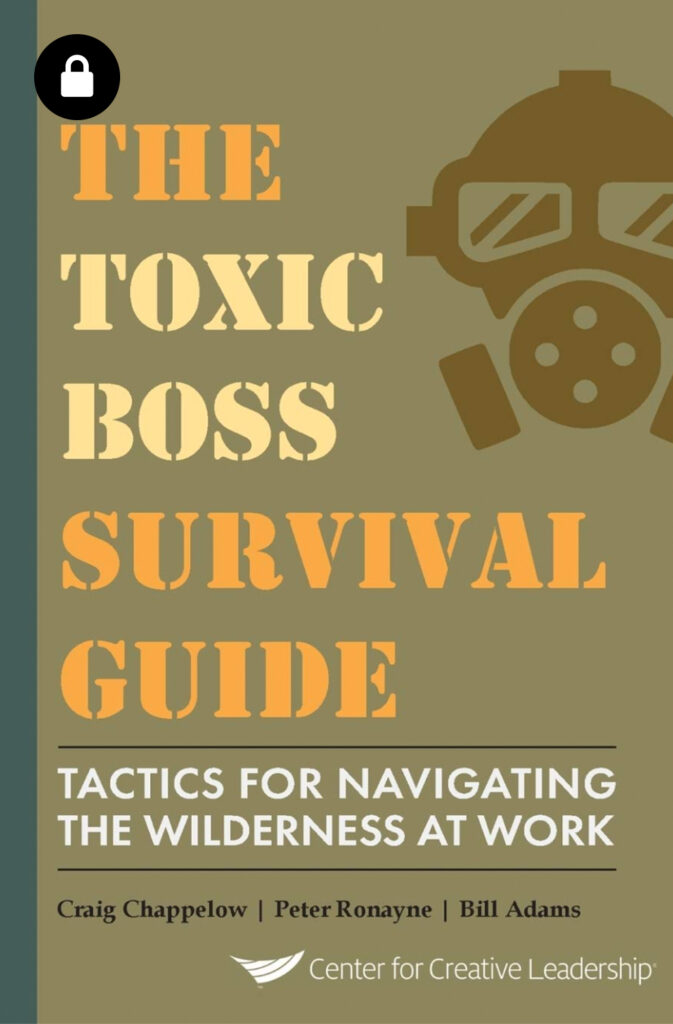
The Toxic Boss Survival Guide — Tactics for Navigating the Wilderness at Work
By Craig Chappelow; Peter Ronayne; Bill Adams
This is a sneak peek of this week’s Deep Dives Book Review — published today! Become a Deep Dives Member to get access to the full Book Summary.
Stuck under a boss who drains your energy — or worse, your confidence? Our Deep Dives membership unlocks the full, no-fluff summary of The Toxic Boss Survival Guide, including the six toxic archetypes, the SERE playbook (Survive, Evade, Resist, Escape), and exactly-what-to-say boundary scripts you can use tomorrow. You’ll get a step-by-step survival plan, decision triggers for when to escalate or exit, and practical tools — checklists, reflection prompts, and a clean exit blueprint — to protect your reputation and your sanity while you keep shipping great work. If you’ve ever felt trapped, this guide gives you language, leverage, and a path out. Subscribe to Deep Dives to read the full summary and grab the complete toolkit.
Quick Reads
quick read — Emotional intelligence

Don’t Confuse Empathy with Sympathy: The Leadership Mistake That Undermines Trust
In an era where emotional intelligence is touted as the “soft skill” that drives hard results, more leaders than ever are being encouraged to show empathy. And that’s a good thing. Organizations thrive when people feel seen, heard, and understood.
But in this well-intentioned push to “be more empathetic,” many leaders make a critical mistake: They confuse empathy with sympathy.
It’s a subtle difference — but the impact is enormous. One builds trust, connection, and resilience. The other can leave people feeling pitied, misunderstood, and emotionally isolated.
If you want to lead people well — not just manage them — you need to understand why empathy is not the same thing as sympathy, and why getting this wrong can quietly erode your culture, credibility, and team cohesion.
What’s the Difference?
Let’s start with the definitions:
- Empathy is the ability to feel with someone. To step into their experience, understand their emotions, and hold space without judgment or solutions.
- Sympathy is feeling for someone. It creates emotional distance — putting you in a position of observation, not participation.
“Empathy fuels connection. Sympathy drives disconnection.”
— Brené Brown
Imagine this: A team member opens up and says, “I’ve been overwhelmed, and I feel like I’m drowning.”
A sympathetic response might be:
“Oh no, that sounds awful. I’m so sorry you’re feeling that way. I can’t imagine how hard that must be.”
An empathetic response would be:
“I hear you. I’ve been there too — when things stack up and you feel buried. What’s weighing you down most right now?”
Sympathy looks from a distance. Empathy climbs into the trench and says, “You’re not alone.”
Why the Difference Matters in Leadership
When employees are struggling — whether it’s with burnout, grief, anxiety, or conflict — they’re not looking for someone to pity them. They’re looking for someone to understand them, validate their emotions, and if appropriate, help them move forward.
Leaders who respond with sympathy often:
- Speak in platitudes (“That must be hard.”)
- Keep emotional distance
- Offer premature advice
- Feel awkward and quickly pivot the conversation
Even if well-meaning, these responses can feel hollow. They can unintentionally infantilize the other person, sending the message: “You’re fragile. I’m not. I feel sorry for you.”
Empathy, by contrast, communicates:
- “I see your experience.”
- “You’re not crazy or weak for feeling this.”
- “I’m with you in this moment.”
And perhaps most importantly: “You don’t have to hide.”
In cultures built on empathy, people speak more freely. They raise issues sooner. They own their mistakes. They support one another. Trust deepens—not because everything is easy, but because people feel safe being real.
Sympathy Undermines Psychological Safety
Psychological safety—the belief that it’s safe to speak up, make mistakes, or show vulnerability without punishment—is the bedrock of high-performing teams. And sympathy, ironically, can chip away at it.
Here’s why:
- Sympathy creates hierarchy. It positions the leader as emotionally superior or more “together.”
- It can feel performative. If your team senses that your response is rehearsed or shallow, trust breaks.
- It stifles truth-telling. No one wants to be pitied or treated as emotionally fragile. People will stop sharing if they fear being patronized.
Empathy does the opposite. It levels the playing field. It says: “You’re human. I’m human. Let’s talk honestly.”
The Business Case for Empathy
Empathy isn’t just about being “nice.” It’s a competitive advantage.
According to a 2021 Catalyst report:
- Employees with empathetic leaders are more innovative, more engaged, and less likely to leave.
- 76% of people who experienced empathy from senior leadership reported they were engaged, compared to only 32% who experienced low empathy.
In short: empathy isn’t fluff — it’s fuel.
But when empathy gets confused with sympathy, the benefits evaporate. Teams don’t want leaders who feel bad for them. They want leaders who can meet them in the mess, sit with discomfort, and still guide with clarity.
How to Know If You’re Leaning Into Sympathy
You might be defaulting to sympathy if:
- You often say things like “That’s too bad” or “I can’t imagine what that’s like”
- You feel emotionally uncomfortable when others are vulnerable
- You tend to offer quick fixes or motivational advice
- You avoid conversations that might get emotional
You’re leaning into empathy when:
- You actively listen without interrupting or judging
- You name and validate emotions (“That sounds frustrating,” “It makes sense you’d feel overwhelmed”)
- You’re willing to just be present — even when you can’t solve the problem
- You ask questions that invite depth: “What do you need most right now?” or “How can I support you?”
Empathy in Action: Real Leadership Moments
Scenario No. 1 — A team member loses a family member.
- Sympathy sounds like. “Oh no, I’m so sorry. Let me know if you need anything.”
- Empathy sounds like. “I’m truly sorry you’re going through this. I know work might be the last thing on your mind. Let’s talk about what support looks like right now.”
Scenario No. 2 — An employee admits they’re burned out.
- Sympathy sounds like. “Yeah, things are tough all around. Just hang in there.”
- Empathy sounds like. “Thanks for being honest with me. What’s the most draining part of your week? Let’s see if we can shift something.”
Scenario No. 3 — A colleague breaks down in frustration.
- Sympathy sounds like. “You’ve got this! Don’t let it get to you.”
- Empathy sounds like. “I can see how much this is weighing on you. Want to walk me through what’s going on?”
Building Your Empathy Muscle
Empathy is not an innate trait — it’s a learnable skill. And like any skill, it requires practice, feedback, and reflection.
Here’s how to strengthen your empathy:
No. 1 — Get curious, not corrective.
Don’t jump in with advice. Ask open-ended questions that invite the other person to explore their feelings or experience.
No. 2 — Practice active listening.
Listen to understand, not to respond. Reflect back what you hear: “You’re saying the project feels directionless, and that’s draining your motivation.”
No. 3 — Check your discomfort.
If you’re rushing to fix, minimize, or escape the conversation, pause. Ask yourself: “What am I trying to avoid feeling?”
No. 4 — Start with presence.
Sometimes empathy is simply showing up fully — no solutions, no agenda. Just presence.
Empathy as Everyday Leadership
Empathy isn’t reserved for crisis moments. It shows up in small, daily interactions: the way you check in during a meeting, how you respond to feedback, how you interpret someone’s silence or frustration.
Don’t wait for a major life event to show empathy. Start practicing it now — in hallway conversations, Slack threads, Zoom calls, and one-on-ones.
Because when you lead with empathy — not sympathy — you don’t just respond to emotions. You honor them.
And in doing so, you create something rare and invaluable: a workplace where people feel safe to be human — and brave enough to do their best work.
quick read — Personal development

The Burnout Epidemic: The Rise of Chronic Stress—and How We Can Fix It
Burnout isn’t just a buzzword. It’s a global crisis.
Despite meditation apps, flexible work policies, and self-care hashtags, millions of professionals are still quietly unraveling behind their screens — physically exhausted, emotionally numb, and mentally foggy. The pandemic may have accelerated it, but burnout has been growing for decades. And it’s no longer confined to doctors, teachers, or social workers. It’s everywhere—from C-suite executives to customer service reps, tech engineers to freelancers.
In her groundbreaking book, The Burnout Epidemic: The Rise of Chronic Stress and How We Can Fix It, author and workplace strategist Jennifer Moss delivers a bold wake-up call:
“Burnout isn’t a personal failure — it’s a cultural and organizational one.”
— Jennifer Moss
And if we don’t start treating it like the systemic issue it is, the costs will keep mounting: disengaged employees, record-breaking resignations, and cultures that quietly bleed talent.
Let’s explore the root causes of burnout, why current solutions often fall flat, and what real, lasting fixes could look like.
What Is Burnout, Really?
The World Health Organization (WHO) formally recognized burnout in 2019 as an “occupational phenomenon,” not a medical condition. It defines burnout as a syndrome resulting from chronic workplace stress that has not been successfully managed, characterized by three key dimensions:
No. 1 — Exhaustion. You’re physically and emotionally depleted, no matter how much rest you get.
No. 2 — Cynicism and Detachment. You begin to withdraw, feeling numb or disillusioned with your work.
No. 3 — Inefficacy. You doubt your ability to make an impact, even in areas where you once thrived.
This isn’t about having a bad day or even a tough month. Burnout is the accumulation of sustained stress without relief, recognition, or recovery.
Burnout Is Not a You Problem — It’s a System Problem
Moss argues that we’ve dangerously misdiagnosed burnout. Instead of addressing the systemic pressures that create it, we put the onus on individuals to “fix” themselves.
Feeling exhausted? Try yoga.
Disengaged? Practice gratitude.
Losing hope? Take a day off.
While these practices may help in the short term, they ultimately place blame on the individual. This “resilience-first” approach assumes that if you just get your mindset right, burnout will go away.
But Moss flips that script. She exposes the truth:
“We’re not burned out because we’re weak — we’re burned out because we’re working in broken systems.”
— Jennifer Moss
In other words, burnout is not a lack of self-care. It’s a lack of care — period.
The 6 Root Causes of Burnout
Based on extensive research, Moss identifies six organizational drivers of burnout. Most companies address one or two, but few tackle all six. That’s why burnout persists, even in “progressive” workplaces.
No. 1 — Unmanageable Workload
No matter how passionate or capable someone is, sustained overload eventually breaks them. High performers are especially at risk because they keep saying yes — until they can’t.
No. 2 — Lack of Control
When employees have no autonomy over their time, tools, or decisions, they begin to feel powerless. And powerlessness is a key predictor of emotional exhaustion.
No. 3 — Insufficient Reward
Burnout thrives in environments where effort goes unnoticed. This isn’t just about money. It’s about recognition, fairness, and respect.
No. 4 — Breakdown of Community
Toxic colleagues, isolated roles, or lack of team cohesion create emotional strain. Humans are wired for connection. Without it, stress becomes more harmful.
No. 5 — Absence of Fairness
Perceived injustice — whether in promotions, workload distribution, or feedback — destroys trust. Burnout often begins where equity ends.
No. 6 — Values Mismatch
When personal values clash with organizational priorities, employees feel like they’re betraying themselves just by showing up. Over time, that fracture becomes unsustainable.
Why “Self-Care” Isn’t the Solution
Moss is critical of the workplace wellness industry’s obsession with surface-level fixes. Meditation apps, burnout workshops, even unlimited PTO — they sound good, but they’re often deployed in place of real structural change.
Here’s the problem: You can’t breathe your way out of a broken culture. A yoga mat won’t fix an abusive manager. A mindfulness workshop won’t offset chronic understaffing.
Instead of asking, “How do we help employees manage stress?” we need to ask: “Why are they so stressed in the first place?”
What Does Work: The Systemic Fixes
Moss doesn’t just identify problems — she offers a blueprint for meaningful change. Her prescription includes bold, research-backed strategies that shift responsibility back to the organization, where it belongs.
No. 1 — Normalize the Conversation
Stop treating burnout like a taboo. Train leaders to recognize it, talk about it, and address it without stigma. When people feel safe naming their stress, organizations can start fixing the causes.
No. 2 — Measure It — Then Act
Use anonymous surveys and pulse checks to track employee well-being. But don’t stop at data collection. Show employees how their feedback leads to change — or they’ll stop giving it.
No. 3 — Redesign Workloads
Audit team responsibilities and capacity regularly. Shift from a “more is better” culture to a “sustainable performance” model. Train managers to prioritize and protect their team’s bandwidth.
No. 4 — Build Manager Competency
The manager-employee relationship is the single biggest predictor of workplace well-being. Yet most managers are promoted for performance, not leadership skill. Invest in training, coaching, and feedback loops.
No. 5 — Create Psychological Safety
A culture where people can speak honestly, admit mistakes, and express needs without fear is a culture that prevents burnout. This requires humility from the top down.
No. 6 — Re-align Values and Mission
Employees are more resilient when they feel their work matters. Reconnect daily tasks to a bigger purpose — and invite employees into shaping that purpose.
Burnout Isn’t Just an HR Problem — It’s a Leadership Imperative
Moss makes it clear: solving burnout isn’t a task for HR to handle in isolation. It’s a strategic priority that starts at the executive level.
Organizations that invest in burnout prevention:
- Retain top talent
- Improve engagement and innovation
- Build cultures of trust, loyalty, and high performance
And those that don’t? They lose silently — through absenteeism, presenteeism, disengagement, and quiet quitting.
From Surviving to Sustaining
The burnout epidemic won’t end with more bubble baths and breathing exercises. It will end when organizations stop romanticizing hustle and start valuing humanity.
“Well-being isn’t a perk. It’s a prerequisite for performance.”
— Jennifer Moss
Jennifer Moss reminds us that solving burnout is not about going slower — it’s about going smarter. About building systems that don’t chew people up and call it ambition. About redefining success not just by output, but by how that output is achieved.
Burnout may be widespread, but it’s not inevitable. With the right mindset, the right metrics, and the courage to lead differently, we can turn the tide.
Not just for the sake of the bottom line — but for the people who power it.
quick read — LEADERSHIP

The 7 Faces of Toxic Leadership: How to Spot, Survive, and Outmaneuver a Bad Boss
They don’t always scream. They don’t always throw tantrums or belittle you in public. Sometimes, the most toxic bosses wear tailored suits, smile during meetings, and ask about your weekend — right before stealing your ideas or sabotaging your progress.
Welcome to the world of toxic leadership — where dysfunction hides in plain sight, morale withers, and careers stall under the weight of ego, fear, and unchecked power.
Toxic bosses are more than just “bad managers.” They are chronic disruptors of psychological safety, productivity, and team culture. And while their styles may vary, their impact is painfully consistent: burned-out teams, high turnover, and a workplace that feels more like a battlefield than a place to grow.
Let’s break down seven distinct archetypes of toxic bosses, how to spot them, and what you can do to protect yourself.
Seven Distinct Archetypes of Toxic Bosses
No. 1 — The Micromanager: The Control Addict
Signature Move. Hovering over every task, redoing your work, and refusing to let go.
Micromanagers believe that if they’re not involved in every step, things will fall apart. In reality, their constant interference suffocates creativity and communicates a single, demoralizing message: I don’t trust you.
You’ll know you’re under a micromanager if:
- You spend more time reporting than producing
- Every small decision requires their approval
- You’re anxious about every minor mistake
Survival Tip. Beat them at their own game. Over-communicate before they ask. Mirror their systems. Slowly build trust by demonstrating consistency and documenting success.
No. 2 — The Credit Stealer: The Spotlight Thief
Signature Move. Taking credit for your work, your ideas, and your breakthroughs — especially in front of executives.
These bosses care more about climbing than collaborating. They’re masters of performance and optics, not leadership. They’ll swoop in at the eleventh hour, present your work as their own, and leave you invisible when it matters most.
Watch for.
- Ideas you presented now mysteriously “belong” to them
- Praise deflection in public settings
- Private compliments that never translate into formal recognition
Survival Tip. Create visibility outside your reporting line. Share progress directly with peers, stakeholders, or cross-functional teams. Keep a “brag file” and maintain a digital trail of contributions.
No. 3 — The Ghost Boss: The Disappearing Act
Signature Move. Avoids meetings, withholds feedback, and vanishes when decisions are needed — only to reappear to critique or take credit.
At first, working under a ghost boss can feel like freedom. No micromanagement! But soon, the absence of leadership leads to confusion, misalignment, and stagnation. You’re left operating in a vacuum, with no support or direction.
Watch for.
- Missed one-on-ones and ignored emails
- Lack of clarity around roles, goals, or expectations
- Absence during conflict or escalation moments
Survival Tip. Treat your role as if you were your own manager. Set clear priorities, document agreements, and initiate regular check-ins — even if they cancel. Don’t let their absence stall your progress.
No. 4 — The Narcissist: The Ego in Charge
Signature Move. Demands admiration, punishes dissent, and centers every decision around their image.
Narcissistic bosses are often charismatic, persuasive, and deeply insecure. They weaponize praise, seek validation constantly, and view employees as tools to feed their narrative. Push back, and you’re a threat. Succeed, and they’ll find a way to make it about them.
Watch for.
- Public praise, followed by private punishment
- Inability to accept feedback or share credit
- Overemphasis on optics, branding, and visibility
Survival Tip. Frame your work in terms that support their image or goals. Avoid direct challenges in public. Manage your emotions carefully, and build a support network outside their orbit.
No. 5 — The Insecure Overachiever: The Chaos Generator
Signature Move. Constantly shifting priorities, last-minute changes, and emotional volatility under pressure.
These bosses may not be malicious — but they’re exhausting. Their drive to prove themselves creates a tornado of urgency, perfectionism, and unpredictability. They thrive in chaos, but you’re left picking up the pieces.
Watch for.
- High-stakes projects with constantly moving goalposts
- Extreme reactions to small setbacks
- Undermining or micromanaging when they feel threatened
Survival Tip. Be the calm to their storm. Clarify goals early and confirm timelines in writing. Don’t mistake urgency for importance. Stay steady, and avoid becoming collateral damage in their pursuit of validation.
No. 6 — The Gaslighter: The Reality Manipulator
Signature Move. Denies past conversations, changes expectations without warning, and subtly makes you question your memory, judgment, or worth.
Gaslighters are the most psychologically damaging of all toxic bosses. They distort reality to maintain control and erode your confidence over time. You’ll feel confused, off-balance, and isolated—like nothing you do is ever quite right.
Watch for.
- “That’s not what I said,” even when you have proof
- Praise one week, punishment the next — for the same action
- Private manipulation that contradicts public praise
Survival Tip. Write everything down. Confirm agreements in email. Keep a private record of inconsistencies (not on a work device). Build reality anchors—colleagues or mentors who help you see clearly and stay grounded.
No. 7 — The Divide-and-Conqueror: The Team Saboteur
Signature Move. Keeps teams fractured to retain power, plays favorites, and stirs conflict to control the narrative.
This boss thrives on division. They withhold information, gossip about team members, and weaponize ambiguity. Their goal isn’t collaboration — it’s control. If the team is united, they lose power.
Watch for.
- Colleagues receiving different information about the same project
- Rumors that seem to originate from leadership
- A culture of mistrust and political maneuvering
Survival Tip. Don’t play their game. Cross-check information directly with colleagues. Refuse to engage in triangulated conversations. Build lateral trust and collaborate openly. Starve the drama of oxygen.
The Bottom Line: It’s Not You. It’s the System.
One of the most dangerous side effects of working under a toxic boss is the slow erosion of self-trust. Over time, you start to believe that you are the problem. That if you were tougher, smarter, or more adaptable, things would improve.
But toxic leadership isn’t about you. It’s about power without accountability.
Tessa West’s research is clear: toxic bosses thrive in environments that reward results over relationships, appearance over ethics, and fear over feedback. If the culture protects dysfunction, no amount of hard work or emotional intelligence can fix it.
So, What Can You Do?
If you’re stuck under one of these toxic archetypes:
- Don’t internalize the dysfunction. It’s not a reflection of your worth or competence.
- Get strategic. Learn their patterns. Document everything. Manage up without losing yourself.
- Build sideways. Allies, mentors, and visibility outside your direct manager are crucial.
- Exit with purpose. Sometimes the smartest move is leaving before the damage becomes permanent.
And remember: surviving a toxic boss isn’t about becoming harder. It’s about becoming smarter—protecting your energy, reclaiming your power, and refusing to let someone else’s chaos define your career.
Because in the end, your future shouldn’t be limited by someone else’s dysfunction.
Quotes of the Week
QUOTE — EMOTIONAL INTELLIGENCE

QUOTE — PERSONAL DEVELOPMENT

QUOTE — LEADERSHIP

Reframe

Why Working More Hours Does Not Equate to Higher Productivity
We’ve all heard the quiet brag: “I put in 70 hours this week.” Hustle-culture treats time like a scoreboard — more hours, more output, more success. But real productivity isn’t a stamina contest; it’s the art of producing valuable results with less wasted effort. As Peter Drucker warned, “There is nothing so useless as doing efficiently that which should not be done at all.” Stretching the day doesn’t automatically stretch the value.
Let’s unpack why piling on hours often backfires — and what actually moves the needle.
The Myth: More Hours = More Output
The cleanest takedown of that myth comes from work by Stanford economist John Pencavel. Looking at production data, he found that productivity rises with hours only up to a point — then it bends, flattens, and falls. After roughly 50 hours in a week, output per hour drops sharply; by 55 hours, the extra time “yields little or no result.” In other words, that jump from 55 to 70 hours is mostly theater, not output.
This isn’t just an academic curiosity; economies show the same pattern. Countries that work fewer hours often produce more value per hour. OECD data and long-run analyses consistently show that as labor productivity (GDP per hour) climbs, average annual hours worked tend to decline. Smarter beats longer.
And when organizations actually test shorter weeks, the gains can be eye-opening. Microsoft Japan cut the workweek to four days in 2019 and reported a roughly 40% jump in productivity. Meetings shrank, email volume dropped, and employees reported higher satisfaction. Large multi-company trials in the UK (2022–23) found similar results: revenue held steady or grew for most firms, burnout fell, and a strong majority chose to continue the four-day schedule. Crucially, teams hit those outcomes not by sprinting harder but by eliminating waste — fewer, tighter meetings; clearer priorities; better handoffs.
Why Longer Hours Produce Less
If you’ve ever pushed through a 10-hour day only to feel foggy the next morning, you’ve met the mechanics of diminishing returns. Fatigue erodes focus, increases rework, and multiplies errors — the silent tax on long days. At scale, the tax is brutal. The World Health Organization and International Labour Organization have estimated that long working hours were associated with 745,000 deaths in 2016, driven by elevated risks of heart disease and stroke. Even if your goal is performance — not health — the cost of chronic overwork shows up as absenteeism, mistakes, and avoidable churn.
There’s also a psychological “law” that keeps tripping us up. Parkinson’s Law — “work expands to fill the time available for its completion” — was coined to describe bureaucratic bloat, but it applies to calendars just as well. Give a task a day, and it will take a day — via over-polishing, hedging, and meetings about meetings. Shorten the horizon, and work compresses to what truly matters. Pair that with decision fatigue (our declining ability to make good calls after a long chain of choices), and it’s no wonder that hour 11 is worth less than hour 3.
Put these together and you get a simple truth: beyond a sane threshold, more time fuels more waste, not more value.
What the Real-World Experiments Show
Shorter weeks force a focus on outputs. Microsoft Japan’s 40% productivity boost didn’t happen because people just worked faster; it happened because teams killed low-value meetings and tightened communication. When hours became scarce, priorities got sharp.
The UK four-day week pilot tells the same story at scale: companies kept revenue stable or growing, attrition fell, and burnout plunged. These weren’t just “wellness wins” — they were operational wins. The common pattern was redesigning workflows — standardizing processes, agreeing on “definition of done,” shrinking handoffs, and building guardrails around distraction.
Zoom out, and even national patterns reflect the trade-off. Places with shorter average weeks — think the Netherlands or Germany — often rank high on productivity per hour, illustrating that an economy can stay competitive without marathon weeks. The picture is nuanced, but the direction is consistent: value per hour matters more than hours per week.
The Executive Lens: Measure What Matters
Here’s where leaders get stuck: we measure inputs (hours, green dots, “responsiveness”) because they’re visible. But inputs are not value. Drucker’s warning still applies: making the wrong work more efficient isn’t progress. The fix is to anchor teams to outcomes — customer impact, quality, cycle time — then remove the friction that blocks those outcomes.
So, if you want more output per hour, redesign the hour.
Five Moves That Beat Long Hours
No. 1 — Time-box the work (and the meeting). People fill the box you give them. Default to 30-minute meetings with a clear decision goal; push status readouts to written updates. Parkinson’s Law loses power when the box shrinks. Add a “three-sentence purpose + decision needed” to every invite, and decline anything that can’t state those.
No. 2 — Protect deep work. Consolidate the day’s decision noise into windows; ring-fence 90–120 minute focus blocks. Complex tasks require continuity. You’ll ship harder problems with fewer total hours because you’re starving context switches—the hidden killers of throughput.
No. 3 — Tighten acceptance criteria. Define “done” before starting — owner, deadline, success test, and “good enough” boundaries. This throttles perfectionism (a cousin of overwork) and raises output per unit of time. Borrow from agile: a crisp definition of done plus small batch sizes beats marathon sprints.
No. 4 — Shrink the WIP (work in progress). Limit simultaneous projects at the team level. Fewer concurrent threads mean faster cycle times, clearer priorities, and cleaner handoffs — especially valuable in a four-day rhythm. Kanban-style WIP limits are simple to set and powerful in practice.
No. 5 — Audit the calendar like a P&L. Ask monthly: Which recurring meetings produce decisions? Which pre-read could replace a live call? Which stand-ups can be merged or killed? Treat cognitively expensive time as a scarce budget. Set a “meeting ROI” rule: no agenda, no attendance; no decision, no recurrence.
“But My Industry is Different…”
There are real constraints — service windows, compliance checks, on-call coverage. Yet even in constrained environments, process design beats heroics. Many sectors have discovered that when they shorten the week or cap hours, they must plan more deliberately: stagger schedules, digitize workflows, and load-balance work. The gains come from reengineering how work flows, not from magical bursts of human energy.
In customer-facing or safety-critical roles, shorter shifts with sharper handoffs often reduce errors and rework. In project-based work, smaller batches and clearer stage gates beat end-of-quarter death marches. The point isn’t to work less for its own sake; it’s to convert hours into value with less friction and fewer mistakes.
Health is a Productivity Strategy
You can’t brute-force sustained performance with sleep debt and chronic stress. The WHO/ILO numbers are sobering because health risks are also business risks — lost days, errors, turnover, and employer brand damage. Protecting rest isn’t indulgence; it’s how you preserve the cognitive horsepower that complex work requires. Creative problem-solving, careful analysis, and hard conversations all demand a rested brain. Treat rest like any other critical asset: scarce and worth protecting.
A New Scoreboard
If hours are the wrong scoreboard, what’s the right one? Try these:
- Throughput per person-hour (not per week).
- Cycle time from start to “done done.”
- Quality (defects escaped to customers).
- Customer impact (NPS/CSAT tied to specific releases or service intervals).
- Team sustainability (burnout/attrition leading indicators).
When you track these, long hours lose their halo fast. You’ll see the compounding effect of fewer mistakes, faster feedback loops, and better prioritization — none of which require 12-hour days.
The Bottom Line
Working more hours doesn’t make you a hero; it often makes you slower, sloppier, and sicker. The leaders who win aren’t those who can stretch a day the longest — they’re the ones who design work so every hour counts. Cut the performative busyness. Compress the time boxes. Measure outcomes, not appearances.
Two guiding truths are worth posting above the desk:
- “Work expands to fill the time available for its completion.” Don’t give it more time than it deserves.
- “There is nothing so useless as doing efficiently that which should not be done at all.” Make sure the work you’re optimizing is worth doing in the first place.
Fewer, better hours. Higher signal, lower noise. That’s where real productivity lives.