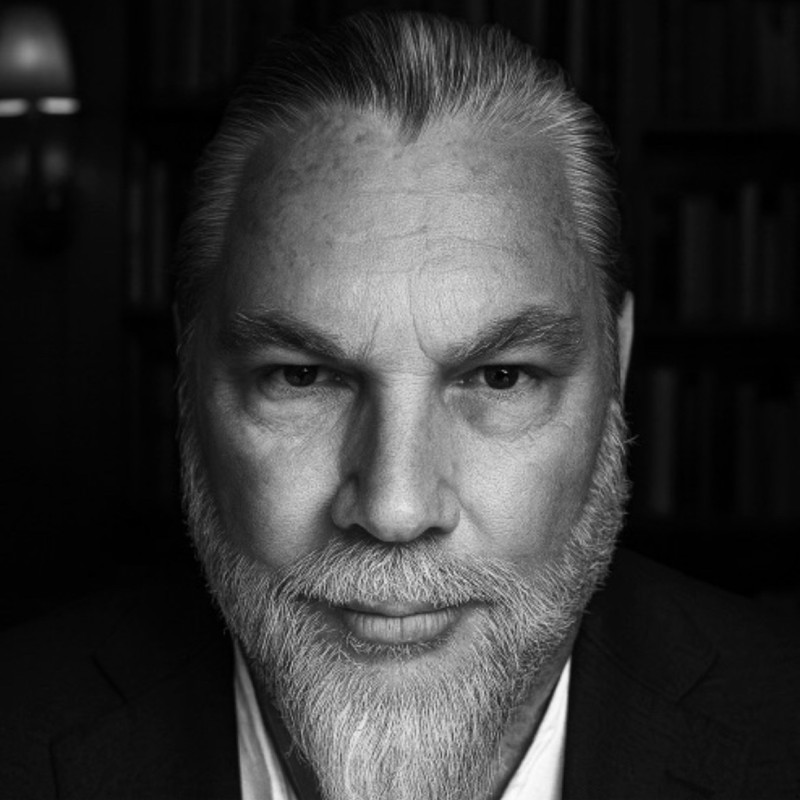
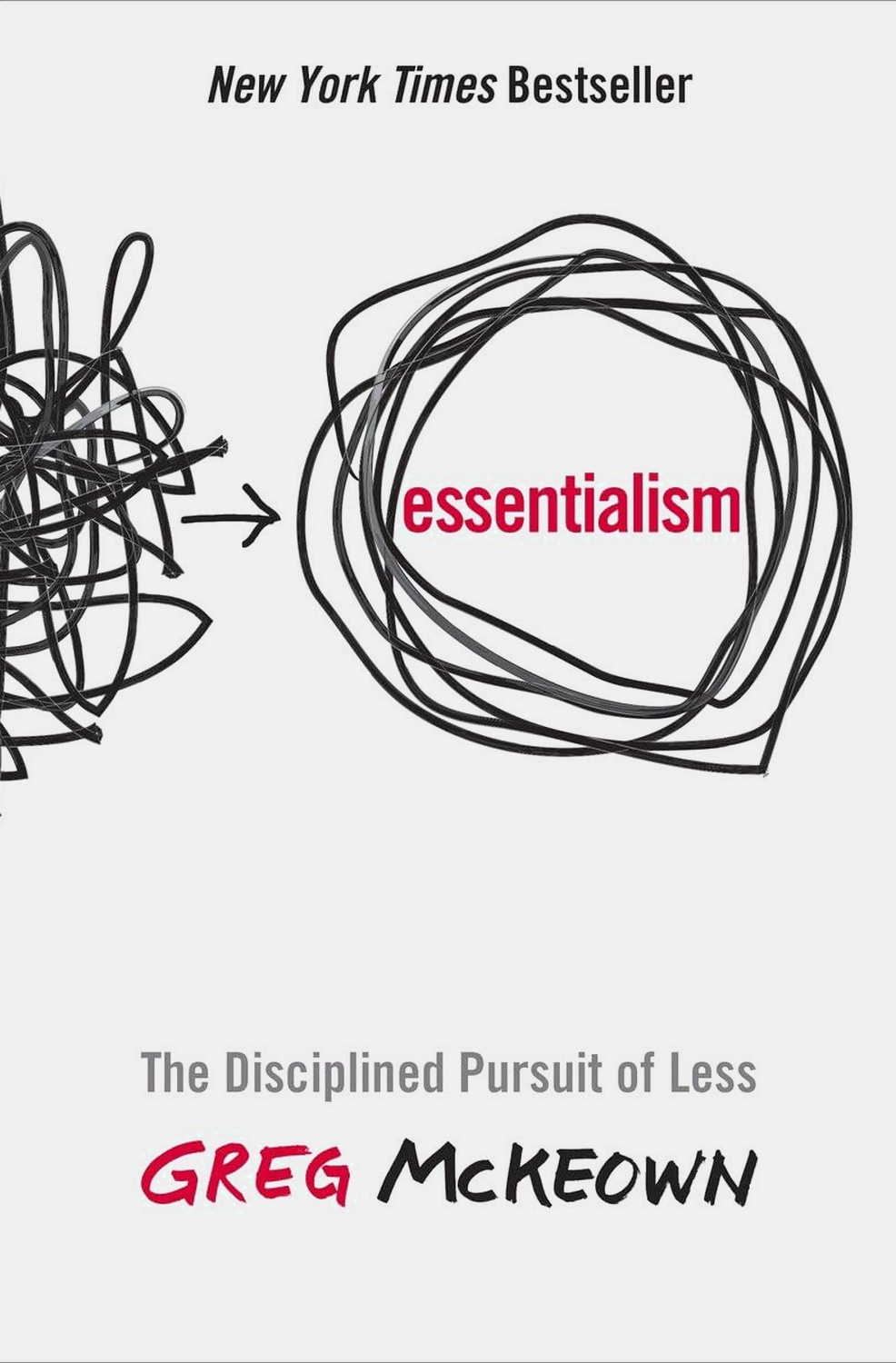
By Greg McKeown
Greg McKeown’s Essentialism: The Disciplined Pursuit of Less is a book about reclaiming control over one’s time, energy, attention, and contribution. Its central argument is simple but profound: most people do not suffer because they lack opportunity; they suffer because they say yes to too many opportunities that do not truly matter. Essentialism is not about getting more done in less time. It is about getting the right things done. It is a disciplined way of thinking and living that asks one repeated question: what is essential?
BUY THIS BOOK
McKeown contrasts the Essentialist with the Nonessentialist. The Nonessentialist believes almost everything is important, says yes too quickly, reacts to other people’s agendas, spreads energy across too many priorities, and eventually feels overworked but underutilized. The Essentialist believes only a few things really matter, pauses before committing, chooses deliberately, protects time and attention, and focuses energy where it can make the greatest contribution. The difference is not merely productivity. It is identity. Essentialism is the shift from living by default to living by design.
The book is especially relevant in a modern world overflowing with choice. Many people are busy, but not necessarily effective. They are responsive, but not necessarily intentional. They are exhausted, but not necessarily impactful. McKeown argues that without a disciplined system for deciding what matters, we become vulnerable to the priorities of others. We let inboxes, meetings, requests, expectations, and social pressure decide our lives for us. Essentialism is the refusal to outsource our priorities.
The Problem of Success
One of McKeown’s most interesting insights is that success itself can become a trap. When people become good at something, more opportunities come their way. Their competence attracts requests, invitations, responsibilities, and expectations. At first, this feels like progress. But over time, the abundance of opportunity can pull them away from the very focus that made them successful in the first place.
This is what McKeown describes as the paradox of success. Clarity leads to success. Success leads to more options. More options lead to diffused effort. Diffused effort undermines the clarity that produced success. In other words, achievement can create complexity, and complexity can quietly dilute achievement.
This idea applies to individuals, teams, and organizations. A talented person becomes stretched thin because everyone wants their input. A growing company loses focus because it chases too many markets, products, or initiatives. A leader becomes reactive because every department sees them as the decision bottleneck. The more capable one becomes, the more essential it is to decide what not to do.
McKeown’s point is not that opportunity is bad. Opportunity is dangerous only when it is accepted without discernment. Essentialists do not say no because they are negative. They say no because they understand that every yes consumes time, energy, attention, and capacity that could be directed toward something more important.
Choice: The Power We Forget We Have
A foundational principle of Essentialism is that we always have the power to choose. McKeown argues that many people forget this. They begin to speak as though their obligations are fixed and unavoidable. They say, “I have to,” when the more honest statement might be, “I am choosing to because I fear the consequences of not doing so.”
This distinction matters. Essentialism begins when we recover our sense of agency. We may not control every circumstance, but we usually have more choice than we admit. We can choose what to accept, what to decline, what to prioritize, what to ignore, where to invest, and where to withdraw. The Essentialist mindset is rooted in ownership.
The Nonessentialist feels trapped by expectations. The Essentialist recognizes tradeoffs. McKeown emphasizes that we cannot have it all, at least not in the sense of doing everything, pleasing everyone, and pursuing every attractive path simultaneously. Every choice excludes another choice. Every commitment carries an opportunity cost. Essentialists accept this reality rather than pretending they can evade it through busyness.
This is one of the book’s deeper philosophical contributions. It challenges the modern obsession with limitless possibility. The promise that we can do everything often leads not to freedom, but to fragmentation. True freedom comes from choosing what matters most and accepting the discipline of exclusion.
Discernment: Exploring Before Committing
Essentialism is not about impulsively cutting everything out of life. It begins with exploration. McKeown encourages readers to create space to think, reflect, read, observe, and evaluate. Before we can know what is essential, we must step back from the noise long enough to see clearly.
This is difficult because modern life rewards reaction. We often confuse urgency with importance. We respond to what is loudest, newest, or most emotionally demanding. Essentialism requires slowing down enough to distinguish the vital few from the trivial many. This includes paying attention to patterns, asking better questions, and resisting the pressure to commit prematurely.
McKeown recommends using strict criteria when evaluating opportunities. Rather than asking, “Is this good?” the Essentialist asks, “Is this the best use of my time and energy?” Many opportunities are good, but not essential. This is a hard discipline because good opportunities are often more difficult to reject than bad ones. Bad options are obvious. Good options are seductive.
One of the strongest ideas in the book is that if something is not a clear yes, it should often be treated as a no. This does not mean living rigidly, but it does mean raising the standard for commitment. Essentialists understand that their time and attention are finite. They are not trying to fit more into life. They are trying to make room for what deserves their best.
Elimination: The Courage to Say No
The most famous practical discipline in Essentialism is elimination. Once we identify what matters, we must remove what does not. This is where Essentialism becomes emotionally difficult. Many people know what is essential, but they lack the courage to disappoint others, abandon sunk costs, or step away from roles they have outgrown.
McKeown treats saying no as a crucial life skill. A poorly managed yes leads to resentment, overextension, and mediocre execution. A thoughtful no protects integrity, energy, and contribution. Essentialists learn to say no gracefully, firmly, and without excessive guilt. They understand that declining a request is not the same as rejecting a person.
The book also addresses the sunk cost trap. People often continue investing in projects, relationships, roles, or commitments simply because they have already invested so much. McKeown argues that this is irrational but common. Essentialists ask whether they would choose the same commitment again today, knowing what they now know. If the answer is no, they consider exiting.
Elimination also applies to possessions, routines, processes, meetings, goals, and habits. McKeown urges readers to simplify. Complexity often accumulates because no one deliberately removes anything. Life fills up by default. Essentialism requires ongoing pruning.
Execution: Making the Essential Easy
Essentialism is not only about choosing the right priorities. It is also about building systems that make execution easier. McKeown argues that once we know what matters, we should design routines, buffers, and habits that reduce friction.
One important concept is the buffer. Nonessentialists often assume everything will go according to plan. Essentialists expect reality to be unpredictable and build in margin. They leave extra time. They prepare for delays. They avoid overcommitting their schedules. This is not pessimism. It is respect for reality.
McKeown also emphasizes the importance of removing obstacles. Instead of forcing progress through heroic effort, Essentialists look for the constraints slowing things down and address them directly. They ask what is preventing forward movement and remove the bottleneck. This approach is especially useful in leadership, where teams often work harder than necessary because no one has identified the real constraint.
Routine is another important execution tool. The Essentialist uses routines to make essential behaviors automatic. When something matters, it should not depend entirely on willpower. Good routines reduce decision fatigue and help protect priorities from daily chaos.
Protecting Sleep, Space, and Play
One of the more refreshing aspects of Essentialism is that McKeown does not treat human beings like productivity machines. He argues that sleep, play, reflection, and space are not luxuries. They are essential to high contribution.
Sleep is presented as a performance advantage. McKeown challenges the cultural habit of glorifying exhaustion. Lack of sleep weakens judgment, creativity, emotional control, and decision making. For the Essentialist, rest is not laziness. It is maintenance of the instrument through which all contribution happens.
Play also matters because it expands imagination and creativity. In a world obsessed with output, play can seem unproductive. McKeown argues that it helps us see possibilities, make connections, and explore freely. It restores the mind’s capacity for discovery.
Space is equally important. Essentialists create room to think. They protect quiet time. They do not allow every open space to be filled with meetings, notifications, or obligations. This is countercultural because empty space often looks inefficient. But without space, discernment becomes nearly impossible.
Essentialism in Leadership and Organizations
Although the book is written largely for individuals, its ideas are highly applicable to leadership and organizational life. Many organizations suffer from nonessentialist behavior. They pursue too many initiatives, tolerate unclear priorities, hold too many meetings, and confuse activity with progress. Teams become busy but misaligned.
An Essentialist leader creates clarity. They help people understand what matters most and what does not. They do not treat every idea as equal. They are willing to make tradeoffs explicit. This can be uncomfortable because organizations often prefer the illusion that everything is a priority. But when everything is a priority, nothing is.
Essentialist leadership also requires protecting the team from distraction. A leader’s job is not merely to generate ideas, but to create focus. This means saying no to initiatives that dilute effort, even when those initiatives sound attractive. It means aligning resources behind the highest contribution. It means measuring success by meaningful progress rather than visible busyness.
McKeown’s argument is especially relevant for founders and executives. As companies grow, complexity multiplies. Without disciplined focus, growth becomes noisy. The Essentialist organization is not smaller in ambition. It is sharper in execution.
The Deeper Message: A Life of Deliberate Contribution
At its core, Essentialism is not a time management book. It is a book about values. It asks readers to confront a fundamental question: what do you want your life to be about? The answer cannot be everything. A meaningful life requires subtraction. It requires deciding what deserves your best energy and what must be released.
McKeown’s philosophy is both practical and existential. He is not simply teaching readers how to clear their calendars. He is teaching them how to stop living as though every demand has equal claim on their attention. Essentialism is a way of preserving the self from the endless claims of the nonessential.
This is why the book resonates with high achievers. Many ambitious people have the discipline to work hard, but not always the discernment to work wisely. They mistake exhaustion for significance. They confuse opportunity with obligation. They allow their usefulness to become a form of captivity. Essentialism challenges them to reclaim authorship.
The disciplined pursuit of less is not about shrinking life. It is about concentrating life. It is about creating the conditions for excellence, presence, clarity, and meaningful contribution. McKeown’s message is that we do not become more valuable by doing more of everything. We become more valuable by doing more of what matters most.
Conclusion: The Freedom of Fewer Things
Essentialism is a powerful reminder that life is shaped as much by what we decline as by what we accept. The ability to say no, eliminate distractions, protect attention, and choose deliberately is not a minor productivity habit. It is a form of personal sovereignty.
Greg McKeown’s central challenge is clear: stop letting the nonessential crowd out the essential. Stop confusing busyness with purpose. Stop saying yes merely because something is good, urgent, flattering, or expected. Ask what matters most, then build a life around that answer.
The Essentialist does not pursue less for the sake of having less. The Essentialist pursues less so that the highest contribution can receive more. More attention. More energy. More excellence. More meaning. In a world that constantly tells us to do more, be more, want more, and chase more, Essentialism offers a quieter and more disciplined truth: the life we most want may depend on our willingness to choose less, but better.
If You Liked This Article, You May Also Like …
- +++
- +++
- +++
CHECK OUT THIS WEEK’S DEEP DIVES ARTICLES

+++
+++