Emotional Intelligence Series
For decades, emotional intelligence (EQ) was treated as a nice-to-have. A feel-good quality. A trait associated with counselors and creatives, not corporate titans or technical experts. It was dismissed as “soft”—the fuzzy counterpart to hard, bottom-line business results.
But that myth has been thoroughly debunked.
Today, research from institutions like Harvard Business Review, McKinsey & Company, and World Economic Forum has made one thing unmistakably clear: emotional intelligence is not soft—it’s strategic.
In an era defined by AI, automation, remote work, constant disruption, and cultural complexity, EQ has emerged as a core differentiator—in leadership, in teamwork, in innovation, and in trust.
Let’s explore why.
What Is Emotional Intelligence?
EQ, a term popularized by psychologist Daniel Goleman, is the ability to recognize, understand, and manage your own emotions, while also being able to tune into the emotions of others and navigate relationships wisely.
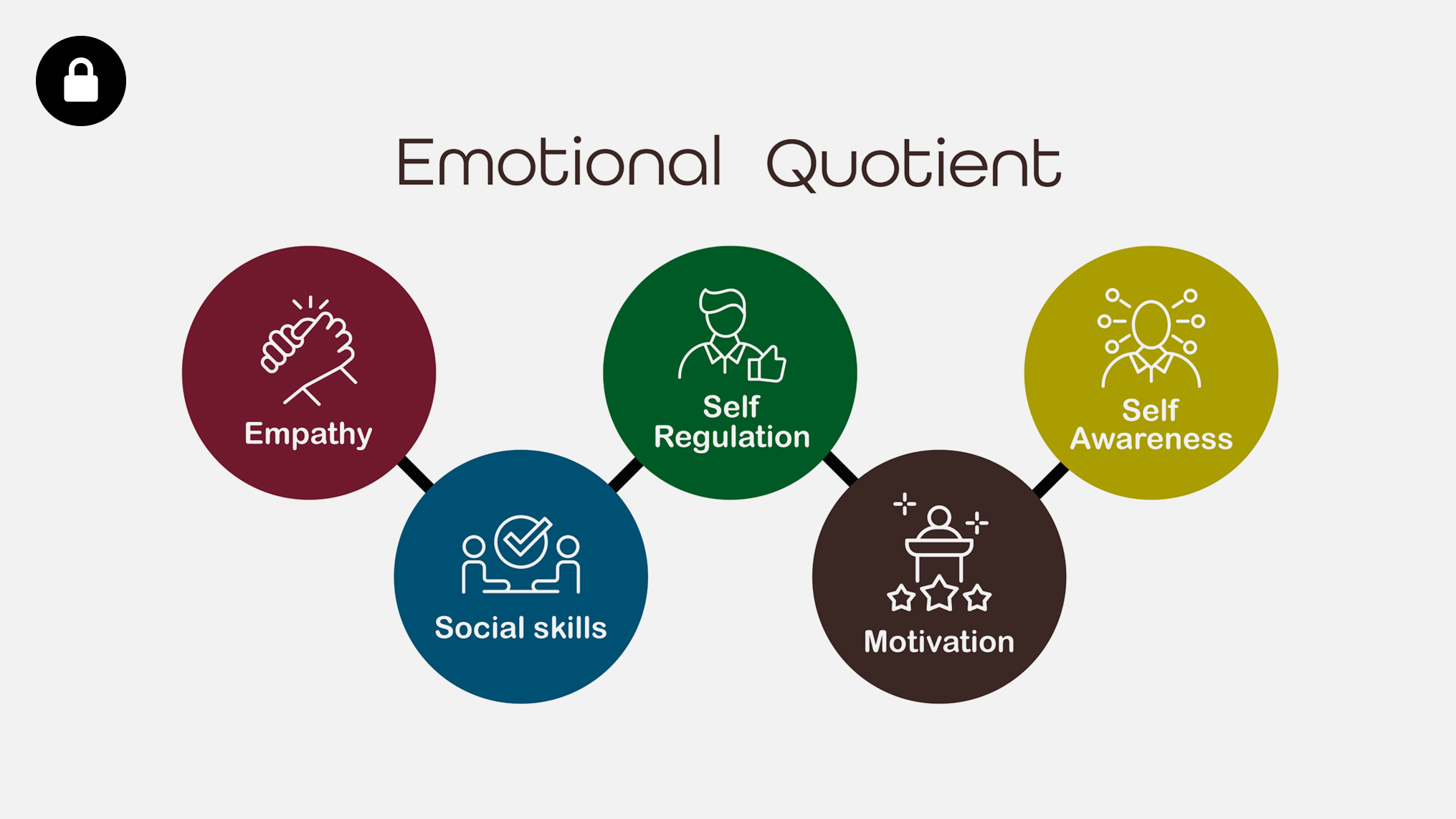
It comprises five key domains:
No. 1 — Self-awareness
No. 2 — Self-regulation
No. 3 — Motivation
No. 4 — Empathy
No. 5 — Social skills
High EQ is not about being agreeable or emotionally expressive. It’s about being emotionally agile, perceptive, and strategic in how you show up—for yourself and others.
Why EQ Is Now a Strategic Imperative
No. 1 — AI Can’t Replace Human Understanding
AI is increasingly capable of data analysis, language processing, and even creativity. But it still lacks emotional depth. It doesn’t intuit intent. It doesn’t read the room. It doesn’t know when to pause a pitch because someone just lost a loved one.
As machines automate more “hard” skills, the human edge lies in soft skills that aren’t soft at all: emotional nuance, ethical judgment, relational awareness.
McKinsey’s 2021 “Future of Work” report named EQ among the most vital skill sets in an AI-driven economy. Why? Because the skills AI struggles to replicate—communication, empathy, leadership, and adaptability—are all grounded in emotional intelligence.
No. 2 — Remote and Hybrid Work Demands More EQ, Not Less
Managing a virtual team isn’t just about bandwidth and Zoom links—it’s about connection across distance, psychological safety, and creating belonging in digital spaces.
Leaders must now:
- Read emotional tone through a screen.
- Check in without micromanaging.
- Lead meetings that inspire, not drain.
- Handle burnout and disengagement with grace.
None of this is about spreadsheets. It’s about EQ.
Harvard Business Review put it succinctly:
“In hybrid work, the leader’s emotional radar becomes their most important tool.”
Without it, teams fragment, morale drops, and turnover spikes.
No. 3 — Diversity and Inclusion Require Emotional Literacy
In a global, multicultural workplace, cultural empathy and emotional nuance are non-negotiable. Leaders are navigating race, gender, neurodiversity, generational gaps, and geopolitical stressors—all of which impact how people feel, show up, and perform.
You can’t just mandate inclusion. You have to model it—by listening, understanding, adapting, and leading with emotional precision.
EQ helps leaders:
- Avoid microaggressions.
- Navigate identity-based tension.
- Have courageous conversations.
- Create safe spaces for expression and growth.
These aren’t “extras”—they’re foundational to team cohesion, retention, and innovation.
No. 4 — Trust Is Now the Currency of Leadership
Gone are the days when authority came solely from titles or tenure. In modern organizations, trust must be earned—and EQ is the trust-building superpower.
A 2022 Edelman Trust Barometer found that employees trust “my employer” more than media, government, or NGOs. But that trust hinges on perceived emotional integrity: Do you care? Do you listen? Do you do what you say?
Leaders with high EQ:
- Keep promises.
- Manage conflict without drama.
- Admit mistakes.
- Read the emotional undercurrents of a team and adjust accordingly.
These actions don’t just improve culture—they increase performance, loyalty, and resilience.
No. 5 — The Cost of Low EQ Is Measurable
Ignore EQ, and you pay for it.
Poor emotional intelligence can lead to:
- Toxic work cultures
- Avoidable turnover
- Communication breakdowns
- Lost sales and damaged client relationships
- Burnout and disengagement
The cost of replacing an employee is estimated to be 50–200% of their salary. And Gallup consistently finds that managers account for 70% of the variance in employee engagement.
Translation: if your leaders lack EQ, your business bleeds money, talent, and innovation.
EQ in Action: Strategic Examples
Let’s look at how high EQ becomes a strategic asset in different contexts.
No. 1 — Sales and Client Management
Empathy allows salespeople to:
- Sense when a client is uncertain and pause the pitch.
- Read between the lines of objections.
- Build rapport that leads to trust—and long-term partnerships.
Clients don’t buy products. They buy trust. And trust is built through emotionally intelligent conversations.
No. 2 — Team Leadership
A manager with high EQ:
- Notices early signs of burnout.
- Helps a high performer feel seen, not used.
- Defuses tension between teammates with calm authority.
This isn’t softness. It’s precision leadership that drives performance.
No. 3 — Change Management
When restructuring, layoffs, or transformation initiatives happen, EQ enables leaders to:
- Communicate clearly and compassionately.
- Navigate fear and resistance.
- Keep morale from tanking.
Organizations that lead through change with EQ recover faster and retain top talent.
Developing EQ: It’s Not Magic. It’s Trainable.
One of the best-kept secrets about EQ? It’s not fixed.
Unlike IQ, which is relatively stable, EQ can be developed through:
- Coaching and feedback
- Reflective practices (e.g., journaling or mindfulness)
- Leadership training and simulations
- Real-time emotional check-ins and debriefs
Daniel Goleman calls this the “emotional gym.” Just like muscles, empathy, regulation, and social skills strengthen with intentional reps.
Organizations that invest in emotional intelligence training see marked increases in collaboration, engagement, and performance.
EQ and the C-Suite: It’s Not Optional Anymore
Top-performing companies are no longer treating EQ as HR’s side project. It’s now central to strategic leadership.
- Satya Nadella, CEO of Microsoft, emphasized empathy as a leadership cornerstone during the company’s turnaround.
- Indra Nooyi, former CEO of PepsiCo, was known for emotionally intelligent leadership that balanced performance with people-first values.
- Barack Obama’s calm under pressure, ability to read the emotional tone of the country, and relational leadership style are often cited as EQ in practice.
In fact, a Korn Ferry study found that CEOs with high emotional intelligence deliver up to 34% higher profits.
Let that sink in. Emotional intelligence is not just about culture. It’s about commercial success.
The Strategic EQ Advantage
The leaders of the future will not be those who know the most—but those who can do the following:
- Regulate their emotions under stress
- Decode what others need—especially when they aren’t saying it
- Communicate with clarity, humility, and presence
- Build teams that feel seen, heard, and safe
- Respond rather than react in moments of pressure
These are not secondary skills. They are the keystone behaviors of resilient, high-impact leadership.
EQ Is the New Power Skill
Let’s stop calling it soft.
There is nothing soft about delivering hard feedback with compassion. There is nothing soft about sitting with someone’s grief and not rushing to fix it. There is nothing soft about defusing tension in a boardroom with presence and poise.
That’s not fluff. That’s power.
Emotional intelligence is not the opposite of strategy—it is the delivery system for it. You can have the best idea, the sharpest insight, the most innovative product—but if you can’t communicate it, connect with others, or earn their trust, it dies in the dark.
The future belongs to emotionally intelligent leaders. Not because they’re warm and fuzzy. But because they’re clear, adaptive, trustworthy, and human.
And in an increasingly complex world, being fully human is your greatest competitive advantage.
If You Liked This Article, You May Also Like …
- Emotional Intelligence for AI: Can Machines Ever Truly Feel?
- Emotional Boundaries Are a Superpower, Not a Wall
- Beyond Empathy: Why True Emotional Intelligence Must Be Culturally Intelligent