By Angela Duckworth
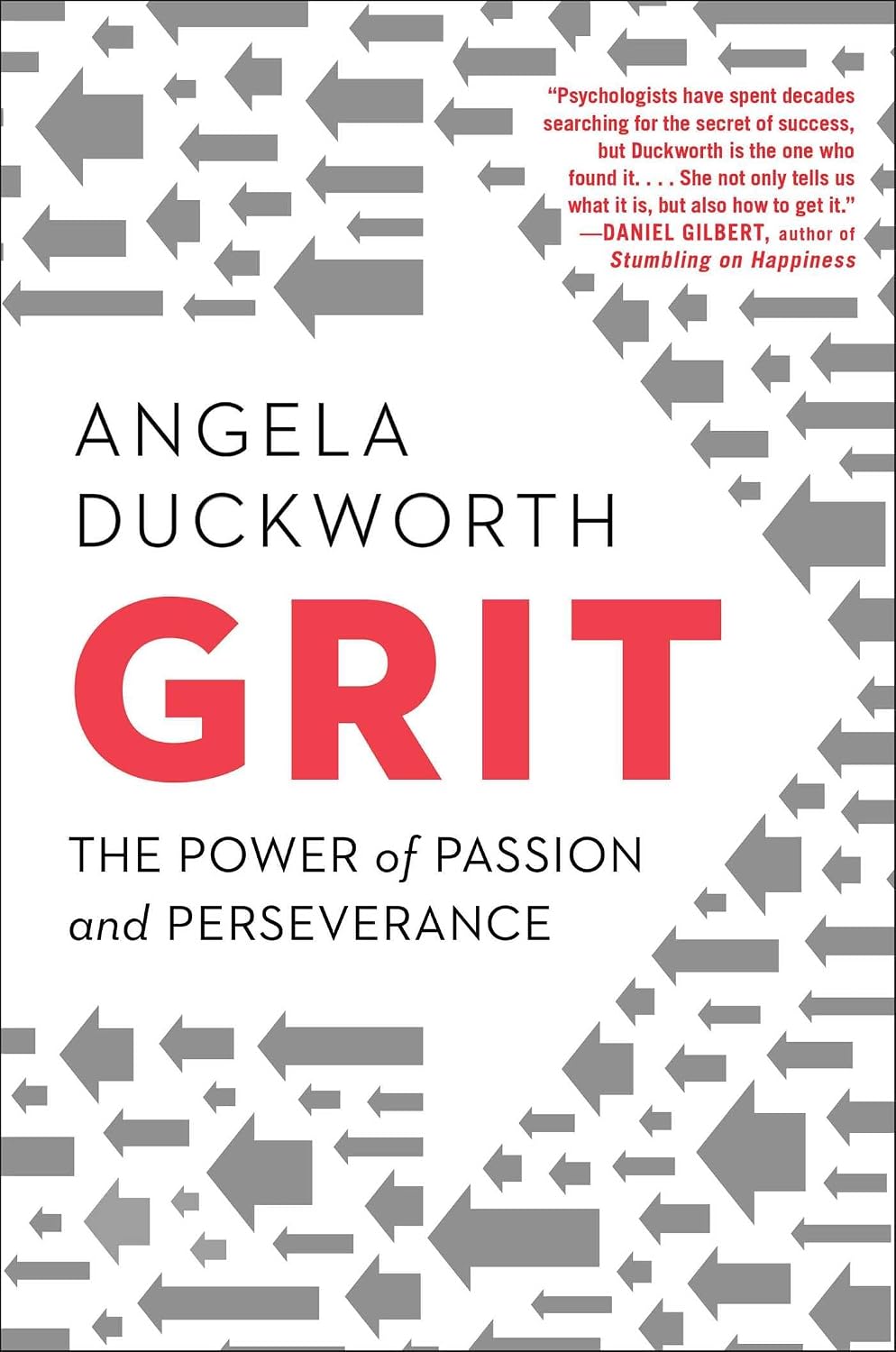
In Grit, psychologist Angela Duckworth challenges a familiar explanation for extraordinary achievement: that the people who rise furthest are simply the most naturally talented. Talent can affect how rapidly someone learns, but it is not a reliable predictor of who will persist through difficult, long range work. The stronger quality is grit, defined as passion and perseverance directed toward goals that take years, not days, to accomplish.
BUY THIS BOOK
Achievement is not just about potential. It is about applying effort after enthusiasm fades, progress slows, criticism arrives, and quitting becomes tempting. Grit is not a burst of intensity. It is sustained commitment.
Duckworth arrived at this idea after leaving management consulting to teach math in public schools. She saw students of varying intelligence respond very differently to challenge. Some worked steadily through frustration. Others, including some with obvious intellectual advantages, disengaged when work became difficult. As a psychologist, she later studied people in demanding settings, including West Point cadets, spelling bee competitors, sales teams, students, athletes, and entrepreneurs. Her conclusion was that success often belongs not to the most gifted person, but to the person most willing to remain in the race.
Talent Counts, but Effort Counts Twice
Duckworth offers a simple framework for understanding achievement. Talent, multiplied by effort, produces skill. Skill, multiplied by effort, produces achievement. The formula is not meant to reduce human performance to arithmetic. Its purpose is to correct a cultural imbalance. Talent counts once. Effort counts twice.
That distinction helps explain why some apparently gifted people fall short of their potential. If someone is repeatedly praised for being naturally smart, creative, athletic, or charismatic, struggle can feel threatening. Difficulty becomes evidence that the gift may not be real. They may avoid situations where they could look inexperienced or average.
Someone with less early advantage may develop a different relationship with effort. They may become accustomed to practice, feedback, mistakes, and trying again. Over time, that relationship with difficulty can become more valuable than early ease.
Duckworth does not argue that everyone has identical opportunities or identical capacities. She argues that people often underestimate how much growth remains possible after talent has done its initial work. Talent worship makes effort look secondary. Grit restores it to its proper place.
Passion Is More Than Excitement
The word “passion” is often misunderstood. It can suggest a dramatic feeling, an intense enthusiasm, or a lightning bolt of certainty about one’s calling. Duckworth means something quieter. Passion is a stable interest that organizes a person’s goals over time.
A gritty person may be bored, discouraged, or tired. What makes them different is that their work has direction. The small tasks of today are connected to a larger ambition, value, or purpose. They are not constantly reinventing themselves in pursuit of the next appealing option.
Duckworth contrasts this with abandoning goals when work stops being novel. Many can begin; fewer endure the repetitive middle, when outcomes remain unclear. Grit does not mean refusing every change of direction. It means resisting the impulse to mistake temporary boredom for a sign that the goal no longer matters.
Her Grit Scale measures two related qualities: perseverance of effort and consistency of interests. People may work hard but constantly shift their ambitions. Others may have a long standing interest but fail to follow through when the work becomes difficult. Grit requires both a durable aim and the discipline to keep acting in its service.
Deliberate Practice Is a Willingness to Be Bad at Something
A major part of Duckworth’s argument concerns deliberate practice, an idea associated with psychologist Anders Ericsson. Deliberate practice is not simply spending more time on a task. It is focused effort aimed at a specific weakness. It requires clear goals, full attention, immediate feedback, and repeated attempts to improve.
This practice is demanding because it keeps people in their least comfortable territory. A musician repeatedly works through the hardest measure of a piece. A salesperson examines why a promising conversation failed. A leader studies the way they handle conflict rather than congratulating themselves for being busy.
Duckworth uses the “hard thing rule” in her own family to make this practical. Everyone must choose an activity that is difficult and requires sustained practice. They can choose the activity, but they cannot quit midway through a season, semester, or agreed period of commitment. The principle is not that suffering is virtuous, but that discomfort is often the price of becoming capable.
This is one of the book’s most useful ideas. Many people interpret frustration as a sign that they have chosen the wrong path. Duckworth argues that frustration is often the normal experience of learning. The key is to distinguish between pointless suffering and productive difficulty. Practice should be purposeful, supported by feedback, and connected to a meaningful goal. But it should not always feel good.
Purpose Turns Endurance Into Something Larger
Perseverance without a sense of meaning can become empty stubbornness. Duckworth argues that grit becomes more sustainable when people connect their work to something beyond personal ambition. They may start with enjoyment, competition, money, recognition, or the desire to excel. Over time, however, the most durable commitments often develop a larger purpose.
Purpose does not require a grand mission. A teacher may be driven by the chance to expand a student’s confidence. A business owner may be motivated by creating opportunity for employees, solving a customer problem, or building a product that genuinely improves daily life. The essential point is that the work matters beyond the self.
Duckworth argues that purpose can be cultivated by reflecting on how work helps others, increasing contribution, and seeking models who connect excellence with service. Many people wait for purpose to arrive fully formed. The book suggests that purpose usually grows gradually, as interest deepens, competence increases, and a person sees the wider effect of their work.
Hope Is the Capacity to Try Again
The fourth major component of grit is hope. Duckworth does not mean optimism as cheerful wishful thinking. She means a belief that personal effort can influence the future, especially after disappointment. Her thinking draws on Martin Seligman’s work on learned helplessness and explanatory style.
When something goes wrong, people tell themselves different stories. One person may think, “I failed because I am incapable, and nothing will change.” Another may think, “This approach did not work, but I can improve, seek help, or try a different strategy.” The second response does not guarantee success. It creates the conditions for another attempt.
Gritty people do not avoid failure or pretend that every setback is small. They simply refuse to turn a setback into a permanent identity. They recover by treating failure as information. That can mean adjusting the plan, preparing more, asking for feedback, or accepting slower progress.
This has particular importance in leadership. Teams learn from the emotional interpretation of their leaders. When a leader treats every missed target as proof that people are incompetent or the situation is hopeless, employees become defensive. When setbacks are treated as data, the organization is more likely to learn, adapt, and persist.
Grit Is Personal, but It Is Also Cultural
Duckworth insists that grit is not fixed at birth. It can develop through interest, deliberate practice, purpose, and hope. It can also be strengthened or weakened by the culture surrounding a person.
A gritty culture rewards improvement, effort, follow through, and the ability to recover from failure. It does not praise talent while treating struggle as shameful. It makes clear that standards matter, but it also provides the coaching and support needed to meet them.
Duckworth applies this principle to parenting and management through the idea of “wise parenting.” Wise parents and leaders combine high expectations with warmth and support. The message is, “I believe in you, and I expect you to follow through.” Demanding without support can create fear. Support without demanding can create fragility. The healthy combination helps people learn that difficulty is survivable and commitments matter.
The Limits and Enduring Value of Grit
Duckworth does not claim grit explains every outcome. Resources, health, timing, luck, discrimination, family stability, education, and opportunity all shape what people can do. Grit should never become a convenient way to blame individuals for obstacles that are structural and real.
Nor is grit the same as blind persistence. Sometimes a strategy, job, relationship, or even a goal should be abandoned. The point is not to cling to every plan. It is to remain committed to a meaningful long term aim while staying flexible about the route.
The book’s lasting value is its rejection of the mythology of effortless excellence. People may look exceptional because we see the finished performance, not the unglamorous years behind it. Duckworth argues that achievement is usually built through patient interest, intentional practice, a growing sense of purpose, and hope resilient enough to survive failure.
Ultimately, Grit asks readers to stop waiting for the perfect talent, feeling, or moment. It asks a harder question: What matters enough to you that you will keep working when progress is slow, praise is absent, and quitting would be easier? Duckworth’s answer is clear. Great achievement is rarely a single act of inspiration. It is the quiet accumulation of effort applied faithfully to something worth pursuing.