Personal Development Series
How obsession with optimization kills originality.
We live in the golden age of self-improvement.
There’s a podcast for every purpose, a framework for every flaw, and a guru for every goal. You can “hack” your morning, “optimize” your mindset, “stack” your habits, and “10x” your productivity — all before breakfast.
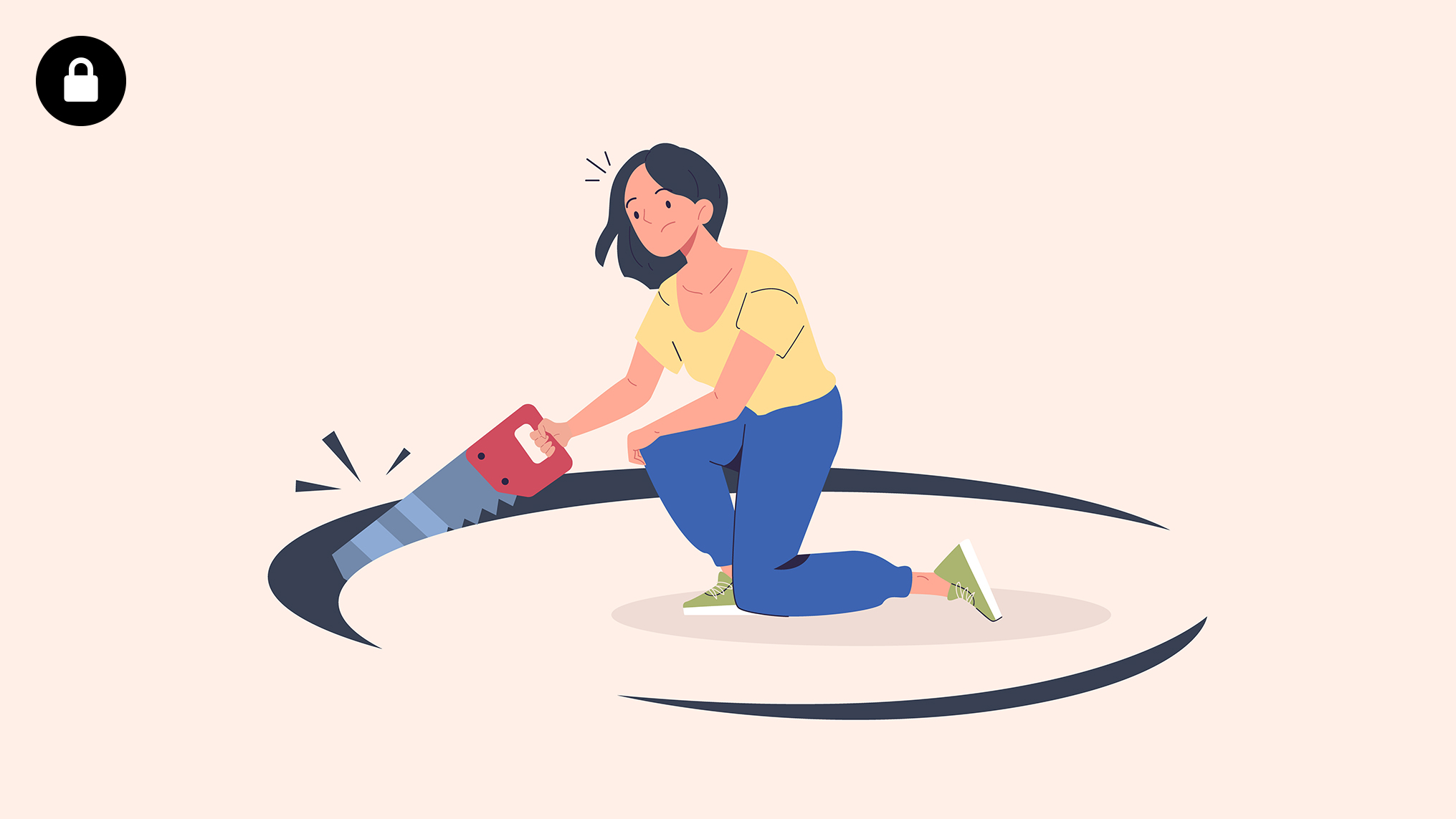
We’ve turned personal growth into an industry, and optimization into a religion. But here’s the paradox no one wants to admit: the more obsessed we become with improving ourselves, the less authentic we often become.
At some point, the pursuit of better becomes the enemy of real.
And that’s when self-help turns into self-sabotage.
The Optimization Epidemic
Scroll through any social feed, and you’ll find a modern miracle of motivation — influencers waking up at 4:30 a.m., reading 52 books a year, journaling in three colors, and micro-dosing gratitude before their cold plunge.
It’s inspiring. Until it’s not.
Because beneath all the “crush the day” content lies a subtle poison: the belief that you’re always a few tweaks away from being enough.
The self-help industry thrives on that insecurity. It doesn’t sell self-acceptance — it sells self-correction.
There’s always a new routine to adopt, a new mindset to master, a new “high-performance” protocol to follow. You never arrive, because arrival kills the business model.
So you chase endless improvement, mistaking movement for progress — and wake up one morning feeling more exhausted than evolved.
When Growth Becomes a Performance
At its core, personal growth should be an intimate, internal process — the slow sculpting of wisdom through reflection and experience.
But today, it’s a public performance.
We don’t just grow. We broadcast our growth.
Our notebooks become content. Our therapy becomes captions. Our vulnerability becomes marketing copy.
The result? We’re no longer improving for the sake of becoming better humans. We’re improving to look like better humans.
Psychologists call it “impression management.” It’s the tendency to curate our identity for approval. And the more “self-aware” we become publicly, the less genuinely self-aware we often are privately.
Because when your worth is measured by how enlightened you appear, you stop growing from the inside out and start editing from the outside in.
The Myth of the Perfect System
One of the most seductive traps in modern self-help is the obsession with systems.
There’s a spreadsheet for your gratitude, a template for your goals, a dashboard for your dreams.
Structure is useful — until it becomes a cage.
Not everything meaningful can be measured. Not every breakthrough can be tracked.
Sometimes the most transformative growth comes from chaos — from the unscripted, the unexpected, the uncomfortable. But the optimization mindset can’t tolerate uncertainty. It needs metrics. It needs proof. It needs control.
And in trying to control everything, we lose the very ingredient that makes growth human: messiness.
Messiness is where creativity lives. It’s where the unplanned insights, the weird detours, and the “aha” moments happen.
Over-optimize your life, and you smooth out the friction that sparks originality. You end up efficient but uninspired — a perfectly tuned machine with nothing left to invent.
The Addiction to “Better”
The most dangerous thing about self-help isn’t that it fails — it’s that it works, at least for a while.
You get that dopamine rush from discipline, the endorphin hit from achievement. You feel in control, competent, “on track.”
But slowly, something shifts. The same system that gave you confidence starts demanding more and more to keep you satisfied.
You can’t just meditate — you have to track your HRV while doing it. You can’t just rest — you need a quantified recovery score to justify it. You can’t just think — you need a thought leader to validate it.
You stop being a person and start being a project.
And like any project, you begin to see yourself as something perpetually unfinished — always version 1.0 of something better.
That’s not self-help anymore. That’s self-doubt with a productivity plan.
The Death of Originality
Creativity requires imperfection. It requires risk, experimentation, and the willingness to get it wrong.
But the optimization mindset worships precision. It hates waste, inefficiency, and unpredictability — the very ingredients of innovation.
The more you try to become “perfect,” the more predictable you become. You start sounding like everyone else who reads the same books, listens to the same podcasts, and follows the same “high-performance habits.”
Your originality dies in the echo chamber of best practices.
Because greatness rarely comes from perfect systems. It comes from obsession, emotion, and the willingness to be ridiculous.
Einstein was forgetful. Picasso was messy. Steve Jobs was mercurial. None of them would survive the current self-help culture — too disorganized, too emotional, too human.
But their chaos was their catalyst.
The False Gospel of “Balance”
Here’s another trap: the obsession with balance.
We’re told to “balance work and life,” “balance hustle and rest,” “balance ambition with mindfulness.”
It sounds wise — but in practice, balance often becomes another form of control. It’s the belief that if you just find the perfect ratio of effort to ease, you’ll achieve perpetual calm.
But life isn’t meant to be perfectly balanced. It’s meant to be lived dynamically — with seasons of intensity and seasons of stillness.
Some of the most defining moments of growth come from imbalance: the late-night grind that births an idea, the heartbreak that rewires your empathy, the failure that forces reinvention.
You can’t systemize soul.
Why Self-Help Feels So Empty
So why does all this self-improvement sometimes leave us feeling worse?
Because optimization promises certainty — but life runs on uncertainty.
You can’t engineer meaning. You can’t “hack” fulfillment. You can’t outsource your identity to a checklist.
The more we optimize our routines, the more we sterilize them of spontaneity. We become efficient at living, but not alive in the living.
And here’s the deeper truth: self-help, when it works, should eventually make itself unnecessary. It should return you to your intuition — not make you addicted to someone else’s.
The real goal of growth isn’t perfection. It’s freedom.
Freedom from comparison. Freedom from metrics. Freedom from the need to “fix” yourself.
The Way Back to Authentic Growth
If you’ve started to feel suffocated by your own improvement plan, here’s how to reclaim the original point of personal development:
No. 1 — Stop Treating Yourself Like a Project
You are not software that needs constant updates. You’re a person — gloriously inconsistent and beautifully unfinished.
No. 2 — Trade Frameworks for Feflection
Put down the productivity book. Pick up your journal. Ask harder questions: What do I actually want? What’s driving me — curiosity or fear?
No. 3 — Redefine “Progress”
Growth isn’t about adding more routines. It’s about subtracting what no longer serves you. Sometimes doing less is the most radical improvement of all.
No. 4 — Reclaim Boredom
Don’t fill every gap with a podcast or motivational reel. Let your mind wander. Originality needs space to breathe.
No. 5 — Trust Your Own Data
The most powerful insights aren’t in someone else’s book; they’re in your own experience. Pay attention to what energizes you and what drains you — that’s your feedback loop.
Final Thought
The self-help movement began with noble intentions — to help people become more self-aware, more fulfilled, more alive.
But somewhere along the way, it turned into a productivity cult — one that measures worth in habits, hustles, and highlight reels.
The truth is, you don’t need to be a better version of yourself. You need to be a truer one.
Growth isn’t about mastering life. It’s about meeting it — with curiosity, courage, and imperfection intact.
Because your greatest breakthroughs won’t come from another system, book, or coach. They’ll come from the quiet moment when you stop trying to optimize everything — and simply start being you.
If You Liked This Article, You May Also Like …
- Applying Elon Musk’s 5 Steps to Personal Development
- The Myth of Finding Yourself: Why Reinvention Is the New Self-Discovery
- When Walking Away Is the Lesson: The Power of Knowing When Enough Is Enough