Listen to this Deep Dive, 13 min, read by Simon
Emotional Intelligence Series
Emotional intelligence has become one of those phrases that almost everyone claims to value, yet fewer people understand deeply. We talk about self-awareness, empathy, regulation, communication, social skill, psychological safety, and the ability to read a room. All of that matters. In families, friendships, leadership, marriage, negotiation, and organizational life, emotional intelligence can be the difference between trust and confusion, connection and performance, repair and resentment.
But there is one dimension of emotional intelligence that does not get nearly enough attention.
Sincerity.
Not charm. Not warmth. Not smoothness. Not the ability to say the right thing in the right tone at the right moment. Sincerity is something quieter and harder to fake for long. It is the alignment between what someone says, what they mean, what they do, and what they are willing to be responsible for after the conversation ends.
Sincerity is emotional intelligence with moral weight.
Without sincerity, emotional intelligence can become a performance. A person can learn the language of empathy without being empathetic. They can validate feelings while privately dismissing them. They can apologize beautifully without changing. They can speak with vulnerability while using vulnerability as strategy. They can make people feel seen in the moment, then prove through behavior that the moment was mostly theater.
That is why sincerity matters so much. It separates emotional fluency from emotional truth.
The Difference Between Skilled and Real
Some people are very skilled interpersonally. They know how to make eye contact. They know how to listen actively. They know how to mirror language, soften conflict, ask thoughtful questions, and make others feel attended to. Those skills can be valuable. In the hands of a sincere person, they help build trust.
But skill and sincerity are not the same.
A person can be emotionally skilled and still be emotionally dishonest. They can understand how feelings work without caring about the person having them. They can use the vocabulary of growth, accountability, and healing while remaining fundamentally self-protective. They can know exactly what to say because they have learned what language creates relief, approval, or access.
This is why people sometimes leave conversations feeling comforted, only to realize later that nothing real changed. The words were right. The tone was right. The emotional choreography was right. But the substance was missing.
Sincerity is what gives emotional intelligence its integrity. It says, “I am not merely managing this moment. I am telling the truth inside it.”
People Can Feel the Difference
Human beings are often more perceptive than we give ourselves credit for. We may not always be able to articulate why something feels off, but we often sense the difference between someone who is genuinely present and someone who is performing presence.
A sincere person does not have to be perfect. In fact, sincerity is often most powerful when it is imperfect. The words may be simple. The apology may be awkward. The expression may lack polish. But something in it lands because the person is not trying to manipulate the emotional outcome. They are trying to be honest.
This is why a clumsy truth can be more healing than a polished performance.
People are not only listening to language. They are listening for congruence. Does the tone match the behavior? Does the apology match the pattern afterward? Does the warmth remain when there is no audience? Does the empathy survive inconvenience? Does the person remain kind when they are not being admired for kindness? Harvard Business Review’s Leaders Can’t Make Up for Bad Behavior by Being Nice Later reports research finding that kindness offered after harm does not repair it, because people never know which version of the leader they are going to get.
Sincerity is tested after the emotionally intelligent words have been spoken.
The Problem With Performative Empathy
Performative empathy is everywhere. It says, “I hear you,” without changing anything. It says, “Your feelings are valid,” while quietly waiting for the discomfort to pass. It says, “I take full responsibility,” and then proceeds to explain why responsibility is complicated. It says, “I care deeply,” but only when caring does not require sacrifice, humility, or changed behavior.
This kind of empathy can be worse than bluntness because it creates the illusion of safety.
At least coldness announces itself. Performative empathy draws people closer before disappointing them. It borrows the language of care while avoiding the demands of care. It makes the injured person feel briefly seen, then leaves them carrying the same pattern with more confusion because now the harmful person sounded so reasonable while avoiding repair. The Greater Good Science Center’s practice guide Making an Effective Apology describes what separates a real apology from a hollow one: naming the harm, taking responsibility for it, and offering to repair it.
That is why sincerity is a superpower. It does not merely sound caring. It is willing to be changed by what care requires.
Sincerity Requires Self-Contact
A sincere person is not simply nice. Niceness can be social training. Sincerity requires contact with the self. It requires knowing what you actually feel, what you actually mean, where you are unsure, what you can honestly promise, and what you cannot.
Many people are insincere not because they are malicious, but because they are disconnected from themselves. They say yes before asking whether they mean it. They apologize before understanding what they did. They promise change because they want to end the discomfort. They agree because disagreement feels risky. They perform confidence because uncertainty feels exposing.
Over time, this creates relational fog. People may not be lying intentionally, but they are still not being fully truthful. They are speaking from the version of themselves that wants approval, safety, control, or relief, not from the deeper self that knows what is real.
Sincerity requires a pause. It may need to say, “I want to answer honestly, but I need a moment.” Or, “Part of me wants to agree, but I am not sure I can actually commit to that.” Or, “I can see that I hurt you, and I do not yet fully understand why I reacted that way.” Or, “I care about this, but I have not been acting in a way that proves it.”
That kind of honesty may be less polished, but it is far more trustworthy.
In Leadership, Sincerity Compounds Trust
In leadership, sincerity is not a soft trait. It is operationally powerful.
Teams know when leaders are saying the right thing because the communications strategy requires it. They know when values language is being used to manage morale. They know when transparency is curated, when accountability is selective, when care is reputational, and when empowerment is mostly decorative.
They also know when a leader is sincere.
A sincere leader does not have to have all the answers. They do not have to perform certainty. They do not have to wrap every difficult decision in inspirational language. They can say, “This is hard.” They can say, “We got this wrong.” They can say, “I understand why trust has been damaged.” They can say, “Here is what we know, here is what we do not know, and here is what we are going to do next.”
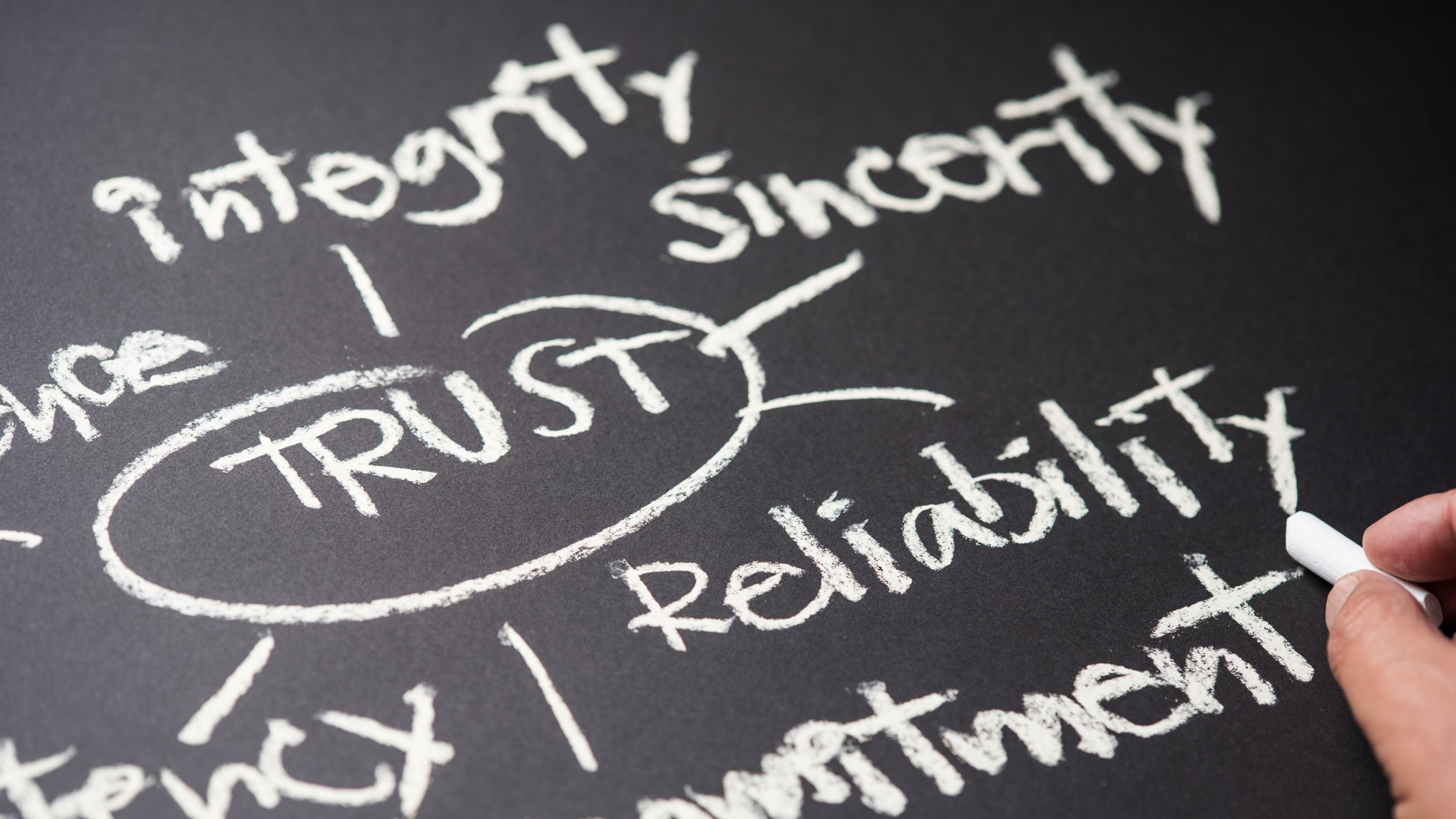
That kind of sincerity creates steadiness because people are not being asked to participate in fiction. They may not like every decision, but they can feel the difference between a leader who is managing optics and a leader who is trying to stay honest under pressure. In The 3 Elements of Trust, Harvard Business Review’s Jack Zenger and Joseph Folkman found that consistency, doing what you say you will do, is one of the three things that most shape whether people trust a leader.
Trust does not require leaders to be flawless. It requires them to be congruent.
Sincerity Does Not Mean Emotional Dumping
It is important to distinguish sincerity from unfiltered expression. Some people confuse being sincere with saying everything they feel the moment they feel it. That is not sincerity. That is often emotional immaturity with a truth label attached.
Sincerity still requires judgment. It asks not only, “Is this true?” but “Is this responsible?” “Is this the right time?” “Is this mine to say?” “Am I saying this to create clarity or to discharge discomfort?” “Will this serve the relationship, the work, or the truth?”
A sincere person does not use honesty as a weapon. They do not make others carry every unprocessed feeling. They do not confuse bluntness with courage. They understand that truth without care can become cruelty, and care without truth can become theater.
Real sincerity lives in the disciplined middle. It is honest enough to be trusted and careful enough not to be reckless.
The Courage to Mean What You Say
Sincerity costs something because it removes escape routes. If you say what you mean, you become responsible for it. If you make a promise sincerely, you must either keep it or acknowledge clearly when you cannot. If you apologize sincerely, you must change the pattern or admit the apology was incomplete. If you say you care, your behavior will eventually be asked to testify.
That is why many people prefer polished ambiguity. It gives them emotional flexibility. They can sound committed without being fully committed. They can sound sorry without doing the hard repair. They can sound aligned without being accountable. They can sound kind without being changed by kindness.
Sincerity is more demanding. It does not let language outrun character.
That is also why it is so powerful. In a world full of performance, sincerity feels rare. It lowers the emotional temperature because people do not have to decode the hidden game. They do not have to wonder whether the kindness is strategic, whether the apology is tactical, whether the concern is real, or whether the words will disappear as soon as the moment becomes inconvenient.
Sincerity creates rest.
The Forgotten Intelligence
The forgotten dimension of emotional intelligence is not only the ability to understand emotion. It is the willingness to be truthful in the presence of emotion. To say what is real without manipulation. To care without performing care. To listen without quietly preparing the defense. To apologize without turning the apology into reputation management. To lead without using the language of humanity as decoration.
That kind of sincerity cannot be faked indefinitely. It is revealed over time, under pressure, after the meeting, after the apology, after the speech, after the vulnerable moment, after the promise.
Sincerity is a superpower because people are starving for what is real. They are tired of being managed, handled, messaged, validated, and performed at. They want to know where they stand. They want language connected to behavior. They want care that survives inconvenience. They want leaders, partners, friends, and colleagues whose words have weight because they come from a place that is not constantly negotiating with image.
Emotional intelligence without sincerity may help you navigate people.
Emotional intelligence with sincerity helps people trust you.
That is the difference. And in the end, it may be the only difference that really matters.