
Deep Dives Articles
DEEP DIVES ARTICLE — EMOTIONAL INTELLIGENCE

Real Connection Cannot Be Faked for Long
This is a sneak peek of this week’s Deep Dives article. Published today!
Most people can spot performative care long before they can explain it. The polished leader who never really listens. The brand that says “community” but treats people like transactions. The relationship that looks close from the outside but feels strangely empty within it. Real connection is not a communication tactic or a carefully rehearsed posture. It is built through presence, consistency, and the willingness to care when it costs something. This Deep Dive explores why people eventually feel the difference, and what it takes to build trust that does not disappear when the spotlight moves on.
DEEP DIVES ARTICLE — PERSONAL DEVELOPMENT

Short Term Sacrifice, Long Term Self Respect
This is a sneak peek of this week’s Deep Dives article. Published today!
Every easy choice comes with a hidden cost. Sometimes it is money. Sometimes it is momentum. More often, it is the quiet erosion of self respect that happens when we repeatedly choose comfort over what we know needs to be done. Discipline is not about making life smaller or punishing yourself. It is about protecting your future from the impulses of the present. This Deep Dive examines why sacrifice is not deprivation, but one of the most practical ways to build a life you can genuinely respect.
DEEP DIVES ARTICLE — LEADERSHIP

The Cost of Delay: Why Avoiding Hard Decisions Weakens Organizations
This is a sneak peek of this week’s Deep Dives article. Published today!
Most organizations do not collapse because leaders missed every warning sign. They weaken because people saw the problem, discussed it privately, and waited too long to act. A poor performer becomes a culture problem. A financial concern becomes a crisis. A difficult conversation becomes a costly mess that everyone else has to carry. This Deep Dive unpacks the hidden organizational cost of delay, why avoidance is so often mistaken for patience, and how strong leaders act before a manageable problem becomes an emergency.
Deep Dives Book Summary
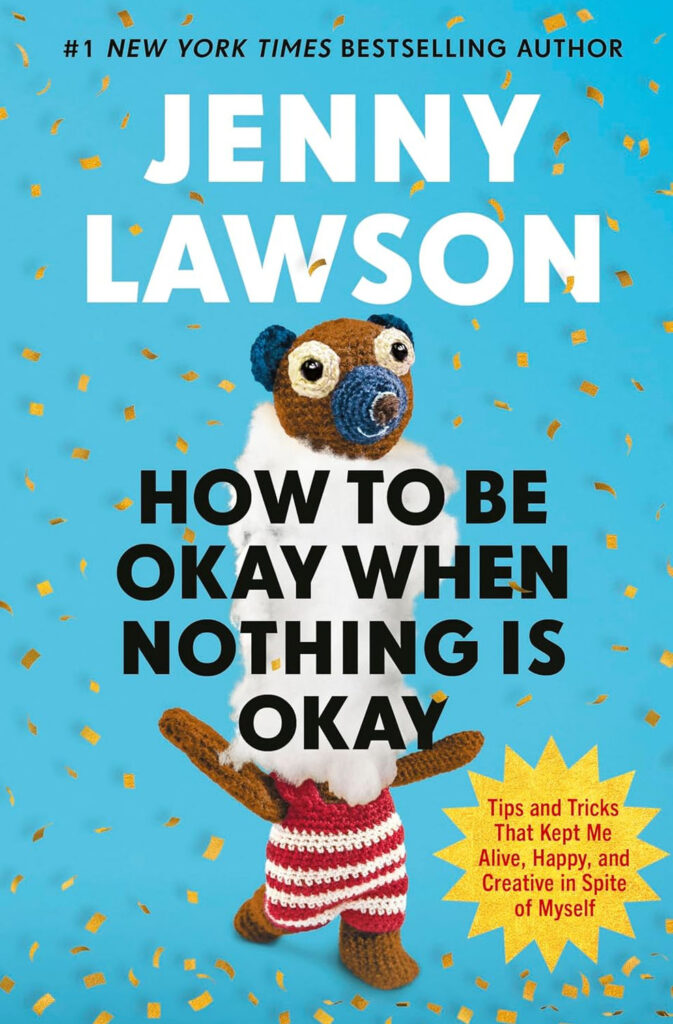
How to Be Okay When Nothing is Okay
By Jenny Lawson
This is a sneak peek of this week’s Deep Dives article. Published today!
What if being “okay” has absolutely nothing to do with fixing your life? Jenny Lawson’s How to Be Okay When Nothing Is Okay turns the usual self-help formula on its head, offering a funny, brutally relatable, and surprisingly profound look at how to keep going when your brain, your circumstances, or both refuse to cooperate. Our latest Deep Dive unpacks the book’s most powerful ideas on resilience, creativity, anxiety, self-compassion, and the liberating realization that survival does not have to look impressive to count. Discover why sometimes the goal is not to conquer the chaos, but to learn how to live meaningfully inside it.
Quick Reads
quick read — Emotional intelligence
The Difference Between Confidence and the Need to Be Right
There is a version of confidence that looks impressive from across the room. It speaks quickly, answers immediately, and rarely appears uncertain. It has an opinion on everything and an instinctive resistance to changing course. In many organizations, that kind of certainty is rewarded. It reads as decisiveness. It sounds like leadership. It can even feel reassuring in a culture that is nervous, busy, and desperate for someone to take control.
But certainty is not the same thing as confidence. Often they are opposites.
Real confidence does not require a person to win every argument, dominate every meeting, or defend every original assumption. It is not threatened by new information. It can say, “I had that wrong,” without experiencing it as a personal collapse. The need to be right, by contrast, is usually not about truth at all. It is about identity. It is about protecting the image of oneself as competent, intelligent, or superior.
The Fragility Behind Certainty
People who need to be right are often mistaken for confident people because both can appear forceful. But confidence has room in it. It has flexibility. It recognizes that being wrong about a fact, a forecast, or a strategy does not make someone fundamentally inadequate.
The need to be right has no such room. It treats disagreement as disrespect, questions as challenges to authority, and correction as humiliation. People who are deeply attached to being right stop evaluating information based on whether it is useful or true. They evaluate it based on whether it threatens the story they have built about themselves.
This is why some of the most intelligent people in the room can become the least teachable. Intelligence is not immunity from ego. A smart person who has made being smart central to their identity may find it especially difficult to admit uncertainty. Every correction feels expensive because it appears to weaken a personal brand built over years.
The irony is that confidence is usually strengthened by uncertainty rather than weakened by it. People become more capable when they can look clearly at what they do not know. They ask better questions. They seek stronger counsel. They update their views before reality forces the issue.
Why Modern Culture Rewards the Wrong Thing
We live in a culture built to reward certainty. Social media favors declarations over nuance. News cycles reward the fastest opinion, not necessarily the most informed one. Corporate environments often promote people who can project confidence upward, even when that confidence rests on incomplete information. The person who says, “I need more data,” can look less decisive than the person who says, “Here is what we are doing,” even when the second is simply guessing with better posture.
This creates an odd cultural incentive. We admire people who are hard to move, even when the evidence says they should move. We call them principled when they may simply be rigid. We call them strong when they may simply be afraid of being exposed as uncertain.
A healthy organization needs people who can hold conviction and curiosity at the same time. It needs leaders who can make a decision without pretending the decision is perfect, and teams who can challenge assumptions without being labeled disloyal. The strongest leaders are rarely the ones who are always right. They are the ones who are hardest to fool, including by themselves.
The Cost of Protecting the Ego
The need to be right quietly destroys trust. People learn fast when they are working for someone who cannot be challenged. They stop bringing bad news. They edit their opinions before sharing them. They begin managing the leader’s emotions rather than solving the actual problem. Over time, the room fills with agreement and very little truth.
That is how organizations get blindsided. Not because nobody saw the risk, but because nobody felt safe enough to name it.
The same thing happens in personal relationships. A person who needs to win every disagreement may believe they are defending their values. In reality, they are teaching the people around them that emotional honesty comes with a cost. Conversations become less about understanding and more about positioning. There is a profound difference between saying, “I see it differently,” and saying, “You are wrong.” The first invites a conversation. The second ends one.
Confidence Can Afford to Listen
The confident person does not need to rush. They can tolerate silence. They can hear a critique without immediately assembling a defense. They can sit with a difficult question long enough to understand what it is really asking.
This is not passivity. It is discipline. It takes discipline to resist responding before you have understood, to separate an attack on your idea from an attack on your identity, and to admit that someone with less authority or experience may still see something you do not.
The need to be right is often fueled by fear. Fear of looking foolish. Fear of losing status. Fear that one mistake will expose a deeper inadequacy. Confidence is not the absence of those fears. It is the ability to act without letting them run the room. That is why confident people can change their minds publicly. Credibility does not come from never being wrong. It comes from being honest about reality quickly enough to adjust.
The Real Test of Strength
The real test of confidence is not how strongly you defend what you believe. It is how honestly you examine why you believe it.
Are you protecting a principle, or protecting your pride? Are you holding your position because the evidence supports it, or because backing down would feel embarrassing? Are you listening to understand, or waiting for your turn to win?
Those questions are uncomfortable because they cut through the performance. They ask us to consider that some of our strongest opinions may be less about wisdom and more about self-protection.
The most secure people in the room are not always the loudest. They are often the ones who can afford to be curious. They can say, “Tell me what I am missing,” because they understand that being corrected is not the same as being diminished. Confidence seeks truth, even when truth is inconvenient. The need to be right seeks victory, even when victory leaves everyone poorer.
quick read — Personal development
The Hidden Insecurity Behind the Need to Control Everything
Control has a flattering reputation. It is often dressed up as discipline, high standards, or attention to detail. The person who controls everything can appear organized, driven, and impossibly committed. They have an answer for every question, an opinion on every decision, and a hand in every process. From the outside, it may look like competence.
Sometimes it is.
But there is another version of control that has very little to do with excellence and a great deal to do with fear. It is the compulsion to oversee every detail because uncertainty feels intolerable. It is the inability to delegate because other people’s judgment feels unsafe. It is the need to dictate outcomes because allowing reality to unfold without supervision feels like a threat. That kind of control is rarely about power alone. More often, it is an attempt to create certainty in a world that cannot be fully managed, and to protect an identity that feels more fragile than it appears.
The Illusion of Safety
Control can feel like safety because it creates the impression that risk has been reduced. If you review every email, approve every expense, and insert yourself into every decision, it is easy to believe that fewer things will go wrong. In the short term, that belief can even be reinforced. Small errors decline. Deadlines are met. People move faster because they know exactly whose preferences matter most.
But control is not the same as stability. In many cases it produces the opposite.
The more one person controls, the less capable everyone else becomes. Teams stop thinking independently because independent thinking is ignored or eventually overwritten. Employees learn that initiative carries risk while obedience carries safety. They begin asking permission for things they should be trusted to handle. The organization becomes dependent on one person’s attention, judgment, mood, and availability. That is not a strong system. It is a fragile system with a confident looking bottleneck at its center.
The uncomfortable truth is that people who need to control everything are often compensating for an internal lack of trust. They may not trust their team, but beneath that is usually something more personal. They may not trust themselves to handle disappointment, mistakes, conflict, or outcomes they cannot predict.
When Standards Become a Shield
There is a meaningful difference between having high standards and using standards as a weapon against uncertainty. High standards are clear, consistent, and teachable. They help people understand what good looks like and create a shared language for excellence.
Control masquerading as standards works differently. It is vague when convenient and rigid when challenged. It changes based on the mood of the person in charge. It treats small deviations as evidence of incompetence. It allows little room for style, judgment, or the possibility that someone else may have an approach that is different but equally effective.
This is where leaders often deceive themselves. They say they are protecting the quality of the work, but what they are really protecting is their emotional comfort. They do not want to be surprised. They do not want to feel exposed by a mistake they did not personally prevent. They do not want to confront the possibility that someone else may make a decision they would not have made and still succeed.
That last point is especially difficult for ambitious people. If you have built a career by being sharp and unusually capable, delegation can feel like a gamble. You know what you can do. You are less certain about what others can do. Yet the inability to let go becomes its own limitation. You may remain impressive, but you will never become scalable.
The Psychology of Over Control
The desire for control tends to increase when people feel anxious, vulnerable, or powerless. When life becomes unpredictable, people look for something they can grip tightly. This can be a schedule, a process, a relationship, a business, or a narrative about how things are supposed to go.
The problem is that control offers relief without resolution. It calms anxiety temporarily, but it rarely addresses the insecurity underneath it. In fact, it can make the insecurity worse. The more a person insists on controlling everything, the more evidence they create that they cannot function without control. Soon they are not leading because they want to. They are managing every detail because they believe they have no choice.
This becomes particularly destructive in relationships. A controlling person may claim they are simply being careful or realistic. But there is a difference between wanting clarity and demanding dominance. Healthy relationships require trust, negotiation, and the willingness to let another person retain their own agency. Control turns love into surveillance and concern into pressure. Nobody feels deeply respected by someone who must supervise their every move.
The Cost to Teams and Families
The hidden cost of control is not merely operational. It is emotional.
People around controlling leaders become hesitant versions of themselves. They second-guess their instincts. They stop taking initiative. They become skilled at reading the room rather than solving the problem. Their energy shifts from contribution to self-protection.
This is why highly controlling environments frequently look productive until they suddenly are not. People may comply for a while, particularly when the leader is charismatic or talented. But compliance is not commitment. Eventually the most capable people leave, disengage, or learn to keep their best thinking to themselves.
The same pattern plays out at home. A parent who controls every decision may believe they are preparing a child for the world, but may instead be preparing them to fear it. Control can create order, but it rarely creates trust. Trust requires the ability to let people make decisions, live with the consequences, and grow without being rescued from every discomfort. You can be responsible for people without owning their choices.
Confidence Lets Go
True confidence has a surprising feature. It can let go.
A confident leader does not need to know every detail because they have built capable people and clear systems. They do not need every decision to carry their fingerprints because they are more invested in the outcome than in the credit. They do not need to control every conversation because they believe good ideas can emerge from places they did not expect.
Letting go is not negligence. It is an act of faith, backed by standards, accountability, and discernment. It means knowing when to stay close and when to step back. It means allowing other people to carry real responsibility, not ceremonial responsibility that disappears the moment they make a choice you would not have made.
The hardest part is that letting go forces a person to confront what control was protecting them from. Perhaps it was fear of failure. Perhaps it was fear of being unnecessary. But leaders are not valuable because they are involved in everything. They are valuable because they create environments where good things can happen without them standing in the middle of every room.
The better question is not, “How can I make sure nothing goes wrong?” Nothing goes wrong only in imaginary systems. The better question is, “How can I build people, processes, and relationships strong enough to handle what goes wrong?” The strongest people are not those who can command every room. They are those who can create enough trust that the room becomes capable without them.
quick read — LEADERSHIP
When Conviction Becomes Arrogance, Teams Stop Telling the Truth
Every leader wants conviction. We want people who can make decisions, hold a point of view, and avoid folding at the first sign of resistance. In a world full of hesitation and endless second guessing, conviction can feel like oxygen. It moves conversations forward. It gives teams direction. It creates the sense that somebody is willing to own the outcome.
But conviction has a shadow side.
When certainty hardens into arrogance, a leader may still appear decisive and capable from the outside. Meetings move quickly. Decisions are made without delay. Yet underneath the apparent efficiency, something more dangerous begins happening. People stop telling the truth. Not because they do not see the problems, and not because they lack ideas, but because they have learned that truth is unwelcome when it conflicts with the leader’s certainty.
That is where many organizations begin to lose their way. Not at the point where they lack talent or resources, but at the point where people become more concerned with managing the leader’s ego than managing the actual business.
Conviction Is Not the Problem
Conviction, in its healthiest form, is a willingness to stand behind a decision after listening carefully to the facts. Every meaningful decision carries uncertainty. Leaders cannot wait for perfect clarity before acting, because perfect clarity rarely arrives.
The issue begins when conviction becomes fused with identity. A leader no longer simply holds an opinion. They become the opinion. To challenge the strategy feels like challenging the person. At that point the discussion is no longer about what is true. It becomes about who is right.
Strong leaders can say, “This is my current view, tell me what I am missing.” Arrogant leaders say, “This is the answer, now help me prove it.” The first approach creates a culture of contribution. The second creates a culture of compliance. Compliance can look like alignment for a while. People nod, repeat the approved language, and execute the plan. But beneath the surface they may be withholding the very information that could prevent a bad decision from becoming a costly one.
The Slow Death of Candor
Teams do not usually stop being honest overnight. It starts when someone raises a concern and is dismissed too quickly. Perhaps they are told they are being negative. Perhaps they are reminded that the leader has more experience. The response may not be openly hostile, but it is sharp enough that everyone in the room notices.
Then it happens again. Someone brings data that challenges a preferred narrative. Someone identifies a risk before it becomes visible on a dashboard. Instead of being thanked, they are treated as difficult, disloyal, or incapable of seeing the bigger picture.
The team learns from this. People always learn from the emotional consequences of speaking up. Soon, meetings become cleaner but less useful. Problems are softened before they reach the top. Bad news travels slowly. The organization develops what might be called strategic politeness, a culture in which everyone is careful, agreeable, and quietly less honest than they need to be. That is not harmony. It is fear in professional clothing.
Amy Edmondson’s work on psychological safety has made clear that high performing teams are not teams without conflict. They are teams where people feel safe raising concerns, admitting mistakes, and asking difficult questions. The healthiest organizations are not built on universal agreement. They are built on the confidence that disagreement will not become punishment.
The Leader Becomes the Bottleneck
Arrogance creates a strange paradox. The leader who wants total confidence from the team ends up receiving less and less useful information from that team. People continue to agree publicly, but their private conversations become more honest than the official ones.
That is where the real damage occurs. When employees raise concerns in hallways, group chats, and side meetings instead of in the room where decisions are being made, leadership loses access to reality. The leader may believe the organization is aligned because nobody is openly objecting. In truth, the team is carrying concerns they no longer believe are safe to articulate.
The organization may still grow for a while, particularly if the market is strong. But the system becomes increasingly fragile. It depends too heavily on one person’s interpretation of reality, and no leader sees everything. The moment a leader believes they are the only adult in the room is usually the moment everyone else begins acting smaller.
Why Arrogance Feels So Attractive
Arrogance is often mistaken for strength because it has the appearance of certainty. It speaks clearly. It moves fast. It refuses to apologize for having standards. In chaotic environments it can even feel reassuring. People like the sensation that someone has a plan.
But certainty without humility is not strength. It is intellectual rigidity. The arrogant leader often believes they are protecting the organization from indecision and endless debate. Sometimes they are. Yet they may also be protecting themselves from a more difficult experience, the experience of being corrected.
As companies grow, the complexity of the problems grows with them. Information becomes more distributed. The leader’s job shifts from having all the answers to building an environment where the best answers can emerge. That requires admitting that insight can come from people with less title, less tenure, or less visibility. That is not a threat to leadership. It is leadership.
The Difference Between Respect and Fear
A team can be afraid of a leader and still produce results. Fear can create urgency and a temporary spike in execution. But fear does not create ownership, creativity, or loyalty. It creates survival behavior. People who are afraid become highly skilled at avoiding blame. They conceal small mistakes until those mistakes become larger. They spend energy trying to predict what the leader wants instead of focusing on what the business needs.
Respect works differently. People respect leaders who are demanding but fair, who can hold high standards without humiliating others, and who can say, “You may be right, let us look at that.” Respect allows people to bring their full intelligence to the work. Fear forces them to hide it.
Building a Culture Where the Truth Can Travel
Creating a truthful culture requires more than telling people they are welcome to speak up. Teams watch behavior, not slogans. They notice who gets promoted, who gets shut down, and whose concerns get investigated.
Leaders who want candor must reward it visibly. They must ask for dissent before decisions are finalized. They must respond calmly when someone brings bad news. They must distinguish between disagreement and disloyalty.
The question is not whether people will talk about the problems. They always will. The question is whether they will talk about them in the meeting where something can be done, or in private after the decision has already been made. A leader’s response to inconvenient truth determines how much truth they receive in the future.
There are few warning signs more dangerous than a room full of people who always agree with the person at the top. It may look like unity. It may also be evidence that people have learned the cost of honesty. The best leaders are not trying to become unquestioned. They are trying to become difficult to mislead. Conviction becomes arrogance when it no longer permits challenge, revision, or curiosity. Once that happens, teams stop telling the truth, and when leaders lose access to the truth, they eventually lose access to reality.
Quotes of the Week
QUOTE — EMOTIONAL INTELLIGENCE

QUOTE — PERSONAL DEVELOPMENT
QUOTE — LEADERSHIP
Reframe
Your Life Changes When You Stop Waiting to Be Rescued
There is a quiet fantasy many adults carry long after they have stopped admitting it to themselves. It is the belief that, eventually, someone will arrive and make the hard parts easier. A boss will finally recognize the effort. A partner will become what they promised to be. A parent will offer the apology that explains everything. An opportunity will appear at exactly the right time. Money will show up. Confidence will show up. Motivation will show up.
Then life can begin.
The fantasy is understandable. Most of us are raised to believe that important people hold the keys to our future. Teachers grade us. Parents protect us. Employers decide whether we advance. Early in life, dependence is not weakness. It is reality.
The problem begins when that dependence quietly becomes a permanent posture. We become adults who are still waiting for permission to act, validation to believe, or a rescue that will spare us the discomfort of taking responsibility for our own lives. At some point, the most important shift is not external. It is the realization that nobody is coming in the way you have imagined. That may sound harsh. It is also one of the most liberating truths a person can accept.
The Seduction of Waiting
Waiting can look responsible. We tell ourselves we are gathering information, waiting for the right moment, or being patient. Sometimes that is true. Patience is a virtue and timing matters.
But waiting can also become an elegant disguise for fear. It is easier to delay a hard conversation than to risk hearing an answer you do not want. It is easier to stay in the job that drains you than to confront the uncertainty of building something new. It is easier to blame a difficult market, a demanding boss, or an unfair past than to ask what remains within your control.
The longer a person waits to be rescued, the more they begin to confuse their circumstances with their identity. They start speaking as though their life is happening to them rather than through them. They become fluent in explanation but less practiced in action.
This does not mean circumstances do not matter. Some people begin with support and resources that others never receive. Some carry losses, illness, financial pressure, or responsibilities that make every decision heavier. Pretending everyone starts from the same place is not wisdom. But even within unequal circumstances, one question cannot be escaped: what is mine to do now? That question is where agency begins.
Rescue Is Often a Story About Avoiding Risk
The desire to be rescued is rarely just about wanting help. Healthy people accept help. Wise people ask for it. Nobody builds a meaningful life entirely alone.
The issue is different. It is the belief that another person must solve the problem before you can move forward. That belief gives away too much power. It places your future in the hands of people who may not understand your needs, share your urgency, or possess the capacity to save you.
This is why resentment often grows in people who wait to be rescued. They feel abandoned, but they may also be waiting for others to fulfill an obligation those people never agreed to carry. They expect recognition without making themselves visible. They expect opportunity without accepting the risk that opportunity requires.
The world is not always fair, but it is often responsive. It responds to movement, to clarity, and to people who begin building before they feel fully ready. Waiting for rescue keeps a person emotionally tied to the version of themselves that was powerless. Action begins the slow work of becoming someone else.
Responsibility Is Not Self-Belief
There is a common misunderstanding around personal responsibility. People hear it as self-blame. They assume taking ownership means pretending every disappointment was their fault and every obstacle could have been avoided. That is not responsibility. That is punishment.
Responsibility is not saying, “Everything that happened to me is my fault.” It is saying, “Even if this was not my fault, I am still responsible for what I do next.”
That distinction changes everything. You may not have chosen the family you were born into, the setback that changed your plans, or the company that failed to see your value. You may have been treated unfairly. But there is a point at which continued focus on the injustice stops protecting you and starts imprisoning you. The past can explain your patterns. It cannot be allowed to permanently excuse them.
Maturity asks us to acknowledge what hurt us without making a permanent home inside the hurt. It asks us to recognize the forces that shaped us while refusing to let them become the final authority over who we become.
The Power of Small Acts of Ownership
People often imagine that reclaiming their life requires a dramatic decision. They picture quitting the job, ending the relationship, or launching the company. Sometimes it does.
More often, the transformation starts quietly. It begins with returning a phone call you have avoided. It begins with opening the bank account, asking for the meeting, applying for the role, writing the first page, or saying no without offering a five-paragraph explanation.
Small acts of ownership compound. Each one teaches you something important: you can tolerate discomfort. You can survive uncertainty. You can make a decision without unanimous approval. You can disappoint someone and still remain a decent person.
This is how confidence is built. Not through affirmations, but through evidence. Confidence is not a mood that arrives before action. It is a conclusion your mind reaches after watching you act in moments when it would have been easier to avoid responsibility.
Nobody Can Want It More Than You
There are people who will help you. Some will open doors. Some will offer advice, encouragement, capital, or forgiveness. Those people matter. A life built without gratitude quickly becomes hollow.
But even the people who love you most cannot want your life more than you do. They cannot have the conversation you keep postponing. They cannot make you leave the thing that is slowly diminishing you. They cannot build the discipline you refuse to practice. They cannot give you self-respect while you continue making decisions that betray what you know to be true.
The turning point comes when you stop asking, “Who is going to fix this?” and begin asking, “What would I do if I accepted that I am responsible for the next move?” That question is not glamorous. It does not offer instant comfort or guarantee success. What it offers is something more valuable: freedom.
Your life changes when you stop waiting to be rescued because you stop living as a passenger in your own story. You begin to see that help can be welcomed without being worshipped, that support can be received without surrendering agency, and that hardship can be acknowledged without building your identity around helplessness. Nobody is coming to hand you the exact life you want. But you are already here. That is where the work begins.