
Quick Reads
quick read — Emotional intelligence

Put the Phone Down: How Our Devices Are Destroying Human Connection
We live in an age of constant connection—yet somehow, we’ve never been more disconnected from one another.
Simon Sinek, in a now-famous talk, shares a deceptively simple observation: when we place our phones on the table during a conversation—or even just hold them in our hands—we are signaling that the person in front of us is not our top priority. It’s not that we intend to be rude. It’s not that we don’t care. But the mere presence of the phone sends a message loud and clear: “You’re not the most important thing right now.”
And that message has a cost.
The Silent Killer of Connection
We often think of disconnection in grand terms—drifting friendships, failed marriages, disengaged employees—but disconnection doesn’t begin with big things. It begins in micro-moments. A glance at a screen during lunch. A quick check of a notification while someone shares something vulnerable. A phone on the table during a team huddle.
These small interruptions accumulate into something far more damaging: the erosion of trust, intimacy, and psychological safety.
Psychologist Sherry Turkle, in her book Reclaiming Conversation, reveals that even a phone placed face down on a table reduces the depth and quality of a conversation. Why? Because the brain, subconsciously, remains alert for distraction. We wonder what we might be missing. We’re not fully present—and others feel that. They may not say it, but they sense it.
We have become so tethered to our devices that being truly present feels foreign. And presence is the foundation of connection. When we trade presence for “just a second” on Instagram, Slack, or email, we don’t just lose time—we lose people.
Phone Use Signals Distrust (Even If You Don’t Mean It To)
Sinek makes a powerful point: if you’re sitting with a friend, or a colleague, and your phone is on the table—even if you never touch it—it’s like saying, “You’re not quite enough.” You’re indicating, whether intentionally or not, that you’re waiting for something better to show up. A more important message. A more interesting headline. A more exciting notification.
And that kind of behavior destroys the social glue that binds people together.
In leadership, this is critical. A manager who looks down at their phone during a team member’s update doesn’t just seem distracted—they come across as disrespectful. Over time, this breaks down employee engagement and motivation. People stop sharing ideas, stop expressing concerns, and stop showing up with their full selves.
As Brene Brown puts it: “Connection is why we’re here. It’s what gives purpose and meaning to our lives.” But connection doesn’t stand a chance if attention is always divided.
The “Addiction” We Don’t Talk About Honestly
Most of us don’t want to admit that we’re addicted to our phones. But the science is clear: dopamine—the brain’s reward chemical—is released every time we check a notification. It’s the same loop that drives gambling and other compulsive behaviors. This means we’re not just checking in “just to be productive”—we’re often feeding an emotional craving.
Even worse, we tend to rationalize our behavior. “I’m just staying on top of things,” or “I didn’t want to miss anything urgent.” But in most cases, we’re missing something more urgent than our screens: the human being sitting in front of us.
Think about this: when was the last time you had a meal, a meeting, or a conversation where no one touched their phone? If you can’t remember, you’re not alone. We’ve normalized digital interruption to the point where being fully present feels awkward—even extreme.
The Subtle Damage in Relationships
We underestimate how fragile trust and emotional safety really are.
When a partner or friend is sharing something important, and we glance at our phone, we may think we’re multitasking. But to them, it often feels like rejection. Over time, these moments chip away at closeness. They communicate, “What you’re saying isn’t interesting enough,” or “You’re not a priority right now.”
And over time, people stop sharing. They retreat. Emotional intimacy erodes not because of one huge betrayal—but because of hundreds of tiny fractures caused by a glowing screen.
Presence Is a Superpower
The good news is that the solution is shockingly simple: Put the phone away.
Don’t just silence it. Don’t just flip it over. Remove it from sight completely. Leave it in your bag. Put it in a drawer. Show the people around you that you are truly, fully there.
This simple act has profound power. It communicates respect. It builds trust. It creates space for deeper dialogue, real empathy, and mutual understanding.
Presence, in today’s distracted world, has become a superpower. The leaders who listen without interruption, the friends who ask follow-up questions, the partners who put their phones away—these people stand out. They foster loyalty, inspire creativity, and deepen bonds.
The Ripple Effect of One Decision
Imagine if you made a rule that all meetings, dinners, and conversations would be phone-free. Not because technology is evil—but because people matter more.
Imagine what would happen to your team culture if every leader committed to giving their full attention for even just 10 minutes at a time. Imagine what would happen to your relationships if you made eye contact instead of screen contact. Imagine what would happen to your life if you rediscovered the art of being fully with someone.
It starts with one decision: to prioritize presence.
Reclaiming What We’ve Lost
We didn’t mean for this to happen. Nobody set out to replace genuine connection with Instagram reels and Slack pings. But now that we’re here, we have a choice.
We can keep drifting. Keep numbing. Keep dividing our attention until our relationships become hollow.
Or we can reclaim what makes us human.
Simon Sinek reminds us: trust is built in the small moments. The way we make people feel seen. The way we listen. The way we show up. And nothing—not brilliance, not charisma, not efficiency—can replace the power of being truly present.
So the next time you sit down with someone—at home, at work, or anywhere in between—ask yourself: What message am I sending?
Then put the phone away.
Because the people in front of you deserve nothing less than your full attention.
quick read — Personal development
Stop Reading. Start Doing: Why One Book Applied Is Better Than a Thousand Read
We live in the golden age of self-help.
Never before in history has personal development been so accessible. Podcasts, YouTube videos, audiobooks, summaries, newsletters, masterminds, and a thousand new books a month all promise the same thing: transformation.
Yet here’s the paradox—despite all this access to wisdom, most people’s lives stay exactly the same.
Why?
Because they confuse consumption with change.
They devour book after book on productivity, leadership, habit change, mindfulness, relationships, or wealth-building—but when you zoom out, their actions haven’t evolved. Their habits haven’t shifted. Their circumstances haven’t improved. They are more informed—but not more effective.
As the saying goes: Reading 1,000 books about cooking doesn’t make you a chef. You have to step into the kitchen.
The Illusion of Progress
Reading is easy. Acting is hard.
Highlighting quotes, posting screenshots on Instagram, or finishing 40 books a year looks impressive—but it’s often a form of procrastination. It feels like you’re growing. It feels like you’re moving forward. But unless that knowledge translates into new behaviors, you’re simply jogging in place with a stack of books in your backpack.
We’ve become addicted to the dopamine rush of inspiration without the discipline of implementation.
In his book The War of Art, Steven Pressfield calls this resistance—a cunning internal force that convinces us to prepare endlessly instead of doing the uncomfortable work that actually changes us.
We say things like:
- “Once I finish this book on leadership, then I’ll finally speak up in meetings.”
- “Let me read a few more books on starting a business before I actually launch.”
- “I’m trying to figure out my morning routine—just started my fifth book on habits.”
This is the self-development trap. Reading becomes a substitute for action. Preparation becomes a stall tactic. And growth becomes theoretical instead of embodied.
Knowledge Without Action Is Just Potential
Here’s the truth no one wants to admit: The world doesn’t reward knowledge. It rewards execution.
You don’t get fit by reading 100 books on fitness. You get fit by showing up at the gym—consistently.
You don’t become a great communicator by reading a dozen books on emotional intelligence. You become one by having awkward, courageous, honest conversations.
You don’t learn to lead by binge-reading Simon Sinek. You learn by taking responsibility, making decisions, getting it wrong, and growing through it.
The most successful people aren’t the ones who read the most—they’re the ones who read, apply, and reflect.
Even just one book, if studied deeply and acted upon relentlessly, can change the course of your life.
The “One Book Per Year” Rule
Instead of reading 52 books a year, what if you read just one—but implemented it fully?
What if you turned the ideas into projects? What if you journaled your progress? What if you taught others the core concepts? What if you tracked your results?
Let’s say you chose Atomic Habits by James Clear. Instead of just reading it cover to cover in two sittings and feeling accomplished, you spend the next 12 months putting it into practice. You build one habit per month. You redesign your environment. You master habit stacking. You shift your identity to become the kind of person who shows up every day.
That year of application would transform your life more than reading 50 other books on behavior change.
Mastery doesn’t come from knowing everything—it comes from doing something repeatedly and deliberately.
Why We Resist Action
There’s a reason we avoid the kitchen and stay in the library.
Action exposes us. When we take action, we risk failing. We risk being seen. We risk confronting our limitations.
But reading? Reading is safe. Reading lets us pretend we’re changing while remaining exactly the same.
It’s more comfortable to intellectualize purpose than to actually pursue it. It’s safer to read about courage than to speak the truth when it’s uncomfortable. It’s easier to study success than to endure the grind and setbacks it actually requires.
But that safety is costly. Because while you’re reading about life, someone else is living it.
The Cult of the Book Hoarder
We don’t just read—we hoard.
Many self-development junkies fall into the trap of endless accumulation. Shelves packed with unread books. Courses bookmarked. Audiobooks half-finished. A graveyard of PDFs and Notion notes.
This is often disguised as ambition—but it’s actually fear in disguise. The fear of starting. The fear of being seen trying. The fear of what happens if you don’t live up to the ideal version of yourself painted in all those pages.
So we stay in the information loop. We “research.” We “gather resources.” We “get inspired.” And we wait. And wait. And wait.
But life isn’t waiting.
What to Do Instead
Here’s a simple framework to break the cycle:
No. 1 — Read Less. Reflect More.
Instead of tearing through a new book every week, read one chapter. Then pause. Ask:
- What idea stood out to me?
- How does this apply to my life right now?
- What small action can I take this week?
Self-help should challenge you, not just comfort you.
No. 2 — Act Immediately
If something resonates, implement it that day. Don’t wait. Don’t overthink. Don’t plan out a 90-day strategy. Just start.
The longer you wait to apply a concept, the more likely it will become mental clutter instead of embodied wisdom.
No. 3 — Teach It to Someone Else
Teaching is a powerful forcing function. It makes you clarify, synthesize, and test the ideas. If you can’t explain it simply, you don’t understand it.
Talk about what you’ve learned with a colleague, partner, or friend. Better yet, lead a small group or write about it.
No. 4 — Track the Transformation
Create a simple journal or system to log the impact. If you’re applying a book on productivity, track how your time use changes. If you’re applying a book on communication, journal how your conversations evolve.
This turns reading from passive to performance-based.
No. 5 — Revisit Instead of Replace
You don’t need a new book. You need to go deeper into the right one. Re-read. Review. Reinforce.
When a book becomes a companion instead of a trophy, it becomes a catalyst.
Final Thought: Depth Over Distance
It’s tempting to chase volume. To finish more books, watch more videos, attend more webinars.
But personal growth is not a race. It’s not about how much you’ve consumed—it’s about how deeply you’ve changed.
Real transformation is slow, uncomfortable, and embodied. It happens in the kitchen, not in the cookbook aisle.
So the next time you’re tempted to buy another self-help book, pause.
Ask yourself: Have I lived the last one yet?
If not—don’t read more. Do more.
Because one book lived is worth more than a thousand read.
quick read — LEADERSHIP
Forged by Fire: Why Failure is the Greatest Developer of Leadership
Ask any respected leader to share their story, and they’ll likely tell you about a failure.
Not a neatly packaged “lesson learned” moment—but a gut-wrenching, pride-breaking, reputation-shaking experience. A misstep that forced them to confront who they really were. A season where they questioned their competence, their calling, and sometimes their sanity.
It turns out, failure is not the opposite of leadership growth. It is the engine of it.
While we often idolize leaders who are confident, visionary, and successful, we forget how those traits were forged: not in comfort, but in crisis. Not in victory, but in defeat.
In truth, failure is the greatest developer of leadership—because it forces us to confront reality, shed ego, grow resilience, and build character in ways success never could.
Success Is a Lousy Teacher
Bill Gates once said, “Success is a lousy teacher. It seduces smart people into thinking they can’t lose.” And that’s the danger—early success can lead to arrogance, complacency, or even fragility. It doesn’t build the muscle of reflection. It rarely prompts reinvention. It doesn’t demand humility.
Failure, on the other hand, teaches fast and teaches deep.
When a launch flops, a team implodes, or a decision backfires—leaders are stripped of illusion. They are forced to examine assumptions, rethink strategies, and most importantly, face themselves.
In that moment, leadership either matures—or it dies.
Failure Builds the Most Essential Leadership Trait: Humility
Humility isn’t thinking less of yourself. It’s seeing yourself accurately. And failure has a way of putting up a mirror that’s hard to ignore.
You can’t blame the market forever. You can’t keep pointing fingers at your team. Sooner or later, failure forces a leader to ask, “What part of this did I contribute to? What did I miss? What do I need to learn?”
This kind of humility is not weakness—it’s strength under control. It makes leaders teachable, self-aware, and open to feedback. It prevents them from becoming tyrants or martyrs. It keeps them human.
Great leadership doesn’t come from a pedestal. It comes from someone who has fallen, stood back up, and is now more grounded than ever.
Failure Builds Empathy and Trust
Nobody wants to follow a flawless leader. They want to follow a real one.
When leaders share their failures—not in a performative way, but with honesty and ownership—they become relatable. Human. Trustworthy. Vulnerable in a way that gives others permission to try, stumble, and grow too.
Failure helps leaders develop empathetic leadership—the kind that sees people not as cogs in a system but as fellow travelers on a messy, complex journey.
This kind of leader doesn’t demand perfection. They create a culture of learning. A culture where failure isn’t punished—it’s mined for insight.
And in that kind of culture? Innovation thrives. Courage shows up. Ownership increases. Because people know: if they fail forward, they won’t be shamed—they’ll be sharpened.
Failure Tests Character Under Pressure
True character isn’t revealed when everything’s going great. It shows up when the storm hits.
- Do you blame others—or take responsibility?
- Do you hide—or face the music?
- Do you cut corners—or stay in integrity?
- Do you lash out—or lead with calm and clarity?
These are the moments that define a leader—not just in the eyes of others, but in their own conscience.
Failure is the fire that reveals what kind of metal you’re made of. It shows where you bend, where you break, and where you’re surprisingly strong. It strips away the PR version of leadership and reveals the raw material underneath.
And that material? It can be reforged—stronger, purer, and more aligned with your values—if you stay in the process.
Failure Teaches What Success Cannot
Success can make you lazy. Failure demands curiosity.
When things go wrong, high-performing leaders don’t just wallow. They interrogate the failure:
- What assumptions did I make?
- Where did we overlook reality?
- What warning signs did I ignore?
- What systems or structures contributed to this?
Failure turns leaders into learners. It activates pattern recognition, foresight, and systems thinking.
Ironically, the best strategic thinkers are usually the ones who’ve experienced the most strategic misfires—because they learned the hard way what not to do.
Failure Creates Psychological Flexibility
In today’s fast-moving, uncertain world, adaptability is the currency of leadership. And nothing builds adaptability like failure.
When a plan doesn’t go according to script, leaders learn to pivot. When an expected outcome collapses, they’re forced to innovate. When the people they count on fall short, they figure out how to recalibrate without collapsing.
This builds psychological flexibility—the ability to hold goals firmly but methods loosely. It trains leaders to be persistent without being rigid, committed without being controlling.
In a world where agility is more valuable than predictability, leaders who have learned to bend without breaking are the ones who endure—and lead others through chaos with clarity.
Famous Leaders Who Failed First
It’s easy to forget that some of the most celebrated leaders failed spectacularly before they found their stride:
- Walt Disney was told he lacked imagination.
- Oprah Winfrey was fired from her first TV job and told she was “unfit for television.”
- Abraham Lincoln lost multiple elections before becoming President.
- Steve Jobs was fired from his own company before returning to revolutionize it.
- Howard Schultz was turned down by 217 investors before building Starbucks.
Failure was not a detour for these leaders. It was the path.
Failure Demands a New Definition of Leadership
In too many organizations, leadership is still defined by confidence, decisiveness, and performance.
But what if leadership was also defined by how well you fail?
- How well you rebound.
- How quickly you learn.
- How willing you are to own it.
- How courageously you keep going.
What if failure wasn’t something to be avoided, but embraced as a necessary tutor in the curriculum of leadership?
How to Use Failure to Grow as a Leader
If you’re in a season of failure—or you’re coaching someone who is—here are a few ways to leverage it for growth:
No. 1 — Debrief Without Shame
Don’t skip the post-mortem. But don’t let it become a self-blame spiral. Look at the facts. What went wrong? Why? What’s in your control?
No. 2 — Extract the Lesson
Ask: What did this teach me about myself, my team, my assumptions, or my blind spots? Document it. Reflect. Share it.
No. 3 — Share Your Story
Vulnerably telling others what happened (and what you learned) builds trust and inspires growth. You’ll be surprised how many people relate more to your failures than your successes. \
No. 4 — Rebuild Stronger Systems
What process, policy, or practice needs to change? Use failure as the raw material for smarter decisions going forward.
No. 5 — Get Back Up, Better
Resilience isn’t bouncing back to who you were—it’s bouncing forward to who you’re becoming.
Failure Is the Fire That Forges
Leadership isn’t polished. It’s forged. And the forge is failure.
You don’t become a great leader by avoiding mistakes. You become one by growing through them.
So the next time you fall flat, remember this: You’re not being disqualified. You’re being developed.
You’re in the gym where the real reps happen. The classroom where the real learning occurs. The crucible where shallow confidence dies and deep character is born.
Failure isn’t the end of your leadership journey.
It’s where it really begins.
Quotes of the Week
QUOTE — EMOTIONAL INTELLIGENCE
QUOTE — PERSONAL DEVELOPMENT

QUOTE — LEADERSHIP
Reframe
Why Happy Employees Aren’t Always the Most Productive
Conventional wisdom tells us that happy employees are the key to a thriving business. After all, who wouldn’t want to work in an environment where people feel good, collaborate well, and enjoy coming to work?
But here’s the uncomfortable truth: happiness doesn’t always translate into high performance.
In today’s workplace culture, “employee happiness” is often used as a proxy for success. We install ping-pong tables, offer kombucha on tap, and celebrate birthdays with elaborate Slack threads. We chase high engagement scores and aim for glowing Glassdoor reviews. But sometimes, in the pursuit of workplace harmony, we overlook a more important metric:
Are we getting the right things done—consistently, effectively, and with excellence?
Because it turns out, happy employees are not always the most productive—and understanding that distinction is critical for any leader who wants to build a high-performing, sustainable organization.
Happiness vs. Productivity: Not Always the Same Currency
Let’s define our terms.
- Happiness in the workplace often refers to emotional satisfaction—how employees feel about their work environment, their relationships, and the overall culture.
- Productivity, on the other hand, is about output—how efficiently and effectively work is being done toward organizational goals.
These two concepts can overlap, but they are not synonymous. A team can be cheerful and well-liked while still underperforming. Likewise, a highly productive team may feel intense pressure, conflict, or burnout beneath the surface.
The healthiest workplaces don’t treat happiness as the goal—they treat performance with well-being as the outcome.
When Happiness Becomes a Distraction
Sometimes, in our desire to maintain a “positive culture,” we inadvertently prioritize comfort over performance. Leaders avoid difficult conversations to keep the mood light. Teams tolerate mediocrity to maintain camaraderie. Underperformers go unaddressed because no one wants to be “the bad guy.”
This dynamic creates what author Patrick Lencioni calls “artificial harmony”—a surface-level peace that hides unresolved tension and accountability gaps.
In these environments:
- Conflict is avoided, not navigated.
- Feedback is softened or withheld.
- Excellence is diluted in the name of empathy.
Ironically, this version of “happiness” doesn’t serve anyone—not the business, not the team, and not even the individuals whose performance is slipping. Because when high standards disappear, so does growth. And growth is a deep, lasting source of satisfaction.
The Dark Side of Complacent Contentment
Another risk? Complacency.
Happy, well-supported employees can sometimes become too comfortable. Without the right mix of challenge, accountability, and stretch goals, they may settle into routines that feel good—but don’t move the needle.
When expectations aren’t clear or pressure is too low, people naturally default to the path of least resistance. This doesn’t mean they’re lazy—it means they’re human. And without intentional structure, even the most talented teams can drift into “coasting mode.”
“People do what you expect, not what you accept.” — Howard Behar, former President of Starbucks
Happy teams need high standards. Without them, happiness can quickly become a false signal of progress.
The Most Productive Employees Aren’t Always the Most Vocal
Here’s another nuance worth considering: your happiest, most enthusiastic employees may not be your top performers—and vice versa.
In many organizations, the loudest or most visible team members are seen as the most engaged. But behind the scenes, the quiet high-performers are the ones consistently delivering results.
They may not attend every social event. They may not gush during team check-ins. They may even seem skeptical or demanding at times. But they take ownership. They get things done. And they raise the bar for those around them.
If we only associate “engagement” with smiles and sociability, we risk overlooking the high-value contributors who thrive on autonomy, results, and meaningful challenge more than camaraderie.
The Science of Motivation: More Than Just Feeling Good
According to self-determination theory, humans are most motivated when three psychological needs are met:
No. 1 — Autonomy
The desire to direct one’s own work.
No. 2 — Competence
The desire to grow and master new skills.
No. 3 — Relatedness
The desire to feel connected to others.
Notice that pleasure or happiness isn’t the top driver. It’s the experience of progress, mastery, and connection that leads to sustainable motivation—not just the presence of good vibes.
That’s why some of the most engaged and productive employees may also feel tension, pressure, or even stress. They’re deeply invested. They care. They want to win—and that passion can come with emotional weight.
Happiness isn’t a prerequisite for productivity. But purpose, clarity, and momentum usually are.
So What Should Leaders Focus On Instead?
It’s not that happiness doesn’t matter—it does. But it should be the byproduct of a healthy culture and high-functioning systems—not the north star.
Here’s what emotionally intelligent leaders prioritize instead:
No. 1 — Clarity Over Comfort
Leaders who care create clarity. They set expectations, give feedback, and align people around outcomes—not just feelings.
No. 2 — Challenge Over Cheerleading
Psychological safety doesn’t mean avoiding pressure. It means creating space where challenge and growth are safe and welcomed.
No. 3 — Purpose Over Perks
Free snacks don’t drive performance. Meaningful work does. Connect team efforts to a mission that matters, and people will rise.
No. 4 — Feedback Over Flattery
Recognition is important, but so is constructive feedback. High performers want to know how to get better—not just that they’re liked.
No. 5 — Standards Over Sentiment
Create a culture where results and relationships go hand-in-hand. Not one at the expense of the other.
The Ideal Blend: Challenged, Supported, Empowered
So what does lead to both happiness and productivity?
It’s not just a great culture—it’s a culture of high challenge and high support.
- Employees are pushed to grow—but never pushed to burnout.
- They are held accountable—but also celebrated.
- They are trusted with autonomy—but coached with care.
- They experience pressure—but it’s the kind that calls them to rise, not collapse.
This environment doesn’t guarantee constant happiness—but it does produce engaged, fulfilled, and productive teams who feel proud of what they’re building.
Aim for Fulfillment, Not Just Happiness
Happy employees are great. But fulfilled employees are unstoppable.
Fulfillment goes deeper than fun or satisfaction. It’s the sense that your work matters, your growth is supported, and your contribution is making a difference.
You don’t need to manufacture happiness. You need to build systems, habits, and leadership behaviors that unlock potential—while protecting well-being.
In other words: don’t ask, “Are my people happy?”
Ask:
- “Are they growing?”
- “Are they clear on what matters most?”
- “Do they feel challenged and supported?”
- “Are we building something meaningful—together?”
When the answer is yes, productivity follows. And so does earned happiness—the kind that doesn’t just feel good, but does good, too.
Deep Dives Articles
DEEP DIVES ARTICLE — EMOTIONAL INTELLIGENCE

You Deserve to Protect Your Peace: The Emotional Intelligence of Choosing Better Relationships
This is a sneak peek of this week’s Deep Dives article — published today! Become a Deep Dives Member to get access to the full article.
Not every relationship deserves a front-row seat in your life. In this Deep Dive, we explore the emotional intelligence behind setting boundaries, recognizing toxic patterns, and choosing relationships that support—not sabotage—your growth. If you’ve ever struggled with guilt, people-pleasing, or staying too long in draining dynamics, this article is your permission slip to protect your peace.
👉 Subscribe to our Deep Dives Membership to access the full article and start building relationships that align with your worth.
DEEP DIVES ARTICLE — PERSONAL DEVELOPMENT

There Is So Much Freedom in Letting Go
This is a sneak peek of this week’s Deep Dives article — published today! Become a Deep Dives Member to get access to the full article.
What if your next breakthrough isn’t about holding on tighter—but finally releasing what’s no longer serving you? In this reflective Deep Dive, we unpack the quiet strength of surrender, the hidden cost of emotional baggage, and the peace that comes from choosing freedom over control. Letting go isn’t giving up—it’s making room for something better.
👉 Subscribe to our Deep Dives Membership to read the full article and embrace the power of release.
DEEP DIVES ARTICLE — LEADERSHIP

Leadership Is a Blank Page: Why Yesterday Doesn’t Define You
This is a sneak peek of this week’s Deep Dives article — published today! Become a Deep Dives Member to get access to the full article.
Too many leaders carry the weight of who they’ve been instead of stepping into who they could become. In this liberating Deep Dive, we explore why leadership isn’t a legacy you inherit—it’s a story you write one decision at a time. Whether you’re reinventing your career, rebuilding trust, or simply ready for a fresh start, this article will help you let go of the past and lead from a place of possibility.
👉 Join our Deep Dives Membership to read the full piece and rediscover the freedom of leading with a clean slate.
Deep Dives Book Summary
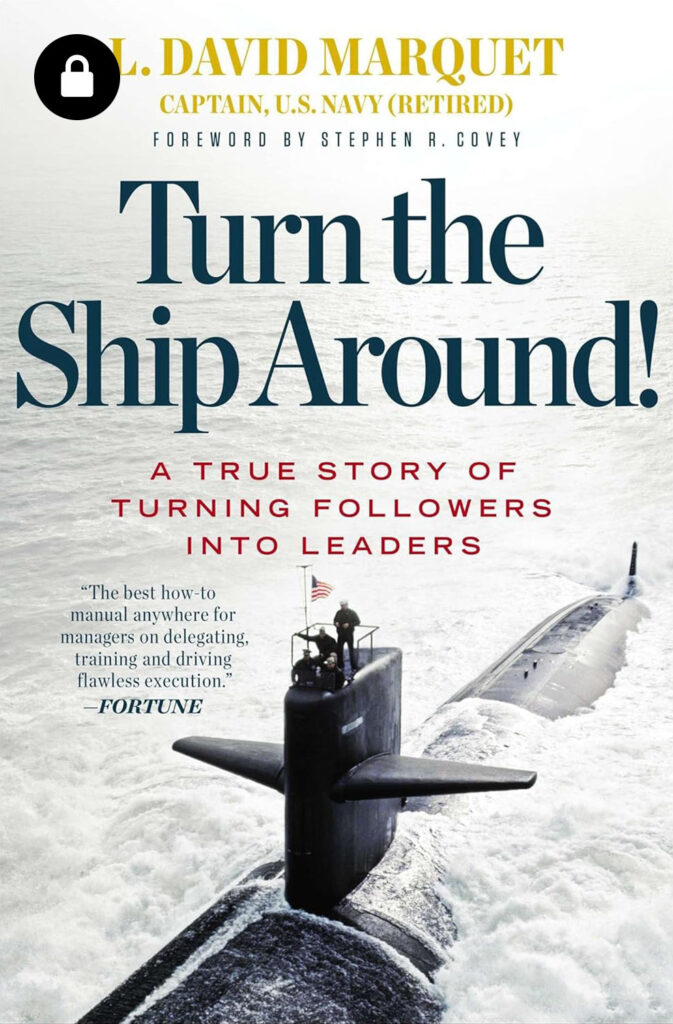
Turn the Ship Around! A True Story of Turning Followers into Leaders
By L. David Marquet
This is a sneak peek of this week’s Deep Dives Book Review — published today! Become a Deep Dives Member to get access to the full Book Summary.
What if the key to building the highest-performing team of your career wasn’t tighter control—but giving it away? In Turn the Ship Around!, former nuclear submarine captain L. David Marquet reveals how he transformed the worst-performing sub in the U.S. Navy into the best by replacing the outdated “leader-follower” model with a “leader-leader” culture. The lessons are as powerful in the boardroom as they are beneath the waves—covering trust, autonomy, competence, and clarity.
👉 Join our Deep Dives Membership and dive into our full, in-depth summary and discover how to turn your own ship around—no matter what waters you’re navigating.