
Deep Dives Articles
DEEP DIVES ARTICLE — EMOTIONAL INTELLIGENCE

Beyond Empathy: Why True Emotional Intelligence Must Be Culturally Intelligent
This is a sneak peek of this week’s Deep Dives article — published today! Become a Deep Dives Member to get access to the full article.
Emotional intelligence is essential—but in today’s global, diverse workplaces, it’s not enough. If you’re not accounting for cultural context, your empathy might misfire. In this Deep Dive, we explore how to lead with both EQ and CQ—so your emotional awareness doesn’t just feel authentic, but land effectively across cultures.
👉 Ready to elevate your emotional intelligence to a global standard? Subscribe to our Deep Dives Membership to unlock the full article.
DEEP DIVES ARTICLE — PERSONAL DEVELOPMENT

The Sacred Pause: Sabbath as the New Self-Mastery
This is a sneak peek of this week’s Deep Dives article — published today! Become a Deep Dives Member to get access to the full article.
What if rest wasn’t a break from mastery—but the beginning of it? In this Deep Dive, we challenge the hustle narrative and reclaim the Sabbath as a powerful tool for reflection, identity, and long-term resilience. It’s not about doing less—it’s about doing what matters better.
👉 Want to learn how intentional rest can fuel your leadership edge? Subscribe to our Deep Dives Membership to read the full article.
DEEP DIVES ARTICLE — LEADERSHIP

Leading Through Fog: Mastering the In-Between Moments That Define Great Leaders
This is a sneak peek of this week’s Deep Dives article — published today! Become a Deep Dives Member to get access to the full article.
Anyone can lead when the path is clear. But true leadership is forged in the in-between—the liminal spaces between what was and what’s next. In this Deep Dive, we unpack how to navigate ambiguity with presence, purpose, and power.
👉 If you’re facing uncertainty, this one’s for you. Subscribe to our Deep Dives Membership for instant access to the full read.
Deep Dives Book Summary
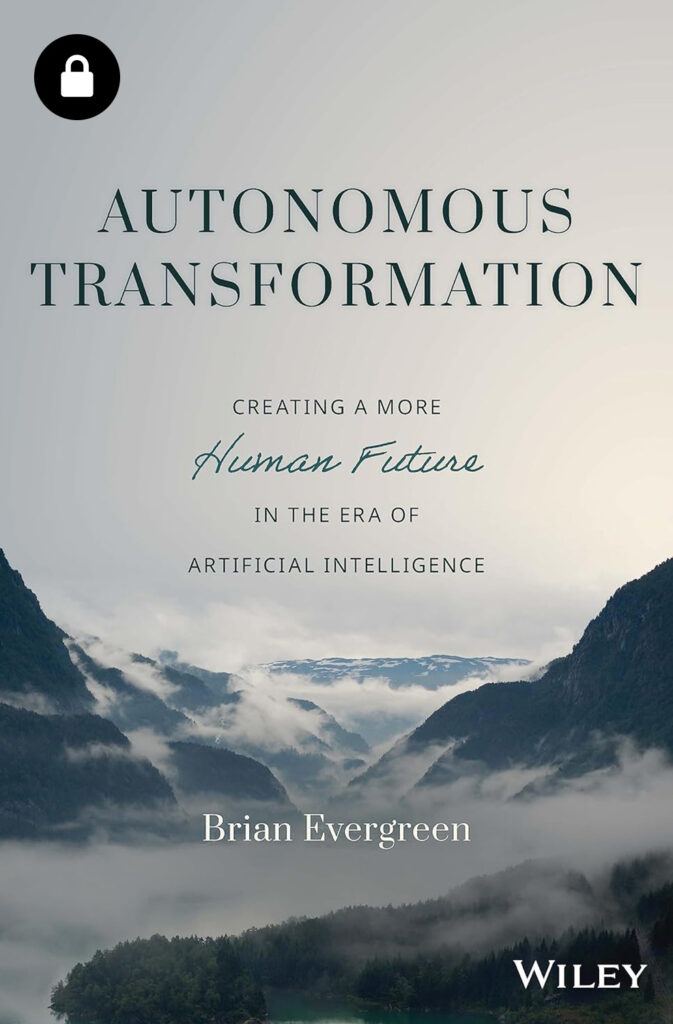
This is a sneak peek of this week’s Deep Dives Book Review — published today! Become a Deep Dives Member to get access to the full Book Summary.
What if the future of AI wasn’t about replacing humans — but about helping us become more human? In Autonomous Transformation, Brian Evergreen offers a bold, hopeful blueprint for how leaders can harness artificial intelligence to build a world where technology serves purpose, dignity, and shared prosperity. Discover his six pillars for humane transformation, real-world examples of AI done right (and wrong), and a powerful call to action for all of us shaping the future.
👉 Subscribe to our Deep Dives Membership to access the full, detailed summary of this essential read.
Quick Reads
quick read — Emotional intelligence

The Mood at the Top: How Emotional Contagion Shapes Leadership—and What to Do About It
It’s Not Just What You Say—It’s What You Feel
We often think of leadership as a function of communication, strategy, and execution. But there’s another, quieter force that shapes the emotional tone of your team: your mood.
In leadership, your emotional state doesn’t stay with you—it spreads. Whether you realize it or not, people are always reading you. Your facial expressions, your energy, your body language, even your breathing patterns—all send signals. And those signals ripple. This phenomenon is known as emotional contagion.
Just like yawns or laughter, emotions are contagious. And when you’re in a leadership position, your emotional “contagiousness” is exponentially amplified. Your frustration can spread through a department in an afternoon. Your optimism can boost an entire launch cycle. Your fear? It can quietly infect a whole company’s culture.
Understanding emotional contagion isn’t just a nice-to-know concept—it’s a leadership imperative.
What Is Emotional Contagion?
Emotional contagion is the process by which emotions are transferred from one person to another, consciously or unconsciously. It’s been well-documented in psychological research: humans are hardwired to “catch” feelings through mirror neurons—the brain cells that help us empathize and intuit what others are experiencing.
In a team environment, especially under a leader’s influence, emotions spread through:
- Tone of voice
- Microexpressions
- Body posture
- Pace and presence
- The stories and metaphors leaders use
- The way tension or calm is managed in meetings
Leaders are “emotional thermostats” for their teams. You don’t just reflect the temperature—you set it.
Why It Matters in Leadership
Most executives are trained to manage time, metrics, and strategy. Far fewer are trained to manage emotional energy—their own or that of others. But emotions drive behavior, and behavior drives performance.
Here’s how emotional contagion impacts a team:
No. 1 — It Influences Decision-Making
If you’re anxious, your team becomes risk-averse. If you’re calm and confident, people are more likely to take smart risks. Emotions shape how people interpret facts and make decisions. Fear shrinks creativity. Enthusiasm expands possibility.
No. 2 — It Affects Culture More Than Policies Do
You can write whatever you want in your employee handbook. But if your leaders are cynical, disengaged, or reactive, no one will believe the words on paper. Culture lives in emotional tone—not in slogans.
No. 3 — It Impacts Performance and Retention
A leader who shows frustration in every meeting unknowingly teaches their team to play it safe, hide problems, or avoid ownership. On the other hand, a leader who models composure and optimism creates psychological safety—the #1 predictor of team performance.
Signs That Emotional Contagion May Be Holding You Back
- Team members seem “on edge” even when things are going well
- Innovation has stalled and no one takes initiative
- Employees mirror your stress, sarcasm, or irritability
- People hesitate to speak up around you
- You’ve noticed more interpersonal conflict or silos forming
If you’re seeing these patterns, the emotional tone of the leadership team may be misaligned—or worse, toxic.
How to Manage Your Emotional Energy as a Leader
The goal isn’t to fake it or suppress emotion. It’s to be aware, intentional, and resilient. Here’s how:
No. 1 — Check In With Yourself First
Before you walk into a meeting, ask:
- What am I feeling right now?
- Is this feeling helpful or harmful to this moment?
- How do I want others to feel by the end of this interaction?
This simple pause can shift you from reacting to leading.
Pro tip. Build a 2-minute “emotional reset” routine before high-stakes meetings—deep breathing, a power mantra, or a music cue that grounds you.
No. 2 — Name It to Tame It
Emotionally intelligent leaders don’t pretend to be robots. They acknowledge emotion in healthy ways.
Instead of dumping frustration onto the team, try:
“I’ve been feeling the pressure of this deadline, and I imagine some of you are too. Let’s find the most strategic way forward together.”
This models emotional maturity—and invites shared ownership.
No. 3 — Use Your Energy Like Currency
You only have so much emotional energy each day. Spend it wisely.
Ask:
- Who drains my energy—and who restores it?
- What moments trigger me to spiral into fear or defensiveness?
- How can I schedule energy-giving activities (creative work, mentoring, gratitude) into my week?
Be deliberate. Your energy sets the tone.
No. 4 — Surround Yourself With Calibrators
Every leader needs emotional “mirrors”—trusted peers, coaches, or team members who can gently reflect when your energy is off.
Invite feedback like:
“Hey, I want to make sure my tone is creating clarity, not pressure. How did I come across just now?”
It’s not weakness to ask for calibration. It’s elite self-awareness.
No. 5 — Create Emotional Safe Zones in the Organization
The more emotionally attuned the leadership team is, the more it normalizes healthy emotional expression across the organization.
Consider:
- Regular emotional pulse-checks in leadership meetings (“How’s everyone actually doing?”)
- Workshops on energy management, not just time management
- Celebrating moments of resilience and emotional leadership—not just performance
A Word on Virtual Contagion
Remote and hybrid teams aren’t immune to emotional contagion. In fact, the cues are subtler—but just as powerful.
Your tone on Zoom, your delay in responding to Slack, your body language on camera—it all matters.
Don’t underestimate the emotional signals you’re broadcasting—even through a screen.
Feelings Are Contagious. So Is Leadership.
The best leaders don’t just manage tasks. They manage tone. They create emotional environments where people can do their best thinking, their boldest creating, and their most courageous collaborating.
Your mood is part of your leadership brand. Your emotional energy isn’t invisible—it’s infectious.
So the next time you walk into a room—virtual or physical—ask yourself: What energy am I spreading? And is it the kind I want multiplying throughout my team? Because in leadership, the ripple effect is real. And it always starts with you.
quick read — Personal development

30 Seconds to Change: The Power of Micro-Moments to Rewire Your Mindset
Transformation Doesn’t Always Take Time
When we think of transformation, we often picture grand events: a major life decision, a spiritual awakening, a breakthrough after months of coaching or therapy.
But what if transformation could happen in less than a minute?
Science—and real life—suggests it can.
Enter the micro-moment: a small, intentional shift that creates lasting change.
These are the 30-second decisions that interrupt autopilot. The re-framings that dissolve fear. The brief, conscious pauses that replace old reactions with new responses.
In a world of long journeys and big goals, micro-moments remind us of a powerful truth: change doesn’t always take time—it takes intention.
What Are Micro-Moments of Transformation?
A micro-moment of transformation is a short, emotionally or cognitively potent moment in which you make a different choice—and begin to form a new pattern.
These moments are small in time, but large in impact. They don’t look dramatic on the surface. But internally, they represent a quiet rebellion against your old wiring.
For example:
- You notice your critical self-talk and respond with kindness instead.
- You pause before reacting in anger, and choose curiosity.
- You reframe a failure from “I’m not good enough” to “I’m learning.”
It may only take 30 seconds. But in that space, something fundamental shifts. And when you repeat those moments consistently, you’re not just managing behavior—you’re rewiring your identity.
The Neuroscience Behind It
Why are micro-moments so powerful?
Because of something called neuroplasticity—your brain’s ability to reorganize itself by forming new neural connections throughout life.
Every time you choose a new response, you activate new neural pathways. The more you activate them, the stronger they become. Eventually, they replace the old ones.
And here’s the key: you don’t need an hour to build a neural pathway—you just need a moment.
A moment of mindfulness. A moment of courage. A moment of pause.
Dr. Barbara Fredrickson, a leading psychologist on positive emotions, found that brief moments of positive emotional engagement—like gratitude, hope, or connection—can lead to long-term well-being and behavioral change.
The moment doesn’t have to be long. It just has to be real.
Where Micro-Moments Show Up
Micro-moments often appear in the cracks of daily life:
- Right before you respond to an email in frustration.
- When your inner critic pipes up after a missed opportunity.
- In a short breath before walking into a tough conversation.
- While standing in line, tempted to doomscroll, but choosing stillness instead.
- When you say “no” to something out of alignment, even though it’s easier to say “yes.”
They don’t announce themselves. They don’t wait for perfect conditions. But they are the hinge points upon which your future swings.
Micro-Moments vs. Habits: What’s the Difference?
Habits are the structures we build over time. Micro-moments are the bricks.
Habits are automated patterns. Micro-moments are interruptions of those patterns.
Habits come from repetition. Micro-moments give you the chance to choose what to repeat.
If you think of your identity as a living sculpture, habits are the grooves—but micro-moments are the sculptor’s hands.
How to Create Micro-Moments of Transformation
These moments can’t always be planned, but you can train your mind to recognize and seize them. Here’s how:
No. 1 — Name Your dTriggers
What situations tend to activate your autopilot reactions—whether it’s avoidance, anger, anxiety, or overthinking?
Name them. Track them. When you know the moment is coming, you can prepare for it.
Example: “I tend to shut down when I feel criticized.”
No. 2 — Install a Mental Pause Button
Practice short pattern interrupters:
- A deep breath
- A mantra (“Pause. Choose differently.”)
- A grounding gesture like placing your hand on your chest
These give your brain a few seconds of space to respond instead of react.
No. 3 — Reframe the Narrative—Fast
In micro-moments, words matter. Use fast reframes to shift from survival to self-leadership.
- “This is hard” → “This is growth.”
- “I always mess up” → “I’m still learning.”
- “I can’t do this” → “I haven’t done it yet.”
No. 4 — Celebrate the Win, No Matter How Small
Each time you choose differently, name it:
“That was a micro-moment of transformation. I showed up differently.”
This helps your brain tag it as significant—and makes you more likely to repeat it.
No. 5 — Stack the Micro-Moments
Like drops of water carving stone, these small shifts stack up over time. One moment of kindness toward yourself becomes a new tone. One brave conversation builds confidence. One pause becomes a pattern.
Before long, those tiny moments become the story you tell about who you are.
Why This Matters: The Identity Shift
Micro-moments are more than mindset tweaks. They’re identity upgrades.
Every time you show up differently—more present, more aligned, more courageous—you reinforce a new internal narrative:
- “I’m the kind of person who pauses before reacting.”
- “I’m the kind of person who speaks kindly to myself.”
- “I’m the kind of person who faces discomfort instead of avoiding it.”
Over time, these stories replace the old ones. And your life begins to rise to meet the person you’re becoming.
Small Keys Unlock Big Doors
We often wait for clarity, for motivation, for the right conditions to change.
But transformation rarely arrives in big, cinematic moments.
It shows up in the ordinary—in those fleeting 30 seconds when you choose awareness over autopilot, courage over comfort, love over fear.
That’s the moment everything changes. Not because you’ve finished the race. But because, for once, you decided to run in a new direction. And tomorrow, you’ll get another moment. And the next day, another.
You don’t need to change your whole life today. Just this moment. Right now.
That’s how transformation begins—30 seconds at a time.
quick read — LEADERSHIP

The Illusion of Progress: Why Tracking Performance Isn’t the Same as Driving It
In today’s hyper-optimized, data-obsessed world, performance tracking has become a corporate religion. Dashboards glow with real-time metrics. Teams obsess over KPIs. Managers hold weekly review meetings to analyze progress, projections, and pipeline. There’s no shortage of visibility—only, somewhere along the way, many companies confuse tracking performance with executing it.
They become great trackers, but poor performers.
It’s a costly mistake.
Because while metrics matter, measurement without momentum is just a façade. Companies fall into the illusion of progress—convinced they’re moving forward because their charts are up-to-date and their graphs look healthy. But charts don’t build companies. Execution does.
Let’s unpack why this happens—and how to fix it.
The Rise of the Tracker Mentality
There’s a reason companies fall in love with tracking. It gives the illusion of control. It feels safe. It gives leaders something to talk about, employees something to report on, and investors something to believe in.
And to be fair, tracking has its place. You can’t improve what you don’t measure. Metrics help spot trends, detect issues early, and assess outcomes. But problems arise when tracking becomes the goal rather than a tool.
You can track every funnel conversion and still miss your sales targets. You can log every project milestone and still miss the deadline. You can track NPS weekly and still deliver a poor customer experience.
Why? Because tracking isn’t doing.
What Happens When You Prioritize Tracking Over Execution
Here’s what starts to break down when companies get too obsessed with measurement:
No. 1 — Activity Disguises Itself as Progress
The team logs their hours in Asana. The sales team fills out Salesforce fields religiously. The marketing team reviews engagement dashboards daily. It all looks like work—but it’s not the right work.
When energy goes toward feeding the tracking system instead of feeding the outcome, it creates a culture of performative productivity.
You don’t get paid for looking busy. You get paid for moving the needle.
No. 2 — Meetings Replace Movement
Every Monday becomes a review of what didn’t get done last week. Every Friday becomes a re-alignment around the same stuck bottlenecks. The team spends more time presenting updates than solving problems.
Tracking-heavy cultures drift toward meetings, not movement. Every moment spent reviewing work that wasn’t done is a moment that could have been used to actually do it.
No. 3 — Ownership Gets Replaced by Oversight
In high-tracking environments, people often start working for the dashboard—not the mission. Instead of asking, “How do I drive real results?” they ask, “What do I need to update before the meeting?”
Micromanagement becomes embedded in the system, and autonomy dies a quiet death.
Great execution comes from clarity, trust, and empowered problem-solving—not from hovering over metrics like a nervous pilot.
The Psychological Trap: Why We Love Tracking
There’s a deeper reason leaders fall into this trap—it feels productive.
Tracking offers:
- Instant gratification (numbers go up or down)
- The illusion of control (visibility = comfort)
- A way to shift blame (“We tracked it, but the team didn’t execute”)
It’s safer to analyze than to act. Safer to report than to risk. Safer to optimize than to own.
But progress doesn’t come from safety. It comes from commitment.
What Real Execution Looks Like
Execution is messy. It’s imperfect. It doesn’t always fit neatly into a dashboard. But it’s where the value is created.
Here’s what high-execution companies do differently:
No. 1 — They Prioritize Momentum Over Reporting
If a report doesn’t drive a decision, it’s just noise. High-performing teams know that 70% clarity with 100% commitment beats 100% clarity with no follow-through.
They ask:
- What action does this data drive?
- Who is responsible for moving this forward?
- What’s blocking the next step?
And they act—fast.
No. 2 — They Design for Accountability, Not Visibility
It’s not enough to see the numbers. Someone has to own them.
Execution cultures define clear owners, clear timelines, and clear definitions of success. Not “We’ll track this weekly,” but “You’re accountable for X by Y, and we’ll know it’s successful when Z.”
Ownership beats oversight. Every time.
No. 3 — They Build Scoreboards, Not Surveillance Systems
High-execution teams still track—but they use it as a scoreboard, not a surveillance camera. The data is used to self-correct, not self-protect. To drive action, not to document delay.
The best scoreboards don’t just show where you are. They make you want to win.
How to Shift from Tracking to Executing
If you suspect your company has become a great tracker but a weak performer, here are four simple shifts to start making today:
No. 1 — Audit Every Metric for Purpose
Ask: What decision does this drive? What action does this inform? If you can’t answer that, stop tracking it.
No. 2 — Limit Review Time, Increase Action Time
Cap metric reviews to 15–20 minutes. Spend the rest of the meeting solving problems, making calls, unblocking progress.
No. 3 — Make Outcomes the Center of Conversation
Don’t just ask, “What’s the status?” Ask, “What will move this forward this week?” Shift from reactive updates to proactive commitments.
No. 4 — Reward Completion, Not Compliance
Don’t reward people for filling out dashboards on time. Reward them for shipping the thing, for solving the problem, for closing the loop. Shift your praise toward outcomes, not optics.
The Illusion Is Comfortable. The Execution Is Real.
The truth is, tracking performance feels like control—but it’s just a mirror. It reflects, but it doesn’t move.
If you want to win, build a company that values movement over metrics. Execution over elegance. Real progress over the illusion of it.
Because the scoreboard is only exciting when there’s a game being played.
And at the end of the day, your business won’t be remembered for how well you measured it—it’ll be remembered for what you actually did.
Quotes of the Week
QUOTE — EMOTIONAL INTELLIGENCE

QUOTE — PERSONAL DEVELOPMENT

QUOTE — LEADERSHIP

Reframe

The Productivity Paradox: Why Rest Is Your Most Strategic Move
The Hustle Myth Is Breaking Us
In many modern workplaces—and even in our own minds—there’s a deep, unspoken belief: Rest is weakness.
Time off is seen as a luxury. Breaks are treated like guilt trips. And the highest compliment you can receive? “You’re a machine.”
It’s the grind mindset. The hustle culture. The badge of burnout. And it’s dead wrong.
Because science, psychology, and real-world performance all tell us the same thing: Rest doesn’t hinder productivity. Rest drives it.
If you want sustained focus, sharper thinking, better decisions, and breakthrough ideas, you don’t need to do more.
You need to rest better.
The False Logic: “Time Off Means Less Output”
Let’s start by dismantling the myth.
In traditional logic, time spent not working = time wasted. After all, if you’re not actively producing, you’re not delivering value, right?
But this logic completely ignores how the human brain and body actually work. It assumes we are machines with endless fuel, instead of organic systems that need cycles of energy, focus, and recovery.
Here’s the real truth: Without rest, your productivity doesn’t just plateau—it declines. And the longer you push without a pause, the steeper that decline becomes.
The Science: Your Brain on Rest
Cognitive neuroscience reveals something fascinating: your brain is most creative and integrative when it appears to be doing nothing.
That’s because of the default mode network (DMN)—a system in your brain that activates during rest, daydreaming, or reflection. It’s where insights form, patterns emerge, and breakthroughs occur.
Consider this:
- The best ideas often show up in the shower, on a walk, or while lying in bed.
- Solutions to complex problems emerge after you’ve stepped away.
- Emotional regulation improves when you’ve had space to decompress.
In other words, your brain needs off-time to do its best on-time work.
Real-World Proof: High Performers Protect Their Rest
Top-performing leaders, athletes, and creatives understand this deeply. Rest isn’t an afterthought—it’s part of the system.
- LeBron James sleeps 8–10 hours a night and naps during the day.
- Jeff Bezos avoids early meetings so he can think and make better decisions.
- Bill Gates famously takes weeklong “Think Weeks” in the woods to recharge and ideate.
These aren’t outliers. They’re evidence that sustained excellence requires structured recovery.
They don’t rest because they’re lazy. They rest because they’re disciplined.
The Corporate Cost of Burnout
Now flip the lens. What happens when rest is denied?
Burnout. Turnover. Poor decision-making. Low morale. Creativity droughts. Toxic cultures of overwork.
In fact, a 2023 study by Deloitte found that 77% of workers have experienced burnout, and over half of them believe rest is seen as weakness in their workplace.
Here’s the kicker: the most burned-out employees are also the least productive.
So when organizations deprioritize rest, they don’t get more work. They get lower quality work, less innovation, and more human fallout.
The Reframe: Rest as a Performance Strategy
So what if we flipped the script?
Instead of seeing rest as the enemy of productivity, we treat it as a performance enhancer.
Here’s how rest actually fuels output:
No. 1 — Rest Enhances Focus
Ever try to read the same sentence ten times when you’re exhausted? That’s cognitive fatigue. Short breaks and sufficient sleep restore your brain’s ability to concentrate and resist distraction.
The Pomodoro technique (25 minutes on, 5 off) is one popular example. Micro-rests drive macro-results.
No. 2 — Rest Fuels Creativity
Research shows that divergent thinking—your ability to brainstorm, innovate, and problem-solve—skyrockets after rest. That’s because your subconscious is still working while you’re recharging.
When you step away, your brain steps in.
No. 3 — Rest Regulates Emotion
Tired leaders snap faster, panic sooner, and tolerate less. Rest improves your emotional bandwidth, helping you respond instead of react, listen more deeply, and lead more calmly.
This isn’t about productivity hacks. It’s about being a better human to work with.
No. 4 — Rest Builds Sustainability
Grit isn’t just pushing through. It’s knowing when to stop so you can keep going. Burnout destroys careers. Pacing creates longevity.
The most effective leaders are not the ones who run the fastest—they’re the ones who learn how to run smart.
What Rest Really Looks Like
Not all rest is equal. It’s not just about “not working.” It’s about intentional recovery.
Here are some forms of rest that actively restore your capacity:
- Mental Rest. Screens off. Quiet time. Journaling.
- Emotional Rest. Talking with someone who doesn’t need anything from you. Saying no.
- Creative Rest. Nature walks. Museums. Music. Play.
- Social Rest. Time away from performative spaces.
- Physical Rest. Sleep, stretching, naps.
Productivity isn’t about packing more into every day. It’s about balancing output with input. Creation with calibration.
Stop Running on Empty. Start Working on Full.
The hustle mindset says: “Work harder.” The mastery mindset says: “Recover smarter. Rest isn’t laziness. It’s not indulgence. It’s not time lost.
It’s capacity gained.
So take the nap. Log off on time. Build the break into your calendar. Because the truth is, you’re not paid to burn out. You’re paid to bring your best. And your best self? Starts with rest.