
Deep Dives Articles
DEEP DIVES ARTICLE — EMOTIONAL INTELLIGENCE

When Your Identity Becomes a Defense Mechanism
This is a sneak peek of this week’s Deep Dives article. Published today!
The story you tell about who you are can either set you free or quietly trap you. “I’m just direct.” “I’m independent.” “I’m a perfectionist.” “This is just how I am.” Sometimes those labels are honest. Other times, they become beautifully packaged excuses for patterns we do not want to confront. This Deep Dive explores the uncomfortable moment when identity stops being self knowledge and starts becoming self protection, and why real growth often requires becoming bigger than the story you have used to survive.
DEEP DIVES ARTICLE — PERSONAL DEVELOPMENT
The More Power You Gain, the More Honest You Need to Become
This is a sneak peek of this week’s Deep Dives article. Published today!
Power does not make truth less important. It makes truth harder to reach. The higher a leader rises, the more filtered the feedback becomes, the more carefully people speak, and the easier it is to mistake silence for trust. This Deep Dive examines why success can quietly distort reality, why leaders become dangerous when they believe their own preferred story, and why the most powerful people need the strongest relationship with truth.
DEEP DIVES ARTICLE — LEADERSHIP

The More Power You Have, the Less You Can Afford to Be Defensive
This is a sneak peek of this week’s Deep Dives article. Published today!
Defensiveness may feel like self protection, but in leadership it becomes an organizational risk. A sharp response, a dismissive look, or a quick explanation can teach a team that honesty is expensive. Over time, people stop bringing the truth and start managing the leader. This Deep Dive unpacks why defensive leaders lose access to reality, how power magnifies emotional reactions, and why the ability to hear uncomfortable truth may be one of the most important leadership skills of all.
Deep Dives Book Summary
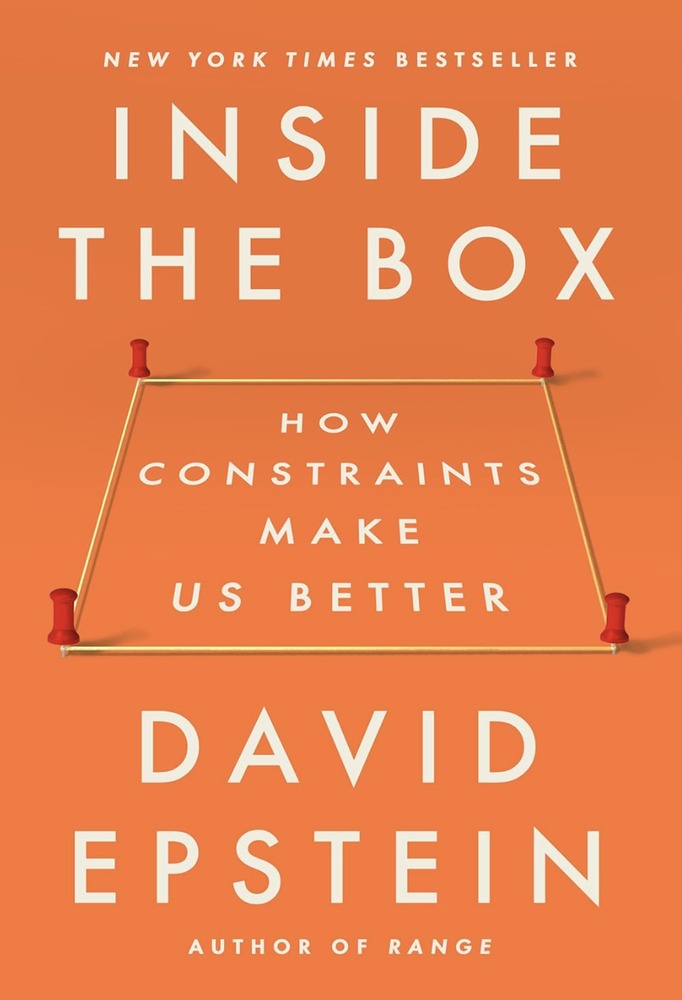
Inside the Box: How Constraints Make Us Better
By David Epstein
This is a sneak peek of this week’s Deep Dives book summary. Published today!
What if the limits you keep trying to escape are actually the thing that could make your work sharper? In Inside the Box, David Epstein challenges the seductive belief that more freedom, more choice, and more resources always produce better results. The deeper truth is more provocative: the right constraints can focus attention, force creativity, improve collaboration, and turn vague ambition into practical invention. This Deep Dive explores why the “box” is not always the enemy of imagination, and why the smartest leaders, creators, and organizations learn to design better limits instead of endlessly chasing more options.
Quick Reads
QUICK READ — EMOTIONAL INTELLIGENCE
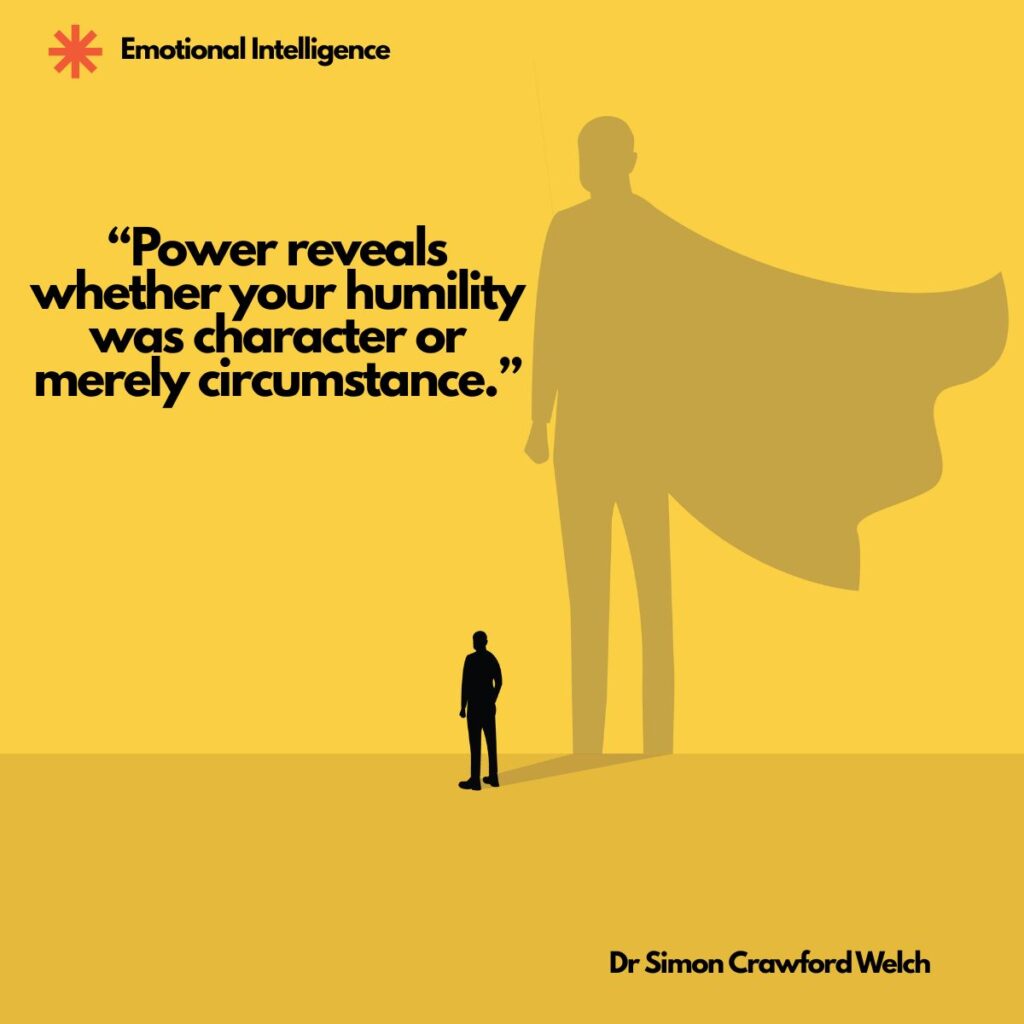
Power Does Not Change You. It Reveals What Was Already There.
Power has an unfair reputation. We often speak about it as though it is a corrupting substance, something that enters a person’s bloodstream and transforms them into someone else. The explanation feels simple and convenient: power changed them.
But that is rarely the whole truth.
Power does not usually create a new person. It removes the constraints that once kept the old person hidden. What looked like kindness may have been dependence. What looked like humility may have been insecurity. What looked like patience may have been fear of consequences.
Power is not merely a test of character. It is an amplifier of character.
The Mask of Necessity
Many people appear virtuous when they have no choice. They are polite because they need approval. They listen because they need support. They show restraint because the consequences of not showing restraint would arrive quickly.
The issue is that constraint can be mistaken for character.
The real question is what happens when the constraint disappears. How does a person treat people who cannot help them? How do they respond when nobody can overrule them? Do they become more generous, or more entitled?
This is why power reveals so much. It exposes what a person does when external pressure no longer forces decency.
The Executive Version of Character
In organizations, power rarely announces itself as tyranny. More often, it appears in subtler forms. The leader stops asking questions because they prefer agreement. They begin to confuse loyalty with silence and alignment with obedience.
From the outside, this may look like confidence. Inside the organization, people start managing the leader rather than the business. They soften bad news. They learn which truths are safe and which must be discussed privately after the meeting.
Power does not invent the pattern. It gives the pattern resources.
The Difference Between Authority and Entitlement
Authority is responsibility. Entitlement is appetite with a title.
The healthiest leaders understand that power expands obligation. More authority should mean more discipline, not less.
Entitlement reverses this. It treats power as exemption. Their convenience becomes more important than other people’s dignity.
This is where moral drift begins. Not with one dramatic betrayal, but with small permissions. The cutting remark that no one challenges. The exception made for oneself. The discomfort ignored because it belongs to someone lower in the hierarchy.
Power Makes Self Deception Easier
One of the dangers of power is that it surrounds people with evidence that confirms their preferred view of themselves.
The powerful person may believe they are becoming wiser or more respected. In reality, they may simply be receiving less honest information.
That is why the more authority someone has, the more deliberately they must seek reality.
Powerful people often say they want honesty. The real test is what happens when honesty arrives inconveniently.
The Private Person Becomes the Public Culture
In leadership, private character eventually becomes organizational culture. A leader’s impatience becomes the team’s anxiety. A leader’s insecurity becomes the company’s politics. A leader’s courage becomes the organization’s capacity for truth.
The higher someone rises, the less their personal patterns remain personal. Their mood becomes weather. Their defensiveness becomes silence. Their humility becomes oxygen.
The Hopeful Side of Power
It would be too cynical to say power only reveals the worst. Power also reveals courage, restraint, generosity, vision, and service.
The point is not that power is inherently dangerous. The point is that power removes disguise. If you are kind only when kindness costs nothing, power will expose that. But if you have done the harder work of becoming grounded before you are elevated, power can become a tool for contribution rather than self enlargement.
The question, then, is not whether power will change you. The better question is what power will reveal when fewer people can tell you no.
That is why the preparation for power is character. Not branding. Not charisma. Not ambition. Character.
Because eventually, life gives each of us some form of power. And in that moment, the truth begins to show. Not the truth we claim. Not the truth we perform. The truth we have practiced.
QUICK READ — PERSONAL DEVELOPMENT
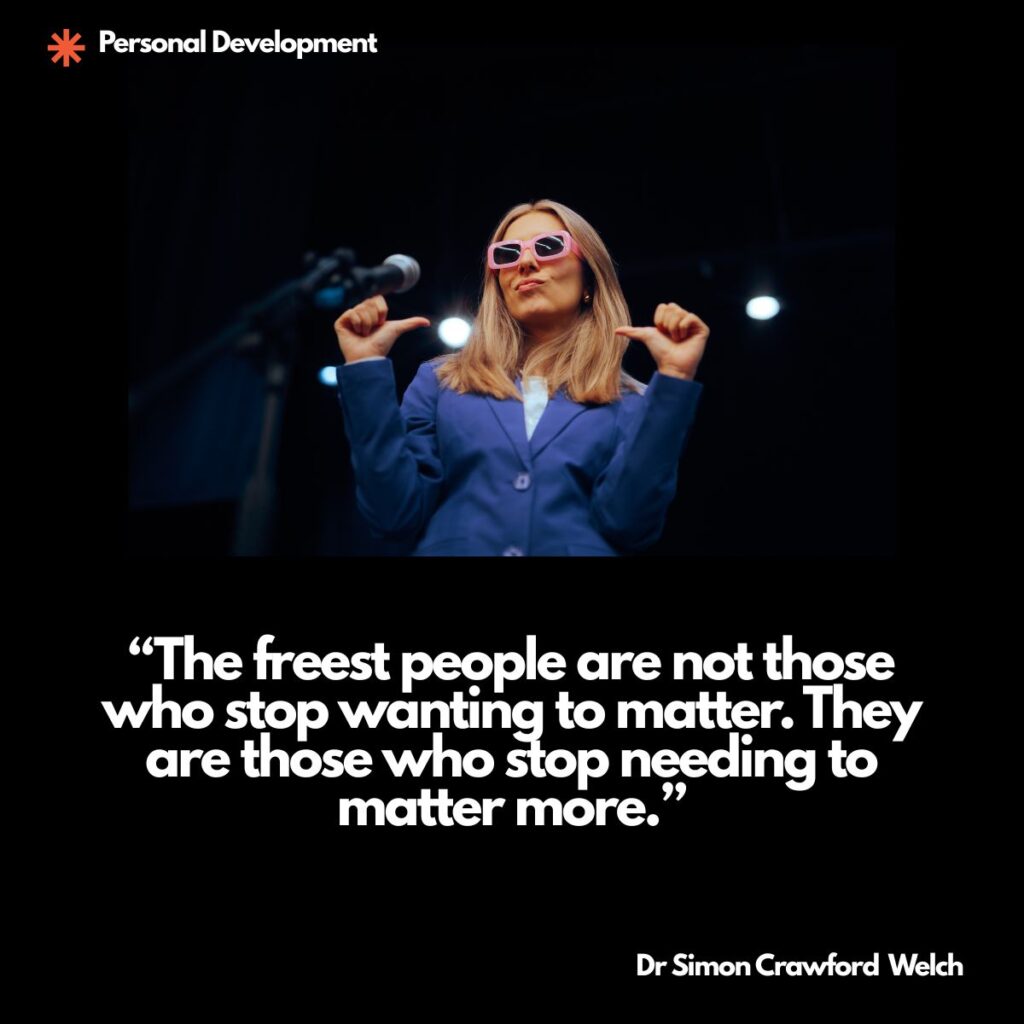
The Hardest Form of Growth Is Letting Go of the Need to Matter More Than Everyone Else
There is a kind of ambition that looks admirable from the outside but is quietly exhausting from the inside. It is the need to be central, exceptional, indispensable, admired, remembered, deferred to, and subtly above the ordinary rules that apply to everyone else. It does not always look like arrogance. Sometimes it looks like achievement. Sometimes it looks like leadership.
The need to matter more than everyone else is one of the most sophisticated forms of insecurity because it often wears the clothing of excellence. It says, “I just care more.” It says, “If I do not hold the room together, everything will fall apart.”
Sometimes those things are partly true. That is what makes the pattern so difficult to see.
The deeper issue is not whether a person matters. We all matter. The issue is whether our sense of identity depends on mattering more. When that hunger goes unexamined, every relationship becomes a ranking system, every conversation becomes a test of significance, and every moment of not being centered feels like diminishment.
The Ego’s Most Respectable Disguise
The ego rarely announces itself honestly. More often, it speaks in morally defensible language. Legitimate desires for impact, recognition, or excellence become psychological necessities.
A person who needs to matter more is trying to secure their identity through comparison.
Other people are no longer experienced fully as people. They become mirrors. If they admire us, we feel secure. If they challenge us, we feel attacked. If they succeed, we may feel threatened.
That is a small way to live, even when the life looks impressive.
Why Being Ordinary Feels So Threatening
Modern culture has intensified the pressure to be exceptional. Social media turns life into a stage.
In that environment, ordinariness begins to feel like failure.
Yet much of a meaningful life is ordinary. Showing up. Listening. Repairing. Being kind without being praised. Allowing other people to shine.
For someone addicted to significance, this can feel intolerable. But it is also where real maturity begins. The ability to be one important person among many, rather than the person around whom everything must orbit, is a profound form of freedom.
The Leadership Cost of Needing to Be Central
In leadership, the need to matter more is especially dangerous because authority can disguise the pattern as responsibility. A leader may claim they are protecting standards, but secretly they cannot tolerate decisions being made without them.
This creates organizations that look aligned but are actually dependent. People defer upward. Decisions slow down. Talent becomes smaller in the presence of the leader.
The strongest leaders do not need every good idea to carry their fingerprints. Legacy is not being needed forever. Legacy is creating something that can continue without requiring constant proof of their importance.
Relationships Cannot Breathe Under Self Importance
The same pattern damages personal relationships. Love requires mutuality. It requires listening without turning every story back toward your own experience. It requires giving care without keeping emotional accounts.
A person driven by the need to matter more may compete with another person’s pain. They may interpret boundaries as rejection.
Real connection asks us to be important without being consuming. It asks us to let people have inner lives that do not revolve around our role in them.
Growth Requires the Death of Specialness
The hardest part of this growth is not becoming humble in public. Public humility can be performed. The harder part is releasing the private belief that our needs, wounds, talent, pressure, or sacrifices are somehow more real than everyone else’s.
The goal is to stop using our capability, pain, or importance as evidence that we deserve a different moral standard.
Letting go of the need to matter more does not shrink us. It places us back into right proportion.
The Freedom of Not Needing the Room
There is a remarkable relief that comes when a person no longer needs to be the most important presence in every room.
This is not passivity. It is security.
A secure person still wants to matter, but they do not need to matter at someone else’s expense.
The challenge is simple and uncomfortable: can you still feel whole when someone else is centered, praised, chosen, or needed? Can you still contribute when the credit is shared? Can you still love when you are not the hero of the story?
The answer to those questions reveals whether we are growing, or merely becoming more sophisticated in our hunger to be seen.
QUICK READ — LEADERSHIP
The Most Dangerous Leaders Are the Ones Who Think Their Intentions Excuse Their Impact
There is a particular kind of leader who is difficult to confront because they do not see themselves as harmful. They may even care deeply about the mission and the people. They believe they are trying to do the right thing.
And that is precisely what makes them dangerous.
A leader who knows they are acting selfishly may at least understand that they are crossing a line. A leader who believes their intentions are noble can become almost impossible to reach.
Good intentions become a shield. Impact becomes secondary. The leader asks to be judged by what they intended, while everyone else is forced to live with what they actually experienced.
That is not leadership. It is self protection dressed as virtue.
Intentions Matter, But They Are Not Enough
Intentions do matter. But they are not the full moral story.
If a leader humiliates someone in a meeting while intending to create urgency, the humiliation still happened.
Impact is where leadership becomes real. People do not experience your private intentions. They experience your decisions, your tone, your timing, your consistency, and your willingness to repair what you damage.
The mature leader can hold both truths at once: “I did not mean to cause harm, and I still caused harm.”
The Ego Hides Inside Moral Certainty
Intention based leadership is dangerous because it often feels morally secure. The leader is convinced they care. Because their internal narrative feels sincere, they become suspicious of anyone who questions the external result.
A founder may believe they are pushing the team because they care about excellence, while employees experience constant volatility and fear.
The leader keeps returning to the purity of their motive. The team keeps returning to the reality of the pattern.
Over time, people stop arguing with the leader’s intentions and start withdrawing from the leader’s impact.
Impact Is the Culture
Culture is not built by what leaders mean. It is built by what leaders repeatedly cause.
The leader remembers the speech about trust. The team remembers what happened when someone told an inconvenient truth.
A leader’s impact becomes the weather people work inside.
If that weather is unpredictable, people adapt. They become cautious. They stop bringing early warnings. They manage the leader’s emotional state before they manage the business problem.
The Apology That Refuses to Repair
You can often tell whether a leader understands impact by the way they apologize.
An intention centered apology sounds like this: “I am sorry if you took it that way.” These statements shift the burden back onto the person who was harmed.
A repair centered apology says, “I can see how that landed. I understand the impact. Here is what I should have done differently. Here is what I will change.”
The most dangerous leaders are often not incapable of apology. They are incapable of repair. They want emotional absolution without behavioral change.
That is not accountability. It is reputation management.
Pressure Does Not Suspend Responsibility
Pressure is real. But pressure does not suspend responsibility for impact. Anyone can be gracious when the numbers are good and the room is calm. Character is revealed when the stakes rise and the leader has less emotional margin.
The work of leadership is not merely to produce results. It is to produce results in a way that does not quietly destroy the human system required to sustain them.
The Humility to Be Measured by Experience
The most trustworthy leaders are not those who insist on the goodness of their intentions. They are those willing to be measured by the experience they create for others.
The better path asks leaders to remain curious about the gap between what they meant and what others experienced. It asks them to care more about learning than being seen as good.
Good intentions may explain the beginning of a behavior. They do not erase the ending.
A leader’s legacy is not built from what they meant to do. It is built from what their presence made possible, what their behavior made normal, and what their power made people feel they had to hide.
Quotes of the Week
QUOTE — EMOTIONAL INTELLIGENCE
QUOTE — PERSONAL DEVELOPMENT
QUOTE — LEADERSHIP
Reframe
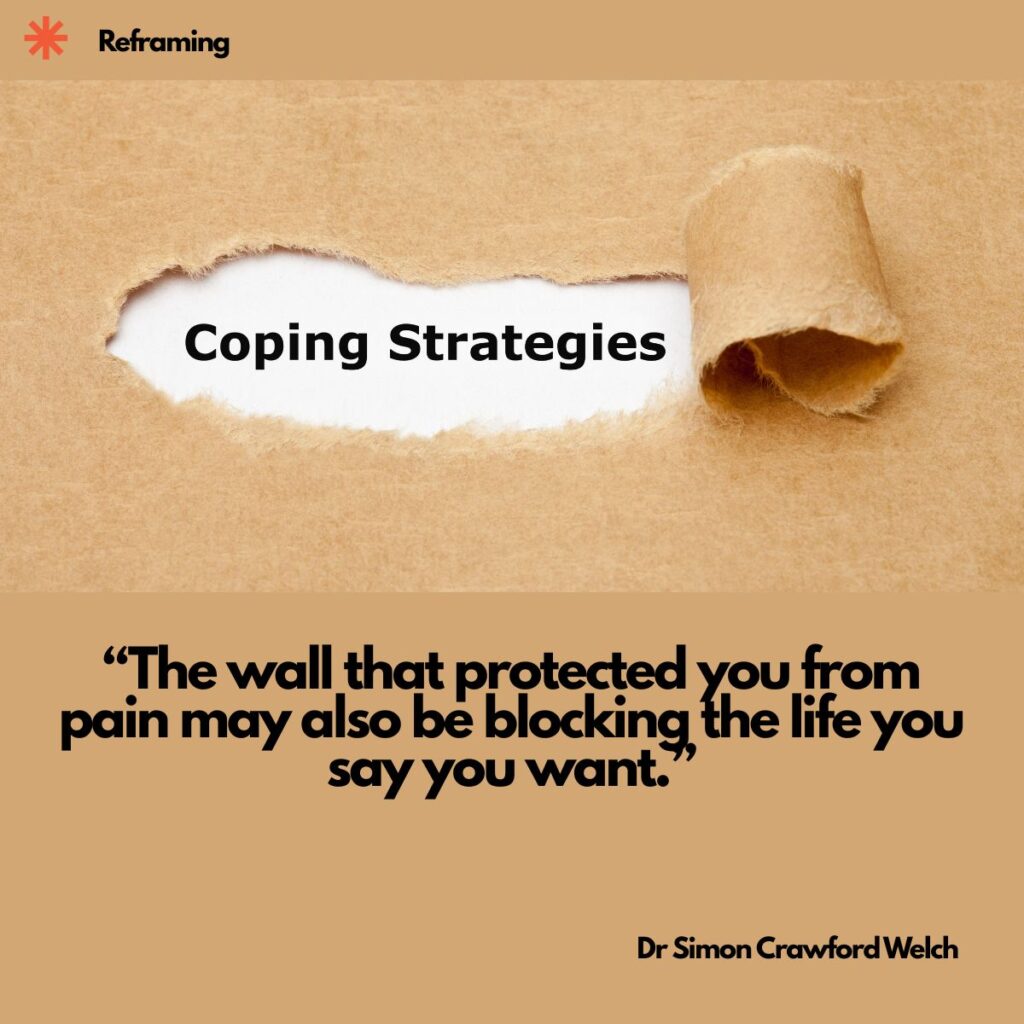
Your Old Coping Mechanisms May Not Belong in Your New Life
There is a strange moment in personal growth when the very habits that once protected you begin to limit you. The reaction that helped you survive a difficult season starts damaging a healthier one. The emotional armor that once kept you safe begins keeping other people out. The independence that once saved you from disappointment becomes an inability to receive care. The vigilance that once helped you anticipate danger becomes anxiety in rooms where no one is trying to harm you.
This is one of the more difficult truths about change. Not everything that needs to be released was bad in the beginning.
Some coping mechanisms were intelligent adaptations to real circumstances. They were not flaws. They were strategies. A child who learned to stay quiet around unpredictable adults was not weak. A young person who became hyper responsible in a chaotic family was not controlling. A leader who learned to anticipate every problem because past environments punished mistakes was not irrational. They were doing what they had to do with the tools available at the time.
But survival strategies are not the same as life strategies. What helped you endure one chapter may not be what helps you build the next.
The Intelligence of Old Patterns
It is easy to judge our coping mechanisms once we have outgrown them. We look back and criticize ourselves for shutting down, overworking, people pleasing, controlling, avoiding, performing, rescuing, or emotionally withdrawing. But most coping mechanisms began as solutions before they became problems.
People pleasing may have started as a way to stay safe around someone whose approval determined the emotional weather. Control may have developed in response to environments where nobody else could be trusted to follow through. Avoidance may have protected someone from conflict that was genuinely unsafe. Emotional numbness may have been the nervous system’s way of surviving pain that felt too large to process at the time.
The problem is not that these strategies existed. The problem begins when they continue operating after the original danger has passed.
Human beings are pattern making creatures. Once the mind learns that a certain response reduces pain, it tends to repeat that response, even when the context changes. This is why people can leave the old environment but carry its rules into the new one. They enter healthier relationships but still expect betrayal. They join better teams but still anticipate humiliation. They receive honest feedback but still hear criticism as rejection.
The past may be over, but the body often keeps checking whether it has returned.
When Protection Becomes a Prison
Every coping mechanism has a hidden cost. At first, the cost may be worth paying. If silence protects you from escalation, silence makes sense. If perfection protects you from punishment, perfection makes sense. If independence protects you from being let down, independence makes sense.
But over time, the cost grows.
The person who never asks for help begins to confuse loneliness with strength. The person who stays in control of every detail becomes exhausted by their own vigilance. The person who avoids hard conversations preserves temporary peace while building long term distance. The person who performs competence at all times becomes unable to admit need without shame.
This is how protection becomes a prison. The strategy continues to guard the wound, but it also blocks the healing.
A coping mechanism is often designed to prevent one specific pain. The difficulty is that it may also prevent joy, intimacy, creativity, trust, and growth. The wall that keeps out criticism may also keep out love. The mask that prevents rejection may also prevent connection. The hyper independence that protects against disappointment may also prevent the experience of being supported.
At some point, the question is no longer, “Did this help me survive?” The question becomes, “Is this still helping me live?”
New Life, Old Reflexes
One of the most frustrating parts of growth is realizing that your circumstances may change faster than your reflexes. You may finally be in a better relationship, a stronger organization, a safer home, or a healthier season of life, yet still react as though the old conditions are present.
This can create confusion for everyone involved. The people around you may wonder why you are defending yourself when no one attacked you, why you are controlling outcomes when trust has been earned, why you keep proving yourself when you are already valued, or why you pull away when someone is trying to get closer.
You may wonder the same thing.
This is where self awareness becomes essential, but also insufficient. It is not enough to say, “I know why I do this.” Understanding the origin of a pattern is useful, but it does not automatically interrupt the pattern. At some point, insight must become practice.
The work is to notice the old reflex in real time and ask whether it belongs to the present moment. Is this situation actually dangerous, or does it merely resemble something that once was? Is this person asking for honesty, or am I assuming honesty will be punished? Am I protecting myself from a real threat, or from a memory wearing the clothes of the present?
Those questions create space. And space is where choice begins.
Growth Requires New Evidence
You do not release old coping mechanisms simply by deciding they no longer serve you. They were built through experience, and they usually have to be replaced through experience.
A person who learned not to trust needs repeated evidence that trust can be safe. A person who learned that mistakes lead to humiliation needs repeated evidence that mistakes can lead to repair. A person who learned that love disappears when they have needs must experience relationships where needs are not treated as burdens.
This is why healing often feels slow. The mind may understand the new truth before the nervous system believes it. You may know, intellectually, that you no longer need to live on alert, but your body may still be scanning for threat. You may know someone cares about you, but still struggle to relax into being cared for.
That does not mean you are failing. It means your system is learning a new language.
The key is to create small, repeated acts of disconfirmation. Ask for help and allow someone to show up. Tell the truth and notice that the relationship survives. Let someone else take responsibility and see that the world does not collapse. Rest without earning it through exhaustion. Admit uncertainty without treating it as personal failure.
The old pattern weakens when the new life provides enough evidence to make it unnecessary.
Leadership and the Legacy of Survival
This issue is not only personal. It shows up constantly in leadership. Many executives built their careers in environments that rewarded overfunctioning, emotional control, constant availability, and relentless self reliance. Those traits may have helped them rise. But once they are responsible for building a team, the same traits can become liabilities.
A leader who cannot delegate may believe they are protecting quality, but may actually be reproducing an old fear that nobody else can be trusted. A leader who reacts defensively to feedback may believe they are maintaining authority, but may actually be protecting an identity built in earlier environments where being wrong was unsafe. A leader who pushes people beyond capacity may believe they are modeling excellence, but may actually be normalizing the survival mode that shaped them.
This is why leaders must examine not only what made them successful, but what made them successful at a cost.
Not every strength should scale. Some strengths are overdeveloped survival responses. They worked in one environment, under one set of pressures, at one stage of life. But the next chapter may require a different kind of maturity: less control, more trust; less proving, more presence; less vigilance, more discernment.
The Courage to Retire an Old Version of Yourself
Letting go of an old coping mechanism can feel strangely disloyal. It may feel as though you are abandoning the version of yourself that survived. But growth does not require contempt for who you used to be. It requires gratitude and release.
You can honor the strategy without continuing to live by it. You can say, “This protected me then, but it is not needed in the same way now.” You can recognize that a habit was once wise and is now outdated. You can stop turning survival into identity.
That is the quiet courage of becoming new. It is not a rejection of the past. It is a refusal to let the past keep managing your future.
The life you want may require more than ambition. It may require updating the emotional operating system you built under pressure. It may require noticing that the danger has changed, the room has changed, the people have changed, and perhaps you are allowed to change too.
Your old coping mechanisms may have helped you survive. But they do not get to decide how fully you live.