
Deep Dives Articles
DEEP DIVES ARTICLE — EMOTIONAL INTELLIGENCE
The Pain You Choose vs. The Pain That Chooses You
This is a sneak peek of this week’s Deep Dives article. Published today!
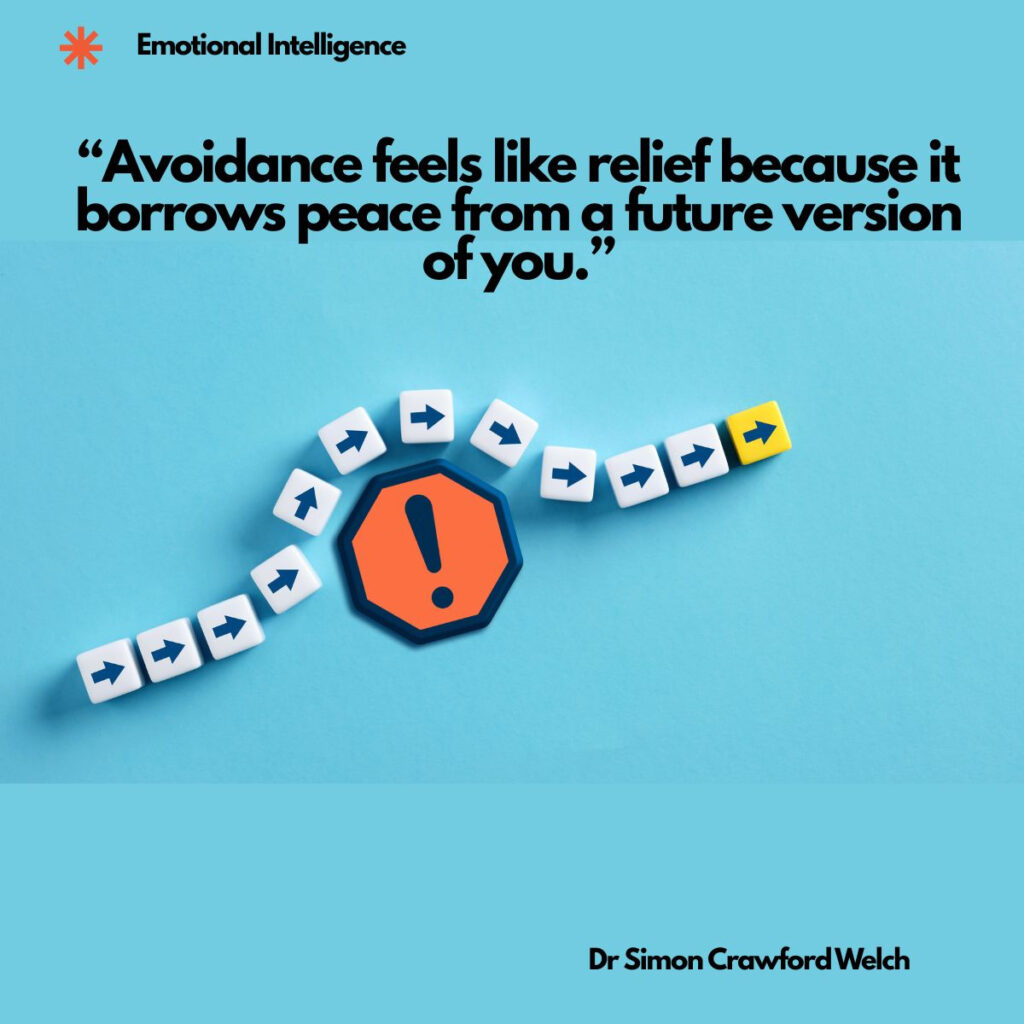
Pain is unavoidable. The real question is whether you meet it while you still have agency, or wait until it arrives as a crisis with fewer options and a much higher cost. This Deep Dive explores the hidden economics of avoidance, the difference between voluntary hardship and imposed consequence, and why the discomfort you decline to carry today often finds its way back to you later.
DEEP DIVES ARTICLE — PERSONAL DEVELOPMENT

Real Growth Happens When Nobody Is Clapping
This is a sneak peek of this week’s Deep Dives article. Published today!
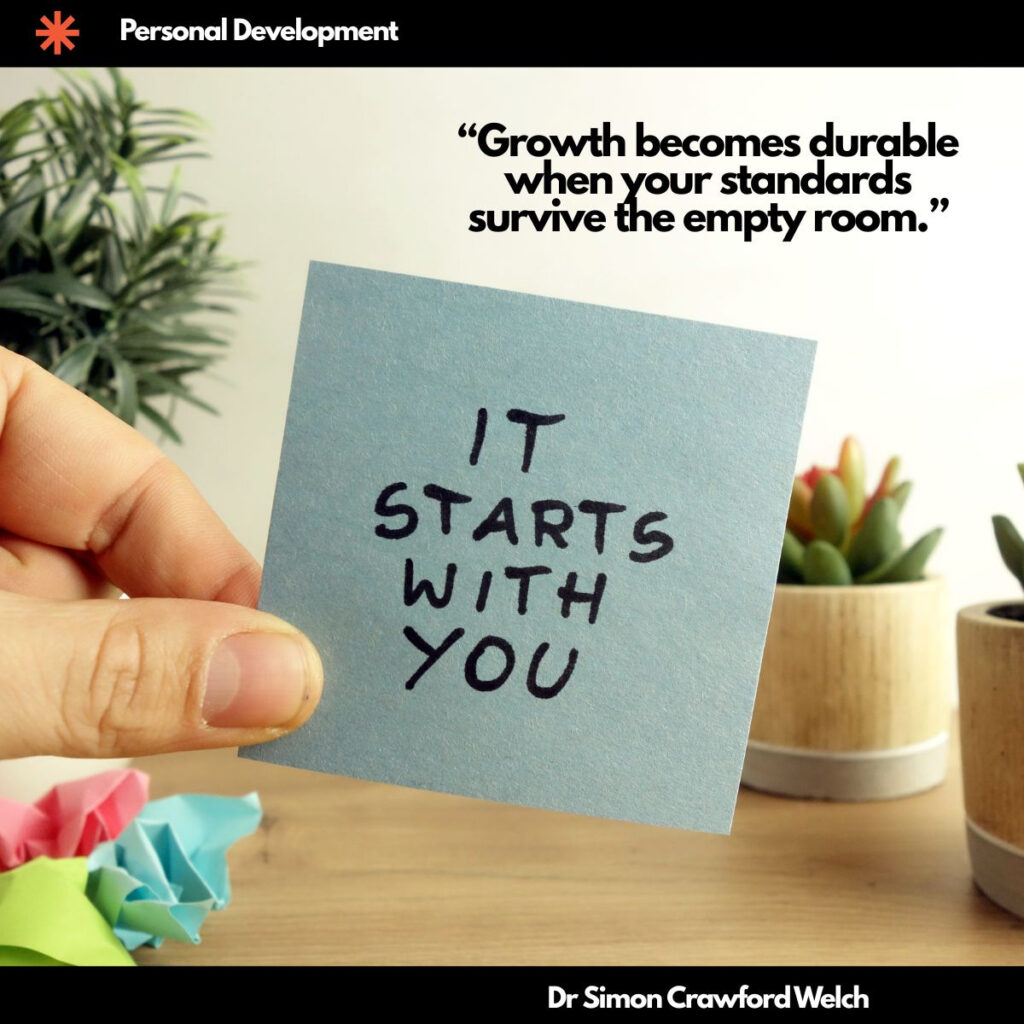
Most people want the applause. Few are willing to endure the long, quiet middle that makes it possible. Real growth is built in the unseen decisions: the promise you keep when nobody will know, the hard conversation you stop avoiding, the repetition you continue after motivation fades. This Deep Dive explores why the work that matters most is rarely glamorous, and why the strongest kind of confidence is built when there is no audience at all.
DEEP DIVES ARTICLE — LEADERSHIP

The Difference Between Looking Self-Aware and Actually Doing the Work
This is a sneak peek of this week’s Deep Dives article. Published today!
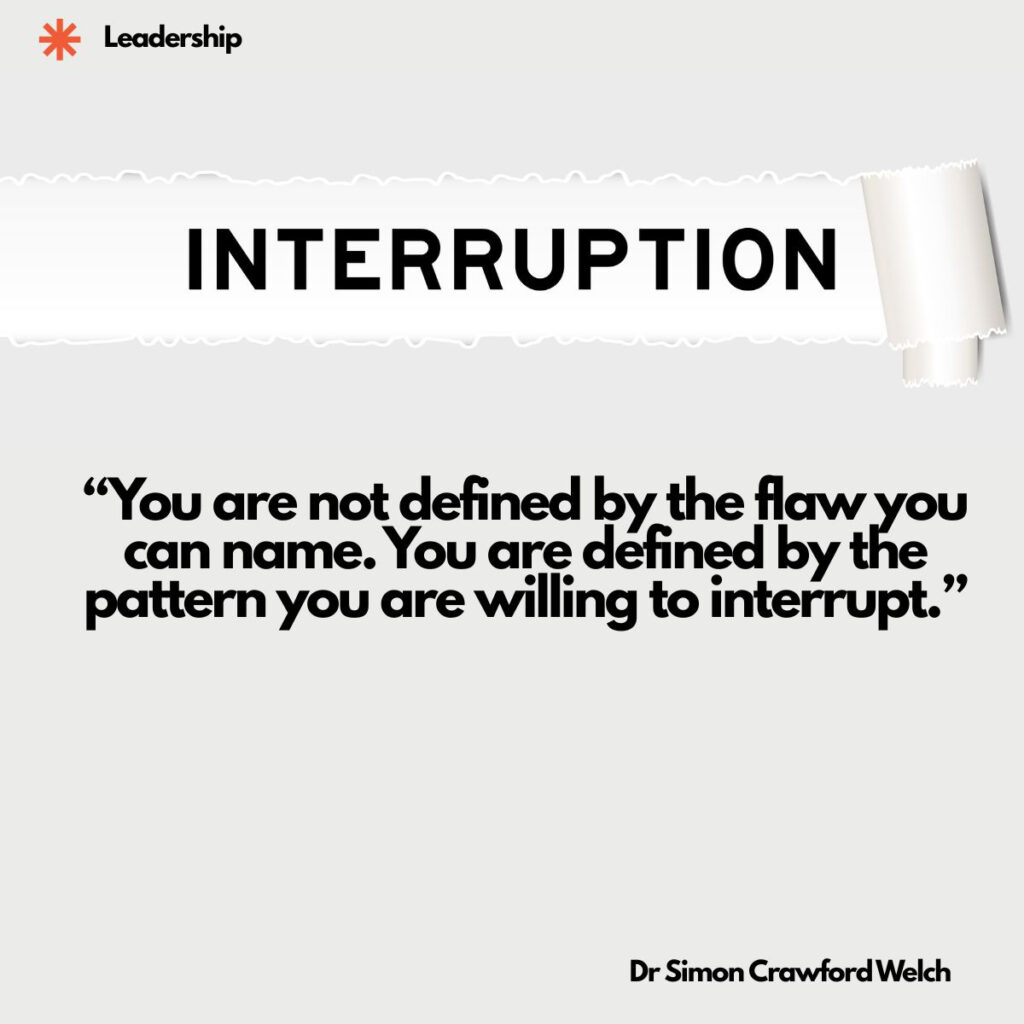
It is easy to name your patterns. It is much harder to stop making other people pay for them. In an age fluent in therapy language, vulnerability, and personal growth, self-awareness can become a polished performance that changes nothing. This Deep Dive confronts the gap between insight and accountability, asking a harder question: are you becoming more evolved?
Deep Dives Book Summary
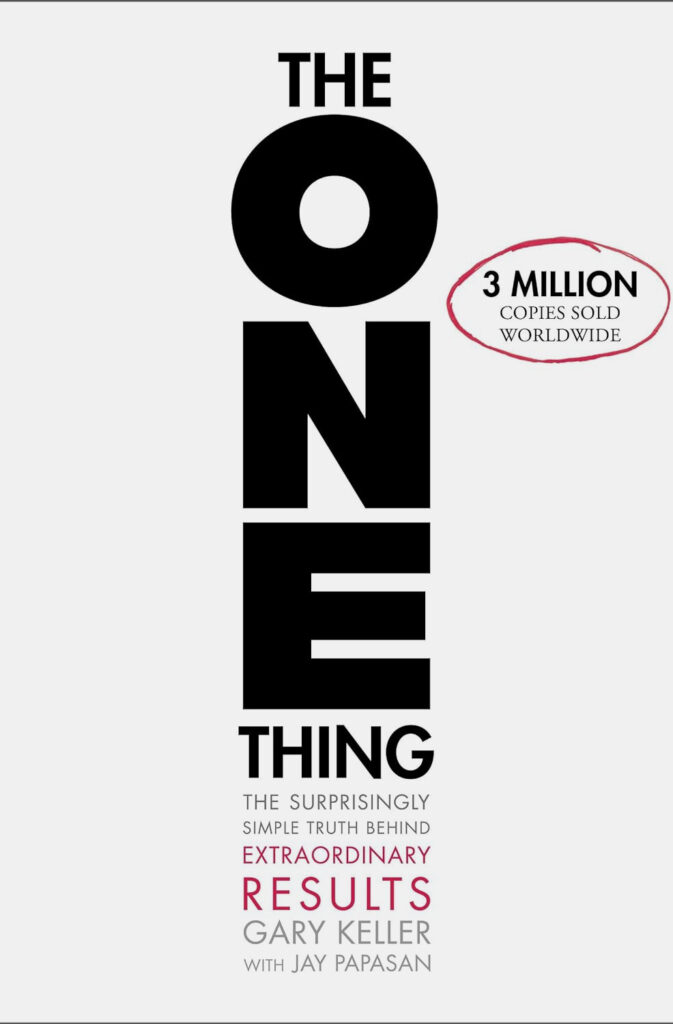
The ONE Thing: The Surprisingly Simple Truth About Extraordinary Results
By Gary Keller, Jay Papasan
This is a sneak peek of this week’s Deep Dives Book Review. Published today!
Most people are not falling short because they lack ambition. They are falling short because their attention is scattered across too many priorities, meetings, messages, and “urgent” tasks that never truly move the needle. The ONE Thing challenges the modern obsession with multitasking and makes a compelling case for ruthless focus: identify the single action that makes everything else easier or unnecessary, then protect the time to do it. This Deep Dive explores the deceptively simple framework behind extraordinary results, and why the right priority can change the trajectory of your work, business, and life.
Quick Reads
quick read — Emotional intelligence
The Psychology of Suspicion in High-Performance Cultures
Every successful organization meets the same temptation. Under enough pressure, leaders begin to treat intuition as evidence. An unanswered message becomes disengagement. A private conversation becomes a possible coalition. A question about a decision becomes a challenge to authority. Suspicion rarely arrives as a declared value. It comes dressed as vigilance, speed, and an insistence on standards.
Vigilance is not irrational. Leaders are paid to notice what others overlook. But high performance depends on candor. It needs people to surface bad news early, challenge assumptions, and raise a hand before a small problem becomes a public failure. When suspicion becomes the operating system, employees learn a different lesson: protect yourself first, tell the full truth later. The company can look disciplined from the outside while becoming less intelligent by the day.
The Seduction of Vigilance
Suspicion usually begins with a legitimate wound. A leader was misled by someone who used ambiguity for personal advantage, and the lesson feels obvious: never be caught unaware again. But people are impatient with incomplete information. Under pressure, the mind fills gaps with motive. A missing detail becomes an omission. The omission becomes intent. Soon the organization is no longer asking what happened. It is asking who is hiding something.
Cultures that celebrate urgency intensify this. High standards create a useful intolerance for excuses, but they can also create a theatrical version of competence. Employees learn which numbers to soften before a meeting, which questions are safe, and which problems to solve quietly rather than escalate. A culture built to eliminate surprises becomes more vulnerable to them, because people have learned that surprise is not a fact to be managed but a personal failure to be punished.
Accountability examines commitments, evidence, and consequences. Suspicion leaps from an outcome to a judgment about character. Accountability asks, “What did we agree to, what happened, and what must change?” Suspicion asks, “What were you really trying to do?” One creates clarity. The other creates defensive behavior.
When Measurement Becomes Theatre
Technology lets leaders practice suspicion with the confidence of science. Response times, activity logs, meeting attendance, pipeline movement, an expanding universe of digital exhaust. Much of it is useful. A good dashboard can expose a bottleneck that instinct would miss. But measurement becomes corrosive when it substitutes for judgment.
The danger is not merely surveillance. It is the belief that what can be observed is the same as what matters. When people know they are evaluated through constant signals, they optimize the signals. They answer quickly instead of thinking deeply. They schedule visible work instead of difficult work. That labor looks like productivity until the organization realizes it is highly informed about activity and oddly ignorant about truth.
The Silence That Follows
Psychological safety is often reduced to a slogan, as though it meant lowering standards or shielding people from consequence. It means neither. Amy Edmondson described it as a shared belief that people can take interpersonal risks without humiliation or retaliation. In her study of 51 work teams, psychological safety was closely connected to learning behavior. The insight was not that safe teams make fewer mistakes. It was that they expose mistakes soon enough to learn from them.
A later meta analysis of 136 samples, representing more than 22,000 individuals, reinforced the pattern. Psychological safety is associated with task performance, engagement, information sharing, and learning. Suspicion does not merely make people uncomfortable. It interrupts the flow of usable information.
The Challenger disaster remains the extreme illustration. The presidential commission concluded there was a serious flaw in the decision process leading to the launch, and that a properly managed system emphasizing safety would have surfaced mounting doubts about the booster joint seal. Institutional pressure can silence reasonable people at exactly the moment their discomfort is most valuable.
Trust Is Not Naivete
A serious executive will object that trust cannot mean blind faith. Organizations need controls, audits, documented decisions, and consequences for dishonesty. The alternative to suspicion is not gullibility. It is disciplined trust.
Disciplined trust places confidence in transparent rules before personal intuition. It investigates evidence before assigning motives. It distinguishes a recurring pattern from a single awkward interaction. It gives people a clear expectation, a fair hearing, and a chance to correct course. It is more demanding, because it requires leaders to regulate their own appetite for certainty.
The strongest cultures assume people will sometimes fail, avoid conflict, and protect status. They refuse to turn every imperfection into a moral indictment. They are hard on problems and precise about people.
The Leader’s Inner Weather
Every culture reflects what its leaders do with bad news. Respond to a missed target with curiosity, specificity, and a demand for action, and people learn that reality is discussable. Respond with suspicion, sarcasm, or an immediate search for villains, and people learn to manage the leader’s emotions before they manage the business.
Before assuming disloyalty, ask: What do I know? What am I inferring? What other explanation fits these facts? Have I made it safe for someone to tell me the truth before it became expensive? Those are not therapeutic questions. They are operational safeguards.
High performance is not built by making everyone feel watched. It is built by making truth survivable. The real test of a culture is not how it behaves when the numbers are good. It is what happens when someone says, early and plainly, that the story may be wrong.
quick read — Personal development
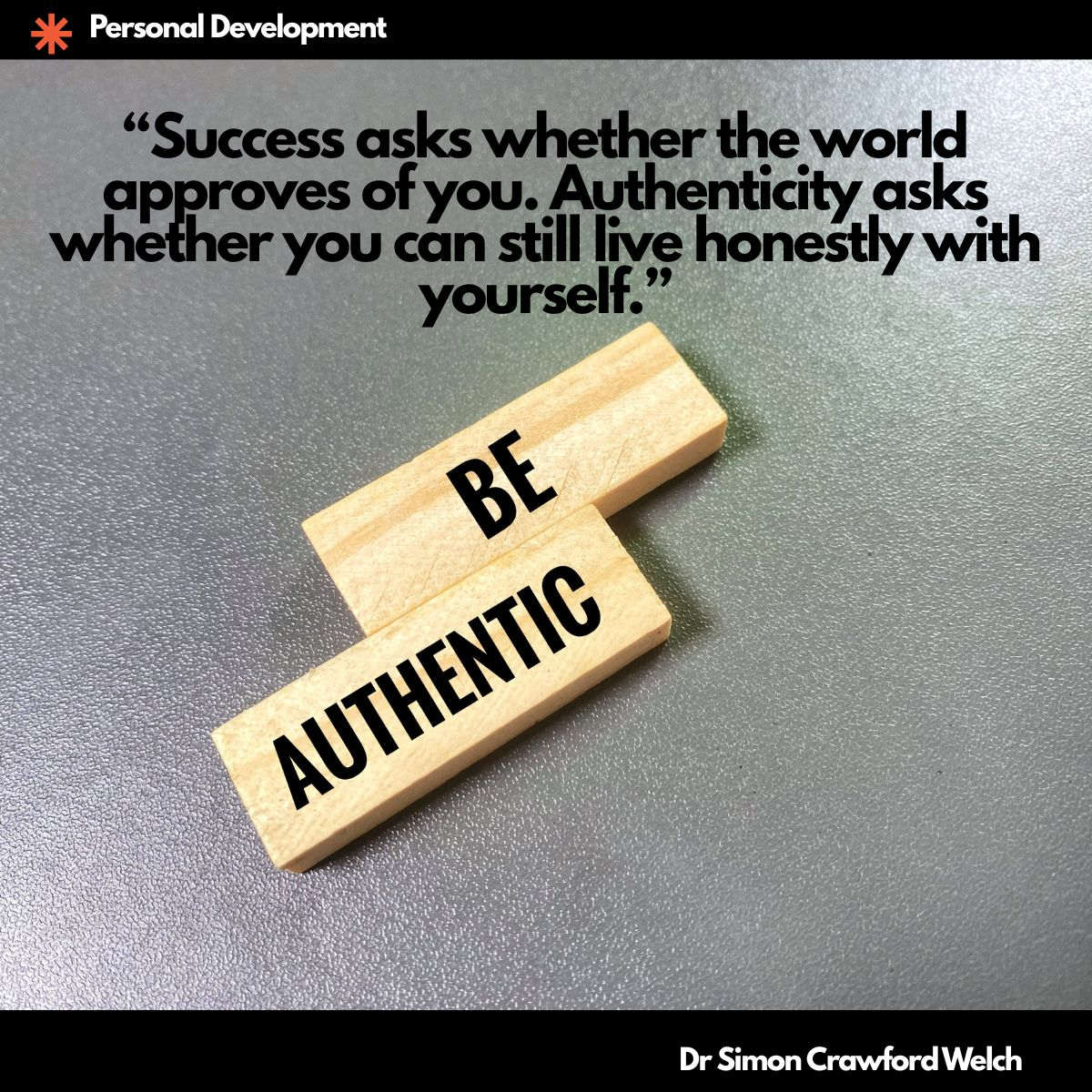
Why Authenticity Is Harder Than Success
Success has a way of simplifying the story people tell about you. The numbers are good. The title is impressive. The audience is applauding. From the outside, it can look like proof that a person found the right path and has the confidence to keep walking it.
But success and authenticity are not the same achievement. In fact, success can make authenticity much harder.
Authenticity requires staying connected to what is true, even when the truth is inconvenient, unprofitable, or out of step with the identity others have assigned you. Success rewards consistency of image. It likes the version of you that worked last quarter, the polished story, the posture of certainty. The more people who benefit from your success, the more pressure there is to keep performing the person they believe you are.
That is why so many accomplished people feel a quiet distance from their own lives. They achieved the thing they once wanted, only to discover that achievement created a role they now feel obligated to play.
Success Creates an Audience
Before success, most people are trying to become visible. After success, visibility is no longer the problem. The problem is that visibility creates an audience, and an audience prefers consistency over complexity.
People do not merely relate to successful leaders as human beings. They relate to them as symbols. Employees want reassurance. Investors want confidence. Customers want certainty. Social media wants a version of the story that fits into a headline. Over time, the successful person begins to feel that every change of mind will be read as weakness, every doubt as instability, every private struggle as a contradiction.
That is a difficult place to live. It creates a strange emotional captivity, in which a person is rewarded for being recognized but punished for being fully known. Søren Kierkegaard warned about the danger of living through public expectation rather than inward conviction, of becoming a person shaped entirely by the crowd. Modern culture has industrialized the crowd. Every leader now has an audience, including those who never wanted one.
The Convenient Mask
Most people assume authenticity means saying exactly what you think, whenever you think it. That is not authenticity. That is impulse with better branding.
Authenticity is not the absence of restraint. It is the absence of pretense. It means the roles you play in public do not require you to betray the person you are in private. A mature leader can be diplomatic without being dishonest, strategic without being manipulative, composed without pretending they never feel fear.
The problem begins when the mask becomes so useful that it becomes permanent. A founder becomes the visionary who is always certain. A chief executive becomes the operator with no patience for emotion. A salesperson becomes the person who can charm anyone. Over time, the role begins to demand payment. The visionary cannot admit confusion. The operator cannot reveal exhaustion. The salesperson cannot say they feel lonely. People reward the mask and depend on it, and the person behind it slowly loses the ability to tell performance from identity.
The Cost of Becoming Predictable
Success makes people predictable, because predictability feels safe to everyone around them. A founder who built a company through force of will is expected to use that same force forever, even after the business has outgrown the need for it.
This is one of the underexamined costs of achievement. The traits that helped you win can become the traits that prevent you from evolving.
Authenticity requires the courage to outgrow a version of yourself that other people still find useful. It means disappointing those who preferred the old version. It means accepting that some will call your growth inconsistency, because they had grown comfortable with your predictability. There is a difference between being grounded and being fixed. Grounded people know what they value. Fixed people confuse loyalty to the past with integrity.
The Fear Beneath the Performance
Much of inauthenticity is driven by fear, though not fear of failure exactly. Many successful people have already survived failure. The deeper fear is that without the role, the title, or the applause, they may not be enough.
That fear makes success addictive. Each win offers temporary reassurance. But the reassurance does not last, because it is attached to the image rather than the person. So the successful individual needs more proof, more momentum, more confirmation that they are still valuable.
This is why authenticity is harder than success. Success can be measured from the outside. Authenticity must be measured from within, and it asks harder questions. What am I pretending not to know? What parts of my life exist mainly to protect an image? Where am I being admired for something that no longer feels true? Those questions rarely produce flattering answers, but they prevent a person from becoming highly successful at living someone else’s life.
The Real Test of Success
Authenticity does not require confession. It requires coherence. A leader can keep some thoughts private, protect confidences, and choose timing carefully. What they cannot do is build a healthy life or organization on the gap between what they say and what they know.
The strongest leaders are not those who reveal everything. They are the ones whose people sense that their public words and private convictions are connected. They do not perform vulnerability because they do not perform invulnerability. They can say, “I do not know.” They can change their mind without collapsing into apology theater.
Success will change you. Responsibility, resources, attention, and power all change people. The real question is whether success makes you more yourself or less. Success may earn you an audience. Authenticity determines whether you still recognize the person they are applauding.
quick read — LEADERSHIP
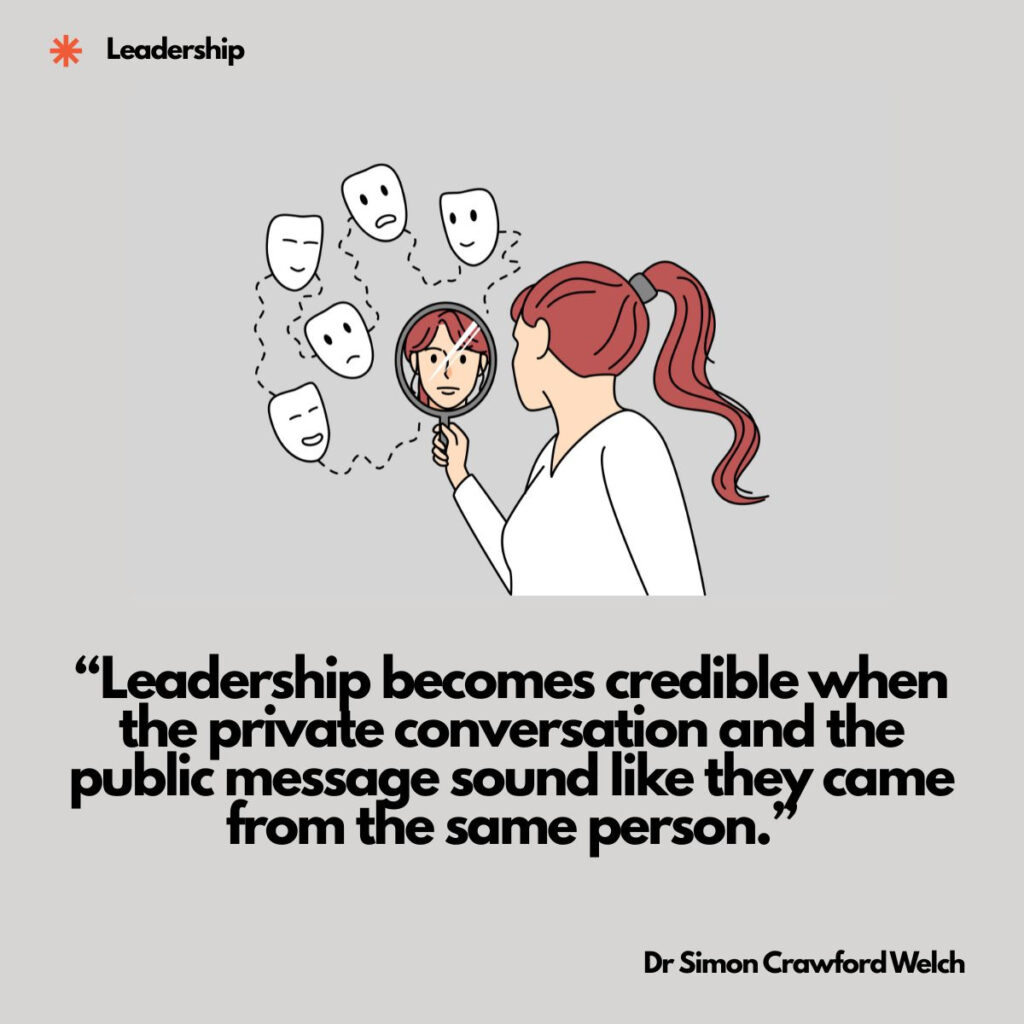
The End of Corporate Theater: Why Authentic Leaders Are Winning
For decades, corporate life rewarded a particular kind of performance. People learned to speak fluently without saying much. Meetings became ceremonies of agreement. Leaders were expected to appear certain even when the facts were incomplete, and employees learned that the safest answer was usually the most polished one.
This was corporate theater, and for a long time it worked well enough. It created the appearance of order. It protected egos. It gave organizations a shared script with approved phrases and a vocabulary that could make almost any problem sound temporary.
But the script is losing its power. The modern workplace moves too quickly for performance to substitute for substance. Information moves faster than internal narratives can contain it. People know when the numbers do not match the message. They know when a stated value exists only on a wall.
Authentic leaders are winning because authenticity has become operationally useful. It is not simply a personal virtue. It is a competitive advantage.
The Performance of Professionalism
Corporate theater is not always dishonest. It usually begins as an attempt to be professional: avoid panic, protect confidential information, present a confident point of view. The trouble begins when professionalism becomes a ritual of concealment. A leader may know a major project is failing but speak as though the outcome is merely delayed. A department head may encourage open dialogue while privately punishing the people who raise inconvenient questions. None of this requires a conspiracy. It requires only enough people to recognize that candor carries more risk than compliance.
Once that happens, the organization confuses calmness with truth. People stop bringing unfinished ideas into the room, because unfinished ideas can be criticized. They wait until a problem is impossible to hide before mentioning it. They use language that softens responsibility, turning obvious failures into areas of opportunity. The result is a workplace full of motion but short on honesty.
Why the Old Model Is Breaking Down
The old corporate model depended on information moving slowly and unevenly. Leaders controlled the message because they controlled the channels. That world has changed. Employees compare notes instantly. Customers publish their experience publicly. Former employees describe the culture in detail. Internal inconsistencies that once stayed hidden now surface quickly.
This has made performative leadership fragile. A leader who speaks about accountability but avoids accountability for themselves is no longer merely disappointing. They are visible. A company that tolerates obvious dysfunction is no longer protected by a values statement. The evidence is everywhere: turnover, online reviews, customer complaints, and the quiet signals that spread through any organization long before they reach the executive suite.
Authenticity wins here because it reduces the gap between message and reality. It creates a form of credibility that cannot be manufactured through branding.
Authenticity Is Not Oversharing
There is a shallow understanding of authentic leadership that mistakes openness for indiscretion. It assumes being real means saying every thought out loud or turning leadership into a public display of emotion. That is not authenticity. It is often poor judgment.
Authentic leaders do not reveal everything. They do not abandon discretion or professional boundaries. What they refuse to do is pretend certainty when they feel uncertainty, promise what they cannot deliver, or ask others to live by standards they themselves ignore.
Their power comes from coherence. When they say the business has a problem, people believe them. When they say they do not yet have an answer, people do not read it as weakness. When they change their mind after better information, people see thoughtfulness rather than instability. That kind of leadership treats adults like adults.
The Courage to Make Reality Discussable
Authentic leadership is often described as vulnerability, but its more important quality is courage. It requires a leader to make reality discussable before reality becomes unavoidable.
That means allowing people to challenge assumptions without being branded difficult. It means asking for bad news early. It means admitting when a strategy has failed, and recognizing that people are more likely to respect a difficult truth than a polished distortion.
The best leaders are not necessarily the warmest people in the room. They are the ones who create the clearest conditions for truth. Their teams know what matters, where authority sits, and which decisions are open for debate. They know a missed commitment will be addressed directly, and that raising a concern will not be treated as betrayal.
This is where authenticity becomes inseparable from performance. High standards require honest feedback. Honest feedback requires trust. A culture cannot become excellent if its people spend their energy decoding what leaders really mean.
The New Advantage
The end of corporate theater does not mean the end of ambition, discipline, or executive presence. It means the end of confusing presentation with leadership.
Authentic leaders win because they create organizations that learn faster. Their teams spend less time managing appearances and more time solving problems. Their employees surface risks before those risks become crises. Their customers trust a company that admits a mistake more than one that hides behind carefully written language.
The deeper point is that authenticity is not soft. It is demanding. It requires self awareness, emotional control, intellectual honesty, and a willingness to be judged by reality rather than image. Corporate theater is attractive because it offers protection. Authenticity offers no such cover.
That is why it is harder, and why it is winning. The leaders who will shape the next era are not those who deliver the most polished certainty. They are those who create enough trust for the truth to arrive early, clearly, and without fear.
Quotes of the Week
QUOTE — EMOTIONAL INTELLIGENCE
QUOTE — PERSONAL DEVELOPMENT
QUOTE — LEADERSHIP
Reframe
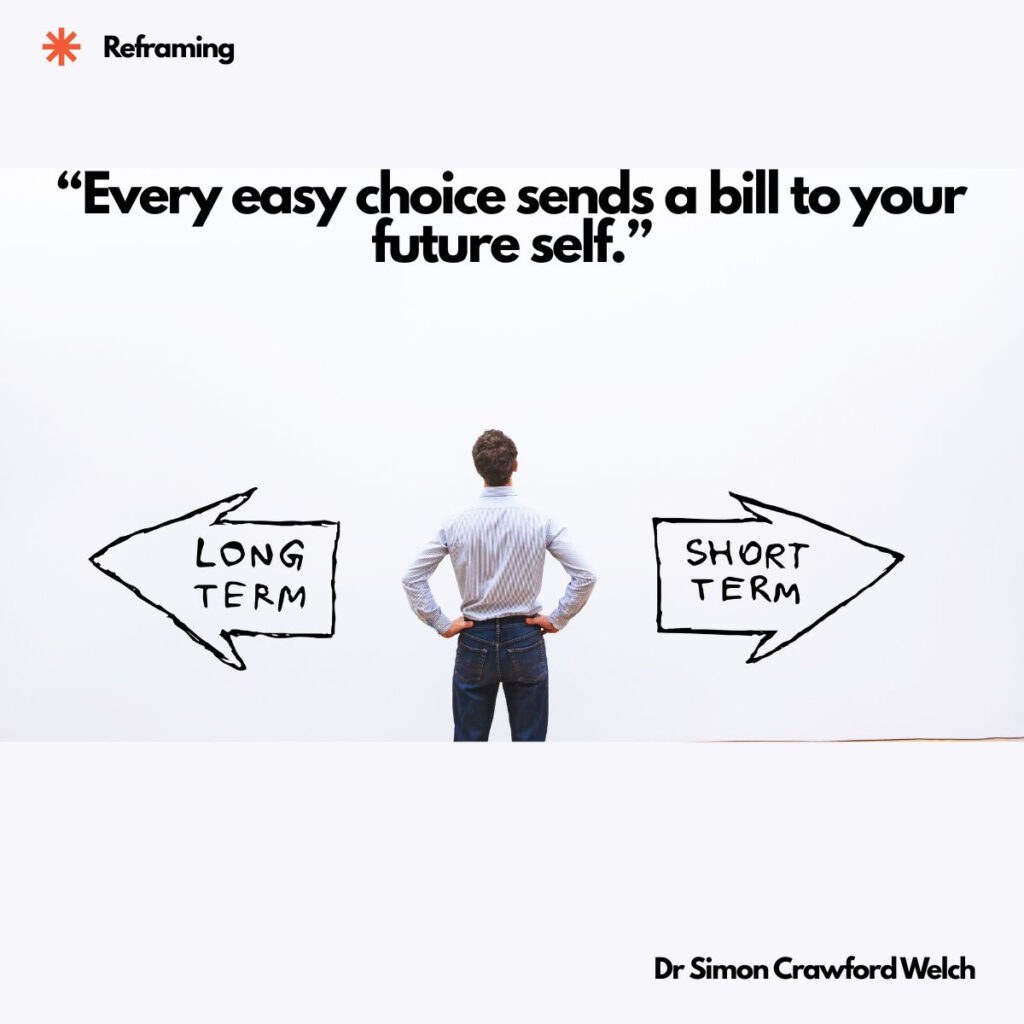
Choose Your Hard: The Discipline of Trading Short Term Pain for Long Term Freedom
Most people say they want freedom, but freedom becomes less romantic the moment you examine its price. Financial freedom requires restraint when spending would feel better. Physical freedom requires movement when rest would be easier. Professional freedom requires the discipline of becoming useful before anyone is obligated to reward you.
The problem is not that life presents us with hard choices. The problem is that it offers two kinds of difficulty, and one is nearly always disguised as relief.
There is the immediate discomfort of discipline, sacrifice, honesty, and delayed gratification. Then there is the deferred discomfort of debt, regret, dependence, declining health, broken trust, and opportunities quietly missed. The first kind announces itself early. The second kind is patient. It lets you enjoy yourself for a while before presenting the bill.
That is the central discipline of adulthood: choosing the pain that leads somewhere rather than the comfort that quietly closes doors.
The Seduction of Immediate Relief
Human beings are not built for long range thinking. We are exquisitely responsive to what is directly in front of us. A difficult email feels more real than the future consequences of avoiding it. A purchase, a distraction, or an unnecessary delay produces immediate relief while the cost remains theoretical.
The person who avoids a difficult conversation is not choosing peace. They are choosing a more expensive version of the same conversation later. The leader who refuses to confront a weak performer may believe they are protecting morale, but they are usually allowing resentment to spread through the team.
Immediate relief is powerful because it often feels like wisdom. We tell ourselves we are waiting for the right moment, gathering more information, or avoiding unnecessary conflict. Sometimes those explanations are true. Often they are sophisticated ways of saying we do not want the discomfort of acting now.
Freedom Is Built Through Constraints
People tend to think of freedom as the absence of limits. But the most durable forms of freedom are built through voluntary constraints.
A person who lives within their means has more freedom than someone whose lifestyle requires constant income to sustain it. A leader in the habit of telling the truth has more freedom than one who must remember which version of reality they told to whom.
Discipline is often misunderstood as deprivation. In reality it is a form of self protection. It creates room to think, room to decide, and room to say no. The person who saves money is buying future choices. The person who practices a difficult skill is reducing how often they must depend on luck.
Freedom is not the absence of effort. It is the reduction of unnecessary dependence.
The Myth of Motivation
Modern culture treats motivation as the fuel of achievement. We wait to feel ready. We look for the right routine, the compelling goal, or the moment when internal resistance disappears. That moment rarely comes.
The people who build meaningful lives are not always more motivated than everyone else. They are more practiced at acting before motivation arrives. Discipline is not a mood. It is a decision made repeatedly, often without drama, when no one is watching and nothing feels inspiring.
This is why the phrase “choose your hard” matters. It does not promise that hard things become easy. It insists that difficulty is not optional. You can choose the difficulty of preparing or the difficulty of being unprepared. You can choose the difficulty of building trust slowly or the difficulty of repairing it after it has broken.
The goal is not to become a person who enjoys pain. That is just another form of performance. The goal is to understand the difference between pain that teaches and pain that accumulates.
The Compounding Power of Small Decisions
The most consequential choices are rarely dramatic. They are usually small enough to be dismissed.
A person does not lose control of their finances in a single day. It happens through a pattern of small justifications. A culture does not become mediocre because of one bad hire. It becomes mediocre when leaders repeatedly tolerate behavior they know does not belong. A relationship erodes through hundreds of moments when honesty felt inconvenient.
The same is true in the other direction. A workout. A hard conversation. A decision to save instead of spend. A commitment to finish the thing that became boring after the excitement wore off. Those choices compound. They become identity. Eventually they produce outcomes that look extraordinary to people who never saw the quiet repetitions behind them.
The Better Trade
The hardest part of choosing the difficult path is not usually the work itself. It is the confrontation with who we might be without our excuses. It is easier to say the market is unfair than to admit we have not become valuable enough. Short term comfort protects us from a more personal discomfort: the fear of discovering our own limits.
But there is something liberating about that discovery. Once a person stops negotiating with reality, they can begin building from it. They can improve a weakness, repair a relationship, or learn a skill. That is not harshness. It is respect for the truth.
Every meaningful life contains sacrifice. The question is not whether you will pay a price. The question is whether the price will purchase something worthwhile. Instead of asking, “What feels easiest right now?” ask, “What future am I buying with this decision?”
Freedom is not found by running from difficulty. It is built by choosing the difficulty that leaves you stronger, more capable, and less dependent on circumstances you cannot control. The people who seem most free are rarely those who avoided hard things. They are the ones who learned to endure the right ones.