
Emotional Intelligence Series
There is a particular kind of fatigue that comes from spending too much of your life trying to look aligned instead of becoming aligned. It is not the ordinary tiredness of work, responsibility, ambition, or stress. It is a deeper fatigue, the exhaustion of constantly editing yourself for the room you are in. You say the thing that sounds strategic, agreeable, confident, humble, grateful, loyal, ambitious, or emotionally intelligent, depending on what the moment rewards. You learn to manage perception with professional skill. You become fluent in the subtle art of appearing fine.
The trouble is that impression management can be mistaken for maturity. In many environments, especially corporate ones, people are rewarded for sounding composed before they are rewarded for being honest. They learn to package uncertainty as confidence, dissent as curiosity, burnout as commitment, and ambition as service. The person who looks aligned often advances faster than the person who is still wrestling honestly with reality. The surface appears clean, but the inner life becomes increasingly negotiated.
Alignment is different. Alignment is not about how convincingly you appear consistent to others. It is about the relationship between what you believe, what you say, what you choose, and what you tolerate. It asks whether your calendar reflects your values, whether your relationships reflect your standards, whether your leadership reflects your stated principles, and whether your private compromises are slowly turning you into someone you would not publicly admire. Impression management wants applause. Alignment wants integrity.
Why We Become Curators of Ourselves
Human beings are social animals. We are wired to notice status, belonging, approval, rejection, and threat. The desire to manage impressions is not a defect; it is part of how we survive in groups. Sociologist Erving Goffman famously described social life as a kind of performance, where individuals present themselves differently depending on audience and context. In that sense, we are all performing to some degree. We behave differently in a boardroom than we do with a close friend, and that is not automatically dishonest. Civilization requires some level of social editing.
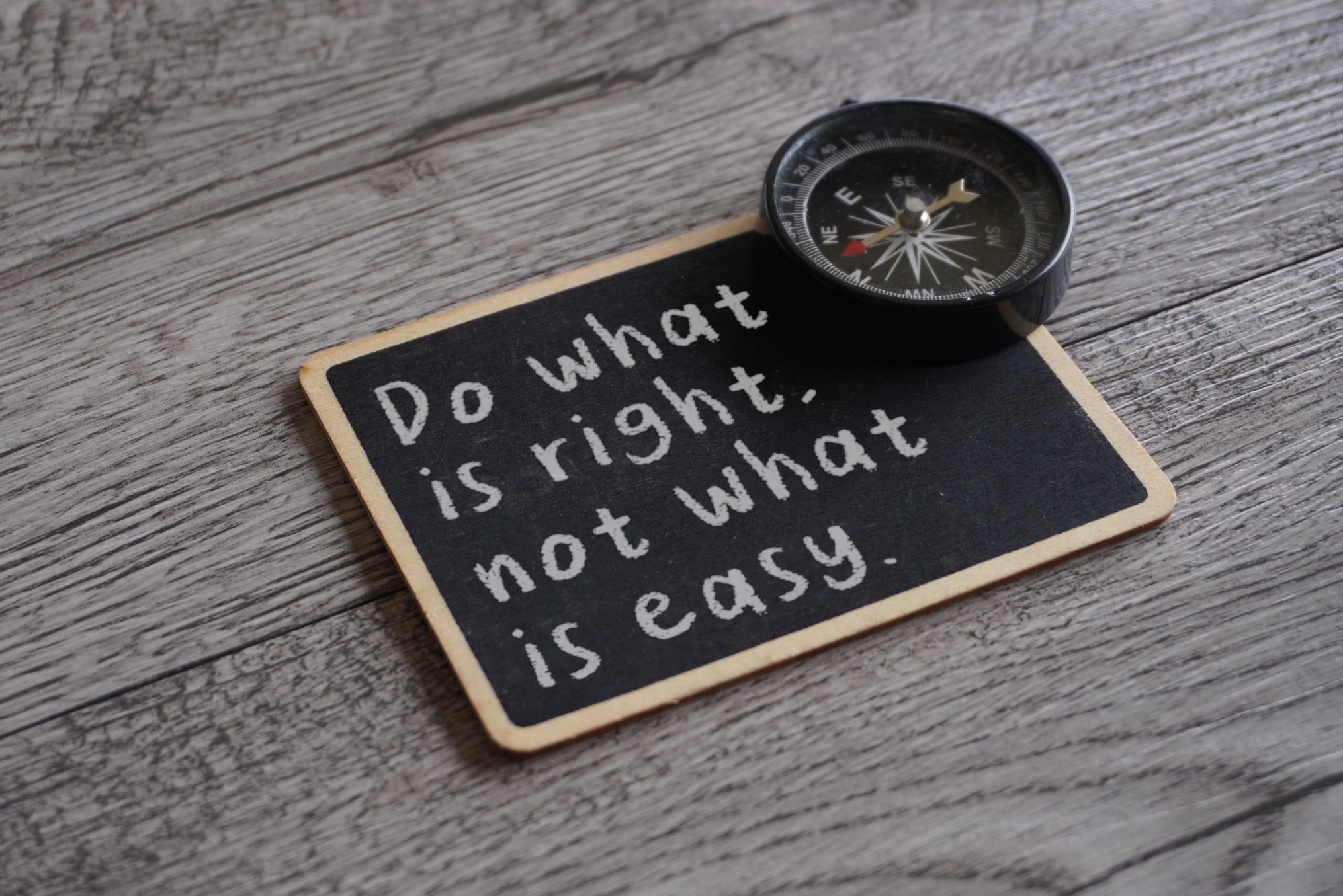
The danger begins when the performance becomes the person. When every interaction becomes an act of positioning, we lose contact with the internal compass that tells us what is true. We begin asking, “How will this land?” before we ask, “Is this right?” We ask, “Will this make me look difficult?” before we ask, “Does this need to be said?” Over time, the fear of misperception becomes stronger than the commitment to reality.
Modern life has intensified this problem. Digital platforms have trained us to think in terms of optics, personal brand, audience reaction, and narrative control. Professional life has absorbed the same logic. Leaders are coached on executive presence. Companies are coached on employer brand. Individuals are coached on visibility. None of this is inherently wrong, but it creates a subtle pressure to optimize how things appear before we have done the harder work of making them true, which is the authenticity paradox we all live inside.
The Corporate Addiction to Optics
Organizations often claim to value alignment, but many actually reward impression management. They reward leaders who sound confident in meetings, even if their teams are confused. They reward executives who speak the language of culture, even if they tolerate behavior that contradicts it. They reward teams that present clean dashboards, even when the numbers underneath are being massaged by optimism, fear, or selective storytelling.
This is how companies drift into dysfunction while still appearing professional. Everyone learns the script. The strategy is “exciting.” The culture is “strong.” The challenges are “opportunities.” The team is “aligned.” The pipeline is “promising.” The transformation is “on track.” These phrases are not always lies, but they can become linguistic anesthesia, words that soothe the room without sharpening the truth.
Real alignment is much more demanding. It requires leaders to ask whether incentives, decisions, behaviors, and stated priorities are actually moving in the same direction. A company cannot claim to value innovation while punishing thoughtful risk. It cannot claim to value people while celebrating chronic overwork. It cannot claim to value accountability while allowing high performers to behave badly. It cannot claim to value speed while burying decisions in political theater. Alignment is not declared in values statements. It is revealed in tradeoffs.
The Psychological Cost of Performing Agreement
The individual cost is just as serious. When people manage impressions for too long, they begin to lose the ability to distinguish between what they want and what they have been rewarded for wanting. They become skilled at adapting, but less skilled at knowing. They build impressive lives around borrowed expectations. They say yes before they have consulted themselves. They confuse acceptance with belonging and approval with trust.
This is why misalignment often feels like restlessness before it becomes crisis. Something feels off, but not always in a way that can be easily explained. The job is successful, but draining. The relationship is stable, but shrinking. The leadership role is prestigious, but spiritually expensive. The public story works, but the private experience does not. People often stay in this condition for years because everything looks good from the outside, and the outside has become the courtroom in which they judge themselves. This is the emotional cost of a life designed for other people.
There is a quiet violence in repeatedly overriding your own signals. You teach yourself not to listen. You dismiss your discomfort as weakness, your intuition as overreaction, your fatigue as lack of discipline, and your resentment as immaturity. Eventually, the body and mind begin to protest more loudly. Anxiety, cynicism, numbness, irritability, and burnout often arrive not as random malfunctions, but as messages from a self that has been managed rather than heard.
Alignment Requires Disappointment
The hard truth is that alignment will disappoint people. This is one reason so many avoid it. To become aligned, you must stop being endlessly available to every version of yourself that others prefer. You may have to say no to good opportunities because they are wrong for the life you are building. You may have to challenge a leader you respect. You may have to leave a room where your performance is admired but your truth is not welcome. You may have to let people misunderstand you.
That last part is especially difficult. Impression management is often driven by the desire to control interpretation. We want to be honest, but still liked. We want to be direct, but still seen as kind. We want to change, but still be understood by people invested in the previous version of us. Alignment asks us to release the fantasy that we can live truthfully while managing every reaction to our truth.
This does not mean becoming careless, rude, or self indulgent. Alignment is not permission to turn sincerity into a weapon. Mature alignment requires responsibility. It means telling the truth with proportion, timing, and respect. It means understanding that your honesty may be necessary, but it is not automatically noble simply because it is uncomfortable. The goal is not to express every feeling. The goal is to bring your choices into honest relationship with your values. Research on authenticity draws the same line between social editing, which is ordinary, and self betrayal, which is not.
From Image Control to Inner Coherence
There is a profound difference between being consistent and being coherent. Consistency can be performed. You can maintain the same image, same language, same posture, and same public identity for years while privately drifting away from yourself. Coherence is harder. It means your inner and outer life are not at war. It means the person making the decision is not constantly betraying the person who has to live with it. Herminia Ibarra’s research describes how leaders who protect a fixed self image stall in their own development.
Coherence creates a different kind of confidence. It is quieter than performance based confidence because it does not require constant confirmation. It does not need every room to validate it. It can tolerate disagreement without panic. It can be misunderstood without immediately shapeshifting. This is the confidence of someone who has done the internal accounting and is no longer willing to live on borrowed approval.
For leaders, this kind of coherence is magnetic. People may be impressed by polish, but they trust alignment. They trust leaders whose actions make sense over time. They trust people who do not change their values depending on who has power in the room. They trust those who can admit tension instead of hiding it under corporate optimism. In a world saturated with performance, coherence has become rare enough to feel almost radical.
The Strategic Power of Alignment
Alignment is often treated as a personal virtue, but it is also a strategic advantage. Misaligned organizations waste extraordinary amounts of energy on friction, confusion, rework, politics, and unspoken conflict. They move slowly not because people are lazy, but because the system is internally contradictory. Priorities compete. Incentives conflict. Leaders send mixed signals. Teams protect themselves because the stated direction does not match lived reality.
Aligned organizations are not free of tension. In fact, they often have more honest tension because people are not wasting energy pretending. They can disagree more productively because the shared purpose is clearer. They can make faster decisions because tradeoffs are understood. They can hold higher standards because the standards are not merely decorative. Alignment does not eliminate complexity; it reduces the emotional and political waste around complexity.
This is also true in personal life. An aligned person still has problems, obligations, compromises, and difficult seasons. But they waste less energy maintaining false versions of themselves. They do not need to remember which room gets which performance. They may still be stretched, but they are not split. That distinction matters. Being stretched can build capacity. Being split corrodes identity.
The Courage to Stop Performing
At some point, a person has to decide whether they want to be admired for the image or trusted for the truth. The image can be useful. It can open doors, earn attention, create opportunity, and protect status. But if the image becomes disconnected from reality, it becomes a beautiful prison. You may get applause inside it, but you will not get peace.
The shift from impression management to alignment begins with a simple but uncomfortable audit. Where am I performing agreement? Where am I managing perceptions instead of addressing reality? Where do my words and choices no longer match? Where have I confused being liked with being honest? Where am I paying for approval with self betrayal?
These questions are not easy because they threaten the arrangements we have built. But they also return us to authorship, and they begin to reveal the person you become when you stop performing. They remind us that a life is not made whole by looking right from the outside. It is made whole when the outside is finally brought into relationship with what we know to be true inside.
The future will belong to individuals and organizations with the courage to become less theatrical and more coherent. Not louder. Not glossier. Not more impressive in the shallow sense. More aligned. More honest. More able to withstand reality without immediately reaching for image control. In the end, the question is not whether people think you are aligned. The question is whether your life, your leadership, and your decisions can survive the audit of your own conscience.