Emotional Intelligence
Human beings like to believe they are rational creatures.
We imagine our workplaces, institutions, and societies operating primarily through logic, incentives, strategy, and conscious decision-making. We speak the language of data, economics, governance, performance, and efficiency as though human behavior emerges cleanly from reasoned analysis.
But beneath nearly every organizational system sits something far older and far more primal.
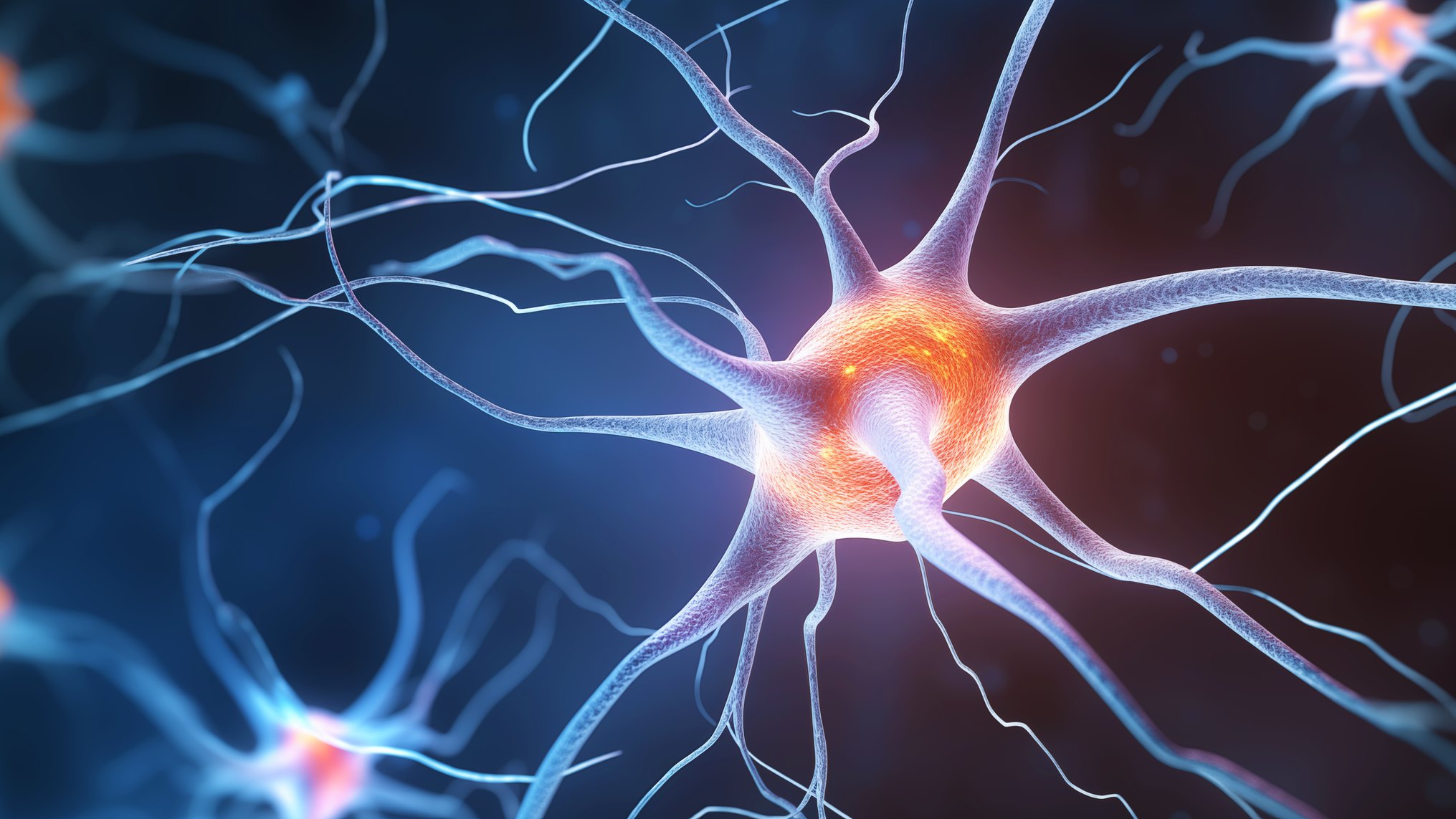
The nervous system.
Long before human beings built corporations, governments, or financial markets, the brain evolved around one central task: survival. The human nervous system developed to constantly scan for safety, threat, belonging, rejection, cooperation, and danger. Every meeting, conversation, negotiation, disagreement, promotion, leadership transition, or cultural shift still passes through these ancient biological filters whether we acknowledge it or not.
This is why trust matters so profoundly.
Trust is not merely a moral virtue or leadership buzzword. It is a neurological condition that determines whether human beings perceive one another as psychologically safe enough to cooperate with fully.
And fear, contrary to how many organizations think about it, does not simply affect morale. Fear changes cognition itself.
The future of leadership may depend less on understanding business mechanics and more on understanding human neurobiology.
Because organizations are not merely operational systems.
They are emotional and neurological systems operating at scale.
The Brain Was Built for Survival, Not Objectivity
One of the most important truths about human psychology is that the brain prioritizes survival over accuracy.
Neuroscientists have long understood that the brain continuously scans the environment for signs of threat. The amygdala, often associated with fear processing, acts like an early warning system. It responds rapidly to uncertainty, social rejection, unpredictability, status threats, and emotional danger.
This process happens largely beneath conscious awareness.
In practical terms, this means employees do not enter organizations as purely rational actors. They enter as nervous systems constantly interpreting emotional safety signals. Tone of voice. Facial expressions. Leadership consistency. Group dynamics. Psychological unpredictability. Power hierarchies. Inclusion. Exclusion. Public embarrassment. Fairness.
The brain interprets all of these as survival-relevant information.
This is one reason workplace fear becomes so damaging. Chronic fear shifts the nervous system into defensive states where cognitive resources become redirected toward self-protection rather than creativity, collaboration, or strategic thinking.
Under threat, humans narrow.
Attention narrows. Curiosity narrows. Risk tolerance narrows. Communication narrows.
People stop asking difficult questions. They avoid intellectual vulnerability. They conceal mistakes. They manage perception carefully. The organization may still appear productive externally while internally operating in a biologically defensive state.
And biologically defensive systems rarely produce exceptional cooperation.
Trust as a Neurochemical State
What makes trust fascinating is that it is not merely philosophical. It is biochemical.
Research from neuroscientist Paul Zak and others has demonstrated that trust correlates strongly with the release of oxytocin, a neurochemical associated with bonding, social connection, empathy, and cooperative behavior. When humans experience psychological safety and relational trust, the brain shifts into states that support openness, connection, and collaboration.
This matters enormously because the quality of cooperation inside organizations depends heavily on whether people feel safe enough neurologically to participate honestly.
High trust environments literally change the way people think and behave.
Employees become more willing to share information openly. Collaboration increases. Innovation improves. Stress decreases. Cognitive flexibility expands. Humans become more capable of complex problem-solving because the nervous system is not allocating excessive energy toward emotional threat detection.
Conversely, fear-driven cultures often produce compliance without genuine cooperation.
This distinction is critical.
A fearful employee may obey instructions. They may meet deadlines. They may avoid conflict outwardly. But fear suppresses many of the higher-order cognitive capacities modern organizations increasingly depend on. Creativity, adaptability, intellectual honesty, emotional intelligence, and collaborative thinking all deteriorate under chronic psychological threat.
The nervous system simply prioritizes survival first.
Why Fear Scales Faster Than Trust
One of the more uncomfortable realities of human psychology is that fear spreads faster than trust.
From an evolutionary standpoint, this makes perfect sense. Missing a threat historically carried greater survival consequences than missing an opportunity for connection. As a result, the human brain developed a negativity bias where threatening information captures attention more rapidly and intensely than positive information.
Inside organizations, this creates enormous leadership implications.
A single public humiliation from an executive can shape team behavior for months. One perceived act of unfairness can ripple through entire departments. Employees observe emotional consequences constantly, even when leadership assumes interactions are isolated.
Fear is socially contagious because nervous systems synchronize with one another.
Research in social neuroscience has shown that humans unconsciously mirror emotional states within groups. Anxiety spreads. Calm spreads. Distrust spreads. Psychological safety spreads. The emotional state of leadership often becomes the emotional state of the organization because humans continuously co-regulate socially.
This is why emotionally reactive leaders create organizational instability even when strategically competent. Employees begin adapting behavior around unpredictability itself. Communication becomes cautious. Innovation slows. Information gets filtered upward politically.
The organization starts optimizing for emotional survival rather than operational truth.
And this dynamic often remains invisible to leadership because fear-based cultures frequently produce artificial agreement.
People stop disagreeing openly long before they stop disagreeing internally.
Cooperation Is Humanity’s Superpower
What makes human civilization remarkable is not individual intelligence alone. Many animals possess forms of intelligence. Humanity’s true advantage has always been large-scale cooperation.
Historian Yuval Noah Harari argues that humans dominate the planet primarily because we can cooperate flexibly in massive groups through shared belief systems. Economies, legal systems, nations, religions, corporations, and currencies all function because humans collectively trust abstract social agreements enough to cooperate around them.
Trust is the invisible infrastructure underneath civilization itself.
Without trust, cooperation collapses into fragmentation.
This is why institutional trust erosion matters far beyond politics or public relations. Once enough people stop believing systems operate fairly or credibly, social cohesion weakens dramatically. Cynicism rises. Polarization intensifies. People retreat toward smaller tribal identities because large-scale cooperation no longer feels psychologically safe.
The same pattern occurs inside organizations.
Low trust companies become internally tribalized. Departments protect themselves. Information becomes territorial. Politics replace collaboration. Employees focus more on preserving status than solving problems collectively.
In many ways, organizational dysfunction is often neurological fragmentation masquerading as operational complexity.
The Modern Workplace and Chronic Nervous System Activation
Modern work environments may unintentionally activate human threat systems far more than many leaders realize.
Constant digital communication creates continuous psychological exposure. Employees are reachable at all hours. Slack notifications create ambient vigilance. Email overload increases cognitive fragmentation. Performance metrics become permanently visible. Economic uncertainty amplifies fear around replaceability. AI disruption introduces existential anxiety about future relevance.
The nervous system struggles with chronic uncertainty.
Historically, stress was often episodic. Humans encountered acute threats followed by recovery periods. Modern professionals increasingly live in persistent low-grade activation where the brain rarely fully exits alert mode.
This has serious consequences.
Chronic stress impairs emotional regulation, sleep quality, memory formation, empathy, and decision-making capacity. It also increases defensive behavior socially because exhausted nervous systems become less resilient under ambiguity.
In practical terms, many organizations are attempting to build collaborative, innovative cultures on top of biologically overstimulated human beings.
That creates tension modern leadership theory still underestimates.
Psychological Safety Is Not Softness
One reason many leaders misunderstand trust is because they confuse psychological safety with emotional comfort.
They are not the same thing.
Psychological safety does not mean avoiding accountability, conflict, standards, or difficult conversations. In fact, psychologically safe environments often support higher performance precisely because people feel secure enough to confront reality honestly.
Amy Edmondson’s work repeatedly found that psychologically safe teams report more mistakes, not because they fail more often, but because they hide less.
That distinction is profound.
Low trust cultures frequently appear stable because fear suppresses visible tension temporarily. But hidden problems compound silently. Employees conceal concerns. Teams avoid difficult truths. Information becomes politically distorted.
Psychological safety allows organizations to metabolize truth faster.
And truth is essential for adaptive systems.
The future likely belongs to organizations capable of maintaining high standards while simultaneously sustaining nervous system safety. That balance is difficult because fear often produces short-term compliance, which can create the illusion of effectiveness.
But over time fear degrades intelligence.
Trust expands it.
The Leadership Nervous System
Perhaps the most overlooked aspect of organizational neuroscience is that leaders themselves shape emotional environments biologically.
Leadership is not merely informational influence. It is nervous system influence.
Calm leaders regulate groups. Reactive leaders destabilize groups. Emotionally grounded leaders increase cognitive clarity inside teams. Chronically anxious leaders transmit uncertainty socially, even when saying all the “right” things verbally.
Humans constantly interpret emotional congruence beneath language.
Employees may forget specific presentations or strategy updates, but they rarely forget how leadership consistently made them feel neurologically. Safe. Unsafe. Seen. Dismissed. Calm. Hypervigilant. Trusted. Threatened.
This explains why trust repair becomes so difficult once emotional safety collapses repeatedly.
The nervous system remembers patterns long after rational explanations arrive.
Conclusion: The Biological Foundation of Civilization
The deeper one studies neuroscience, the more obvious it becomes that trust is not optional infrastructure for human systems.
It is foundational.
Trust shapes cognition, cooperation, innovation, resilience, emotional regulation, and collective intelligence itself. Fear may produce temporary obedience, but sustainable human cooperation requires something biologically different. Psychological safety. Relational stability. Emotional credibility.
Civilizations rise through cooperation. Organizations scale through cooperation. Teams thrive through cooperation.
And cooperation depends on whether human nervous systems perceive enough safety to move beyond self-protection.
This may ultimately become one of the defining leadership challenges of the modern era.
Not merely how to optimize systems, but how to build environments where human beings remain neurologically capable of trust in a world increasingly saturated with uncertainty, overload, disruption, and fear.
Because in the end, every company, institution, and society is built on something far more fragile than strategy.
Belief.
And belief lives inside the nervous system.
If You Liked This Article, You May Also Like …
- Trust Is the Real Employee Benefit: The Brain Science Behind Engagement That Lasts
- What Psychological Safety Is NOT
- The Emotionally Intelligent Brain in a High-Speed World