
Leadership Series
Modern leadership is often framed as an information problem. When performance dips or uncertainty rises, the instinct is predictable. Gather more data. Build better dashboards. Increase visibility. The assumption is that clarity lives on the other side of volume.
It sounds reasonable. It is also increasingly wrong.
Leaders today are not suffering from a lack of data. They are overwhelmed by it. Metrics multiply, reports expand, and real-time feeds create the illusion of control. Yet despite this abundance, decision quality does not improve at the same rate. In many cases, it declines.
The issue is not access. It is filtration.
Data, in its raw form, does not create insight. It creates noise. Without a system to prioritize, interpret, and discard, more data simply increases cognitive load. It complicates rather than clarifies.
The modern leader’s challenge is no longer acquiring information. It is deciding what to ignore.
The Rise of Data Saturation
Over the past two decades, organizations have invested heavily in data infrastructure. Analytics platforms, customer tracking tools, and operational dashboards have become standard. The promise was compelling. Better data would lead to better decisions.
To some extent, it has. Organizations now have unprecedented visibility into performance. However, this visibility has come with a cost.
Data saturation.
The sheer volume of available information makes it difficult to distinguish signal from noise. Every metric appears relevant. Every variation seems meaningful. Leaders are presented with more inputs than they can reasonably process.
Research published by the McKinsey & Company has highlighted this paradox. While data availability has increased dramatically, many organizations report slower decision-making and reduced confidence in those decisions.
This is not a contradiction. It is a consequence.
When everything is visible, nothing is prioritized.
The Cognitive Limits of Decision-Making
The human brain is not designed to process unlimited information. It relies on heuristics, patterns, and simplification to function efficiently.
When faced with excessive data, these mechanisms can break down.
Cognitive load increases, making it harder to focus on what matters. Decision fatigue sets in, reducing the quality of judgments over time. Leaders may default to familiar patterns or defer decisions altogether.
Psychologist Herbert Simon captured this dynamic decades ago when he noted that “a wealth of information creates a poverty of attention.” The statement is even more relevant today.
Attention is the bottleneck.
No matter how much data is available, the capacity to process it remains constrained. Without effective filters, leaders are forced to allocate attention inefficiently, often focusing on what is most visible rather than what is most important.
The Illusion of Precision
Another challenge associated with data abundance is the illusion of precision.
Detailed metrics can create a sense of accuracy that is not always justified. Numbers appear definitive. Trends seem conclusive. However, data is only as reliable as the assumptions and context that underpin it.
When leaders rely heavily on granular data without understanding its limitations, they risk overfitting their decisions. They respond to short-term fluctuations rather than underlying patterns. They optimize for metrics that may not align with long-term objectives.
This is particularly evident in environments where performance is measured across multiple dimensions. Leaders may find themselves chasing incremental improvements in isolated metrics while losing sight of the broader system.
Precision, in this context, becomes a distraction.
It narrows focus rather than expanding understanding.
Filters as a Leadership Capability
If more data is not the solution, what is?
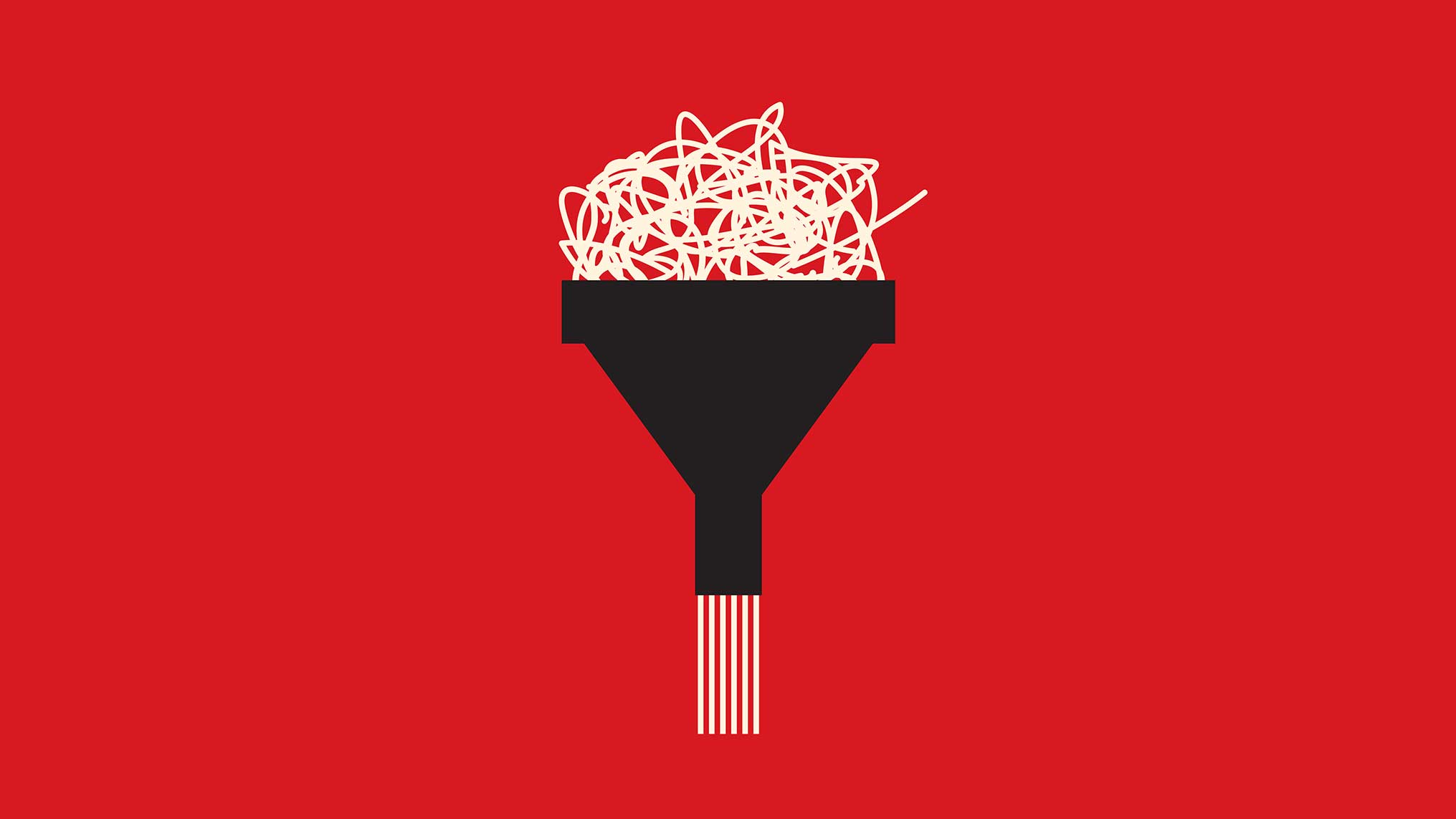
Filters.
Filters are the frameworks, principles, and mental models that determine how information is processed. They define what is relevant, what is actionable, and what can be ignored.
Effective filters do not eliminate data. They prioritize it.
At a basic level, filters answer three questions. What matters? Why does it matter? What action does it require?
These questions may seem simple, but they require clarity of purpose. Without a clear understanding of objectives, it is impossible to filter effectively. Everything appears important because there is no defined hierarchy.
This is where leadership becomes critical. Leaders set the context that enables filtering. They define priorities, align metrics with strategy, and create a shared understanding of what success looks like.
Without this clarity, data becomes unanchored.
The Role of Strategic Context
Data without context is noise. Filters provide that context.
Strategic context acts as a lens through which information is interpreted. It connects individual data points to broader objectives, allowing leaders to assess relevance more effectively.
For example, a fluctuation in a particular metric may appear significant in isolation. However, when viewed within the context of long-term strategy, it may be less meaningful.
Conversely, small changes in key indicators may signal larger trends that require attention.
The ability to distinguish between these scenarios is not a function of data quantity. It is a function of context.
Leaders who operate with clear strategic frameworks are better equipped to filter information. They can quickly identify what aligns with their objectives and what does not.
This reduces cognitive load and improves decision speed.
Designing Organizational Filters
Filters are not just individual capabilities. They can be designed into the organization.
One approach is to limit the number of metrics that are actively tracked. While it may be tempting to monitor everything, this often leads to dilution. Focusing on a smaller set of critical indicators creates clarity.
Another approach is to establish decision rules. These rules define how data should be interpreted and what actions should follow. For example, predefined thresholds can trigger specific responses, reducing the need for constant analysis.
Communication structures also play a role. Information should flow in a way that supports filtering. Reports should be concise, highlighting key insights rather than presenting raw data.
Importantly, filters must be dynamic. As the organization evolves, so too must the criteria used to evaluate information. What was relevant at one stage may become less important at another.
The Discipline of Ignoring
One of the most difficult aspects of filtering is deciding what to ignore.
Leaders are often reluctant to disregard information. There is a fear of missing something important, of overlooking a critical detail that could impact outcomes.
This fear is understandable, but it can be counterproductive.
Attempting to consider all available data leads to analysis paralysis. Decisions are delayed, and opportunities are missed.
Effective filtering requires confidence. It involves accepting that not all information will be considered, and that this is not a flaw but a necessity.
This discipline is closely tied to trust. Leaders must trust their frameworks, their teams, and their own judgment. Without this trust, the temptation to overanalyze remains strong.
Ignoring, when done intentionally, is not negligence. It is focus.
From Data-Driven to Decision-Driven
There is a subtle but important distinction between being data-driven and being decision-driven.
Data-driven organizations prioritize the collection and analysis of information. Decision-driven organizations prioritize the quality and speed of decisions.
This does not mean ignoring data. It means using data in service of decisions rather than as an end in itself.
In decision-driven environments, filters are central. Data is evaluated based on its ability to inform action. If it does not contribute to a decision, its relevance is questioned.
This approach shifts the focus from accumulation to application.
It also reinforces accountability. Decisions are owned, rather than deferred to data.
The Leadership Mindset Shift
Adopting better filters requires a shift in mindset.
Leaders must move away from the belief that more information inherently leads to better outcomes. They must recognize that their primary role is not to consume data, but to interpret it.
This involves embracing simplicity. Not simplistic thinking, but clarity. Distilling complex information into actionable insights.
It also requires humility. Acknowledging that not all data is useful, and that overreliance on metrics can obscure judgment.
Perhaps most importantly, it demands intentionality. Filters do not emerge automatically. They must be developed, tested, and refined over time.
A New Standard for Leadership
As the volume of data continues to grow, the ability to filter effectively will become an increasingly important leadership skill.
Organizations that master this capability will move faster, make better decisions, and adapt more effectively to change. Those that do not will struggle with complexity, even if they have access to the same information.
The difference will not be in what they know, but in how they process it.
The Real Bottleneck
In many ways, the conversation about data is a distraction.
The real bottleneck is not the availability of information. It is the capacity to interpret and act on it.
Leaders who recognize this can shift their focus. Instead of investing solely in data collection, they invest in developing the filters that make data useful.
This is not a rejection of analytics. It is an evolution.
Because in a world where information is abundant, the advantage belongs to those who can decide what matters.
A Final Reflection
The instinct to seek more data is deeply ingrained. It feels responsible, analytical, and thorough.
But leadership is not about completeness. It is about clarity.
Better filters create that clarity. They reduce noise, sharpen focus, and enable action.
The goal is not to know everything.
It is to understand enough to decide well.
And that begins not with more data, but with better judgment about what to do with the data you already have.