
Personal Development Series
Let’s get one thing straight: I love technology. I really do.
I love that I can ask my phone how to convert Fahrenheit to Celsius. I love that I can dictate a grocery list and have it magically appear in a shared note. I love that I can use AI to brainstorm ideas for this article. But recently, I’ve been wondering—at what cost?
Not the data privacy cost, not the job loss debate, not the sci-fi “will the machines rise?” question.
No, I’m talking about something quieter. More personal. More human.
I’m talking about the creeping suspicion that AI—while making life easier—is making us a little slower, a little softer, a little… dumber.
The Slippery Slope of Convenience
It started innocently enough. A quick prompt to ChatGPT to rephrase a tricky email. A request to summarize a dense article. A shortcut here, a time-saver there. But then, something shifted.
I found myself hesitating to write from scratch.
I noticed I was skipping the mental gymnastics I used to take pride in—crafting sentences, finding the perfect word, organizing thoughts.
Instead of digging deep and doing the hard cognitive work, I was outsourcing it. And the more I did, the less capable I felt.
It wasn’t a dramatic decline. It was subtle. Gradual. Like forgetting a familiar road because you’ve used GPS one too many times.
And that’s when it hit me: I wasn’t just saving time—I was slowly surrendering my thinking.
“Liberation” or Laziness?
AI evangelists tell us this is the great liberation. The machines will do the boring stuff so we can be more creative, more strategic, more human.
But let’s be honest—are we using that extra brain space to write novels, build businesses, or learn new languages?
Or are we just coasting?
Because here’s the truth: what we don’t exercise, we lose.
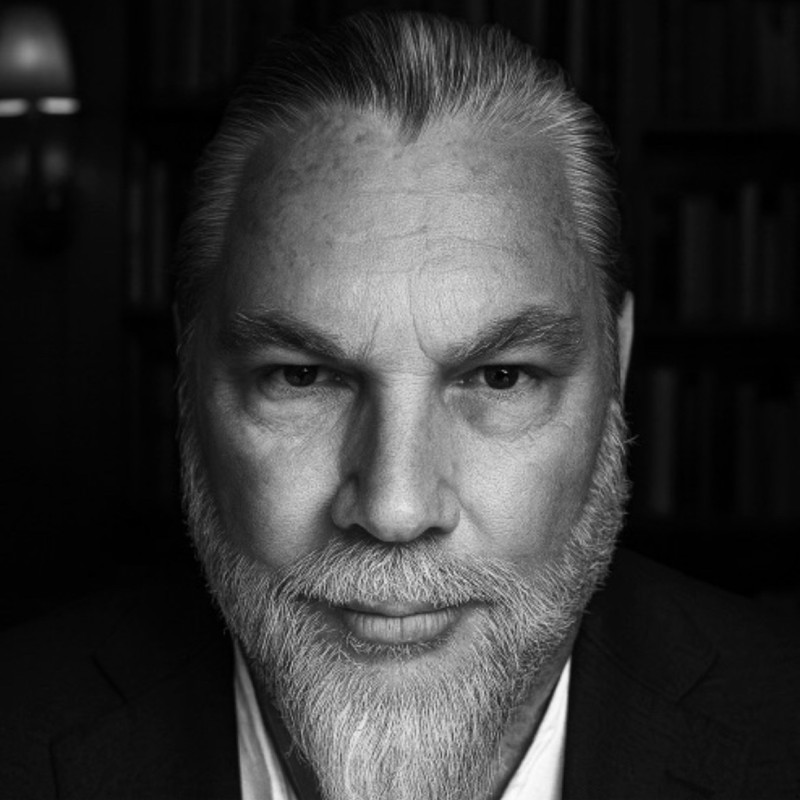
Robert Sternberg, a psychology professor at Cornell who studies intelligence and creativity, warns that AI is already taking a toll. Like unused muscles, our minds are starting to atrophy.
And we’re not talking about fringe theory. We’re talking real cognitive decline: weakened memory, reduced critical thinking, dulled creativity.
Let’s not sugarcoat it. We are becoming passive participants in our own thinking. And that should scare us.
Cognitive Offloading: Helpful or Harmful?
Humans have always outsourced memory. Ancient scribes used tablets. We use calendars and calculators. There’s nothing wrong with offloading mental tasks—until we start offloading everything.
We used to remember phone numbers. Now we can’t recall our partner’s number without scrolling. We used to read whole articles. Now we scan headlines and ask bots to summarize.
Sure, that’s convenient. But is it costing us something deeper?
A 2025 study in Societies found that frequent use of generative AI correlates with lower critical thinking—especially among younger users. Another study from the Wharton School showed that students who relied on AI tutors performed worse on AI-free exams.
The pattern is clear: The more we offload, the less we engage. The less we engage, the less we grow.
Is This the Death of Deep Work?
You know what real thinking feels like?
It’s messy. Slow. Sometimes uncomfortable.
It’s staring at a blank page and trying to translate swirling thoughts into language. It’s grappling with opposing ideas. It’s searching for a better metaphor when the first one doesn’t land.
It’s work. But it’s also where insight lives. Where growth happens. Where your brain sharpens and your confidence builds.
That’s what we risk losing when we hand our cognitive effort to a machine.
And here’s the kicker: the more we outsource our hard thinking, the less capable we feel of doing it. Which makes us reach for AI even faster.
It’s a loop. A spiral. And unless we wake up, we’re heading straight into a future where we don’t know how to think—we just ask the thing that thinks for us.
The Second Life of the Mind
There’s a moment in all of this—quiet but profound—when you start to feel it.
The ache of a thought left unfinished. The discomfort of not knowing how to say what you mean without help. The doubt that creeps in when you’re asked to explain something without a prompt.
It’s like realizing you’ve been living life on autopilot.
And that’s the wake-up call.
Because the second life of your mind—the part that’s curious, present, fully alive—doesn’t begin when AI gets better. It begins when you decide to engage again.
What Happens When You Wake Up
When you step off the cognitive treadmill and start using your brain like it matters, something shifts.
You stop looking for shortcuts. You start taking the stairs, mentally speaking. You remember what it feels like to wrestle with words, to sit in uncertainty, to form your own conclusions.
And it feels good.
It feels real.
Use It or Lose It
So what do we do?
We don’t have to ditch AI altogether. That’s not realistic—or even wise. These tools are powerful, and yes, they can be helpful. But they must remain just that: tools.
We need to use them with intention, not dependence.
That Means.
- Write before you prompt. See what you can come up with before you ask for help.
- Summarize in your own words. Even if it takes longer, the act of doing it improves your comprehension.
- Take mental notes. Don’t rely solely on transcripts—engage your brain during meetings.
- Get lost on purpose. Ditch the GPS now and then. Exercise your spatial awareness.
- Talk to people. Don’t let AI craft every message. Reclaim the art of conversation—even the awkward bits.
It’s not about rejecting progress. It’s about choosing presence over passivity. Effort over ease. Thought over automation.
This Is Our Fork in the Road
We’re standing at a crossroads. One path leads to increasing dependence—where AI becomes the brain and we become the hands. Efficient, yes. But hollow. The other leads to a more intentional partnership. Where AI handles what it’s good at, and we strengthen the muscles that make us human—our discernment, our voice, our creativity, our courage. The first path is smooth. Tempting. Convenient.The second? It’s harder. Slower. But so much more rewarding.
So the real question is this:Are you still living your first cognitive life—on autopilot? Or are you ready to step into your second—on purpose? Because the future isn’t about how smart AI becomes. It’s about whether we stay awake.