By Charles Duhigg
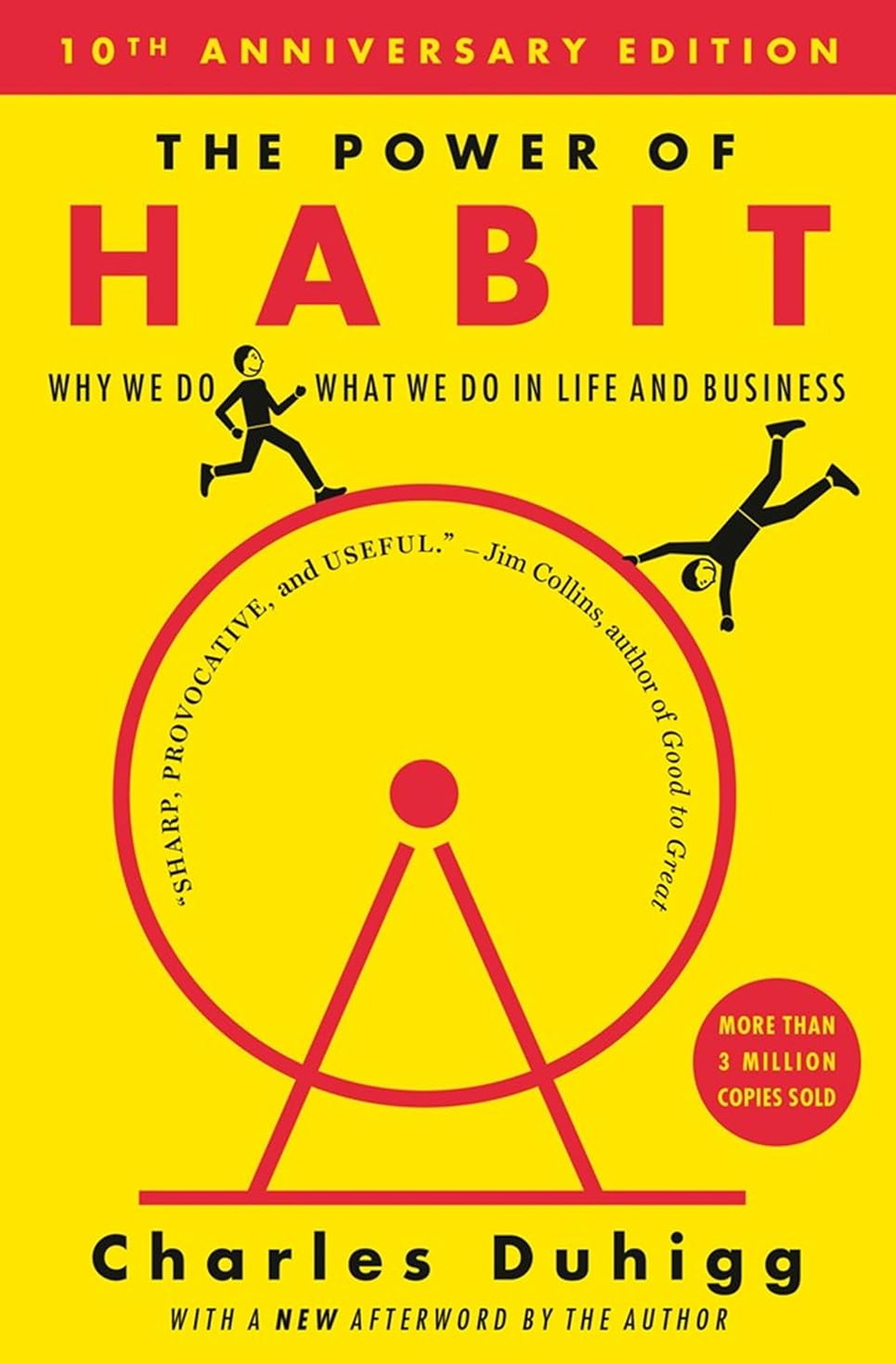
Charles Duhigg’s The Power of Habit is built around a deceptively simple idea: much of what we do every day is not the result of conscious decision making, but the consequence of habits that operate beneath awareness. We like to think of ourselves as rational actors, carefully choosing how we eat, work, spend, speak, lead, and live. Duhigg challenges that assumption by showing that human behavior is often driven by automatic loops of cue, routine, and reward. Once these loops are installed, they can shape individual lives, corporate cultures, consumer behavior, and even social movements.
BUY THIS BOOK
The book is not merely about self improvement. It is about behavioral architecture. Duhigg argues that habits are the invisible structures through which people and organizations conserve mental energy. The brain turns repeated actions into automatic routines so that it can free itself for other demands. This is efficient, but it is also dangerous. Once behavior becomes automatic, we can continue doing things long after they no longer serve us. We may keep reaching for snacks, avoiding difficult conversations, reacting defensively, overspending, procrastinating, or tolerating broken systems because the habit loop has become stronger than conscious intention.
At the heart of the book is what Duhigg calls the habit loop. Every habit has three parts: a cue, a routine, and a reward. The cue is the trigger that tells the brain to begin a behavior. The routine is the action itself. The reward is the payoff that teaches the brain whether the loop is worth remembering. Over time, the brain begins to anticipate the reward as soon as the cue appears. That anticipation creates craving, and craving is what gives habits their power. Without craving, a behavior may repeat occasionally, but it is unlikely to become deeply ingrained.
Duhigg uses neurological research to show how habits are formed in the brain, particularly through activity in the basal ganglia, a region associated with pattern recognition and automatic behavior. He describes how, when a new behavior is being learned, the brain works actively throughout the task. But once the behavior becomes habitual, mental activity decreases during the routine. The brain essentially stops working as hard because it has converted the sequence into a stored pattern. This explains why habits can feel so effortless once established, and why they can be so difficult to interrupt.
One of the most important insights in the book is that habits cannot simply be erased. They must usually be replaced. The cue and reward often remain powerful, so the most effective strategy is to insert a different routine between them. This is sometimes called the golden rule of habit change. To change a habit, keep the same cue and the same reward, but alter the routine. For example, someone who snacks every afternoon may not actually crave food. They may crave a break, social interaction, energy, or relief from boredom. The task is not just to stop snacking. The task is to identify the cue, understand what the reward at the end of the loop is actually satisfying, and create a new routine that meets the same craving in a healthier way.
This is where the book becomes especially useful. Duhigg is not saying that habit change is easy. He is saying it becomes more manageable when treated as a diagnostic process rather than a test of willpower. Too often people attack the surface behavior without understanding the loop beneath it. They blame themselves for lacking discipline, when what they really lack is clarity about the trigger and payoff. A person cannot reliably change what they have not studied. Self awareness, in Duhigg’s framework, is not abstract introspection. It is behavioral investigation.
The book also explores the role of belief. Duhigg argues that replacement routines may work for a while, but deep and lasting change often requires belief that change is possible. Carol Dweck’s research covers the same ground from another angle, explaining why belief in the possibility of change is a prerequisite for it. This is why groups can be so powerful. Whether in recovery programs, teams, religious communities, or social movements, people often change more successfully when they are surrounded by others who reinforce the belief that a new identity and new behavior are attainable. Habit change is not just mechanical. It is social and psychological. People need structures, but they also need meaning.
One of the strongest sections of the book focuses on keystone habits. These are habits that create disproportionate effects because they influence other behaviors. Exercise is a classic example. Someone who begins exercising regularly may also start eating better, sleeping better, spending less impulsively, and feeling more disciplined in other areas of life. The exercise habit becomes a leverage point. It generates small wins, changes self perception, and begins to reorganize other patterns. This is the same principle behind small repeatable routines compounding into a different life. Keystone habits matter because not all habits are equal. Some habits create momentum far beyond the behavior itself.
Duhigg applies this idea to organizations through the story of Paul O’Neill, who became CEO of Alcoa and focused obsessively on worker safety. At first, some investors and analysts thought this focus seemed narrow or even misplaced. But O’Neill understood that safety was a keystone habit. By improving safety, the company had to improve communication, accountability, operational discipline, reporting systems, and trust between labor and management. Safety became the organizing principle through which broader organizational excellence could be built. The lesson is profound: leaders often try to change everything at once, but the smarter move may be to identify the habit that, if changed, forces many other things to improve.
This insight has enormous relevance for business leadership. Many organizations attempt transformation by launching broad initiatives, changing slogans, restructuring teams, or investing in new technology. Duhigg’s framework suggests that culture changes when routines change. A company’s culture is not what it says on the wall. It is what people repeatedly do, especially under pressure. If employees habitually avoid bad news, that is culture. If managers habitually punish candor, that is culture. If teams habitually escalate conflict rather than resolve it, that is culture. Organizational life is built from recurring behavioral loops.
The book also examines consumer habits and the way companies study and influence behavior. Duhigg discusses how businesses learn to identify patterns in consumer data and use those patterns to predict or shape purchasing decisions. The famous example from Target illustrates how retailers can detect changes in customer behavior and market products accordingly. This section raises unsettling questions about privacy, manipulation, and the commercial power of behavioral science. Once companies understand habit loops, they can design products and marketing strategies that insert themselves into daily routines.
Duhigg also explores how products become habitual by creating cravings. Febreze, for example, initially struggled because consumers who lived with bad smells often became habituated to them and did not notice the problem. The product became successful when it was repositioned not merely as a solution to odor, but as a finishing ritual associated with cleanliness and satisfaction. The reward changed. The product became part of a routine that made people feel their cleaning was complete. This example reveals an uncomfortable truth about markets: people do not simply buy products because they need them. They buy them because the product fits into an emotional and behavioral loop.
Another important theme is willpower. Duhigg presents willpower not as a fixed trait, but as a habit that can be strengthened and depleted. He discusses research suggesting that self control functions like a muscle. It can become fatigued, but it can also be trained. When people practice self discipline in one area, it can spill into other areas of life. This again connects to keystone habits. A person who learns to follow through consistently in one domain may begin to see themselves as someone capable of discipline, and that identity can influence other choices.
However, Duhigg also makes clear that willpower is not simply an individual issue. Environment matters. People are more likely to exercise willpower when they have planned for difficult moments in advance. In organizations, employees perform better when they have a sense of agency and control. This is critical. Systems that demand self control while denying people autonomy may actually weaken performance. People need not only rules, but also ownership. A habit is more powerful when people understand it, participate in it, and feel some control over how it is enacted.
The book then widens its lens to social habits. Duhigg examines how movements emerge through patterns of friendship, social pressure, and shared identity. He describes how social change often begins through strong ties, spreads through weak ties, and becomes durable through new habits of community. This helps explain why movements are not simply the result of ideas. Many people may privately agree with an idea, but movements require routines of participation, obligation, and belonging. Social change becomes powerful when belief is turned into repeated collective behavior.
One of the more interesting implications of the book is that identity and habit are deeply connected. We become what we repeatedly do, but we also keep doing what confirms who we believe we are. This creates either a virtuous or vicious cycle. A person who sees themselves as disciplined is more likely to act in disciplined ways. A person who repeatedly follows through begins to see themselves as disciplined. The behavior shapes the identity, and the identity reinforces the behavior. This is why habit change often requires more than tactics. It requires a shift in self conception.
The practical value of The Power of Habit lies in its clarity. Duhigg gives readers a way to examine behavior without moral panic. Instead of asking why they are so weak, the reader can ask what cue is triggering this routine and what reward they are actually seeking. Instead of asking why a company is so dysfunctional, a leader can ask what habits are being repeated and what rewards are sustaining them. This shift from blame to diagnosis is one of the most useful contributions of the book.
At the same time, the book carries a deeper warning. If habits shape so much of life, then the quality of our lives depends heavily on the systems we allow to become automatic. A habit is not just a behavior. It is a vote for a future. Each repeated action makes some version of ourselves more likely. Each organizational routine makes some culture more durable. Each consumer pattern makes some market more powerful. What we repeat, we reinforce. What we reinforce, we eventually become.
The ultimate message of The Power of Habit is both empowering and humbling. We are not as consciously in control as we like to believe, but we are not helpless either. By understanding the architecture of habit, we can redesign behavior at the level where it actually operates. We can identify cues, test rewards, replace routines, build keystone habits, create belief through community, and reshape environments so that better behaviors become easier to repeat.
For individuals, the book is a call to study the mechanics of one’s own life. For leaders, it is a reminder that culture is not changed through speeches, but through repeated patterns of behavior. For businesses, it is a playbook for understanding customers and employees at the level of routine and reward. For society, it offers a lens through which movements, norms, and collective change can be understood.
In the end, Duhigg’s central insight is simple but powerful: habits are destiny only when left unexamined. Once we understand them, they become tools. The routines that once controlled us can be redesigned. The patterns that once kept organizations stuck can become engines of change. The behaviors that once seemed automatic can become deliberate. The power of habit is not just that habits shape our lives. It is that, with enough awareness and discipline, we can shape them back.