Personal Development Series
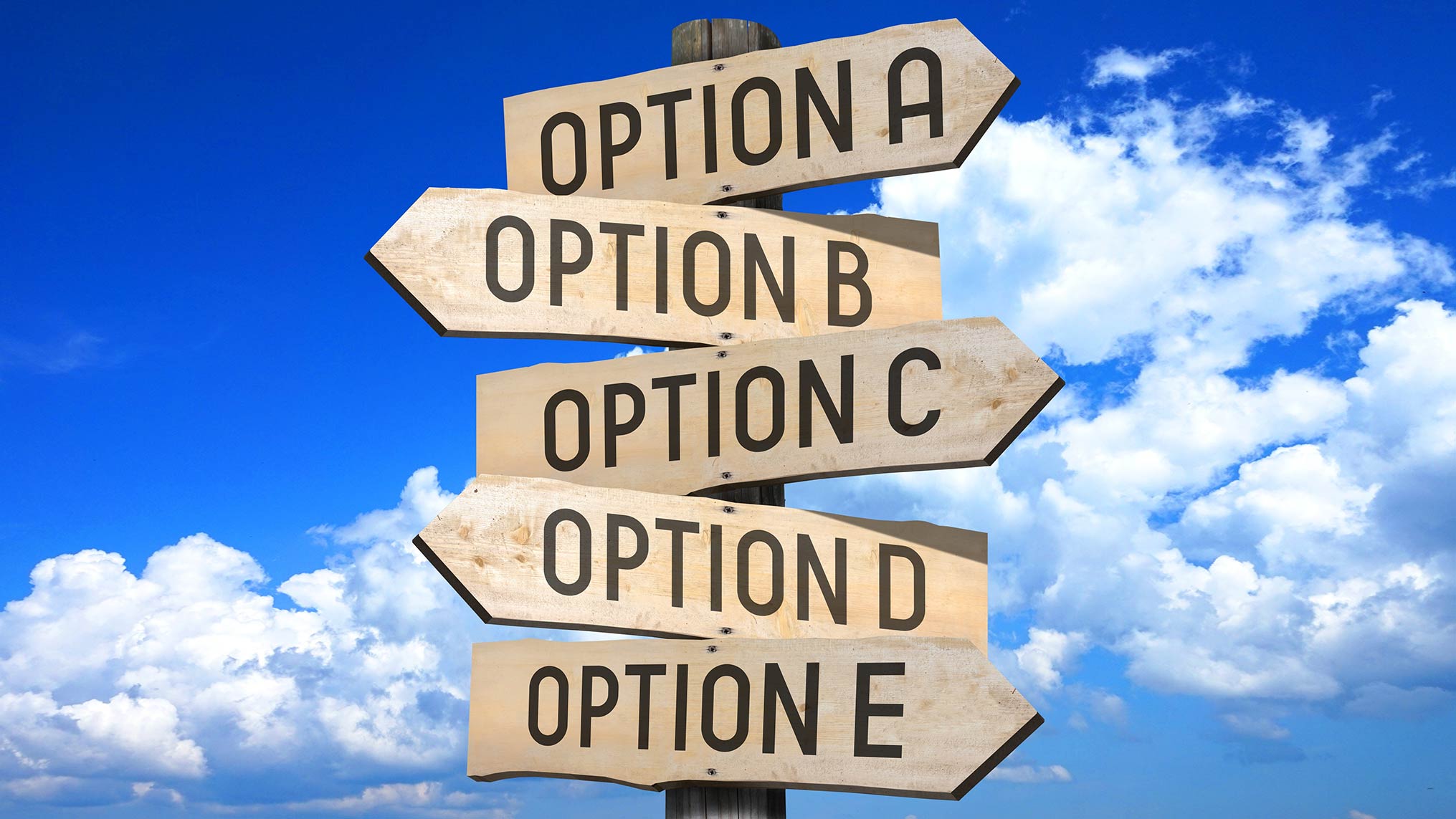
We have more options than any generation in history, and yet we have never been more restless.
Careers are fluid. Geography is flexible. Relationships are customizable. Identity feels editable. Entire lives can be redesigned with a few bold decisions. On the surface, this looks like freedom. In reality, it often feels like pressure.
The paradox of modern life is that expanded choice has not produced expanded peace. It has produced expanded anxiety.
Optionality was supposed to liberate us. Instead, it has quietly destabilized us.
The Illusion of Infinite Pathways
In previous generations, life was narrower. You inherited a trade, a geography, a community. You had fewer decisions to make because many were made for you. While that constraint carried its own limitations, it also carried clarity. The path was visible.
Today, the path is not just invisible; it is infinite.
You can switch careers at thirty-five. You can build a brand from your laptop. You can relocate across the country or the world. You can pivot industries. You can monetize a hobby. You can redesign your lifestyle every few years. You are told constantly that you are one bold decision away from reinvention.
And while this is empowering, it also creates a subtle burden: if every path is possible, then every path not taken feels like loss.
Optionality does not simply give you choices. It confronts you with opportunity cost in real time.
Freedom as Responsibility
When options expand, responsibility expands with them.
If you dislike your job, you cannot blame geography. If your business stalls, you cannot blame lack of access. If your life feels misaligned, you cannot claim there were no alternatives. The modern world whispers, “You could have chosen differently.”
That whisper becomes internalized pressure.
Optionality shifts failure from fate to choice. If everything is possible, then stagnation feels self-inflicted. This amplifies anxiety because every decision feels heavier. You are not merely choosing a job; you are choosing a version of yourself. You are not merely staying; you are actively not leaving.
The weight of potential can be heavier than the weight of constraint.
The Psychology of Too Much Choice
Psychological research has repeatedly shown that while some choice increases satisfaction, excessive choice increases paralysis. When options multiply, decision fatigue sets in. Cognitive bandwidth narrows. Regret probability rises.
This is because choice requires comparison, and comparison activates evaluation. Evaluation triggers uncertainty. Uncertainty fuels anxiety.
When there are three viable paths, you deliberate. When there are thirty, you hesitate. When there are three hundred, you stall.
Optionality promises autonomy but often delivers rumination.
This is why many high-performing professionals, despite having abundant opportunities, feel stuck. They are not lacking options. They are overwhelmed by them.
Identity Fragmentation
Optionality also fragments identity.
When you can become anything, committing to one thing feels like closing doors. The fear is not simply choosing wrong. It is choosing too narrowly. We fear becoming outdated versions of ourselves.
So we hedge. We keep side projects alive. We maintain backup plans. We avoid full commitment because full commitment reduces optionality. Yet in preserving options, we dilute focus.
Identity becomes provisional rather than anchored.
You are not fully an entrepreneur because you might pivot. You are not fully committed to your role because something better may emerge. You are not fully present in your current season because you are scanning for the next.
This scanning produces low-grade anxiety. It prevents immersion.
And immersion is where meaning lives.
The Comparison Engine
Optionality is magnified by visibility.
In previous eras, you compared yourself to neighbors. Today, you compare yourself to global highlight reels. Social media is a live feed of alternative lives. Every scroll presents a different path someone else has chosen and apparently succeeded in.
This constant exposure fuels what psychologists call “counterfactual thinking.” You imagine the life you could be living had you chosen differently. The brain struggles to differentiate between real loss and imagined loss. The result is dissatisfaction with perfectly viable choices.
Optionality combined with visibility produces chronic second-guessing.
You are not just evaluating your path; you are evaluating it against thousands of others.
The Hidden Cost of Keeping Doors Open
Many people pride themselves on maintaining optionality. They avoid long-term commitments. They resist specialization. They delay decisions. The rationale sounds strategic: stay flexible, preserve leverage, avoid being boxed in.
However, there is a hidden cost.
Every open door consumes cognitive energy. Every unclosed loop occupies mental space. When too many possibilities remain active, focus fragments. Energy disperses.
The irony is that real leverage often comes from constraint. When you choose deliberately and commit deeply, skill compounds. Reputation solidifies. Identity stabilizes. Opportunity narrows, but depth increases.
Optionality maximizes breadth. Commitment maximizes density.
And density builds momentum.
The Anxiety of the “Perfect” Choice
Modern culture also amplifies the myth of the optimal decision. We are told that with enough research, enough self-awareness, and enough data, we can engineer the ideal life path.
This belief intensifies anxiety because no decision feels sufficient. There is always another podcast, another framework, another case study. We delay action in pursuit of certainty.
But life does not reward perfect decisions. It rewards adaptive decisions.
The anxiety of optionality often dissolves when we shift from “What is the best choice?” to “What is the next aligned choice?”
Perfection is paralyzing. Alignment is actionable.
High Agency Within Constraint
There is a deeper lesson here about agency.
Optionality feels like power because it offers choice. Yet paradoxically, too much choice can reduce agency by overwhelming it. True agency is not the presence of infinite options; it is the ability to choose decisively within constraints.
Constraint sharpens identity. It forces prioritization. It clarifies trade-offs.
When you voluntarily narrow your field of options, you reduce anxiety. You transform possibility into direction. The act of commitment stabilizes the nervous system because it ends rumination.
You move from scanning to building.
Optionality in Leadership
For leaders, the anxiety of optionality manifests in strategic drift. Endless new initiatives appear promising. Markets shift. Technologies emerge. The temptation to pivot constantly is strong.
Without disciplined prioritization, organizations chase multiple directions simultaneously. Execution suffers. Teams grow fatigued. Strategy becomes reactive rather than intentional.
High-agency leaders reduce optionality deliberately. They define what the organization will not pursue. They create focus through exclusion. This is uncomfortable because it means letting attractive opportunities pass.
Yet clarity reduces collective anxiety. When teams know what matters most, cognitive load decreases. Energy concentrates.
Leadership is not about maximizing options; it is about optimizing commitment.
Reclaiming Peace in a World of Choice
The solution to the anxiety of optionality is not retreating from modern life. It is redefining freedom.
Freedom is not the endless preservation of options. It is the disciplined selection of a path and the willingness to walk it fully. It is the courage to accept opportunity cost as the price of depth.
When you commit, you quiet the internal negotiation. You stop asking who you could be and start investing in who you are becoming.
There will always be alternative paths. That reality does not disappear. What changes is your relationship to it. Instead of seeing unchosen options as losses, you begin to see them as necessary exclusions.
Depth requires sacrifice.
Peace requires decision.
The Rare Discipline
In a culture intoxicated with possibility, the rare discipline is commitment. It is choosing without obsessing. It is narrowing without fearing irrelevance. It is building without constantly scanning for escape routes.
Optionality is a gift when used strategically. It becomes anxiety when preserved indefinitely.
The mature response to modern freedom is not paralysis. It is intentional constraint.
You do not need every door open to live expansively. You need the right door chosen and the discipline to walk through it fully.
If You Liked This Article, You May Also Like …
- CEO Excellence: The Six Mindsets That Distinguish the Best Leaders from the Rest
- Emotional Intelligence: Why It Can Matter More Than IQ
- Be the Unicorn: 12 Data-Driven Habits That Separate the Best Leaders from the Rest
CHECK OUT THIS WEEK’S DEEP DIVES BOOK SUMMARY