
Deep Dives Articles
DEEP DIVES ARTICLE — EMOTIONAL INTELLIGENCE

The Emotionally Intelligent Brain in a High-Speed World
This is a sneak peek of this week’s Deep Dives article. Published today!
We are moving faster than ever, yet thinking worse than we realize. The modern world rewards speed, responsiveness, and constant engagement, but beneath that velocity something critical is breaking down. Our ability to think clearly under pressure is eroding. Emotional signals are getting louder, decision cycles are getting shorter, and the brain is defaulting to reaction over reflection. The real risk is not that we are overwhelmed, it is that we no longer notice when our judgment is compromised. In the full Deep Dive, we unpack the neuroscience, psychology, and hidden costs of operating at high speed, and more importantly, how to build a mind that can keep clarity when everything else is accelerating.
DEEP DIVES ARTICLE — PERSONAL DEVELOPMENT

Building a Mind That Can Handle More Without Becoming Less Human
This is a sneak peek of this week’s Deep Dives article. Published today!
There is a subtle erosion happening in high performers. As demands increase, they become sharper, faster, more efficient, and at the same time less patient, less curious, and less emotionally present. Somewhere along the way, capacity is gained but humanity is lost. The question is not whether you can handle more, it is what you are sacrificing in the process. The full article explores the neuroscience and psychology behind this tradeoff and shows how to expand your mental capacity without narrowing who you are. If you want to perform at a higher level without becoming a diminished version of yourself, the full Deep Dive is where that work begins.
DEEP DIVES ARTICLE — LEADERSHIP

The Leadership Bottleneck: When Everything Still Depends on You
This is a sneak peek of this week’s Deep Dives article. Published today!
If your business only moves when you move, you do not have a scalable organization. You have a highly dependent system disguised as leadership. It feels productive, even necessary, to stay involved in everything, but that constant involvement is often the very constraint preventing real growth. The uncomfortable truth is that the bottleneck is rarely the market or the team. It is the structure that still routes everything through you. The full article breaks down why this happens and how to redesign your organization so decisions, execution, and momentum no longer depend on your presence. If you are serious about scale, you will want to unlock the full Deep Dive.
Deep Dives Book Summary
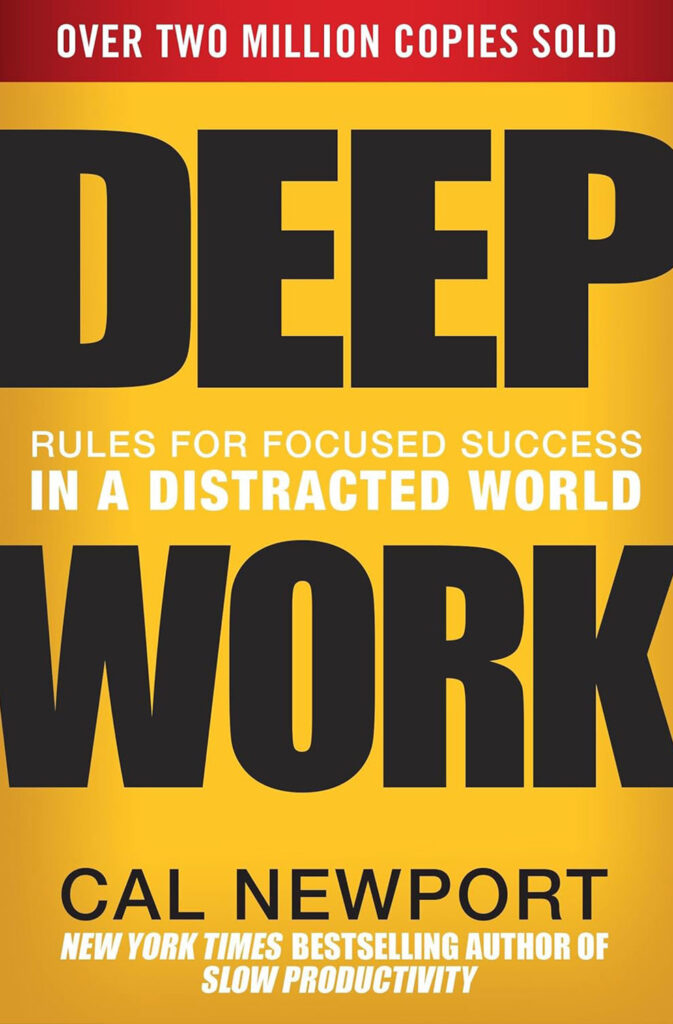
This is a sneak peek of this week’s Deep Dives Book Review. Published today!
If you think distraction is just a modern inconvenience, Cal Newport’s Deep Work makes a far more unsettling argument: distraction is quietly rewiring our ability to think. In a world obsessed with responsiveness, notifications, meetings, and constant availability, the people who can still focus deeply are becoming the new elite. This Deep Dive unpacks why most professionals are trapped in a cycle of “productive busyness,” how shallow work is eroding creativity, performance, and even meaning itself, and why attention may become the single most valuable economic asset of the next decade. The full article explores the psychology, neuroscience, and cultural consequences behind this shift, along with the practical frameworks Newport argues can help people reclaim cognitive control before distraction becomes their permanent operating system.
Quick Reads
quick read — Emotional intelligence
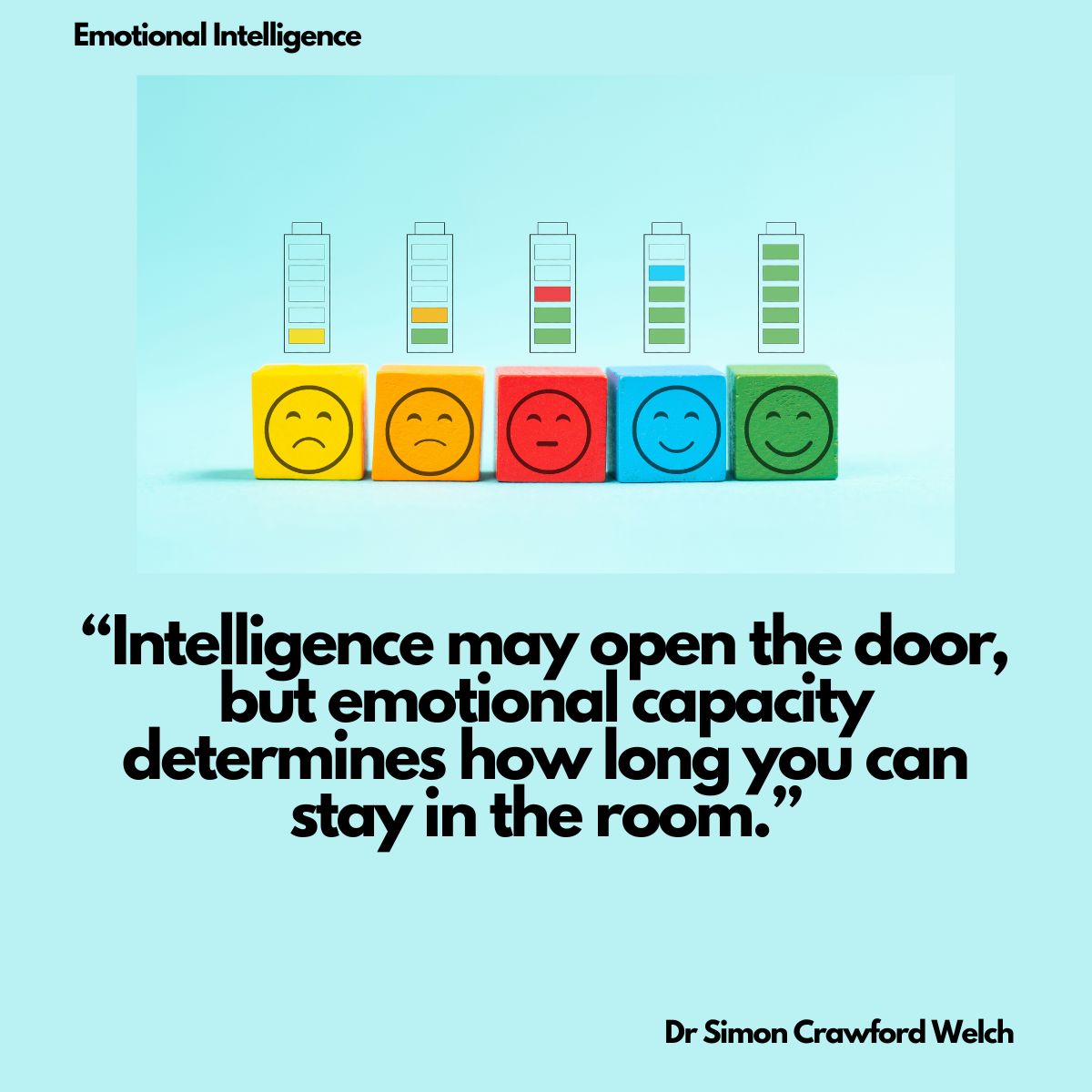
Emotional Capacity Is the New Competitive Advantage
There was a time when raw intelligence was the ultimate differentiator. Then came the information era, where access to knowledge was democratized and speed of execution separated leaders from laggards. Today, information is abundant, intelligence is increasingly augmented by machines, and execution can be systematized. A quieter variable is emerging as the true constraint on performance: emotional capacity.
Most organizations measure what is easy to quantify, such as output, efficiency, revenue, and conversion rates. Beneath those metrics sits a deeper layer of human performance that rarely reaches a dashboard. It is the ability to process stress without shutting down, navigate ambiguity without becoming reactive, and engage in conflict without fracturing relationships. Emotional capacity, simply put, is the ability to remain effective under emotional pressure.
The Hidden Constraint
In high-growth organizations, the common story is that systems break first. But systems do not break in isolation; they are operated by people whose ability to handle complexity is finite. Research in organizational psychology has long shown that cognitive overload reduces decision quality, and studies from institutions like Stanford and Harvard find that as stress rises, individuals default to habitual rather than adaptive thinking. When emotional capacity is exceeded, even highly intelligent people simplify problems prematurely, avoid difficult conversations, or make reactive decisions. The result is a subtle, compounding degradation that creates an invisible ceiling on growth.
The Illusion of Rational Leadership
Modern leadership culture overvalues rationality. We celebrate data-driven decisions and analytical rigor, which creates the illusion that leadership is primarily a cognitive exercise. In reality, it is as much an emotional discipline. In a high-stakes meeting, ego, fear of failure, desire for control, and interpersonal dynamics all shape how the data is interpreted. Daniel Goleman’s work on emotional intelligence highlighted self-awareness, self-regulation, and empathy, but emotional capacity extends beyond awareness. It is the resilience to stay present with emotion without being overwhelmed. Awareness without capacity often produces insight without change.
Technology Is Raising the Stakes
As AI absorbs routine cognitive tasks, the human role shifts toward judgment, creativity, and complex interpersonal interaction, the very areas most vulnerable to emotional overload. The differentiator is no longer who produces the most information, but who can navigate the emotional complexity around it. AI also compresses decision cycles and amplifies pressure, creating continuous low-level stress. Without sufficient capacity, people become reactive, defaulting to speed over quality.
The Cost of Fragility
Emotional fragility rarely announces itself. A leader avoids a hard conversation and a small issue grows. A team member disengages after feedback. A strategic initiative stalls under the discomfort of uncertainty. These patterns carry economic consequences. Gallup research consistently ties engagement to productivity and profitability, and engagement is deeply tied to emotional dynamics. Fragility in leadership also cascades, as teams mirror avoidance, defensiveness, and reactivity.
Building Capacity as a Strategic Asset
Unlike technical skills, emotional capacity is built through experience, reflection, and deliberate practice. One of the most effective methods is controlled exposure to discomfort, leaning into difficult conversations and ambiguity rather than avoiding them. Organizational design matters too: environments that encourage open dialogue and psychological safety let people process emotions constructively. Neuroscience supports this; research on neuroplasticity suggests that repeated exposure to challenge, combined with reflection, can rewire stress-response pathways over time.
A New Definition of Strength
For much of business history, strength meant control and composure. True strength is not the absence of emotional response. It is the ability to experience emotion without being controlled by it, to remain engaged amid discomfort, and to act with clarity when certainty is unavailable. This reframes leadership from performance to presence, and from control to awareness.
As change accelerates, the gap between those with high emotional capacity and those without will widen. It is difficult to copy, automate, or outsource. Emotional capacity is not a soft skill; it is infrastructure that determines how much complexity a person or organization can carry without breaking. The question is not whether emotional pressure will rise. It will. The advantage belongs to those who expand their capacity to meet it without losing themselves in the process.
quick read — Personal development
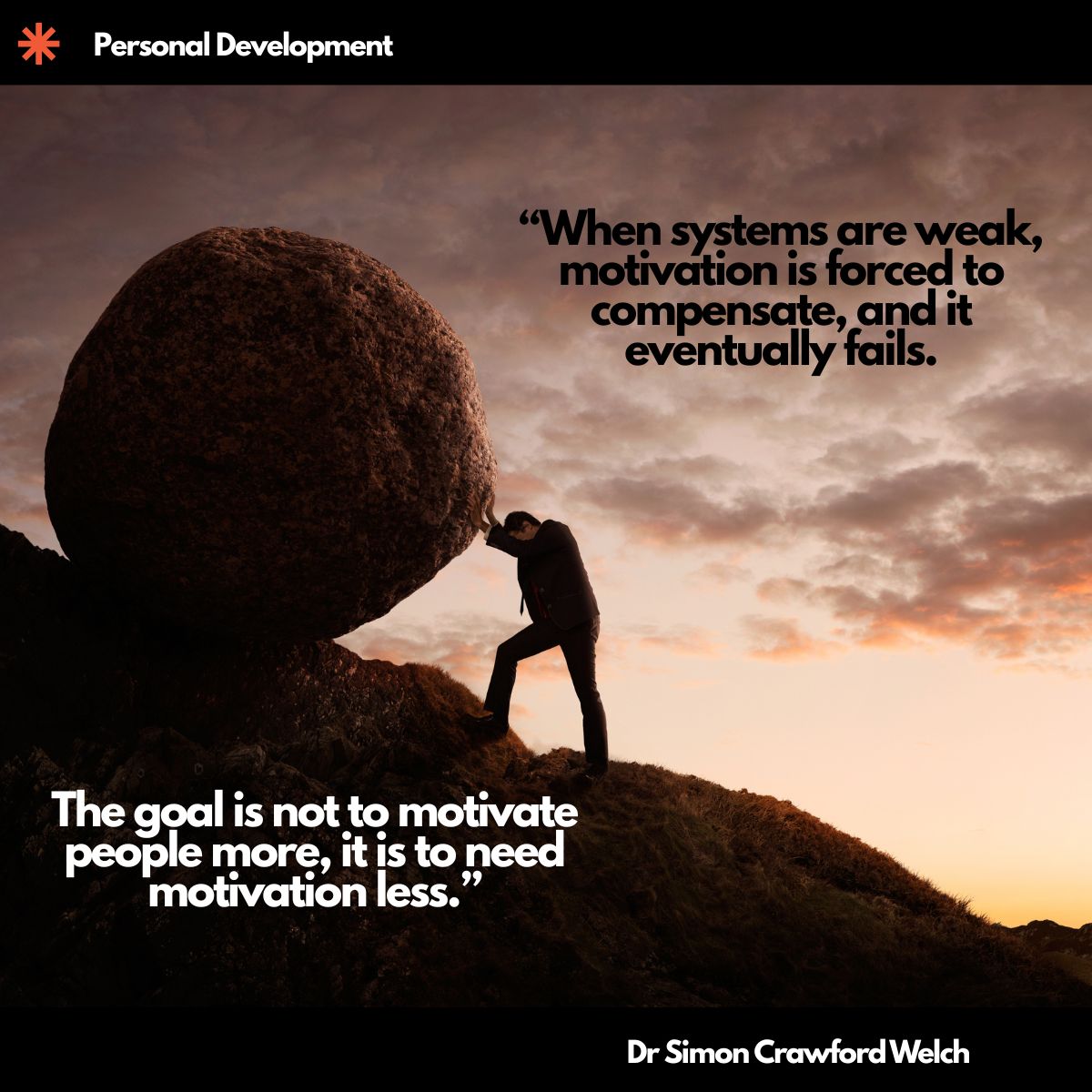
The Myth of Motivation: Systems Scale, Emotions Don’t
Motivation has become one of the most romanticized concepts in modern work culture, treated as both catalyst and cure. Entire industries have been built around it. Yet beneath the fixation lies an uncomfortable truth: motivation is inherently unstable. It fluctuates with mood, context, energy, and circumstance, surging with inspiration and disappearing under pressure. And most importantly, it does not scale.
For individuals, motivation is useful in short bursts. It can initiate action and overcome inertia. But organizations require consistency, predictability, and repeatable outcomes, and for that, motivation is a fragile foundation. Systems, not emotions, determine whether performance sustains. The myth is not that motivation matters. It is that it can be relied upon.
The Seduction of Motivation
Motivation feels powerful. When someone is motivated, effort comes easier and progress accelerates, which creates the impression that success is driven by emotional intensity. But this confuses cause and effect. High performers are not successful because they are consistently motivated; they are motivated because they have built systems that produce results. The emotional state follows the structure, not the other way around. Research on self-determination theory suggests intrinsic motivation is influenced by autonomy, competence, and relatedness, yet those factors are themselves shaped by the environment. With poorly designed systems, even motivated people struggle. With well-designed systems, people perform even when motivation is low.
The Variability Problem
Motivation rises and falls with sleep, stress, interpersonal dynamics, and external events, which makes it unreliable as a driver of consistent behavior. Systems are designed to reduce variability. They create structure, define processes, and set clear expectations regardless of how someone feels in a given moment. This is why systems scale; they can be replicated, optimized, and improved over time. The contrast is sharpest under pressure. When stress increases, motivation often decreases, but systems continue to function.
The Organizational Cost of Chasing Motivation
Organizations that overemphasize motivation fall into a predictable pattern, investing in workshops, retreats, and incentive programs that create temporary spikes but rarely sustained change. The problem is that these address the symptom rather than the cause. Low motivation is often a signal of deeper structural issues such as unclear roles, inefficient processes, and misaligned incentives. Gallup’s research on employee engagement consistently highlights clarity, recognition, and development opportunities, all systemic factors embedded in how work is designed. The better question is not how to motivate people, but how to design systems that make performance inevitable.
Systems as Behavioral Architecture
A system is a form of behavioral architecture, shaping how people act by defining the environment in which they operate. Consider a sales organization that relies on individual drive versus one with a clearly defined process, metrics, and feedback loops. In the first, performance varies widely; in the second, it becomes consistent because it is less dependent on individual variability. This does not eliminate motivation but changes its function, making it a multiplier rather than a prerequisite. Behavioral economics reinforces this; research by Richard Thaler and Daniel Kahneman shows that small changes in how choices are structured can produce significant changes in behavior.
The Emotional Blind Spot
Many leaders still prioritize motivation because it is visible and immediate, observable in energy and enthusiasm, while systems operate quietly in the background. This creates a bias toward what can be seen and felt. Leaders respond to low energy by trying to raise motivation rather than examining the underlying structure. A cultural element reinforces this, as organizations celebrate stories of individual drive that suggest success is primarily personal effort.
Designing for Consistency
Designing systems effectively begins with clarity, since ambiguity forces people to spend emotional energy navigating uncertainty. Next is alignment, ensuring incentives, metrics, and feedback reinforce the desired behavior rather than sending conflicting signals. Finally comes feedback, providing timely information so behavior can be adjusted based on outcomes rather than emotions.
There is a paradox here. The highest performers often appear highly motivated, which suggests motivation causes their success. In reality, strong systems create the conditions where success is likely, and success reinforces motivation, creating a virtuous cycle. The organizations that scale will not be those with the most motivated people, but those with the best-designed systems, where motivation becomes a bonus rather than a requirement.
quick read — LEADERSHIP
You’re Not Leading a Team, You’re Designing a System of Behavior
Leadership is usually framed as a relational endeavor. We picture a leader at the center of a group, inspiring and guiding individuals toward a shared goal. We talk about managing people, building culture, and developing talent. This framing is not wrong, but it misses a more fundamental truth. Leaders are not simply directing individuals; they are designing the conditions under which behavior occurs.
The distinction matters. If leadership is primarily about people, success depends on hiring the right individuals and motivating them. If leadership is about systems of behavior, success depends on how work is structured, how decisions are made, and how incentives are aligned. The difference becomes especially clear at scale. Small teams rely on proximity and informal communication; as organizations grow, what replaces those is not more charisma but structure.
The Illusion of People-Driven Performance
It is tempting to believe performance is primarily a function of talent and motivation, a belief reinforced by stories of exceptional individuals. Consider two teams with equally talented people. One operates within a clear framework with defined processes, aligned incentives, and consistent feedback; the other relies on individual initiative with loosely defined roles. Over time the performance gap becomes pronounced, and the difference is not the people but the system. Behavioral science offers a useful lens: context shapes behavior more powerfully than intention. People act based on what the environment makes easy, difficult, rewarded, or discouraged.
Behavior Is a Function of Design
The processes, tools, incentives, and norms within an organization create a framework that guides how individuals act. Take incentives. If a sales team is compensated solely on closed deals, behavior skews toward short-term wins. Add metrics for customer satisfaction or retention, and behavior shifts. The individuals have not changed; the system has. The same applies to communication structures and decision-making frameworks. Leaders are constantly designing systems of behavior whether they intend to or not, and every decision about structure and policy signals what is valued.
The Myth of Culture as an Abstract Force
Culture is often described as the shared values and norms that define how an organization operates, which can be misleading because it suggests culture exists independently of the systems that produce it. In reality, culture is the output of repeated behavior, and behavior is shaped by systems. This means culture cannot be managed through slogans alone. If the underlying systems contradict stated values, behavior aligns with the system, not the message. An organization may claim to value collaboration, but if incentives reward individual performance above all else, collaboration will be limited.
Scaling Behavior, Not Just Headcount
As organizations grow, the challenge is ensuring behavior scales consistently, not simply adding people. Without intentional design, teams develop their own processes and norms, creating inconsistency that reduces efficiency and increases error. Scaling behavior requires systems that can be replicated across contexts: standardized key processes, aligned incentives, and shared decision-making frameworks. The goal is not to eliminate autonomy but to create a foundation that allows both consistency and adaptability.
The Leader as Architect
This redefines the leader’s role from motivator or problem solver to architect, whose primary responsibility is to design and refine the systems that shape behavior. If a team consistently misses deadlines, the instinct may be to push for more accountability. A systems-oriented leader asks different questions: Are the timelines realistic? Are dependencies clearly defined? Is there a feedback loop that catches issues early? Addressing these structural factors influences behavior more effectively than pressure.
Resistance and Responsibility
System thinking often meets resistance because systems are less tangible than individual actions and require a longer time horizon. There is also a psychological component: focusing on systems shifts responsibility from individuals toward design, which can be uncomfortable in cultures that emphasize personal accountability. But this does not eliminate accountability; it reframes it. Individuals remain responsible for their actions, while leaders are responsible for the conditions that shape those actions.
Leadership at its highest level is not about managing people. It is about shaping the patterns of behavior that determine outcomes. Teams are the visible manifestation of these patterns, but the underlying system sustains them. In the end, the question is not whether you are designing a system of behavior. You are. The question is whether you are doing it intentionally.
Quotes of the Week
QUOTE — EMOTIONAL INTELLIGENCE
QUOTE — PERSONAL DEVELOPMENT
QUOTE — LEADERSHIP
Reframe
Stop Solving, Start Architecting: The Leader’s Real Job
There is a quiet but costly misunderstanding at the center of modern leadership. Many leaders believe their primary job is to solve problems. They pride themselves on responsiveness, on their ability to step into complexity and deliver answers. They become the person everyone turns to when something breaks, stalls, or becomes unclear. In the short term, this creates a sense of value. It reinforces the leader’s importance. It keeps the organization moving.
In the long term, it creates a system that cannot scale.
Problem-solving, when it becomes the default mode of leadership, turns the organization into a dependency machine. Every unresolved issue flows upward. Every decision bottlenecks at the top. Every moment of uncertainty triggers escalation. The leader becomes not just a resource, but the resource. And while this may feel like control, it is actually fragility.
The real job of a leader is not to solve problems. It is to design systems that prevent the same problems from recurring. It is to architect environments where decisions can be made without constant intervention, where clarity exists before confusion arises, and where execution does not depend on a single individual’s capacity to respond.
The Addiction to Being Needed
At first glance, problem-solving appears to be a strength. It demonstrates competence, decisiveness, and experience. Leaders who can quickly diagnose issues and provide direction are often seen as indispensable. However, this dynamic can become addictive.
There is a psychological reward in being needed. Each solved problem reinforces the leader’s sense of value. Each escalation confirms their central role. Over time, this creates a feedback loop where the leader unconsciously encourages dependency. Not through intention, but through behavior.
Teams learn quickly. If the fastest path to resolution is to escalate, they will escalate. If decisions are consistently made at the top, they will wait. What begins as support gradually becomes a system of learned helplessness.
Research in organizational behavior highlights this pattern. Studies on autonomy and decision-making show that individuals are more likely to take ownership when they have both the authority and the framework to act. When either is missing, behavior shifts toward passivity. The leader, by solving too much, inadvertently removes both.
The Hidden Cost of Constant Intervention
The cost of this dynamic is not always immediately visible. On the surface, problems are being solved. Decisions are being made. The organization appears to function. But beneath this activity lies a growing inefficiency.
Every escalation consumes time and cognitive bandwidth. As the volume increases, the leader becomes overloaded. Decision quality begins to decline, not because of lack of ability, but because of lack of capacity. Important issues compete with trivial ones. Strategic thinking is crowded out by operational noise.
At the same time, the organization’s ability to operate independently deteriorates. Teams become less confident in their decision-making. Initiative declines. Innovation slows, as individuals hesitate to act without approval.
This creates a paradox. The more the leader intervenes to keep things moving, the more the organization depends on that intervention. Growth amplifies the problem. What worked at a smaller scale becomes unsustainable as complexity increases.
From Solver to Architect
Shifting from problem-solving to system design requires a fundamental change in mindset. It involves moving from reactive to proactive thinking. Instead of asking how to fix an issue, the leader asks why the issue exists in the first place.
This shift is not about ignoring problems. It is about using them as signals. Each recurring issue points to a gap in the system. A lack of clarity, a misaligned incentive, an undefined process. The leader’s role is to identify these patterns and address the root cause.
This approach requires patience. System design does not provide the immediate satisfaction of solving a problem. It often involves slower, more deliberate work. Defining processes, aligning incentives, and creating feedback loops. The payoff, however, is exponential. Once a system is in place, it reduces the need for repeated intervention.
The distinction can be summarized simply. Solvers create answers. Architects create environments where answers emerge consistently.
Designing for Decision-Making
One of the most critical aspects of system design is decision-making. In many organizations, decision rights are unclear. This ambiguity leads to hesitation, duplication of effort, and unnecessary escalation.
Architecting a system of decision-making involves defining who decides what, under which conditions, and with what information. It requires clarity around authority, accountability, and boundaries.
For example, a leader might establish that certain types of decisions can be made independently within defined parameters. Others may require consultation, while a smaller subset requires escalation. By making these distinctions explicit, the leader reduces uncertainty and increases speed.
This does not eliminate mistakes. In fact, it may increase them in the short term as individuals adjust to new levels of autonomy. However, it creates a learning environment where capability develops over time. The organization becomes more resilient, as decision-making is distributed rather than centralized.
The Role of Constraints
Effective systems are not built on freedom alone. They are built on well-designed constraints. Constraints provide structure. They define the boundaries within which individuals can operate.
Without constraints, autonomy becomes chaos. With too many constraints, it becomes rigidity. The challenge for leaders is to find the balance that enables both clarity and flexibility.
This concept is supported by research in cognitive science. Humans perform better when they operate within clear frameworks. Constraints reduce cognitive load, allowing individuals to focus on execution rather than constantly determining what is permissible.
In practice, this might involve setting clear guidelines for pricing, defining standards for customer experience, or establishing protocols for communication. These constraints create a consistent foundation while still allowing for creativity within defined limits.
Feedback as Infrastructure
No system is complete without feedback. Feedback provides the information necessary to adjust and improve. Without it, systems become static, unable to adapt to changing conditions.
Leaders must design feedback loops that are timely, relevant, and actionable. This includes both quantitative metrics and qualitative insights. It also requires creating an environment where feedback is shared openly, without fear of negative consequences.
In many organizations, feedback is either delayed or diluted. Issues are identified too late, or they are communicated in ways that obscure their significance. This limits the ability to respond effectively.
By contrast, strong feedback systems create a continuous flow of information. They allow leaders and teams to identify patterns, test assumptions, and make adjustments in real time. This reduces the need for reactive problem-solving, as issues are addressed before they escalate.
Letting Go of Control
Perhaps the most challenging aspect of this transition is letting go. Moving from solver to architect requires a willingness to step back. To allow others to make decisions, to experience the consequences, and to learn.
This can be uncomfortable. It involves a loss of immediacy and, in some cases, a temporary dip in performance. But it is a necessary step toward building a scalable organization.
Control, in its traditional sense, is often an illusion. True control comes from designing systems that produce consistent outcomes, not from personally managing every variable. It is the difference between holding everything together and creating something that holds itself together.
Building What Endures
Leadership is often judged by how effectively problems are solved. But the more enduring measure is how few problems require direct intervention. This is the mark of a well-designed system.
Stopping the cycle of constant problem-solving is not about doing less. It is about doing different work. Work that is less visible, less immediate, but far more impactful over time.
The leaders who scale are not those who can solve the most problems. They are those who build systems where problems are less frequent, less severe, and more easily resolved without escalation.
In the end, the shift from solving to architecting is not just a change in approach. It is a redefinition of leadership itself.