
Deep Dives Articles
DEEP DIVES ARTICLE — EMOTIONAL INTELLIGENCE

Internal Chaos, External Complexity: Why You Can’t Scale Beyond Your Emotions
This is a sneak peek of this week’s Deep Dives article. Published today!
Most leaders think they have a strategy problem. They don’t. They have a capacity problem they can’t see. As complexity increases, something subtle begins to happen. Decisions feel heavier. Clarity fades faster. Small issues start compounding into larger ones. It’s easy to blame the market, the team, or the pace of growth. But the real constraint is closer than that. It’s internal. This Deep Dive explores the uncomfortable truth that your business doesn’t scale independently of you, it scales your emotional patterns with it. And unless you understand how to process pressure, you will eventually become the bottleneck you’re trying to solve.
DEEP DIVES ARTICLE — PERSONAL DEVELOPMENT

Stop Adding, Start Eliminating: The Discipline of Personal Scale
This is a sneak peek of this week’s Deep Dives article. Published today!
When progress stalls, most people respond the same way. They add more. More tools, more habits, more commitments, more goals. It feels productive. It feels like forward motion. But beneath the surface, something else is happening. Complexity is increasing, decisions are multiplying, and execution is quietly deteriorating. What if the problem isn’t that you’re doing too little, but that you’re doing too much? This Deep Dive challenges one of the most ingrained assumptions in personal growth and performance, and makes a compelling case that real scale doesn’t come from addition. It comes from disciplined subtraction.
DEEP DIVES ARTICLE — LEADERSHIP

Culture as Code: How Great Leaders Build Systems That Think for Them
This is a sneak peek of this week’s Deep Dives article. Published today!
Every company talks about culture. Very few actually design it. Values get written, repeated, and displayed, but behavior tells a different story. Decisions don’t align. Standards drift. Execution varies depending on who is in the room. At a certain point, leaders realize something uncomfortable. Culture isn’t what you say, it’s what your systems enforce. This Deep Dive unpacks a powerful shift in thinking, from culture as a narrative to culture as code, and shows how the best leaders don’t just communicate values. They embed them so deeply into the system that the organization begins to think and act on its own.
Deep Dives Book Summary

Chillpreneur: The New Rules for Creating Success, Freedom, and Abundance on Your Terms
By Denise Duffield-Thomas
This is a sneak peek of this week’s Deep Dives Book Review — published today!
Most entrepreneurs are chasing success using a model that quietly guarantees burnout. Work harder, do more, sacrifice now, enjoy later. It sounds logical, until you realize how many people “make it” only to feel trapped by the very business they built. Chillpreneur flips this script entirely, arguing that success isn’t something you grind your way into, it’s something you design intentionally from the start. This Deep Dive unpacks the hidden beliefs driving overwork, the psychology of money and self-worth, and the counterintuitive path to building a business that actually gives you freedom, not just income.
Quick Reads
quick read — Emotional intelligence

Emotional Throughput: How Much Pressure Can You Process Without Breaking?
In business, we are obsessed with throughput. We measure how much a system can handle, how many units can move through a process, how much demand can be absorbed before something breaks. We understand intuitively that every system has a limit. Yet when it comes to human beings, we rarely apply the same rigor.
We assume that more pressure produces better results. We celebrate resilience, often without examining the cost. The language of performance dominates the conversation, while the language of capacity is quietly ignored.
But every person has a throughput limit. Not just physically, but emotionally. And in many cases, that limit is the true constraint on performance.
What Emotional Throughput Actually Is
Emotional throughput is the amount of psychological and emotional pressure an individual can process effectively over time. It is not about tolerance. It is about the ability to metabolize stress, uncertainty, conflict, and complexity without losing clarity, judgment, or stability.
Two people can experience the same external pressure and respond in radically different ways. One remains composed and decisive. The other becomes reactive and overwhelmed. The difference is rarely intelligence or experience. It is the capacity of their internal system to process what is happening in real time.
Like any processing engine, the system absorbs inputs, interprets them, and responds. When the volume of input exceeds capacity, something has to give. Decisions slow down. Errors increase. Behavior becomes less intentional and more reactive. The system does not fail all at once. It degrades.
Endurance Is Not Capacity
High performers often mistake endurance for capacity. Because they continue operating under pressure, they assume they are processing it. In reality, they may simply be delaying the consequences. The system is still absorbing strain, but without releasing it. Over time, this creates a backlog of unresolved stress that eventually manifests as burnout, poor decision-making, or emotional volatility.
The World Health Organization classifies burnout as an occupational phenomenon characterized by chronic workplace stress that has not been successfully managed. The phrase that matters most is the failure to manage. Endurance allows you to survive pressure. Throughput determines whether you can sustain performance under it.
Pressure Without Processing
Modern environments are designed to increase input without increasing capacity. Information flows continuously. Decisions are compressed into shorter timeframes. Technology has amplified the dynamic, creating a constant stream of notifications and demands.
Researchers describe this as attentional overload. The brain is forced to process more stimuli than it can effectively handle, leading to impaired judgment and increased stress. Beyond the cognitive impact, there is an emotional cost. Every unresolved decision and every ambiguous expectation accumulates. Without mechanisms to release that load, the system becomes saturated. At that point, even small additional pressures can trigger disproportionate responses.
Under stress, the brain shifts activity from the prefrontal cortex, which governs rational decision-making, to more reactive regions associated with threat response. In short bursts, this is adaptive. Sustained over time, it becomes destructive. The system is no longer optimizing. It is coping.
Scaling Emotional Capacity
Capacity does not increase simply by exposing yourself to more pressure. Unstructured exposure often reduces capacity over time. Capacity expands through deliberate practices that improve processing, recovery, and regulation.
This includes the ability to identify and label emotions accurately, a skill shown to reduce their intensity and increase cognitive control. It involves creating structured reflection that allows experiences to be processed rather than stored. It requires building recovery into the system as a core component of performance, not as an afterthought.
For leaders, emotional throughput is not just personal. It is systemic. Leaders set the tone for how pressure is distributed and managed within an organization. If a leader operates beyond their own capacity, that state propagates through the system. A system cannot scale beyond the capacity of the people operating it.
The Question That Matters
The most important question is not how much pressure you can take on, but how much you can process.
Pressure will continue to increase. Complexity will continue to expand. Demands will continue to evolve. These forces are structural. The only variable that can adapt is your capacity. And that capacity, like any system, can be designed.
quick read — Personal development
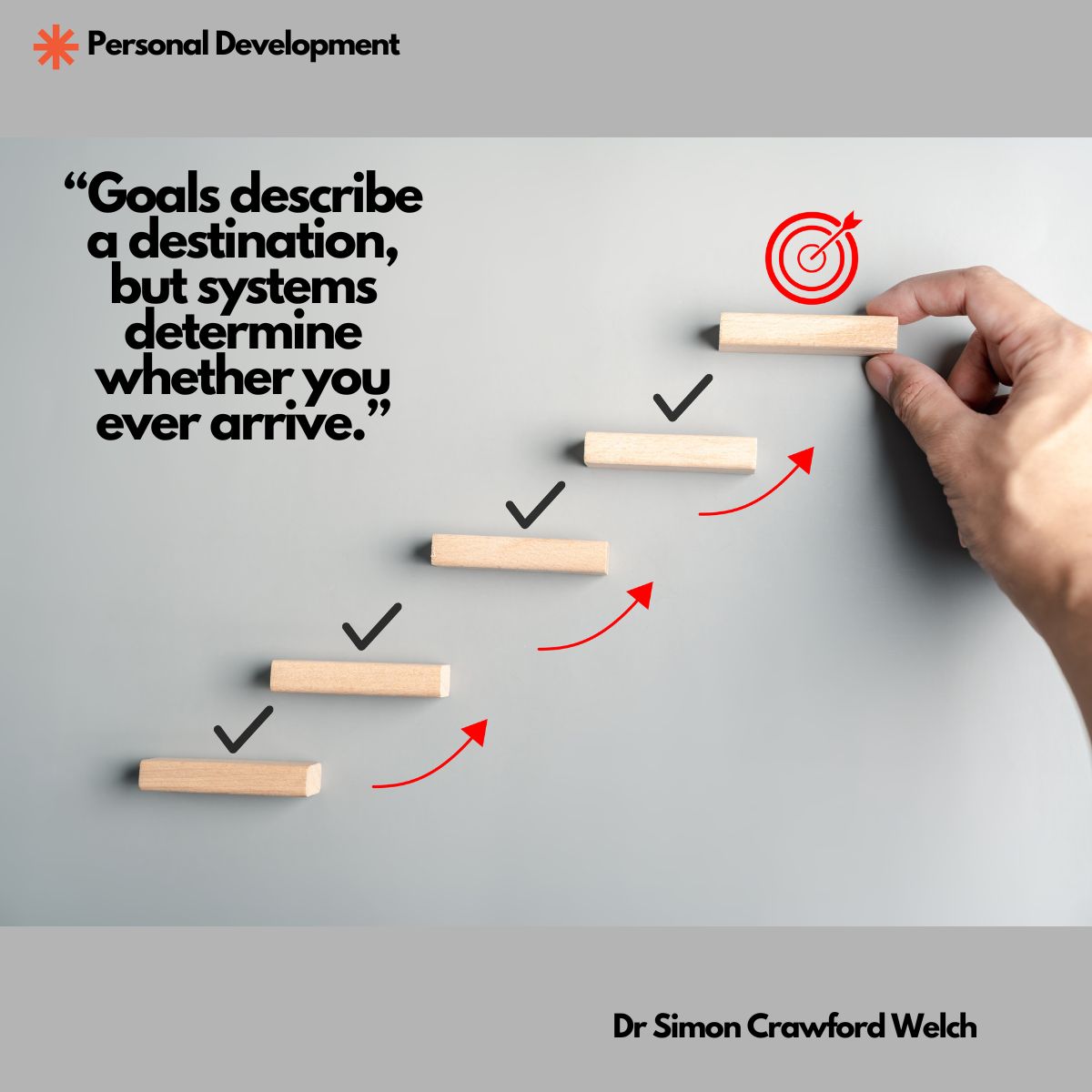
You Don’t Rise to the Level of Your Goals, You Scale to the Level of Your Systems
There is something deeply comforting about setting goals. They give shape to ambition, direction to effort, and a sense of progress. A goal promises a future that is cleaner, sharper, and more resolved than the present.
But observe carefully across individuals and organizations, and a different pattern emerges. Goals are rarely the constraint. Most people have no shortage of aspiration. The gap lies somewhere else.
People do not rise to the level of their goals. They fall, predictably and repeatedly, to the level of their systems.
Systems, Seen and Unseen
A system is not just a set of processes. It is the invisible architecture that governs behavior over time. It includes habits, feedback loops, incentives, environments, and defaults. It is the structure that determines what happens when motivation fades and pressure increases.
In organizations, this is easier to see. A company may declare that customer experience is its top priority, yet if its systems reward speed over care, the outcome is already decided. The stated goal becomes a narrative, while the system dictates reality.
At the individual level, the same principle holds, though the systems are internal. Daniel Kahneman described the mind as operating through two systems, one fast and intuitive, the other slow and deliberate. Much of our behavior is governed by automatic processes that function as systems in their own right. They do not respond to goals. They respond to design.
Why Goals Fail Under Pressure
Goals tend to live in moments of clarity. Systems reveal themselves in moments of stress.
People set ambitious targets at the start of a year or quarter. For a time, behavior aligns with intention. Then reality intervenes. Work intensifies, fatigue accumulates, attention fractures. Under these conditions, the individual does not continue operating at the level of their goal. They revert to their default system.
Research on habit formation, including a well-known Stanford experiment, has shown that participants who altered their environment to reduce friction around desired behaviors were significantly more likely to sustain those behaviors. The structure surrounding behavior matters more than the intention behind it. Goals assume consistency. Systems account for variability.
The Myth of Motivation
Modern self-improvement culture is built on the idea that motivation is the primary driver of change. This belief is misleading.
Motivation is inherently unstable. It fluctuates based on mood, energy, and context. Systems, on the other hand, are designed precisely to reduce reliance on motivation. They create consistency in the absence of enthusiasm.
Consider the difference between someone who exercises when they feel motivated and someone who has built a system around their training. The former depends on an emotional state that may or may not arrive. The latter depends on a structure that operates regardless of how they feel. Over time, this difference compounds. Consistency, more than intensity, drives long-term outcomes.
Identity as Infrastructure
If systems determine behavior, what determines systems?
At a deeper level, systems are an expression of identity. They reflect what a person believes about themselves, what they prioritize, and what they are willing to tolerate. James Clear has written about identity-based habits, arguing that lasting change occurs when behavior becomes a reflection of who you believe you are. Identity functions as infrastructure. It shapes the systems that are built and the ones that are rejected.
If someone sees themselves as disorganized, they will unconsciously resist systems that require discipline. These patterns are not accidental. They are coherent with the identity that sustains them. To change the system, you must confront the identity that created it.
A Different Standard
If you accept that you scale to the level of your systems, then the standard for growth shifts.
The question is no longer what you want to achieve. It is what structure you have built to make that outcome inevitable. This is more demanding. It requires you to move beyond intention and into design. It removes the comfort of aspiration and replaces it with the discipline of execution.
But it also offers something more valuable than motivation. It offers control. Not control in the sense of certainty, but control in the sense of influence. The ability to shape the conditions under which behavior occurs. The ability to create consistency where there was once volatility.
In the end, this is the quiet shift that separates those who continually reset their goals from those who steadily compound their progress.
They are not aiming higher. They are building better systems.
quick read — LEADERSHIP
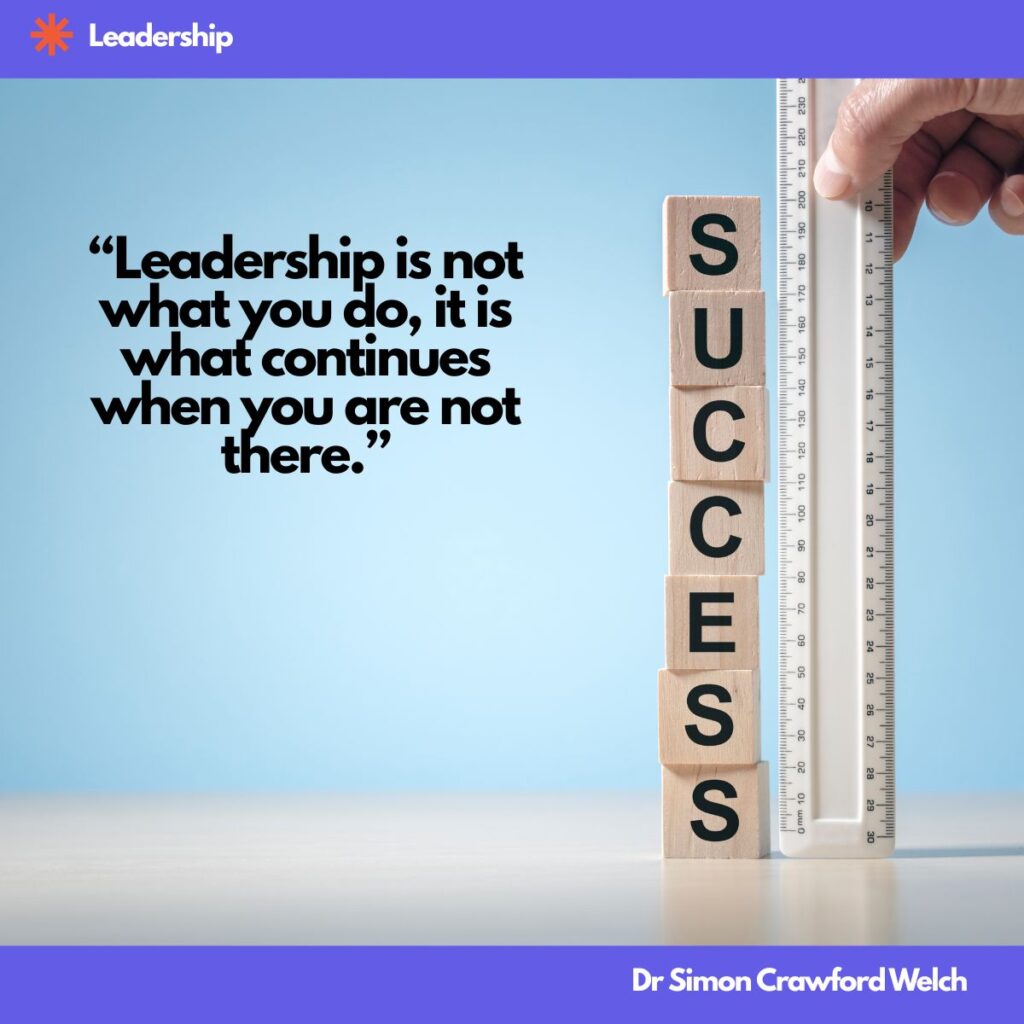
Leadership Is a Scaling Function, Not a Personality Trait
Leadership is often described in terms that feel almost mythological. We talk about charisma, presence, vision, and instinct, as if great leadership emerges from something innate. Popular culture reinforces this narrative, creating a subtle belief that leadership is primarily a matter of personality.
It is appealing, but misleading.
If leadership were primarily a personality trait, organizations would scale in proportion to the charisma of their leaders. Some do, for a time. But over longer horizons, the pattern breaks down. Charisma does not scale. Presence does not replicate. Instinct does not transfer.
The leaders who build enduring organizations understand that leadership is a function of systems. It is about how effectively they design environments where others can perform, decide, and execute without constant intervention. Leadership, at its core, is a scaling function.
From Expression to Architecture
When leadership is treated as a personality trait, the focus remains on expression. How does the leader communicate, inspire, and motivate. These capabilities are important but insufficient. They operate at the surface level of influence.
Scaling requires architecture.
An architect does not personally build every component of a structure. They design the system within which construction occurs. They define constraints, relationships, and flows. Once the architecture is sound, the system can produce outcomes consistently, even in the absence of the architect.
A leader operating as an architect designs decision frameworks, communication rhythms, accountability structures, and cultural norms. When done well, the organization does not depend on the constant presence of the leader to function effectively.
The Bottleneck Problem
The clearest signal that leadership is being treated as a personality trait rather than a scaling function is the presence of bottlenecks. In many organizations, decisions accumulate at the top. The leader becomes the central node through which critical activity must pass.
This creates the appearance of control, but also fragility. As the organization grows, decision volume increases. Eventually, the leader’s capacity is exceeded. Response times slow. Teams begin to wait rather than act. The organization scales into its own constraint.
This is not a failure of effort. It is a failure of design.
The Illusion of Control
There is a paradox at the heart of leadership. The more a leader tries to control outcomes directly, the less scalable their leadership becomes. The more they design systems that allow others to operate effectively, the more control they gain at a systemic level.
Friedrich Hayek argued that complex systems function best when information is distributed and decision-making occurs at the point of knowledge. While his work focused on markets, the principle applies to organizations. Leaders cannot process all available information. They must design systems that allow those closest to the information to act effectively. Control, in this sense, is not centralization. It is alignment.
Designing Decision Systems
At the heart of scalable leadership is the design of decision systems. These define who makes decisions, how those decisions are made, and what principles guide them. When designed well, they allow individuals throughout the organization to act with confidence, even in the absence of direct oversight.
This does not mean eliminating judgment. It means structuring it. A leader might define clear thresholds for decision-making authority, establish guiding principles that inform trade-offs, and create feedback mechanisms that allow decisions to be evaluated. Over time, this builds a distributed capability.
The Real Measure of Leadership
If leadership is a scaling function, it must be measured differently. A revealing measure is how the organization performs in the absence of the leader.
Do decisions continue to be made effectively. Do teams operate with clarity and accountability. Does the culture hold under pressure. These are indicators of a system designed to scale. If performance declines significantly when the leader is not present, leadership is still operating at the level of personality.
The Question That Remains
In the end, the question is not whether you have the personality to lead.
It is whether you have built something that can lead without you.
Because organizations do not fail from a lack of ambition. They fail when their leadership cannot scale beyond the individual. And no matter how strong that individual is, there is always a limit. The only way past it is through design.
Quotes of the Week
QUOTE — EMOTIONAL INTELLIGENCE
QUOTE — PERSONAL DEVELOPMENT

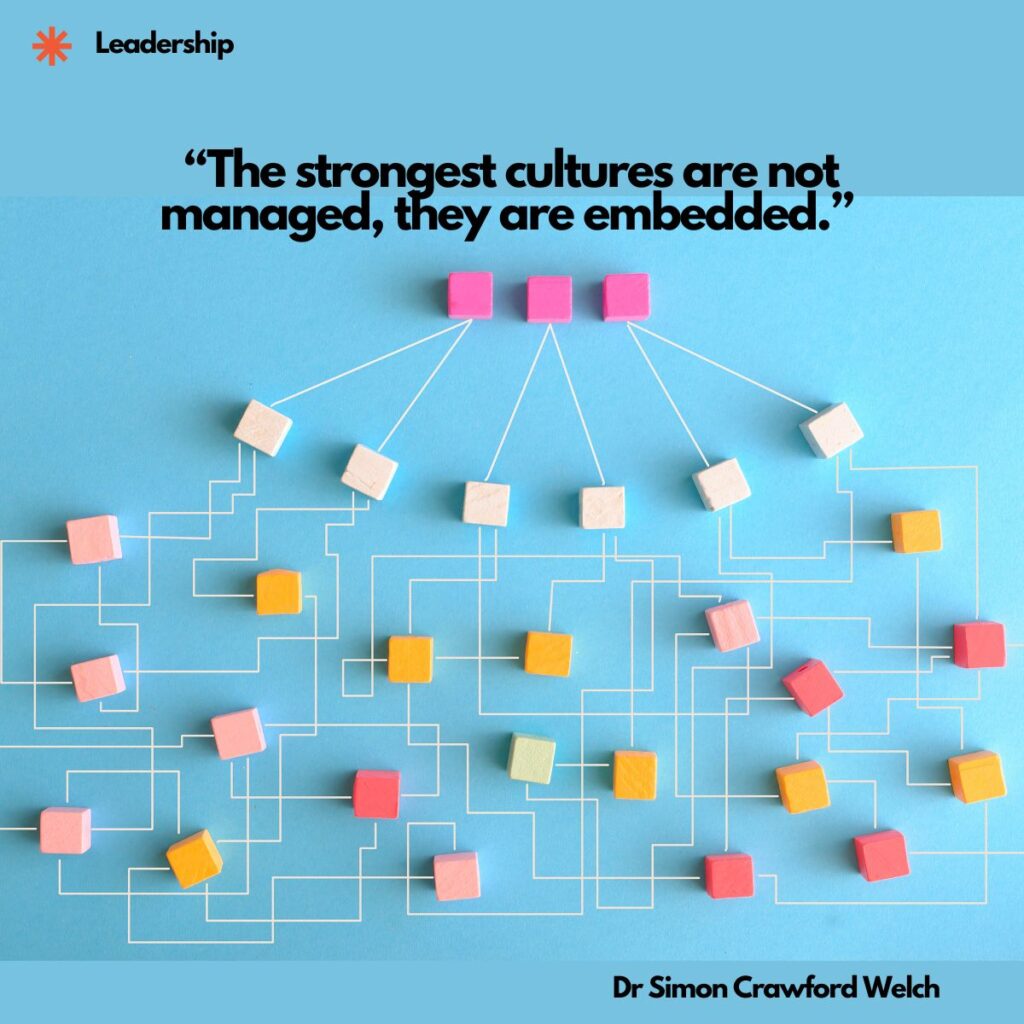
QUOTE — LEADERSHIP
Reframe
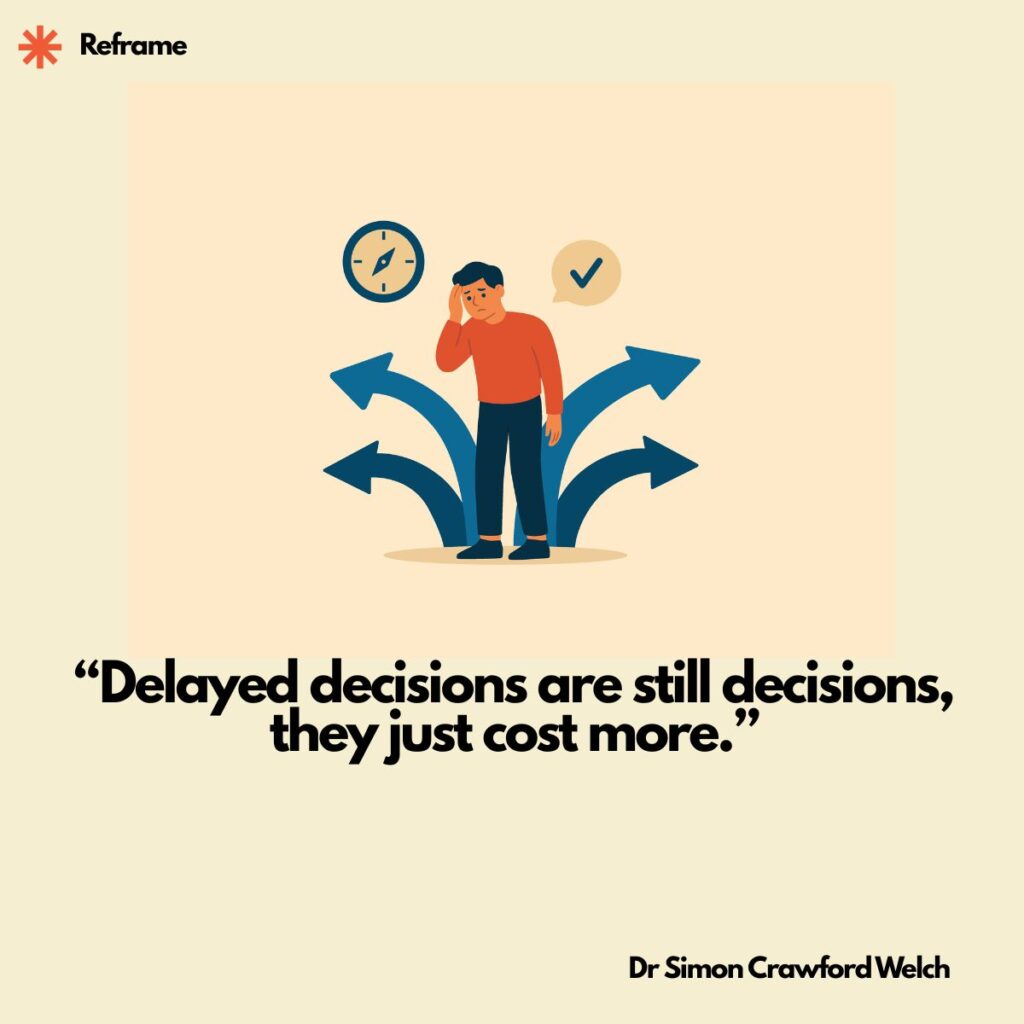
Decision Latency: The Silent Killer of Growing Organizations
Most organizations know when they have a revenue problem. They know when costs are too high, when margins are compressing, when demand is weakening. These issues are visible, measurable, and widely discussed.
Far fewer organizations recognize when they have a decision problem.
Not bad decisions. Not reckless decisions. Something more subtle and far more dangerous. Decisions that are delayed, deferred, or diffused across layers of uncertainty. Decisions that take too long to make, too long to communicate, and too long to execute.
This is decision latency.
It rarely shows up in dashboards. It does not appear in financial statements as a line item. Yet over time, it erodes momentum, distorts priorities, and quietly constrains growth. It is the friction that accumulates in the system until progress begins to feel heavier than it should.
And by the time it becomes obvious, it is already deeply embedded.
What Decision Latency Really Is
Decision latency is the time between recognizing that a decision is needed and that decision being acted upon effectively. It is not just about speed. It is about flow.
In a healthy system, decisions move. They are identified, framed, resolved, and executed with a rhythm that matches the pace of the environment. Information flows to the point of action. Authority is clear. Trade-offs are understood.
In a system with high latency, decisions stall. They get escalated unnecessarily. They are revisited repeatedly. They sit in queues, waiting for alignment that never fully arrives. Even when a decision is made, it may not be communicated clearly or acted upon consistently.
The result is not chaos in the traditional sense. It is something more insidious. It is slow drift. The organization appears busy, but progress is uneven. Energy is expended, but outcomes lag.
The Cost of Waiting
At first glance, delayed decisions can feel prudent. Waiting allows for more information, more analysis, more consensus. It reduces the risk of making the wrong call.
But this view ignores the cost of inaction.
Every delayed decision carries an opportunity cost. Markets move. Competitors adapt. Internal momentum fades. Teams begin to operate in uncertainty, making assumptions in the absence of direction. These assumptions rarely align, which creates rework and inefficiency.
Research in organizational behavior has shown that speed of decision-making is often a stronger predictor of performance than the accuracy of any single decision. This is not because accuracy does not matter, but because systems that move quickly can correct errors. Systems that move slowly compound them.
Jeff Bezos once described decision-making at Amazon as a process of making reversible decisions quickly and irreversible decisions more deliberately. The principle is not about recklessness. It is about matching decision speed to decision type. When organizations fail to make this distinction, they default to treating all decisions as high stakes, which increases latency across the board.
Over time, the cost of waiting exceeds the cost of being wrong.
How Latency Creeps In
Decision latency rarely begins as a deliberate choice. It emerges gradually as organizations grow in size and complexity.
Early in a company’s life, decisions are fast because the structure is simple. Founders are close to the work. Communication is direct. The cost of coordination is low.
As the organization scales, layers are added. Roles become specialized. Processes are introduced to manage complexity. Each of these changes is rational in isolation, but together they increase the distance between information and authority.
This creates friction.
Decisions that were once made in a conversation now require meetings. Meetings require alignment. Alignment requires input from multiple stakeholders. Each step adds time, and each additional participant introduces the potential for delay.
At the same time, risk tolerance often decreases. As the organization grows, the perceived cost of mistakes increases. Leaders become more cautious. This caution manifests as additional analysis, additional approvals, additional checkpoints.
Individually, these actions feel responsible. Collectively, they slow the system.
The Psychology of Delay
Beyond structure, decision latency is reinforced by human behavior.
People avoid decisions for many reasons. Fear of being wrong. Fear of conflict. Fear of accountability. In ambiguous situations, the cost of making a visible mistake can feel higher than the cost of delaying an invisible one.
This creates a bias toward inaction.
There is also a tendency to seek consensus as a proxy for correctness. If more people agree, the decision feels safer. But consensus takes time, and in many cases, it is not necessary. Not all decisions require alignment from multiple stakeholders. When consensus becomes the default, latency increases without a corresponding increase in decision quality.
Cognitive biases play a role as well. Analysis paralysis, the tendency to overanalyze information in search of certainty, can stall decisions indefinitely. The paradox is that certainty rarely arrives. The environment continues to change, rendering the analysis incomplete by the time it is finished.
In this way, decision latency is not just a structural issue. It is a psychological one.
The Compounding Effect
The most dangerous aspect of decision latency is its compounding nature.
A single delayed decision may have limited impact. But decisions do not exist in isolation. They are interconnected. One delay affects another. Dependencies form. Bottlenecks emerge.
Over time, the system slows.
Projects extend beyond their expected timelines. Priorities shift without resolution. Teams lose clarity about what matters most. The organization becomes reactive rather than proactive, responding to issues as they arise rather than shaping outcomes intentionally.
This has a direct impact on culture.
When decisions take too long, people begin to disengage. Initiative decreases because action is not rewarded. Accountability weakens because ownership is unclear. The system signals that speed and decisiveness are not valued, even if leadership claims otherwise.
Culture, in this sense, becomes a reflection of latency.
Designing for Speed and Clarity
If decision latency is a structural and psychological issue, it must be addressed at both levels.
Structurally, organizations need clear decision rights. Who is responsible for making which decisions, under what conditions, with what inputs. This reduces ambiguity and prevents unnecessary escalation. It allows decisions to be made closer to the information.
Equally important is the classification of decisions. Not all decisions carry the same weight. Some are reversible and can be made quickly with limited data. Others are more consequential and require deeper analysis. When organizations fail to differentiate, they default to treating all decisions as high risk, which increases latency unnecessarily.
Psychologically, leaders must create environments where making decisions is safer than avoiding them. This involves normalizing reasonable mistakes, encouraging calculated risk-taking, and reinforcing accountability. It also requires modeling behavior. Leaders who delay decisions signal that delay is acceptable. Leaders who act decisively, while remaining open to correction, set a different standard.
Feedback loops are critical. Decisions should be evaluated not just on outcomes, but on speed and process. This creates awareness and allows for continuous improvement.
The Leadership Imperative
At its core, decision latency is a leadership issue.
Leaders define how decisions are made, who makes them, and how quickly they move. They set the tone for risk tolerance, accountability, and clarity. When latency exists, it is often a reflection of how leadership has designed, or failed to design, the system.
This requires a shift in perspective.
Leaders must move from being decision-makers to being designers of decision systems. Their role is not to make every call, but to ensure that calls are made effectively throughout the organization. This includes creating the structures, incentives, and norms that support speed and clarity.
It also requires discipline.
Reducing latency often involves removing layers, simplifying processes, and challenging assumptions about risk. These actions can feel uncomfortable because they reduce perceived control. But without them, the system slows, and growth is constrained.
The Signal You Cannot Ignore
Decision latency is easy to rationalize because it often masquerades as thoroughness. It can be framed as careful thinking, as alignment, as due diligence.
But there is a simple test.
If decisions consistently take longer than the environment allows, if opportunities are missed because action is delayed, if teams are waiting more than they are moving, then latency is present.
And it is costing more than you think.
A Different Standard
The goal is not to make every decision instantly. It is to make decisions at the right speed, with the right level of information, by the right people.
This requires a different standard of performance.
Speed becomes a metric, not just an outcome. Clarity becomes a requirement, not an aspiration. Accountability becomes distributed, not centralized. The organization begins to operate as a system where decisions flow, rather than stall.
In such a system, momentum builds.
Not because every decision is perfect, but because the system is capable of learning and adapting. Errors are corrected quickly. Opportunities are captured early. The organization moves with a sense of purpose and direction.
The Quiet Constraint
In the end, decision latency is a quiet constraint.
It does not announce itself. It does not demand attention. It simply accumulates, slowing the system until growth begins to feel like resistance.
Most organizations respond by pushing harder. More meetings, more analysis, more oversight. But these responses often increase the very friction they are trying to overcome.
The alternative is to redesign the system.
To remove unnecessary barriers. To clarify authority. To align speed with context. To create an environment where decisions move.
Because growth is not just a function of what you decide.
It is a function of how quickly you decide it.