
Listen to this week’s Insights, 30 min, read by Simon
Deep Dives Articles
DEEP DIVES ARTICLE — EMOTIONAL INTELLIGENCE

Emotional Agency: Taking Responsibility for Your Inner World
This is a sneak peek of this week’s Deep Dives article. Published today!
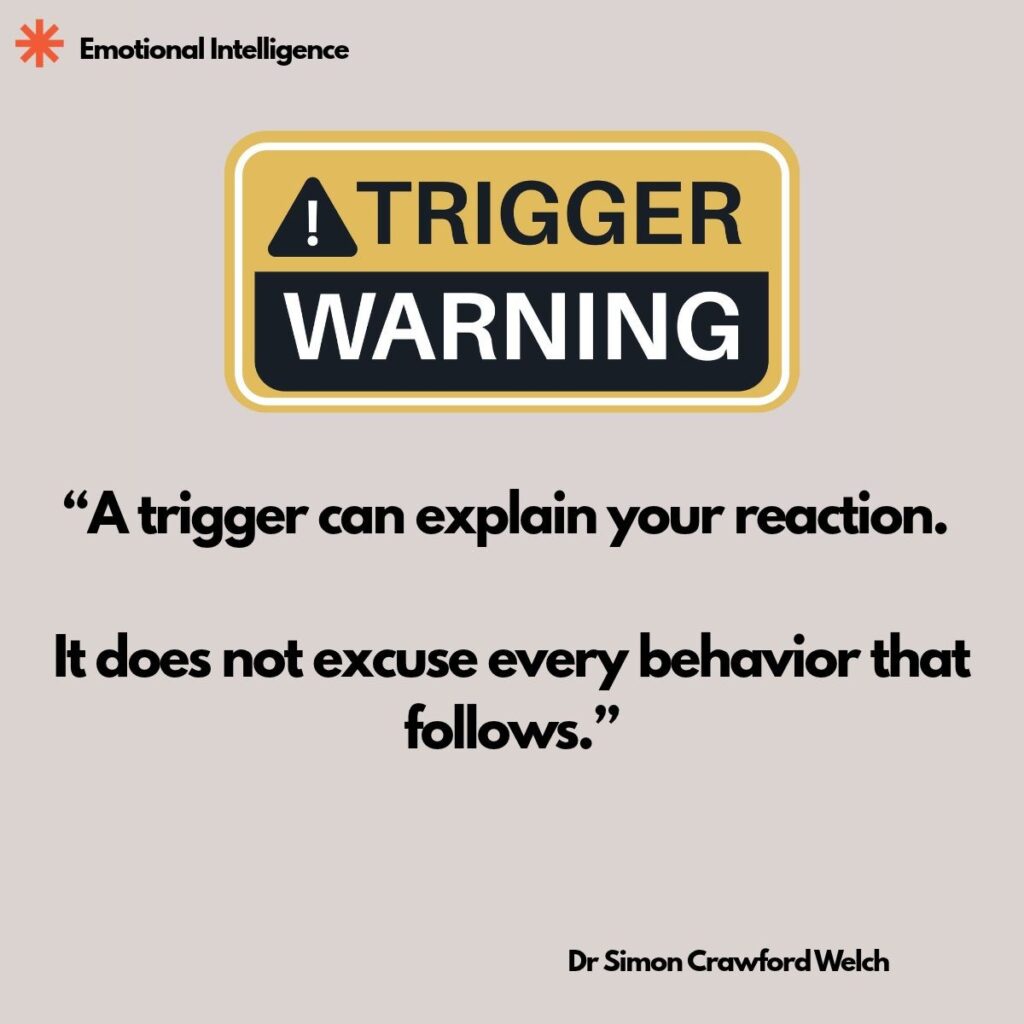
Emotional agency is not about becoming untouched by life. It is about becoming less governed by what touches you. This Deep Dive explores why your feelings are real, but not always instructions, why triggers explain reactions without excusing every behavior that follows, and why taking responsibility for your inner world is not self-blame, but self-respect. The goal is not to suppress emotion, but to understand it well enough that it no longer has to run your life from behind the curtain.
DEEP DIVES ARTICLE — PERSONAL DEVELOPMENT

The Permission Trap: Why So Many People Never Begin
This is a sneak peek of this week’s Deep Dives article. Published today!
Many people are not stuck because they lack talent. They are stuck because they are still waiting for someone or something to make the beginning feel safe. This Deep Dive examines the permission trap, the quiet belief that we cannot begin until we feel ready, chosen, approved, certain, or protected from criticism. But readiness is often created by beginning, and the life we keep postponing may not be waiting for the world’s approval. It may be waiting for our own.
DEEP DIVES ARTICLE — LEADERSHIP

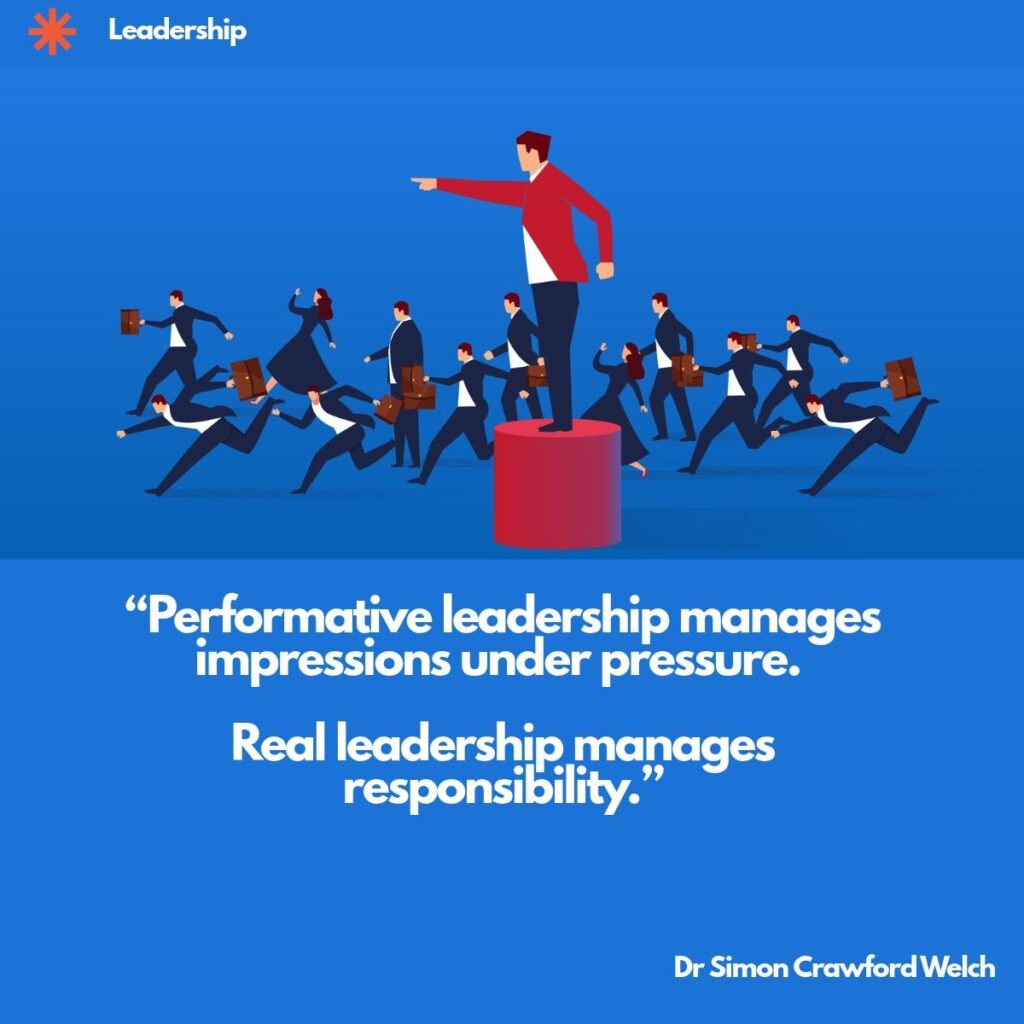
Performative Leadership vs. Real Leadership: Why Teams Know the Difference
This is a sneak peek of this week’s Deep Dives article. Published today!
Teams know the difference between leadership that sounds good and leadership that lives true. The words may be polished, the values visible, and the speeches convincing, but people are always watching what happens under pressure, what leaders tolerate, who gets protected, and whether truth can survive in the room. This Deep Dive explores why performative leadership eventually breeds cynicism, while real leadership builds trust through consistency, consequence, and the courage to act when values become inconvenient.
Deep Dives Book Summary

This is a sneak peek of this week’s Deep Dives book summary. Published today!
What can modern leaders learn from the secretive aerospace shop that built some of the most extraordinary aircraft in history? In The Impossible Factory, Josh Dean tells the story of Kelly Johnson and Lockheed’s Skunk Works, the small, fast, fiercely disciplined innovation machine behind aircraft like the P-38 Lightning, the U-2, and the SR-71 Blackbird. This Deep Dive explores why the Skunk Works was more than an engineering legend. It was a leadership model built on speed, trust, technical excellence, minimal bureaucracy, and the rare ability to make impossible work feel operationally possible.
Quick Reads
QUICK READ — EMOTIONAL INTELLIGENCE
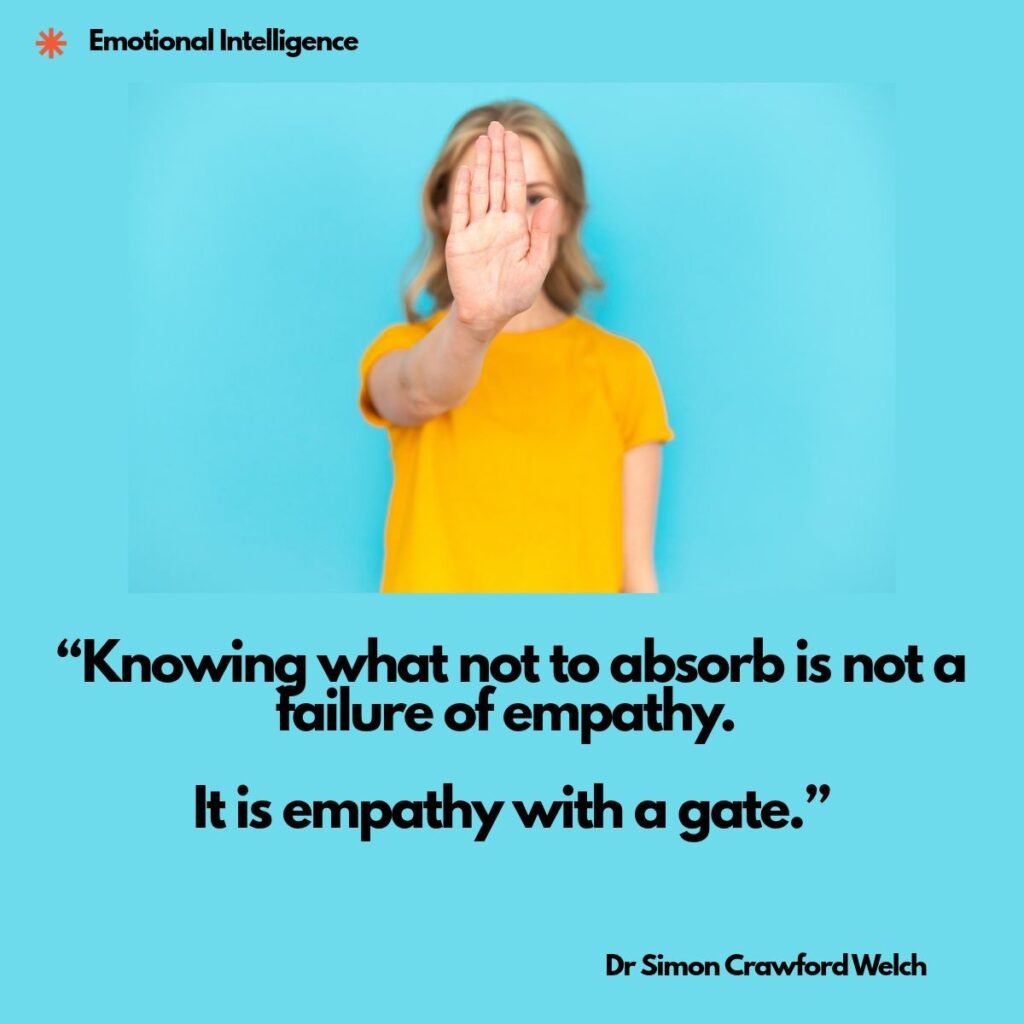
The Quiet Skill of Knowing What Not to Absorb
There is a kind of intelligence we do not talk about enough. It is not the intelligence of knowing more, reading more, reacting faster, processing more information, or having an opinion on everything. It is quieter than that.
It is the ability to know what not to absorb.
This is not indifference. It is discernment. It is the ability to move through a noisy world without allowing every mood, opinion, crisis, outrage, expectation, insecurity, and emotional atmosphere to take up residence inside you.
That skill has become essential because we live in an age of constant psychological trespass. The boundaries that once existed between our private interior life and the emotional weather of the world have become porous.
If you absorb everything, you will eventually confuse saturation with sensitivity.
Not Everything Deserves Entry
Many thoughtful people struggle with this because they do not want to become hardened. They care.
But caring does not require absorbing everything.
You can be informed without being invaded. You can be compassionate without becoming emotionally consumed.
The mature question is not, “Should I care?” The better question is, “What kind of contact does this deserve?”
Some things deserve action. Some deserve attention. Some deserve a boundary. Some deserve no entry at all.
Discernment begins when you stop treating every input as equally worthy of your emotional energy.
Emotional Contagion Is Real
We underestimate how easily we absorb the emotional states of others. A tense meeting can follow us into dinner. A critical comment can ruin an afternoon.
This is not weakness. Human beings are relational creatures.
But without boundaries, sensitivity becomes overexposure.
Knowing what not to absorb is not a failure of empathy. It is empathy with a gate.
Urgency Is Not Always Importance
One of the easiest things to absorb is urgency. Urgency has a way of presenting itself as moral authority. It says, “This must be handled now.”
Sometimes urgency is real. But much of what arrives as urgency is simply anxiety looking for somewhere to land.
This is particularly dangerous in leadership. A leader who absorbs every anxious signal becomes the carrier of organizational panic. Instead of creating clarity, they amplify noise.
The disciplined leader learns to pause. Is this urgent, or merely loud? That pause is not delay. It is judgment.
You Are Not Required to Internalize Every Opinion
Another form of absorption is opinion.
Some opinions deserve consideration. Others are projections wearing the costume of insight.
The hard part is that criticism often sounds more intelligent than encouragement. But not every criticism is wisdom.
You do not have to absorb every opinion simply because someone delivered it with confidence.
This does not mean becoming unteachable. The goal is not to reject feedback. The goal is to discern its source, quality, motive, and usefulness.
Some feedback should change you. Some should inform you. Some should pass through without finding a home.
The Discipline of Inner Custodianship
Your inner life requires custodianship. What you repeatedly absorb becomes part of the atmosphere you live in.
The mind has a diet. So does the heart.
Peace is not always found. Sometimes it is protected.
That protection may look simple. Fewer inputs. Slower responses. Better boundaries.
These are not small acts. They are acts of custody over the only interior life you have.
What You Absorb Shapes What You Become
The things we absorb do not merely affect our mood. They shape our character. If we absorb constant outrage, we become more easily inflamed.
The question is not only, “What am I consuming?” It is, “What is this consumption training me to become?”
That question applies to relationships too. Some people repeatedly bring chaos, contempt, manipulation, neediness, or negativity into our lives, then expect unlimited emotional hospitality. Compassion may require understanding them. It does not require becoming a storage unit for what they refuse to regulate.
The Freedom of Selective Attention
There is freedom in deciding that not everything gets access.
Selective attention is not ignorance. It is wisdom about human limits.
The quiet skill of knowing what not to absorb is really the skill of remaining available for what matters. If everything enters, nothing is protected.
So the work is not to become untouchable. The work is to become well-boundaried enough that you can be touched by the right things.
To care without drowning. To listen without carrying everything. To stay informed without becoming invaded. To remain open-hearted without leaving every door unlocked.
That is not coldness. That is stewardship.
QUICK READ — PERSONAL DEVELOPMENT
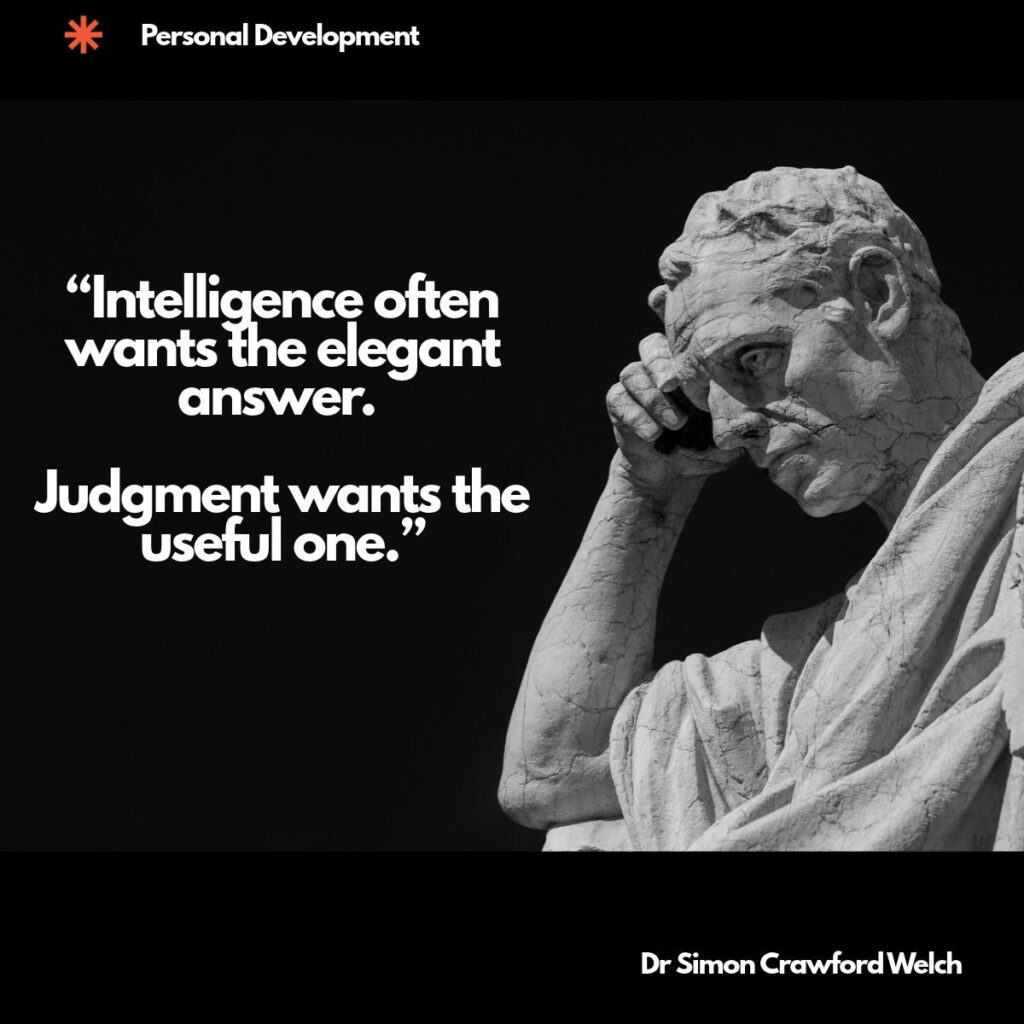
Intelligence Is Not the Same as Judgment
We live in a world that worships intelligence. Intelligence opens doors. It wins arguments. It builds reputations.
But intelligence is not the same as judgment.
That distinction matters more than ever because the modern world is not short of information, opinions, models, frameworks, data, analysis, commentary, and confident explanations. The harder skill is knowing what matters, what is true, what is noise, what is urgent, what is important, what is being disguised, and what should actually be done.
Intelligence helps you understand complexity. Judgment helps you live and lead inside it.
Intelligence Can Move Faster Than Wisdom
Intelligence often works quickly. It sees patterns, makes connections, develops arguments, identifies inconsistencies, and reaches conclusions with impressive speed.
But speed can also become a trap.
A quick mind may reach a conclusion before a wise mind has finished listening. It may mistake the first plausible explanation for the right one.
Judgment has a different rhythm. It asks not only, “Can we do this?” but “Should we?”
That final question is where intelligence and judgment often part company.
The Clever Answer Is Not Always the Right Answer
Some people are very good at producing clever answers.
But the clever answer is not always the right answer.
A clever answer may be too neat for the messiness of real life. It may solve the wrong problem elegantly. In organizations, this happens constantly. Leaders create dashboards instead of confronting poor accountability.
Intelligence often wants the elegant answer. Judgment wants the useful one.
The useful answer may be less glamorous. Fire the toxic high performer. Stop funding the initiative that no longer works.
Judgment does not need to sound brilliant. It needs to make contact with reality.
Information Does Not Automatically Produce Discernment
One of the illusions of our age is that more information should produce better judgment. Sometimes it does. Often it simply produces more noise.
Information becomes useful only when filtered through judgment.
Without judgment, intelligence can drown in its own inputs. It can become addicted to analysis because analysis feels safer than decision.
There is a point at which the problem is no longer lack of information. The problem is lack of discernment.
Judgment Requires Emotional Honesty
Judgment is not purely intellectual. It is moral, emotional, and psychological. This is why intelligent people can still make terrible decisions. They may understand the facts but be captured by fear, ego, loyalty, resentment, ambition, insecurity, or the desire to avoid discomfort.
Good judgment requires the willingness to see not only the situation, but ourselves inside the situation. What do I want to be true? What am I afraid to admit?
A person without emotional honesty can use intelligence to build a magnificent defense around a bad decision.
Judgment Knows the Difference Between Urgent and Important
One of the great tests of judgment is the ability to distinguish urgency from importance. Urgency is loud. Importance is often quiet.
Many intelligent people are seduced by urgency because urgency feels like significance. The person feels needed, activated, central, and busy.
But busyness can make poor judgment look responsible.
Judgment asks a harder question: what actually deserves attention? What truly matters?
Great leaders understand that not every fire deserves the same water.
Judgment Is Tested by Consequences
Intelligence can be measured in the abstract. Judgment is measured in consequences.
Judgment is practical. It is about making choices that work in reality, under pressure, with incomplete information, competing values, and imperfect people.
Experience does not automatically create judgment. Reflection does.
The Humility to Be Corrected
Intelligence often enjoys being right. Judgment is more interested in becoming right.
That difference requires humility. A person with good judgment can revise their view without experiencing revision as humiliation. They can be challenged without becoming defensive.
The smartest person in the room may be the one with the most impressive argument. The person with the best judgment may be the one willing to let the better argument change them.
The Deeper Intelligence
None of this is an argument against intelligence. But intelligence without judgment can become dangerous because it gives bad decisions better language.
The deeper intelligence is discernment.
Intelligence asks, “Can I understand this?”
Judgment asks, “What does this require of me?”
That is the difference. And in a world overflowing with information, persuasion, and cleverness, judgment may be the rarer and more valuable capacity.
Because intelligence can help us explain the world. Judgment helps us navigate it without losing contact with what is true.
QUICK READ — LEADERSHIP
Why the Best Leaders Slow the Room Down Before They Decide
There is a kind of leader who mistakes speed for strength. The meeting starts, the issue is named, the options are presented, and almost immediately the leader wants to move. Decide. Commit. Act.
Sometimes that instinct is exactly right. There are moments when leadership requires pace, decisiveness, and the courage to move before certainty arrives.
But the best leaders understand something less glamorous and far more important.
Before a decision is made quickly, the room often needs to be slowed down.
Not forever. Just long enough to separate urgency from importance, confidence from clarity, emotion from evidence, and noise from signal.
A fast decision is only strong if the room has first understood what it is actually deciding.
Urgency Narrows the Mind
Urgency has a physical quality. It tightens the room. The person with the most confidence can begin to sound like the person with the best judgment.
Leaders need to know the difference between real urgency and emotional urgency.
Real urgency means timing matters. A decision delayed will create avoidable damage.
Emotional urgency is different. It is pressure looking for release. Someone wants closure.
The best leaders do not let the room confuse emotional relief with good judgment.
Speed Can Hide Weak Thinking
Fast decisions are often praised because they look decisive. But decisiveness is not the same as judgment. A leader can decide quickly and still decide poorly.
Speed can hide weak thinking because it prevents the room from asking better questions. What problem are we solving? What are we calling urgent because we failed to address it earlier?
These questions do not have to take weeks. Sometimes they take minutes. But those minutes matter.
A room that has not slowed down enough to ask the right questions may become very efficient at solving the wrong problem.
Slowing Down Creates Better Candor
When a leader rushes a room, people often stop thinking and start complying.
Slowing the room down creates space for candor.
It allows quieter voices to enter.
The best leaders know their first reaction can accidentally become the room’s direction. They understand that the timing of their voice affects the quality of everyone else’s contribution.
The Pause Is Not Indecision
Some leaders avoid slowing down because they fear looking indecisive.
But there is a difference between hesitation and disciplined pause.
Hesitation is avoidance. Disciplined pause is different. It clarifies the choice, tests assumptions, surfaces risk, and improves the odds that the decision will hold.
A disciplined pause might sound like this: “Before we decide, what would make this the wrong call?” Or, “What are we assuming that we have not proven?”
These questions do not weaken authority. They strengthen it because they show the leader is more committed to reality than performance.
Good Decisions Need Emotional Temperature Control
Every important room has emotional temperature. Good leadership requires temperature control.
The goal is to prevent emotion from secretly making the decision while logic writes the press release afterward.
Slowing the room down helps reveal what is actually driving the decision.
The Best Leaders Separate Framing From Choosing
Many bad decisions happen because the room starts choosing before it has properly framed the issue. Once the frame is wrong, every option inside it is compromised.
For example, a team may ask, “How do we cut costs quickly?” when the better question is, “Which costs are weakening the business, and which costs are protecting the future?”
Framing determines thinking.
The best leaders slow the room down before deciding because they know the first framing is often incomplete. They make sure the team is solving the real problem, not the most convenient version of it.
Speed After Clarity
A poorly understood decision creates drag.
A well-framed decision creates speed after clarity.
This is the rhythm of effective leadership: slow enough to think, fast enough to act.
The Leader’s Real Job
The best leaders are not paid merely to make decisions. They are paid to improve the quality of the conditions in which decisions are made.
There are moments to move quickly. But the strongest leaders know that speed is not a virtue by itself. Speed in the wrong direction is just a more efficient mistake.
Before the decision, slow the room down.
Ask what is true. Ask what people are not saying.
Then decide.
Decide because the issue has been properly understood, the tradeoffs have been named, and the action now deserves momentum.
That is not indecision. That is judgment.
Quotes of the Week
QUOTE — EMOTIONAL INTELLIGENCE
QUOTE — PERSONAL DEVELOPMENT

QUOTE — LEADERSHIP
Reframe
The Dangerous Gap Between Having a Good Life and Actually Experiencing It
It is entirely possible to build a good life and still barely experience it.
That may be one of the quieter tragedies of modern adulthood. A person can work hard, provide well, build a career, raise a family, earn respect, create comfort, take the trips, buy the house, have the friends, fill the calendar, and still move through the whole thing as if they are watching it from a distance. Present, but not really present. Blessed, but not deeply touched by the blessing. Surrounded by evidence of a meaningful life, yet internally unavailable to the meaning.
This is not ingratitude. It is not weakness. It is often the result of living too long in performance mode, protection mode, achievement mode, or survival mode. The life may have improved, but the nervous system has not received the memo. The conditions may be better, but the person inside them is still scanning, striving, managing, proving, preparing, or recovering.
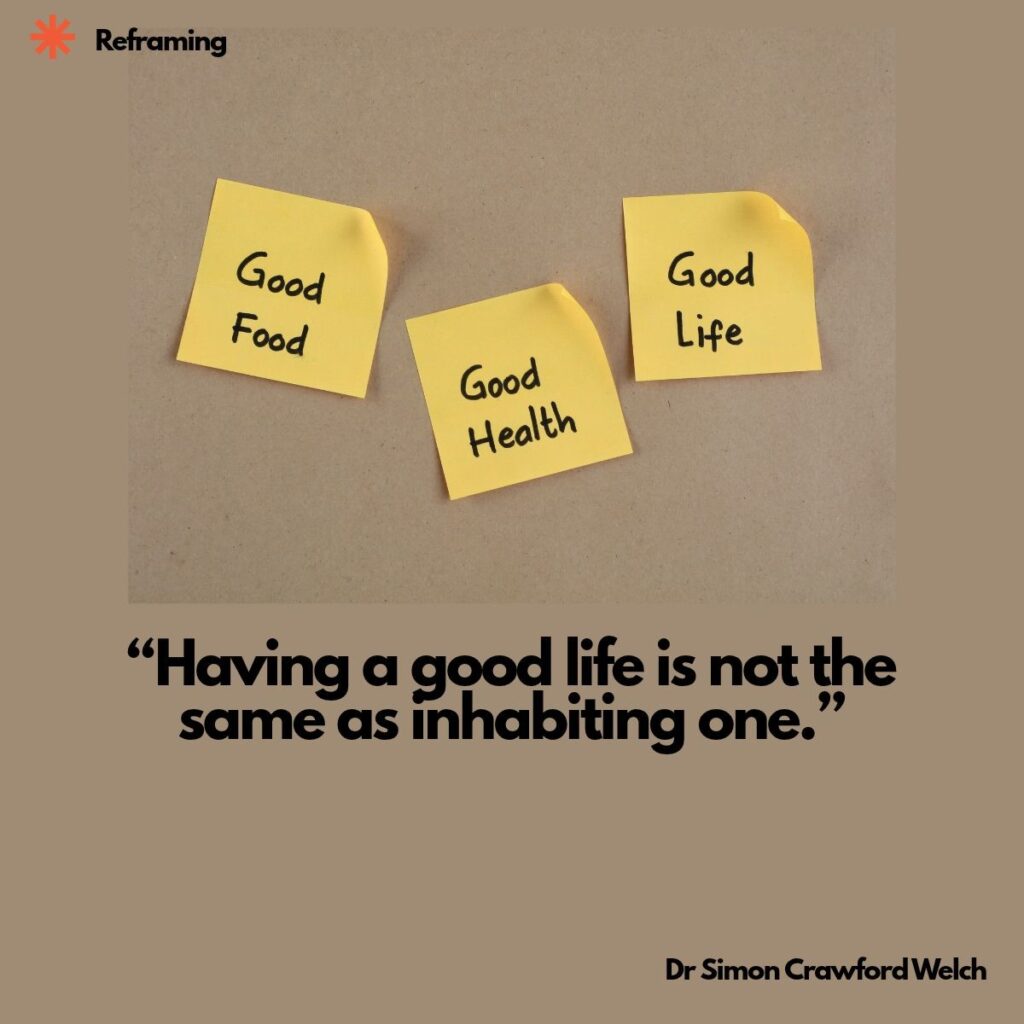
Having a good life is not the same as inhabiting one.
Achievement Can Outrun Presence
Many people spend years building the conditions they once believed would allow them to relax. If I can earn enough, I will feel secure. If I can reach that role, I will feel legitimate. If I can build the business, I will feel free. If I can find the relationship, buy the house, get the children settled, organize the future, then perhaps I can finally breathe.
But the habits that help us build are not always the habits that help us receive.
Achievement often trains us to live slightly ahead of ourselves. The next target. The next risk. The next problem. The next improvement. The next chapter. The mind becomes conditioned to search for what is missing, broken, unfinished, or vulnerable. That orientation can create extraordinary progress, but it can also make arrival impossible.
You get there, wherever “there” was supposed to be, and immediately the mind begins negotiating the next concern.
This is how people become strangers to their own success. They have the life they wanted, or at least parts of it, but they remain psychologically organized around pursuit rather than presence.
Survival Mode Does Not Automatically End
For some people, the gap between having and experiencing a good life comes from old survival patterns. They learned early to stay alert, work hard, anticipate disappointment, read the room, control the variables, and avoid depending too much on ease. Those patterns may have been necessary. They may have protected them from real instability, scarcity, criticism, rejection, or chaos.
But survival mode does not disappear simply because life becomes safer.
A person who once had to fight for everything may struggle to enjoy anything that feels unearned. A person who grew up around volatility may distrust peace. A person who learned that love was conditional may struggle to receive affection without performing. A person who escaped financial insecurity may continue living with the emotional posture of scarcity long after the bank account has changed.
The outer life can improve faster than the inner life can soften.
That is why some people cannot rest inside what they have built. They are not ungrateful. They are still loyal to an older version of reality. Their body remembers a life where ease was temporary, safety was fragile, and good things could disappear without warning.
Busyness Can Become a Way of Not Feeling
Busyness is one of the most socially acceptable ways to avoid experiencing life. It gives us a noble excuse. We are responsible, productive, needed, committed, useful. We are doing what must be done. We are keeping the machine moving.
But constant busyness can protect us from contact with our own lives.
If you never slow down, you do not have to feel the distance in a relationship. You do not have to notice how tired you are. You do not have to confront the quiet sadness beneath your competence. You do not have to ask whether the life you are maintaining is still the life you want. You do not have to sit long enough for gratitude, grief, longing, or dissatisfaction to become audible.
Many people say they are too busy to be present. Sometimes the truth is more uncomfortable. They are busy because presence would reveal too much.
A good life requires more than management. It requires contact. And contact asks for stillness, attention, vulnerability, and the willingness to be affected by what is already here.
Presence Is Not a Productivity Hack
Presence is often discussed as if it is another technique for high performance. Be present so you can focus better. Be mindful so you can reduce stress. Breathe so you can return to work more effectively. There is value in that, but it misses the deeper point.
Presence is not merely a tool for becoming more productive. It is the way life becomes real.
Without presence, even beautiful things pass through us only partially received. A child’s laughter. A partner’s face. A meal with friends. A quiet morning. A walk. A conversation that did not need to be rushed. A small moment of peace we would miss if we were only measuring life by milestones.
The good life is not only found in the major achievements. It is found in the capacity to notice ordinary goodness while it is happening.
That capacity is fragile. It can be dulled by anxiety, distraction, ambition, resentment, exhaustion, and the constant habit of living somewhere other than here.
The Mind Is Always Trying to Leave
The mind is a remarkable escape artist. It leaves the present for yesterday’s regret, tomorrow’s worry, someone else’s opinion, the next obligation, the unresolved conflict, the imagined disaster, the unfinished task, the better version of the life not yet reached.
Some of this is useful. Reflection matters. Planning matters. Responsibility matters. But a life lived mostly in rehearsal and replay becomes strangely thin. You are technically there, but never fully there long enough for the moment to enter you.
This is especially costly in relationships. The people we love do not only need our provision, competence, advice, or logistical support. They need our attention. Not perfect attention. Not constant attention. But real enough attention that they can feel us with them.
A life can be materially generous and emotionally absent. That is a painful contradiction, and many good people live inside it without realizing what is being lost.
Gratitude Requires Availability
We often tell people to be grateful, but gratitude is difficult when the mind is unavailable. You cannot deeply appreciate what you are too distracted to notice. You cannot savor what you are rushing past. You cannot feel the weight of a blessing while treating it as background scenery.
Gratitude is not just a thought. It is an experience.
It requires enough attention to let something land. To look around the dinner table and realize, not intellectually but bodily, that these are your people. To feel the strange privilege of an ordinary day. To understand that the life you once hoped for may already be present in fragments, not perfectly, not permanently, but really.
This does not mean ignoring problems. Every good life still contains difficulty, disappointment, uncertainty, and pain. But gratitude does not require perfection. It requires contact.
The danger is waiting for life to become flawless before allowing yourself to experience it.
Closing the Gap
Closing the gap between having a good life and experiencing it does not require theatrical reinvention. It often begins with smaller acts of return.
Put the phone down when someone you love is speaking. Take the walk without turning it into a podcast opportunity. Eat the meal without rushing to the next task. Let silence exist without immediately filling it. Notice when your mind has left the room. Ask yourself what part of today you would miss if it were gone tomorrow.
These are simple acts, but they are not easy. They interrupt years of conditioning. They ask us to stop treating life as something to be optimized, managed, documented, or postponed and begin treating it as something to be inhabited.
The good life is not only the one you build. It is the one you are awake enough to feel while you are living it.
At some point, the question is no longer whether your life contains enough. The question is whether you are present enough to be touched by what it already contains.