
Personal Development Series
There is a subtle shift happening right now, and most people are missing it. It does not announce itself in dramatic fashion. It does not feel like disruption. It feels like convenience. It feels like progress. It feels like finally having leverage over complexity. But underneath that surface, something far more consequential is taking place. We are not just using AI to move faster. We are beginning to use it to think for us.
At first, this seems harmless. Even intelligent. Why struggle through ambiguity when a system can generate clarity in seconds? Why wrestle with forming a point of view when one can be delivered, fully articulated, at the click of a button? Why endure the friction of thinking when answers are readily available, polished, and persuasive? Efficiency has always been the north star of modern work, and AI delivers it in abundance. But there is a difference between removing inefficiency and removing the very process that builds capability. That line is now being crossed, quietly and repeatedly, without much resistance.
The Seduction of Effortless Intelligence
The appeal of AI is undeniable. It is fast, coherent, and increasingly authoritative in tone. It compresses time, reduces effort, and creates the illusion that mastery can be achieved without the years of struggle that traditionally accompanied it. But that illusion comes with a hidden cost. Every time you outsource a piece of thinking, you also outsource the opportunity to strengthen your ability to think.
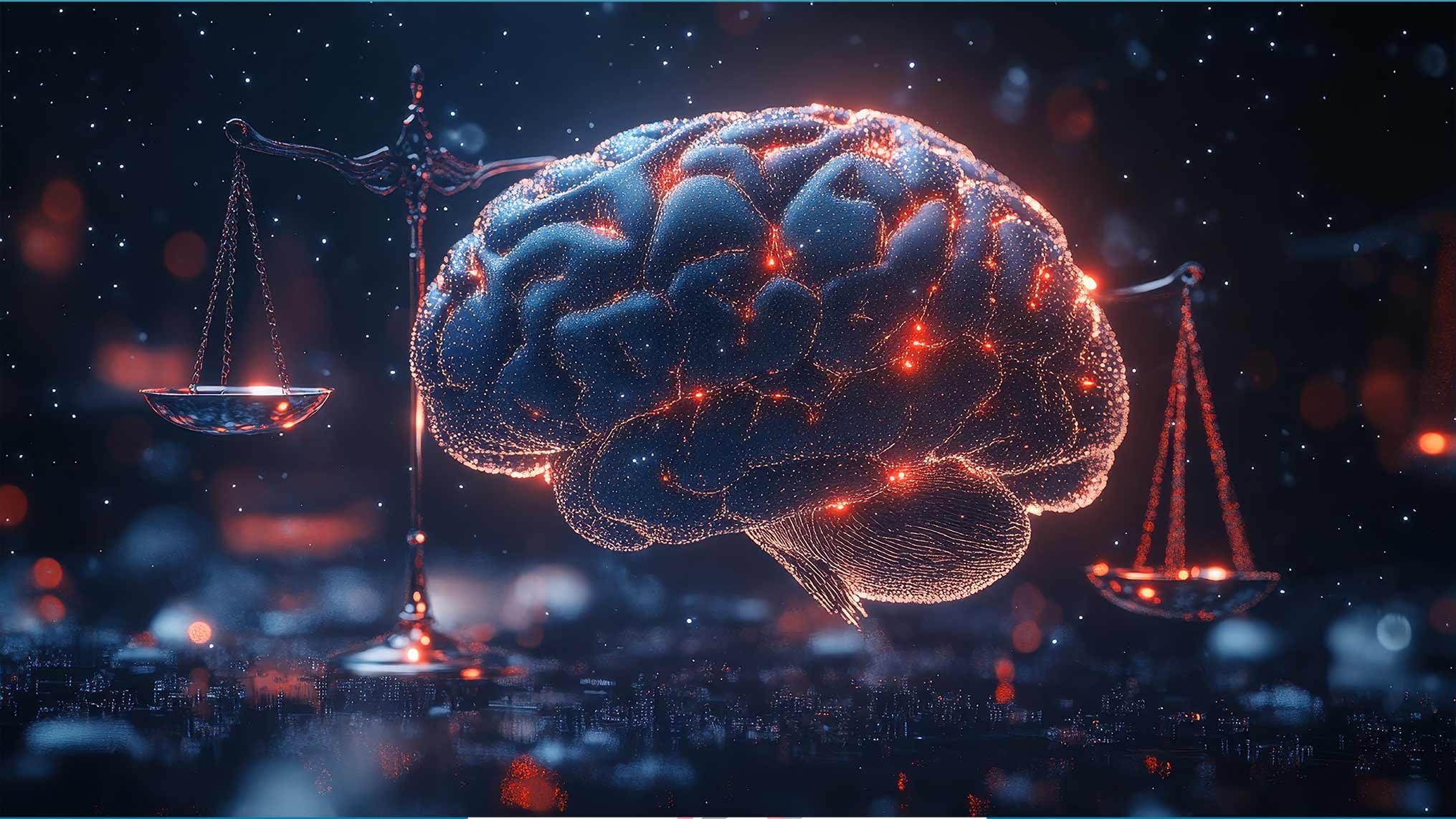
This is not a philosophical argument. It is a practical one. The human brain develops through use. It sharpens through tension, through iteration, through the slow and often uncomfortable process of working through incomplete ideas. When that process is bypassed, development does not simply pause. It begins to erode. Over time, the individual does not become more capable. They become more dependent.
What makes this particularly dangerous is that the decline is not immediately visible. In fact, the opposite appears to be true. Output improves. Speed increases. Communication becomes cleaner. But beneath that improved surface lies a subtle degradation of something far more important than output quality. Judgment.
Judgment Is Built, Not Downloaded
Judgment is not something you acquire by consuming answers. It is not downloaded through exposure to information. It is built through experience, through decision-making under uncertainty, through evaluating trade-offs and living with the consequences of those decisions. It is forged in moments where there is no clear answer, only competing priorities and imperfect information.
AI does not participate in that process. It does not make decisions with real stakes. It does not carry the emotional or reputational weight of being wrong. It does not learn through consequence in the way humans do. It processes patterns and generates responses, but it does not own outcomes.
This creates a fundamental asymmetry. The more you rely on a system that does not bear the cost of being wrong, the more you distance yourself from the very mechanism that builds sound judgment. Over time, that distance grows. And eventually, the individual no longer trusts their own thinking without external validation.
The Consequence Gap
This is where the real risk begins to take shape. When thinking is outsourced to a system that does not live with consequences, a gap forms between decision and accountability. That gap is subtle at first. It shows up as convenience, as a way to move faster, as a tool to enhance productivity. But over time, it becomes structural.
Decisions begin to feel less owned. Outcomes feel slightly disconnected from the individual who approved them. The line between assistance and dependence starts to blur. And within that blur, something critical is lost. Calibration.
Without consequences, there is no meaningful feedback loop. Without feedback, there is no improvement. The individual stops refining their judgment because they are no longer fully engaged in the process that requires it. They are reacting to outputs instead of wrestling with inputs. They are evaluating answers instead of forming them.
From Decision-Maker to Output Operator
As this pattern compounds, the role of the individual begins to shift in a way that is rarely acknowledged. You are no longer synthesizing information into a coherent perspective. You are selecting from options that have already been generated. You are no longer building arguments from first principles. You are editing and refining pre-existing ones. You are no longer making decisions in the fullest sense. You are approving outputs.
On the surface, this looks like progress. It feels like leverage. More gets done in less time. The work appears cleaner, more structured, and more complete. But beneath that efficiency lies a deeper transformation. The center of gravity moves away from human judgment and toward system-generated suggestion.
Over time, this shift changes how individuals engage with problems. Instead of asking, “What do I think?” the question becomes, “What does the system suggest?” That is not a small change. It is a fundamental redefinition of agency.
The Illusion of Originality
There is a common defense of AI that misses the point entirely. It goes something like this: AI does not produce original ideas anyway, so there is no real risk of losing originality. But this argument focuses on the wrong variable. The question is not whether AI is original. The question is whether you are.
Originality has never meant creating something from nothing. It has always meant synthesizing existing information through a unique lens of experience, context, and judgment. That synthesis requires effort. It requires friction. It requires the willingness to sit with incomplete thoughts and refine them into something meaningful.
When that process is skipped, originality does not simply diminish. It disappears. What replaces it is a kind of intellectual uniformity. Ideas that are well-structured, broadly acceptable, and technically correct, but ultimately lacking in depth and conviction. They sound right, but they do not carry weight.
Friction Is Not the Enemy
One of the most persistent misconceptions in modern work is that friction is inherently negative. We design systems to eliminate it. We celebrate tools that remove it. We measure progress by how little resistance exists between input and output. But not all friction is waste.
Some friction is developmental. The friction of thinking through a problem forces clarity. The friction of writing forces articulation. The friction of decision-making under uncertainty forces judgment. These are not inefficiencies to be eliminated. They are capabilities to be developed. When these forms of friction are removed entirely, the individual does not become more effective. They become less capable. The very processes that build strength are replaced by shortcuts that produce results without growth.
The Real Competitive Advantage
In an AI-driven world, it is tempting to assume that advantage will come from access to better tools. But tools are quickly democratized. Capabilities spread. What feels like an edge today becomes standard tomorrow. What does not standardize as easily is judgment.
The individuals and organizations that will outperform are not those who rely most heavily on AI. They are those who maintain strong thinking capabilities while using AI to enhance, not replace, their judgment. They question outputs instead of accepting them. They challenge assumptions instead of inheriting them. They integrate context, nuance, and consequence into decisions in ways that no system can fully replicate. Their advantage is not technological. It is cognitive.
A Different Relationship with AI
The answer is not to reject AI. That would be both unrealistic and strategically shortsighted. The answer is to redefine the relationship. AI should not be treated as a substitute for thinking. It should be treated as a tool that sharpens it.
This requires discipline. It requires resisting the urge to default to generated answers. It requires engaging with problems before delegating them. It requires maintaining ownership of the thinking process, even when a faster alternative is available. AI should be a sparring partner, not a replacement. It should challenge your thinking, not define it. It should expand your perspective, not become it. Used this way, it becomes a force multiplier for capability rather than a quiet substitute for it.
The Final Trade-Off
Every technological advancement carries with it a trade-off. Some are obvious. Most are not. The trade-off with AI is not just about productivity or efficiency. It is about cognition. It is about whether we become more capable thinkers with better tools or more dependent operators with fewer original ideas of our own.
That outcome is not determined by the technology. It is determined by how we choose to use it. The convenience of AI will continue to grow. The quality of its outputs will continue to improve. The temptation to rely on it will become stronger, not weaker. Which brings us to the only question that really matters. Are you still doing the thinking? Because the moment you stop, the loss is not just originality. It is ownership. It is judgment. It is the very thing that makes you valuable in the first place.