
Deep Dives Articles
DEEP DIVES ARTICLE — EMOTIONAL INTELLIGENCE

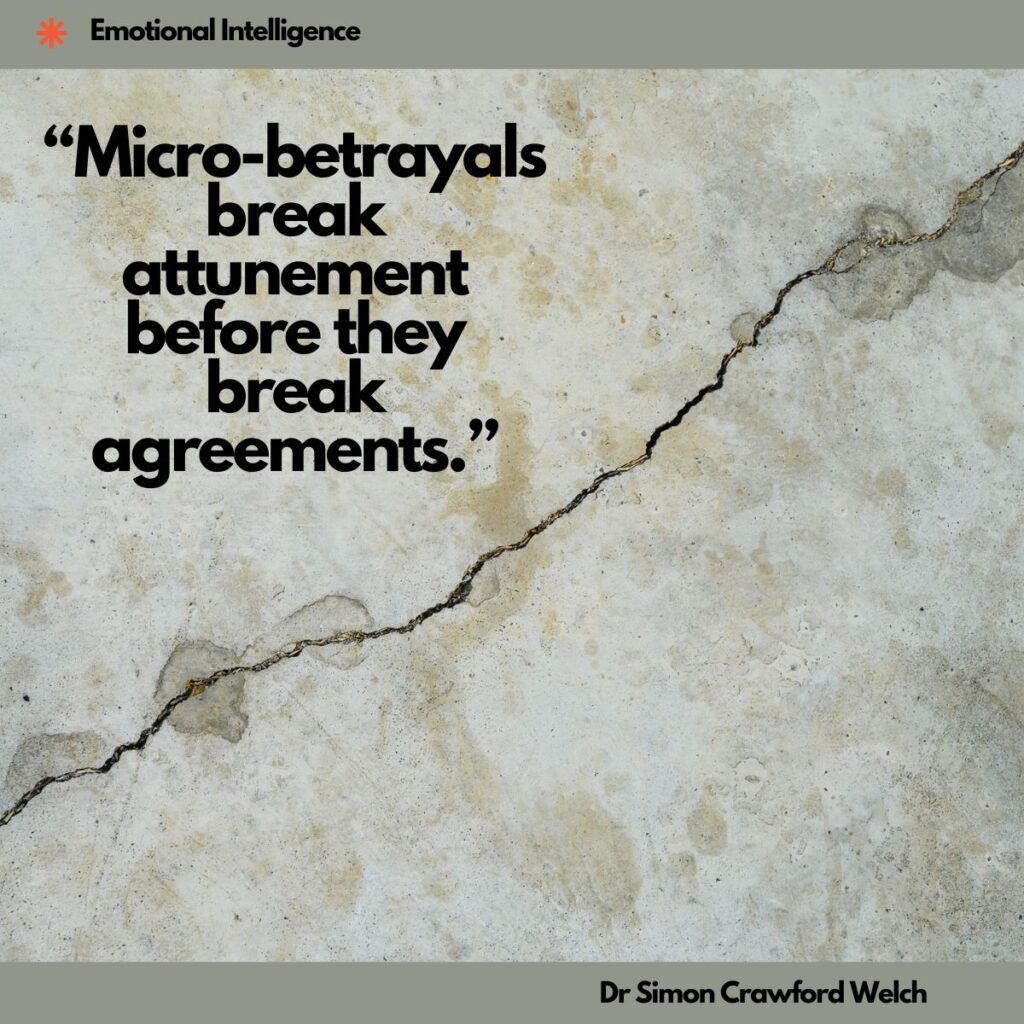
Micro-Betrayals: The Tiny Emotional Misses That Quietly Destroy Trust
This is a sneak peek of this week’s Deep Dives article. Published today!
Trust rarely collapses because of one catastrophic moment. It erodes through the small, almost invisible misses. The distracted glance during vulnerability, the credit not given, the promise not quite kept. Individually, they seem insignificant. Repeated, they recalibrate safety. In this Deep Dive, I unpack how micro-betrayals accumulate beneath the surface of relationships and organizations, why they hurt more than we admit, and how subtle repair, not grand gestures, determines whether trust survives.
DEEP DIVES ARTICLE — PERSONAL DEVELOPMENT

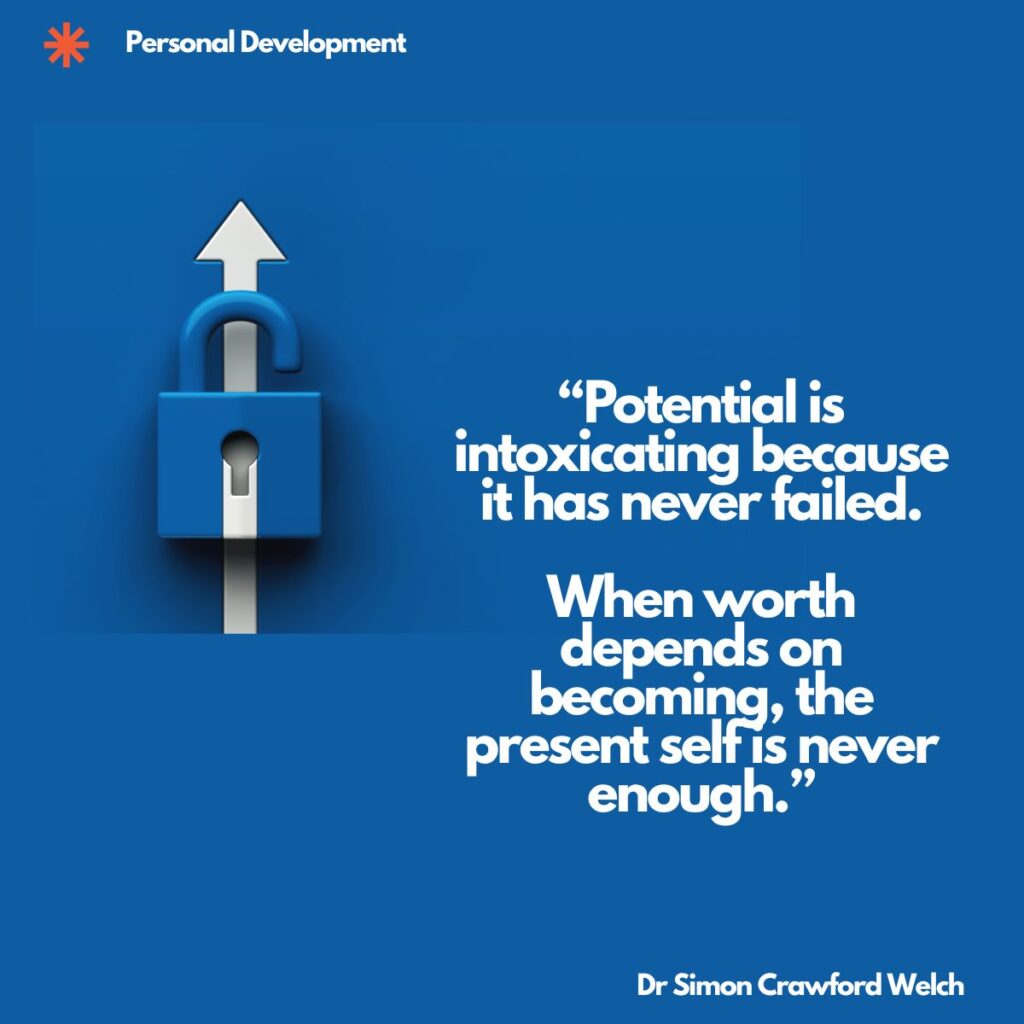
Attachment to Potential: The Hidden Cost of Loving Your Future Self
This is a sneak peek of this week’s Deep Dives article. Published today!
Ambition feels noble. Growth feels necessary. But what happens when your attachment to who you could be quietly turns into dissatisfaction with who you are? Many high performers live in pursuit of a future identity that never quite arrives, postponing pride, peace, and presence along the way. In this article, I explore the psychology of potential addiction, why it creates a perpetual identity gap, and how grounding yourself in the present paradoxically accelerates real transformation.
DEEP DIVES ARTICLE — LEADERSHIP

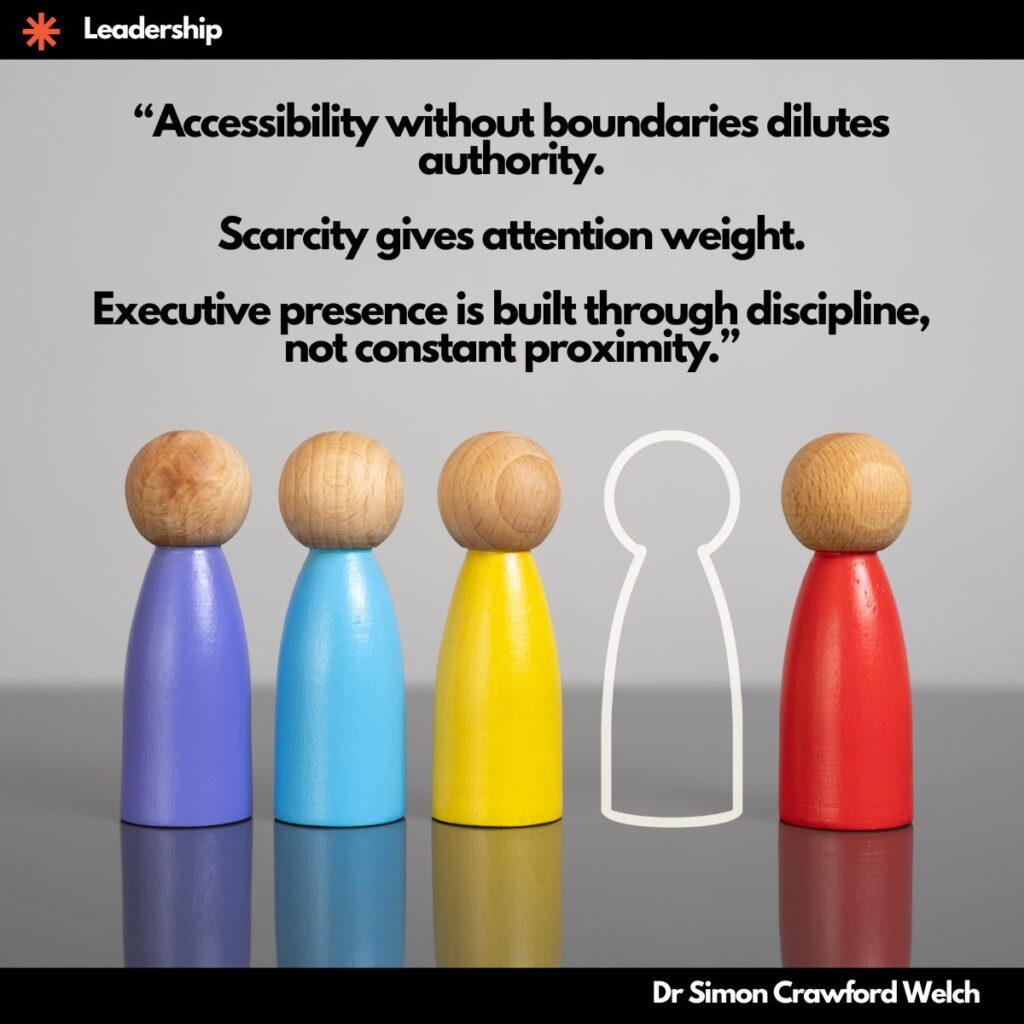
The Over-Availability Trap: When Accessibility Erodes Authority
This is a sneak peek of this week’s Deep Dives article. Published today!
Leaders often believe that being constantly accessible signals strength. In reality, perpetual availability can dilute authority, flatten hierarchy, and quietly reduce executive presence. When attention becomes abundant, it loses weight. In this Deep Dive, I examine the psychology of scarcity, the difference between accessibility and intentional access, and why disciplined boundaries, not constant responsiveness. create real influence.
Deep Dives Book Summary

Mindset: The New Psychology of Success
By Carol S. Dweck
This is a sneak peek of this week’s Deep Dives Book Review. Published today!
What if the biggest constraint on your growth isn’t your ability, but your belief about your ability? In Mindset, Carol Dweck breaks down the invisible divide between those who plateau and those who continuously evolve. It comes down to two operating systems: fixed and growth. One is obsessed with proving; the other is committed to improving. That single shift changes how you handle pressure, failure, feedback, and success itself. In this detailed summary, I unpack how mindset quietly governs performance, shapes leadership, and determines whether you become someone who protects what they have, or someone who expands what’s possible.
Quick Reads
quick read — Emotional intelligence
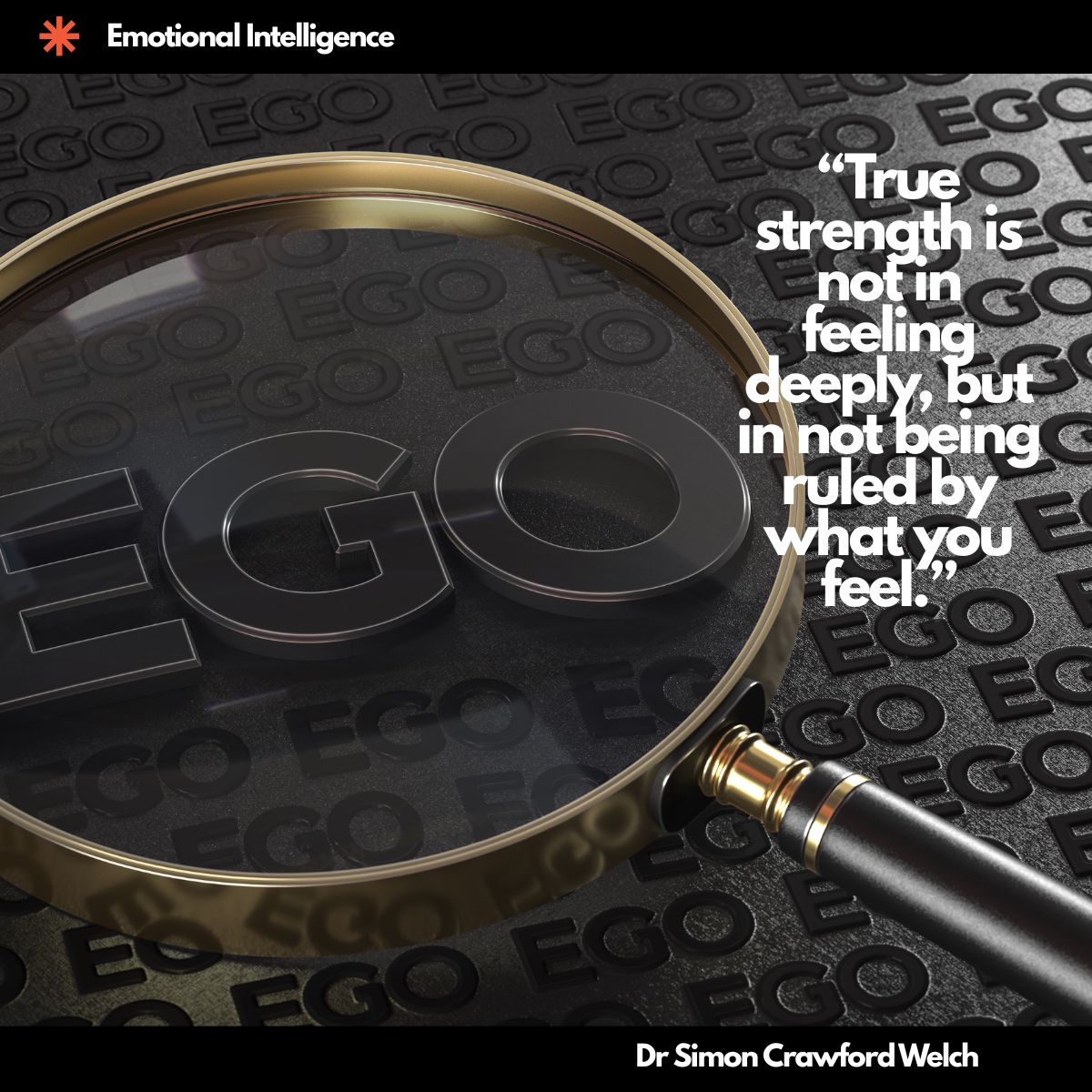
When Feeling Deeply Becomes Self-Absorption: The Narcissism of Over-Identification
We live in an era that celebrates emotional depth. Sensitivity is framed as strength. Empathy is considered virtue. Self-awareness is currency. To “feel deeply” is often positioned as evidence of authenticity and psychological sophistication.
And in many ways, it is.
The ability to access and articulate one’s emotions is foundational to healthy relationships and strong leadership. Emotional literacy increases connection, sharpens intuition, and fosters compassion.
But there is a shadow side to emotional depth that few people discuss.
There is a point at which “I feel deeply” stops being insight and starts becoming over-identification. When that happens, emotion ceases to be information and becomes identity. The person is no longer experiencing a feeling. They are becoming it.
This is the narcissism of over-identification.
The Difference Between Feeling and Fusing
Experiencing emotion means recognizing it as data. “I feel hurt.” “I feel overlooked.” “I feel anxious about this decision.” The feeling is acknowledged, explored, and integrated into perspective.
Fusing with emotion is different. It sounds more like, “This hurt defines the situation.” “My anxiety means something is wrong.” “If I feel dismissed, then I have been dismissed.”
In fusion, emotion becomes evidence. The internal state is treated as objective truth. When someone over-identifies with their feelings, they stop distinguishing between emotional reaction and external fact. The boundary collapses.
The Subtle Ego Beneath Emotional Intensity
At first glance, this pattern does not look narcissistic. It looks vulnerable. It looks honest. But over-identification often centers the self in every dynamic. The emotional experience becomes the gravitational core around which all interpretation rotates.
Consider a disagreement where one party says, “I feel dismissed.” That may be valid. But when the conversation immediately becomes about protecting that feeling rather than exploring the shared dynamic, the emotional narrative eclipses context.
The focus shifts from “What is happening between us?” to “How I feel is the definitive measure of what is happening.”
Depth becomes self-reference.
When Sensitivity Becomes Self-Centeredness
Over-identification can manifest as chronic personalization. Neutral comments feel loaded. Minor delays feel like rejection. Constructive feedback feels like betrayal. The individual experiences intense emotional responses and then assumes those responses accurately reflect the external world.
Because they feel deeply, they assume they perceive deeply.
Yet emotional intensity does not guarantee emotional accuracy.
When someone treats every feeling as revelation, they risk misinterpreting nuance. Their relationships begin to orbit around emotional reassurance rather than mutual exchange.
The Neuroscience of Emotional Certainty
There is a neurological component to over-identification. Emotional experiences activate brain regions associated with threat and reward. When emotions are intense, they produce physiological certainty. The body feels convinced.
That conviction can override cognitive evaluation. The narrative is built around preserving the emotional state rather than examining it.
Over-identification creates a feedback loop. The stronger the emotion, the more convincing it feels. The more convincing it feels, the less it is questioned. This dynamic can masquerade as self-awareness. In reality, it may be a lack of emotional differentiation.
Emotional Precision vs. Emotional Ownership
There is a healthier alternative to over-identification: emotional precision paired with emotional ownership.
Instead of saying, “You made me feel insignificant,” emotional ownership reframes it as, “I felt insignificant in that moment, and I want to understand why.” This shift preserves agency. It opens inquiry rather than accusation.
Over-identification often collapses ownership. The emotion is projected outward as evidence of someone else’s failure. Precision reintroduces humility.
Depth Without Drama
The solution is not emotional suppression. It is differentiation.
Differentiation means recognizing that feelings are real without assuming they are definitive. It means pausing before interpreting emotion as conclusion. It means asking, “What else could be true?” alongside “What do I feel?”
Mature emotional depth is quiet. It does not require constant validation. It does not demand that others reorganize around its intensity. It integrates feeling into perspective without allowing it to dominate.
Depth without discipline becomes drama. Depth with discipline becomes wisdom.
The narcissism of over-identification is subtle because it hides behind virtue. It sounds like authenticity. It feels like vulnerability. But when every conversation orbits one person’s emotional landscape, relational balance erodes.
True emotional intelligence is not about feeling more. It is about understanding feeling without being consumed by it.
And that distinction changes everything.
quick read — Personal development
The Addiction to Urgency: When Constant Motion Becomes Your Identity
There is a particular kind of person who does not walk through life; they accelerate through it. Their calendar is full, their phone is buzzing, their Slack notifications are stacked, and their conversations are punctuated with phrases like “crazy week,” “back-to-back,” and “just trying to keep up.” They wear exhaustion like a quiet badge of honor.
But beneath the surface of constant motion, something more complex is often happening.
Urgency has become a self-worth regulator.
The busyness is not just operational. It is psychological. Movement is not just productive. It is stabilizing. Without it, something uncomfortable surfaces. Stillness feels threatening. Silence feels exposing. Empty space feels like irrelevance.
This is the addiction to urgency.
Urgency as Emotional Anesthesia
On the surface, urgency looks like productivity. It looks like ambition. But urgency can also function as anesthesia.
When your calendar is saturated and your mind is constantly triaging, you do not have to sit with deeper questions. You do not have to examine dissatisfaction. You do not have to confront loneliness, doubt, or identity confusion. The noise keeps you occupied. The pace keeps you distracted.
Motion becomes avoidance disguised as achievement.
Urgency provides a steady drip of validation. Every email answered, every crisis managed reinforces the narrative that you are needed. Needed becomes valuable. Valuable becomes worthy.
Over time, you stop distinguishing between contribution and compulsion.
The Psychological Reward Loop
Urgency produces adrenaline and dopamine. Adrenaline sharpens focus. Dopamine rewards task completion. Together, they create a biochemical loop that feels energizing, even addictive.
When your nervous system becomes accustomed to operating at elevated intensity, calm begins to feel unfamiliar. Slower days feel dull rather than restorative. You may unconsciously create urgency when none exists simply to maintain internal stimulation.
What began as responsiveness becomes dependence.
When Productivity Becomes Identity
The addiction to urgency is rarely about time management. It is about identity management.
If your sense of worth is anchored in output, then slowing down threatens coherence. Who are you if you are not solving, fixing, responding, optimizing? In high-performing environments, urgency is often rewarded. Quick responses signal engagement. Reactive agility is mistaken for leadership.
But when urgency becomes the primary lens through which you measure value, you lose access to strategic depth. Constant motion compresses perspective. It narrows your field of vision to what is immediate rather than what is meaningful.
The Fear Beneath the Pace
At the core of urgency addiction is often fear. Fear of irrelevance. Fear of being surpassed. Fear of insignificance. Fear of being alone with your own thoughts.
Stillness exposes what speed conceals.
When you slow down, questions surface. Am I building what I actually want? Do I like the life I have constructed? Is my value tied exclusively to what I produce?
It is easier to check another email.
Strategic Urgency vs. Emotional Urgency
Not all urgency is pathological. There are moments that require decisive speed. The difference lies in whether urgency is situational or habitual.
Strategic urgency is deliberate. It is applied when appropriate and released when unnecessary. Emotional urgency is constant. It is carried into meetings that do not require it. It becomes the default state.
When urgency is habitual, you are no longer responding to the environment. You are recreating it.
Reclaiming Space
Breaking the addiction to urgency does not mean abandoning ambition. It means decoupling motion from worth.
Start by introducing friction into your reactivity. Delay non-critical responses. Create intentional white space in your calendar. Notice the anxiety that arises when you are not immediately engaged.
That anxiety is instructive. It reveals how tightly your identity is fused with speed.
Begin identifying qualities that are not performance-based. Integrity. Clarity. Thoughtfulness. Presence. These traits do not require constant motion. They require attention.
When you anchor worth in character rather than cadence, urgency loses its grip.
True power is not measured by how fast you respond. It is measured by how deliberately you choose.
You were valuable even before the next notification arrived.
quick read — LEADERSHIP
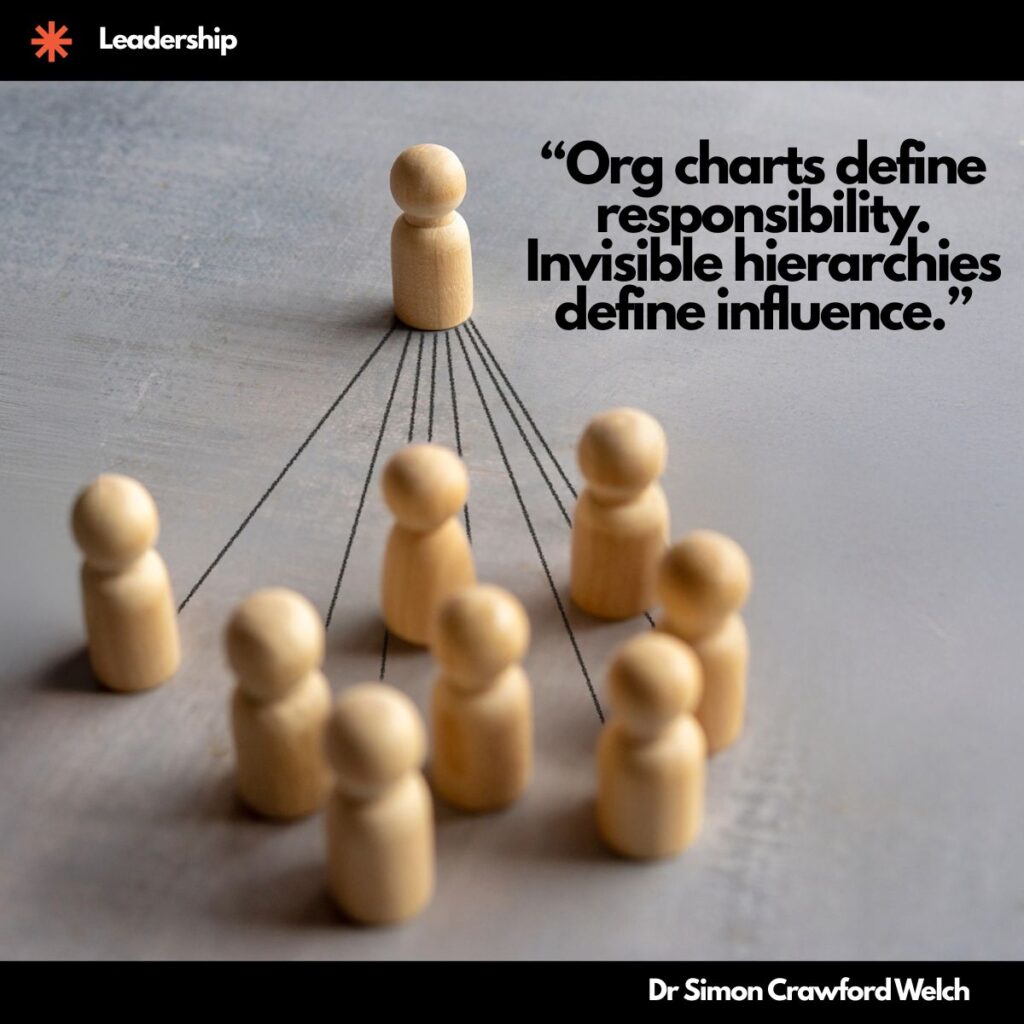
Invisible Hierarchies: The Power Structures That Matter More Than the Org Chart
Every organization has two structures.
The first is visible. It lives in slide decks and onboarding manuals. It is the org chart with clean lines, defined reporting relationships, and neatly arranged titles.
The second structure is invisible. It is not documented. It does not appear in handbooks. Yet it determines far more than the official chart ever will.
This is the invisible hierarchy: the informal power structure that quietly shapes influence, access, credibility, and ultimately, outcomes.
The Illusion of Formal Authority
Formal hierarchy creates clarity. Titles provide structure. But if you have spent time inside any complex organization, you know that formal authority does not always translate into real influence. A Vice President may hold the title, yet a senior project manager might carry more weight in key discussions.
Formal authority is explicit. Informal authority is relational.
The mistake many leaders make is assuming that because the chart is clean, the power dynamic is aligned. In reality, invisible hierarchies often override formal ones. Decisions follow trust, proximity, expertise, and emotional leverage more than they follow lines on paper.
What Creates Invisible Hierarchies
Invisible hierarchies are built on three primary forces: perceived competence, relational proximity, and consequence density.
Perceived competence refers to who the organization believes “really knows what’s going on.” Regardless of title, individuals who consistently demonstrate clarity under pressure gain informal authority.
Relational proximity refers to closeness with power. Those who have frequent communication with founders, executives, or key stakeholders accumulate influence. Being in the room regularly shapes perception.
Consequence density refers to how much weight someone’s reaction carries. If a person’s response can alter strategy, budgets, or careers, others calibrate to them.
These forces rarely align perfectly with official structure. That misalignment is where invisible hierarchies emerge.
Why Invisible Hierarchies Outperform Org Charts
In high-functioning organizations, invisible hierarchies often determine speed. People bypass formal routes and go directly to trusted influencers. Decisions accelerate because informal trust substitutes for procedural delay.
But invisible hierarchies also determine who gets heard. Ideas proposed by someone with low informal status may be overlooked, while identical ideas proposed by someone with high informal capital gain traction immediately.
Org charts define responsibility. Invisible hierarchies define momentum.
The Risk of Unchecked Informal Power
When invisible hierarchies grow unchecked, they can undermine institutional integrity. Decision-making may concentrate around small relational clusters. Transparency decreases. Favoritism emerges subtly. Accountability blurs.
Individuals outside the inner influence circle may feel marginalized, even if their titles suggest authority. This dynamic often explains why high-potential employees disengage despite clear reporting lines. They sense that advancement depends less on competence and more on proximity.
Leaders and the Blind Spot of Informal Influence
Leaders often believe that because they have defined roles clearly, power is evenly distributed. Yet they may unconsciously reinforce invisible hierarchies through consistent reliance on certain voices.
If the same few individuals are always consulted informally before decisions are finalized, their influence compounds. Others recognize the pattern. When informal influence is unacknowledged, it distorts accountability.
Leaders must periodically audit not only who reports to whom, but who influences whom.
Aligning Formal and Informal Structures
The healthiest organizations do not attempt to eliminate informal power. They integrate it.
This means ensuring that informal influencers are aligned with institutional values. It means increasing transparency around decision pathways. It means clarifying where input ends and authority begins.
Invisible hierarchies also offer opportunity. They remind us that influence is not exclusively tied to title. Authority can be earned through competence, composure, and consistency.
The Strategic Reframe
Instead of asking only, “Who reports to whom?” begin asking, “Who influences whom?” Instead of focusing solely on titles, evaluate credibility. Instead of assuming authority is static, observe how it shifts in different contexts.
The org chart may define the official story.
The invisible hierarchy determines the real one.
Quotes of the Week
QUOTE — EMOTIONAL INTELLIGENCE
QUOTE — PERSONAL DEVELOPMENT
QUOTE — LEADERSHIP
Reframe
Strategic Silence: When Not Speaking Multiplies Authority
Most people believe authority is built through articulation. The sharper the argument, the quicker the response, the more confident the delivery, the stronger the presence. In fast-moving environments especially, silence can feel like weakness. If you are not speaking, you are not leading. If you are not responding, you are not engaged. If you are not filling the space, someone else will.
But this assumption confuses noise with influence.
Authority is not always amplified by volume. It is often multiplied by restraint.
Strategic silence is not withdrawal. It is not passivity. It is disciplined pause. It is the conscious decision not to react immediately, not to fill every conversational gap, not to prove understanding in real time. And when used deliberately, it increases weight rather than diminishes it.
Silence, when intentional, alters power dynamics.
The Reflex to Fill Space
In most professional and social settings, people rush to fill silence. A question lands, and someone answers immediately. A pause stretches beyond two seconds, and discomfort rises. Leaders often interpret silence as a vacuum that must be corrected.
This reflex is rooted in anxiety. Silence feels ambiguous. It can be misread as confusion, disagreement, or incompetence. Speaking quickly reassures the room—and ourselves—that control is intact.
But constant verbal presence creates predictability. When your input is always immediate, it becomes expected. When it is expected, it loses gravity.
Silence introduces uncertainty in a productive way. It signals deliberation. It communicates that words are chosen, not reflexive.
Silence as Cognitive Leverage
When you resist the urge to respond immediately, you create cognitive leverage. A pause forces others to think more carefully. It disrupts conversational autopilot. It slows the tempo of the room.
In negotiations, silence is often more powerful than argument. When someone presents an offer and you respond instantly, you reveal your position. When you pause, you invite recalibration. The other party begins second-guessing. They may fill the silence with concessions or clarification.
Silence shifts the burden of movement.
In leadership conversations, a measured pause after a proposal encourages deeper reasoning. Instead of rushing to affirm or reject, silence communicates that evaluation is happening. It increases perceived seriousness.
Thoughtfulness often speaks louder than speed.
The Psychological Weight of Selective Speech
Scarcity increases perceived value. This applies not only to products and time, but to words.
If you speak constantly, your input blends into the background rhythm of the room. If you speak selectively, your contributions stand out. Colleagues begin to notice when you lean forward. Teams anticipate that when you do speak, it carries intention.
Strategic silence builds anticipation.
This does not require aloofness or detachment. It requires discipline. Speak when it advances clarity. Remain silent when the room benefits from processing.
Authority grows not from dominating airtime, but from elevating it.
Silence and Emotional Regulation
One of the most powerful uses of silence occurs during emotional escalation. When tension rises, the instinct is to counter, defend, or assert. Speaking quickly in these moments often amplifies volatility.
Silence creates space for regulation.
A pause during conflict signals composure. It communicates that you are not governed by impulse. It lowers emotional temperature because it interrupts reactive rhythm.
This does not mean suppressing response indefinitely. It means allowing emotion to settle before choosing articulation.
When others escalate and you remain steady, the contrast reinforces authority. Emotional steadiness is magnetic.
The Leadership Optics of Restraint
Executive presence is not defined by constant commentary. It is shaped by composure under ambiguity.
When leaders respond instantly to every comment or concern, they risk appearing reactive rather than reflective. Strategic silence conveys strategic altitude. It signals that decisions are not formed impulsively.
Consider high-level board meetings. The most influential voices are often not the most frequent. They listen fully. They observe patterns. When they finally speak, they synthesize rather than scatter.
Silence allows integration.
The optics matter. Deliberation increases perceived depth. Speed can unintentionally signal insecurity.
The Fear Beneath Over-Talking
Many people over-speak because they fear invisibility. Silence can feel like disappearance. If you are not contributing continuously, you worry that you are not adding value.
This fear often drives conversational clutter.
But influence is not proportional to word count. It is proportional to clarity. Strategic silence requires confidence in your value independent of constant reinforcement.
When you are secure enough to withhold immediate reaction, you project stability. Stability increases authority.
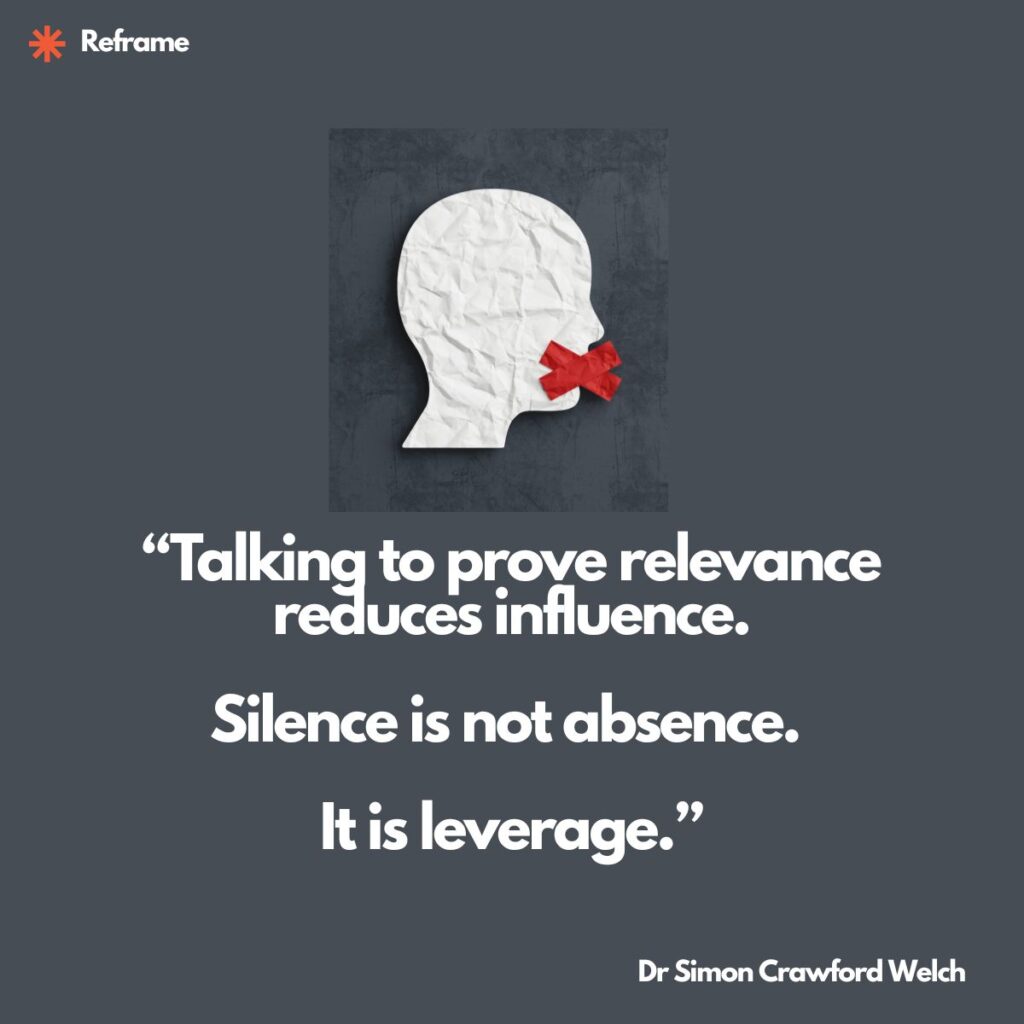
Talking to prove relevance reduces it.
Silence as Listening Amplifier
Strategic silence enhances listening. When you are not preparing your response mid-sentence, you absorb nuance. You notice tone shifts. You catch inconsistencies. You identify underlying concerns.
People feel heard not when you speak quickly, but when your response reflects accurate comprehension. Silence is the bridge to that comprehension.
It also invites others to expand. When you do not interrupt or immediately redirect, they elaborate. They clarify. They reveal more.
Silence uncovers layers.
In this way, silence is not absence. It is active data gathering.
When Silence Is Misused
It is important to distinguish strategic silence from avoidance. Withholding speech to punish, manipulate, or withdraw connection is not authority. It is control.
Strategic silence is purposeful and transparent. It serves clarity, not ego. It creates space for thought, not anxiety.
Avoidant silence breeds confusion. Strategic silence breeds respect.
The intention behind the pause determines its impact.
Practicing Strategic Silence
The discipline begins with awareness. Notice where you feel compelled to respond immediately. Notice the discomfort of unfilled space. Notice the urge to defend reflexively.
Experiment with small pauses. Count two breaths before answering a question. Allow a moment of reflection after a proposal. Resist interrupting when someone finishes speaking.
In meetings, speak last rather than first. Let others frame their perspectives before adding yours. This prevents anchoring the room prematurely and increases the weight of your eventual contribution.
In conflict, delay reaction. Acknowledge emotion, but choose your response with deliberation.
These micro-adjustments compound.
Silence and Long-Term Authority
Over time, strategic silence reshapes perception. People learn that your words are intentional. They prepare more carefully when presenting ideas. They take feedback more seriously because it is not constant.
Authority becomes less about dominance and more about discernment.
Silence does not diminish visibility. It enhances it selectively. It turns speech into signal rather than noise.
When you do speak, the room listens.
Reframing Silence
Silence is often framed as absence. In reality, it is leverage.
It is the refusal to let impulse dictate influence. It is the choice to let others reveal themselves fully before responding. It is the discipline of allowing weight to build before releasing words.
In a culture that rewards speed and volume, silence feels counterintuitive. Yet it is precisely this restraint that multiplies authority.
You do not gain influence by filling every gap.
You gain it by choosing when not to.